
NEWS
Valve Skin Ban Hits BLAST and Forces CS2 Teams Toward Betting Cash
Skin trading logos vanish from Tier 1 CS2 broadcasts at BLAST Bounty Season 2 as teams keep deals off-air and shift toward pure betting sponsors.

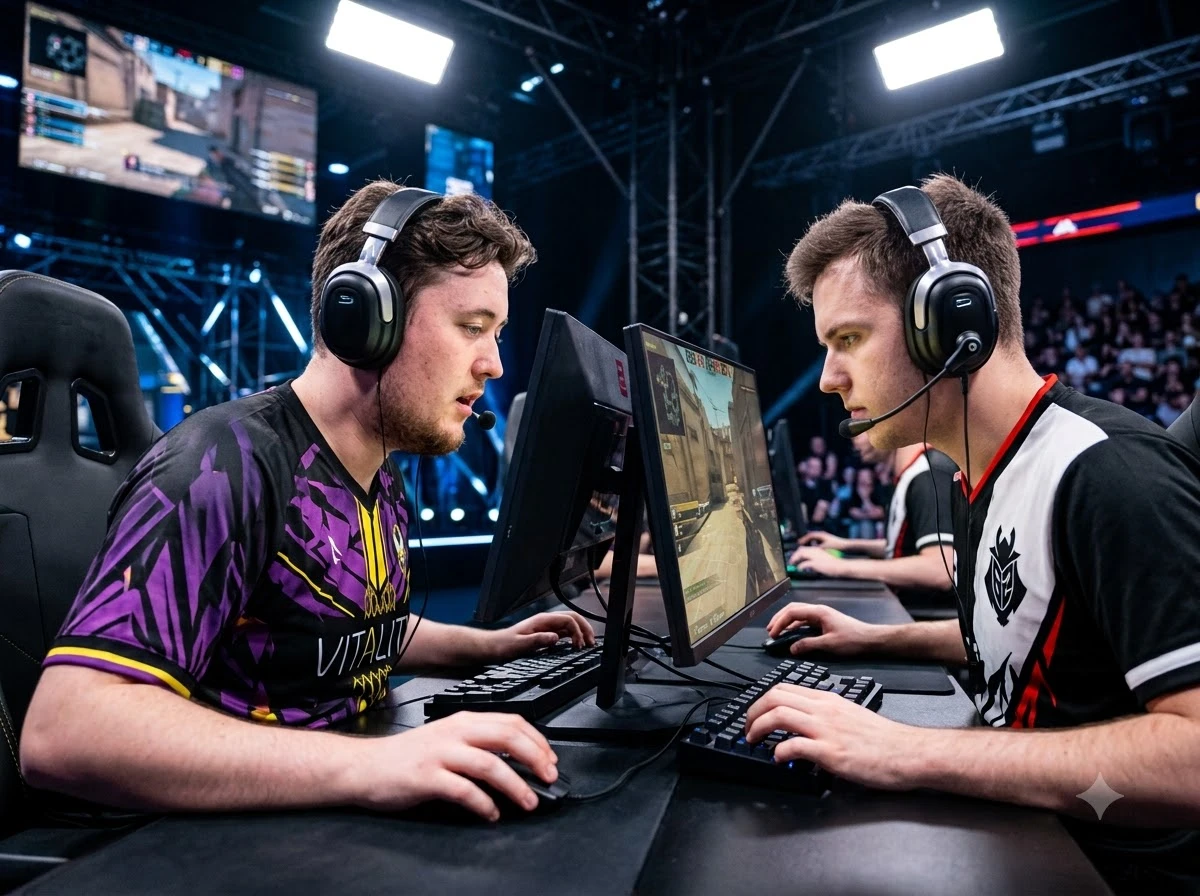
Valve’s ban on skin trading and case-opening site sponsorships hit Tier 1 Counter-Strike 2 broadcasts for the first time at BLAST Bounty Season 2 2026. Skin.Club logos vanished from Team Vitality jerseys during their match against Liquid even as the partnership continued on the organization’s social channels.
The rule, written into the Tournament Operation Requirements in December 2025, finally binds the highest level of licensed events. Pure betting and prediction market sponsors unconnected to Valve’s inventory remain free to stay visible.
What the License Clause Forbids
Every licensed CS2 tournament must follow the Limited Game Tournament License. Section 2.4.e delivers the core restriction in plain language.
Licensee must not distribute or display, including on team jerseys or in any other content that may be visible during the broadcast, any content or material that either violates Valve IP or the terms of the Steam Subscriber Agreement (for example, game case opening sites or skin trading sites). Licensee will not accept sponsorships from sponsors that generate revenue through activities that … rely on Valve’s game economies. This includes, but is not limited to, key resellers or companies that interact with players’ Valve game inventories.
That is the IP Protection clause in the Limited Game Tournament License. Organizers cannot show the logos on air or on kit during broadcasts. They also cannot take the sponsorship money themselves for the event. Teams keep the commercial deals; they simply strip the marks for the stream and the arena cameras.
Key resellers and any platform that touches player inventories fall under the same net. Traditional sportsbooks and prediction markets that never touch skins sit outside it.
The Ten-Month Rule That Delayed the Crackdown
Valve published the update in December 2025. Tier 1 events only began enforcing it in the second half of 2026. The lag is mechanical, not political.
- December 2025, TOR and Limited License updated with the skin-site examples and inventory language.
- Early 2026, Tier 2 events, which need only two weeks to three months of notice, adopted the rule first.
- July 2026 onward, First Tier 1 tournaments whose Additional Information packages were locked after the December rewrite reach the ten-month mark and must comply.
The TOR requires Tier 1 operators to publish full Additional Information at least ten months before the main event. That 10-month Additional Information deadline for Tier 1 created the calendar gap. BLAST Bounty Season 2 became the first major Tier 1 test case.
Jerseys Went Clean at BLAST Bounty Season 2
During Vitality’s Stage 1 match against Liquid, players wore Major-edition jerseys with the collarbone Skin.Club patch removed. The brand stayed active on Vitality’s own channels throughout the event. Liquid, the 30th seed, knocked out the top seed 2-0 and advanced.
The online stage ran 21-26 July with a $410,000 prize pool before the Malta LAN finals. Full details of the BLAST Bounty Season 2 online stage and Malta LAN show how ranking points and club shares still flowed even after the early exit for the favorites.
ESL FACEIT Group had already aligned its own rulebook weeks earlier, closing the same loophole for its events. The pattern is now consistent across the biggest operators.
Who Feels the Cash Pinch First
Top organizations such as Vitality already carry diversified books that include Stake and other betting firms. They can absorb the loss of on-broadcast skin visibility. Mid-tier and lower-tier squads cannot.
| Entity | Prior Skin Exposure | Immediate Status at Tier 1 |
|---|---|---|
| Team Vitality | Skin.Club / Skin.Land partnerships | Logos off jerseys and broadcast; deals continue on socials |
| ESL FACEIT Group events | Previously allowed under older code | Full ban on inventory-interacting sponsors |
| Mid and lower-tier orgs | Heavy reliance on skin gamba deals | Visibility cut; prize money alone often insufficient |
| Pure betting operators | Already present | Unaffected and likely to expand share |
Crowd reaction on X after the December 2025 announcement mixed celebration with alarm. One widely viewed post from market tracker Pricempire simply stated the ban. Replies and parallel threads warned that many orgs “don’t make enough from tournaments alone to survive” and asked whether lower tiers face bankruptcy pressure inside one to two years. That fear is sharper now that the rule has reached the Tier 1 stage where prize pools and exposure concentrate.
- Skin sites lose the highest-visibility advertising channel in the sport.
- Teams retain the revenue stream but must hide the branding during licensed broadcasts.
- Organizers lose a category of title and jersey sponsors for the event itself.
- Viewers see cleaner kits and fewer gamba logos during peak concurrent streams that already topped 2.75 million at IEM Cologne.
Betting Fills the Gap While Surrogates Hover
Because the rule only targets companies that rely on Valve’s game economies, traditional bookmakers and prediction markets keep full rights to jerseys and broadcasts. Several top teams already hold multi-year betting deals measured in seven figures. Those contracts look more valuable overnight.
The tobacco-sponsorship parallel from motorsport is already circulating. Ferrari once ran Mission Winnow branding as a stand-in for Marlboro. Similar creative naming or abstract marks could appear on CS2 kits at the next Majors if skin brands want residual presence without triggering the inventory language. Valve has not yet closed the social-media or surrogate loopholes, so the next test will be how strictly organizers police borderline cases at IEM Cologne and later events.
The underlying skin economy itself remains enormous. Market trackers placed CS2 skin market capitalization near six billion dollars in late 2025, with Valve taking roughly $1.15 billion that year from keys and Steam Market fees. The ban does not touch that secondary market; it only severs the promotional feedback loop inside official tournaments.
A Long Arc from Skin Gambling Scandals to Broadcast Clean-Up
Skin gambling controversies date back more than a decade in Counter-Strike. Valve has repeatedly updated Steam rules and Third-Party guidelines, yet third-party case sites and trading platforms kept growing by sponsoring the very teams that generate the content. The December 2025 TOR language is the first time the company used the tournament license itself as the enforcement hammer across every licensed event.
The practical result is a cleaner broadcast product at the cost of one of the few sponsorship categories that paid mid-table rosters real money. Pure betting operators, already licensed in more jurisdictions, stand ready to claim the vacant inventory. Whether that trade improves the long-term health of the scene or simply swaps one form of gambling promotion for another will show up in the next round of team balance sheets and Major viewership numbers.
For now the jerseys at BLAST Bounty Season 2 already look different. The collarbone space is empty. The money has not disappeared; it has simply moved off camera and, increasingly, toward operators that never touched a Steam inventory.


Howard the Duck at 40 Still Owns Marvel’s First Flop

Valve Skin Ban Hits BLAST and Forces CS2 Teams Toward Betting Cash

Oil Crashes Below $80 as Iran Talks Restart and Markets Split

Netflix Screening Erases Fortitude Exclusivity in $105M Cage Suit

Bitget BGBTC Upgrade Turns Idle Bitcoin Into Daily Yield

FFXIV Switch 2 Port Brings Portability With a Second Bill

MacBook Air Delays Reveal AI Memory Crunch Repricing Laptops

Bitcoin BIP-110 Soft Fork Dies on Tiny Miner Support

CXMT LPDDR6 Push Locks In Mobile DRAM Split

Snapchat Hands Spotlight Priority to Human Creators Over AI Farms

Kalshi Loses Major NY Prediction Markets Ruling to Judge Torres

Fed Minutes Cite AI Demand as Inflation Risk, Put a 2026 Hike Back on the Map

Marker AI Writing Startup Lands $13M Seed Led by Index Ventures

Dota 2 Esports World Cup 2026: Spirit Defends $2M Title In Paris

Meta’s Muse Spark 1.1 Beats Rivals on Price, Trails on Coding

ARC Intelligence Closes €4M Seed Round in Roughly a Week

CS2 Premier Season 5 Lands With Cache and a C4 Damage Rework

Finto Picks Munich Over Silicon Valley After YC, Raises $3.4M

Backrooms Returns to Theaters as the Everything Must Go Edition

Trump Calls Iran ‘Islamic Republic of Japan’ as Ceasefire Ends
-
 FINANCE2 months ago
Zcash Patched a Double-Spend Bug as ZEC Climbed 5%
-
 ENTERTAINMENT2 months ago
Steam Summer Sale 2026 Locks In June 25 to July 9 Dates
-

 FINANCE1 month ago
CLARITY Act Final Text Expected This Weekend as 60-Vote Hurdle Looms
-
 NEWS3 months ago
Meta Adds AI Replies to Threads, But Users Can’t Block It
-
 ENTERTAINMENT3 months ago
‘Widow’s Bay’ Review: Apple TV’s Sleeper Horror-Comedy Earns Its Fog
-
 NEWS5 months ago
U.S. Navy Deploys Solar-Powered Lightfish Drone to Patrol Oceans
-
 NEWS8 months ago
FolderFresh Review: This Free Tool Automates Windows File Organizing
-
 FINANCE4 weeks ago
Kalshi Loses Major NY Prediction Markets Ruling to Judge Torres