
NEWS
Bezos’s Prime Video AI Overhaul Puts Studio Deals at Risk
Jeff Bezos ordered Prime Video’s AI overhaul after rejecting an earlier plan, and the studios who fund its recommendations may pay the price.

Jeff Bezos rejected Prime Video’s redesign plans last autumn and personally ordered a rebuild centered on artificial intelligence, and Amazon is now testing the result on real customers. Reuters reported Thursday that the project, known internally as Lighthouse, would shine a light on Amazon’s AI capabilities for the more than 200 million consumers who use Prime Video.
The push carries stakes beyond the interface. Prime Video’s recommendation engine has long doubled as paid shelf space for studios promoting new releases, and Amazon has not said whether real personalization threatens that arrangement. Reuters also could not determine whether viewing and voice data collected through Lighthouse would end up training Amazon’s broader AI models.
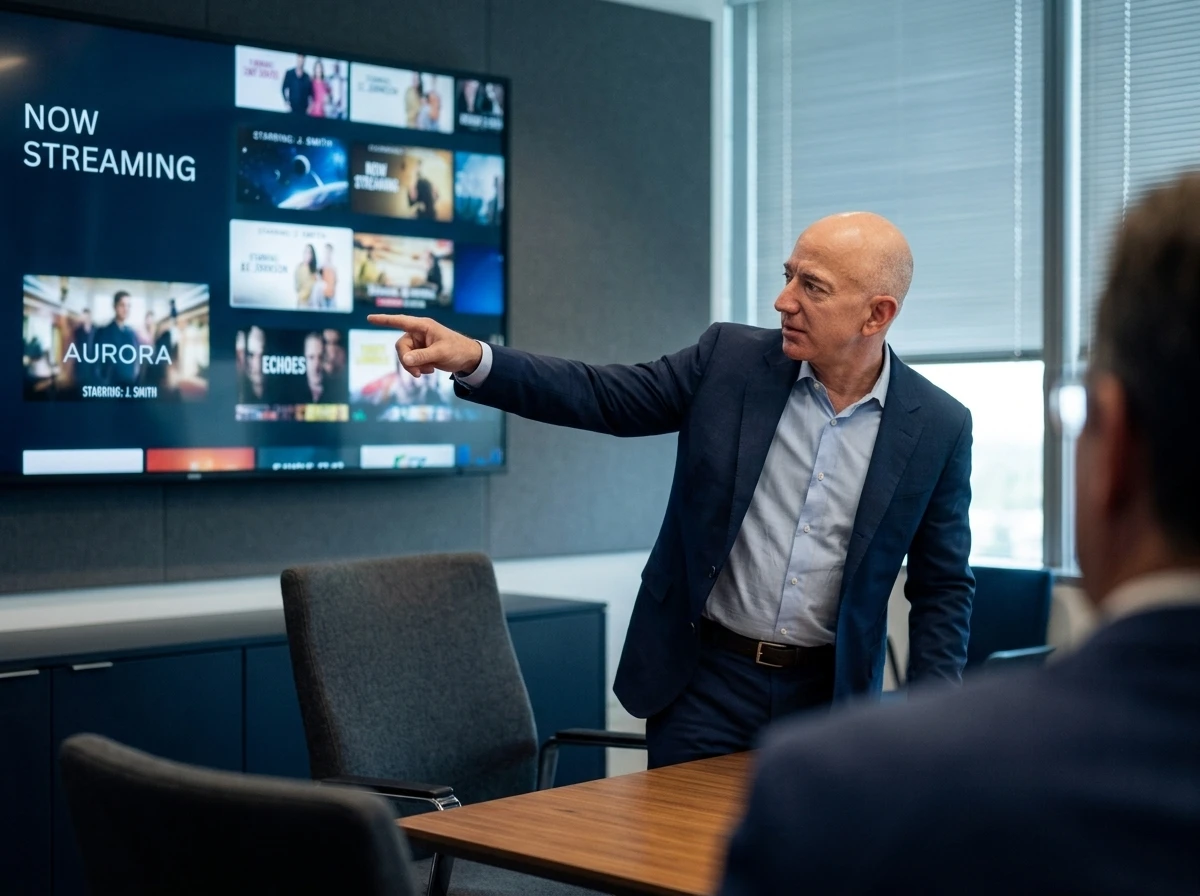
What Lighthouse Actually Changes on Prime Video’s Home Screen
No final design exists yet, but Prime Video executives have discussed a homepage built around AI-generated prompts rather than a fixed grid of tiles, things like “action movies from the 1980s” or “Christmas rom-coms” instead of static category rows. One version under discussion skips heavy text entirely.
Some elements are staying put. The keyword search bar is expected to survive, according to people familiar with the plans, and so is the strip at the top of the screen that promotes new releases and live events, including Amazon’s exclusive Thursday Night Football broadcasts. Features under development include AI-generated thumbnails, pre-filled browsing prompts such as “1980s action films” and “Christmas rom-coms”, and voice search powered by Alexa, one person with knowledge of the project told reporters.
- AI-generated prompts replacing static category tiles, such as decade or holiday themed suggestions
- AI-generated thumbnails for titles across the homepage
- Voice search built around Alexa, folded directly into Prime Video’s search bar
- The existing keyword search function, which is expected to remain
- The top-of-screen highlight strip for premieres and live sports like Thursday Night Football
Amazon is already running early versions of the redesign with a small test group, and the company has left itself room to change course.
A Contentious Meeting Killed Hopkins’ Original Plan
Lighthouse did not start as a grand strategy memo. It began last autumn, when Prime Video executives presented an update plan to Bezos that, by multiple accounts, went badly. Bezos was displeased that Hopkins’ plans to update Prime Video failed to sufficiently highlight the service’s capabilities in AI and personalization, according to the people.
Bezos’ response prompted the Prime Video executives to scrap their previous plans and embark on Lighthouse. The rebuild is now being run day to day by Kam Keshmiri, Prime Video’s global design chief, who was in the room for the original presentation and now leads the redesign.
Bezos stepping back into a product review this closely is itself notable. Bezos is said to be personally involved in the overhaul, an unusual step considering he relinquished the CEO title in 2021 to focus on the Washington Post and his spaceflight company Blue Origin. He has since added the AI startup Prometheus to that list, and Amazon says he still gets regular progress updates on Lighthouse specifically.
Amazon’s AI Bet, By the Numbers
Lighthouse is a small line item next to what Amazon is spending on AI overall. CEO Andy Jassy told investors on the company’s Q4 2025 earnings call in February that “We’re monetizing capacity as fast as we can install it,” and dismissed suggestions the spending was reckless, saying “This isn’t some sort of quixotic, top-line grab.”
Wall Street was not entirely convinced. Amazon’s stock plunged 11% in extended trading Thursday, dragged lower by market jitters around the company’s $200 billion capex plans, the highest spending forecast among the megacap companies. Amazon has also put money directly into rival AI labs, part of the same effort Lighthouse is meant to advertise. That stake is not without friction elsewhere in the industry; Meta’s own compute talks with Anthropic have already exposed cracks in Amazon and Google’s Anthropic bet.
| Metric | Figure | Context |
|---|---|---|
| 2026 planned capital spending | $200 billion | Mostly AWS data centers, chips and robotics |
| 2025 actual capital spending | $131 billion | Up from about $83 billion in 2024 |
| Initial OpenAI and Anthropic stake | $23 billion | Combined initial commitment |
| Potential additional AI investment | Up to $40 billion | Discussed, not yet committed |
| 2025 free cash flow | $7.7 billion | Down from $32.9 billion in 2024 |
| Stock reaction to the capex plan | Down about 11% | Extended trading, February 5, 2026 |
Prime Video is the platform Amazon picked to make that spending feel tangible to a paying audience of 200 million, rather than an abstraction inside a data center.
Who Pays When Prime Video Gets Smarter?
Real personalization on Prime Video would mean recommending what a viewer is actually likely to watch. That is a problem for a business model built around showing viewers what studios paid to have shown. Genuine AI-driven recommendations could quietly break the paid placements that help fund the platform today.
Like any other streaming platform, Prime Video relies on paid placements by studios and recommendation algorithms.
Michael Goodman, an analyst at the research firm Parks Associates, said that, and added that introducing more personalization could disrupt this existing system. His firm’s own research backs up how much is riding on that arrangement industry-wide. Platform operators (e.g., Roku, Amazon, Google) now capture major ad revenue streams via OS-level placements, Parks Associates found in its most recent streaming tracker review, and smart TV platforms now serve as the primary consumer gateway for that advertising.
Prime Video is not immune to the broader shift toward ad-supported viewing that makes those placements valuable in the first place. Ad-based tier subscribers account for 57% of the user bases among the eight biggest streaming services, Parks Associates has found, and that count of eight includes Prime Video alongside Max, Netflix, Disney+, Discovery+, Paramount+, Hulu and Peacock. Amazon has discussed folding Alexa directly into Prime Video’s search bar as part of Lighthouse, a further step toward an algorithm that answers to the viewer first.
The Privacy Question Lighthouse Hasn’t Answered
Voice search and deeper personalization both require Prime Video to read more of a viewer’s behavior: what gets watched, skipped, rewound, or asked for out loud. Reuters’ reporting leaves a gap here. Reuters did not identify new privacy controls or explain whether data from Lighthouse would be used to train AI models.
Amazon says existing Alexa users can review and delete voice requests, but the company has not said how those controls would apply to the reported Prime Video integration. Amazon itself has stayed quiet on the record. Amazon declined to comment when Reuters sought a response for its original story.
What We Know
- Confirmed by four sources: Bezos personally directed the pivot to an AI-first redesign after rejecting Hopkins’ earlier plan
- Confirmed leadership: Kam Keshmiri now runs the day-to-day redesign, with Bezos receiving periodic updates
- Confirmed spending: $200 billion in 2026 capital expenditure, plus $23 billion already committed to OpenAI and Anthropic
What’s Unconfirmed
- No final homepage design or launch date has been set
- No word on whether viewing or voice data collected through Lighthouse will train Amazon’s AI models
- No detail on how existing Alexa data controls would extend to a Prime Video integration
These are large gaps for a redesign already running on live test accounts.
Alexa+’s Rocky Reception Sets the Bar Lighthouse Must Clear
Amazon has been here before. The Alexa overhaul that Lighthouse is partly modeled on has not gone smoothly. Reviewers have flagged factual mistakes, an overly chatty tone and device lag, and some longtime users have switched back to the classic version rather than adopt the generative rebuild.
The financial history is worse. Between 2017 and 2021, the devices division lost over $25 billion, and by 2022, insiders put the annual burn rate at roughly $10 billion. Alexa sits inside the same Worldwide Digital organization as Prime Video, so its losses are not a distant cautionary tale, they are a sibling division’s track record.
Amazon’s AI ambitions have hit friction elsewhere too. The company’s own coding assistant has suffered outages that pointed to a broader governance gap between coding gains and control, and a separate push to frame warehouse robots as a jobs creator has run into its own skills-gap problems. Lighthouse arrives carrying that pattern, not a clean slate.
Testing Continues Before Any Design Is Final
Reuters said Amazon is testing versions with a small number of users. Feedback, cost considerations and other concerns could still change the product before release. Bezos has since received periodic updates on how those tests are going, according to people familiar with the project.
For now, Lighthouse remains a test running on a sliver of the 200 million Prime Video accounts Amazon needs to convince.
Frequently Asked Questions
Is Alexa+ Free With Amazon Prime Membership?
Yes. Alexa+ is included at no extra cost for Prime members, while non-Prime users pay $19.99 a month. The service first rolled out in early access in March 2025 before reaching a full United States rollout in February 2026.
How Much Did Amazon’s Alexa Unit Lose in Its Worst Year?
Alexa lost $3 billion in the first quarter of 2022 alone, described at the time as the bulk of the hardware division’s losses, and the fallout contributed to a round of layoffs that cut 10,000 jobs across Amazon that year.
Is Alexa Already Built Into Amazon’s Shopping App?
Yes. Amazon integrated a generative AI version of Alexa into its shopping platform’s search function earlier this year, the same instinct now driving discussions to fold Alexa into Prime Video’s search bar under Lighthouse.
Is All of Amazon’s $200 Billion Capex Going to Prime Video?
No. The $200 billion figure covers Amazon’s entire 2026 capital budget, weighted toward AWS data centers, custom chips, robotics and low Earth orbit satellite infrastructure. Prime Video’s Lighthouse redesign is a small piece of that much larger AI buildout.
Has Prime Video Used AI Before Lighthouse?
Yes. A 2024 redesign already used Amazon’s Bedrock platform to build personalized collections and large language models to simplify title descriptions. Lighthouse would move those AI capabilities to the center of the interface instead of keeping them behind the scenes.


Veridue Raises $4 Million to Speed Energy Deal Diligence

Healey Adds a £150m Rung for Northern Scale-Ups

Ten Deals Took Most of Europe’s August Tech Money

Holmes Hired Fielder to Film Her Last Days

Molten Bets £100m of Plc Cash on Late-Stage Tech

Garlinghouse Cited Dutch Gold, and London Got the Bars

byFounders Bets $4.3 Million on Fluencify After $2M ARR

Alpha Gang Puts A-List Stars on a Zellner Wager

Angel Bets a Recut PG-13 Chase on Ritchson and Wilson

Flex IT and T1A Combine to Own Corporate Device Supply

Walter’s TWG Insists No Fraud as Insurer Probes Force Cleanup

30-Year Yield Hits 5.32% Highest Since 2007 as Debt Supply Locks In Costs

PCE Stays at 3.7% as Gas and Tariffs Outrun Coming Revisions

Evernorth S-4 Clears Path for Active XRP Treasury on Nasdaq

Astute’s $1.2M bet makes B2B creator deals feed AI discovery

Strategy Parks $1.59B Cash While Bitcoin Stack Stays Flat

Instinct Hits $2.5 Billion as AI Agent Access Sparks Trust Fights

Oracle’s 2.8 GW Bloom Deal Exposes the AI Power Bypass

CLARITY Act Cloture Opens a Door Ethics Still Blocks

Amber’s €7M locks Mittelstand knowledge inside Europe
-
 FINANCE3 months ago
Zcash Patched a Double-Spend Bug as ZEC Climbed 5%
-
 ENTERTAINMENT3 months ago
Steam Summer Sale 2026 Locks In June 25 to July 9 Dates
-

 FINANCE2 months ago
CLARITY Act Final Text Expected This Weekend as 60-Vote Hurdle Looms
-
 NEWS4 months ago
Meta Adds AI Replies to Threads, But Users Can’t Block It
-
 ENTERTAINMENT5 months ago
Extraction 3 Is Officially Coming to Netflix in 2027
-

 NEWS3 months ago
YouTube Shorts is testing a heart in place of the thumbs-up
-

 NEWS1 month ago
Senators Force Apple Off Chinese Memory as Big Three Cash In
-

 NEWS3 months ago
NEURA Robotics’ $1.4B Series C Redraws Europe’s Physical AI Bet