
NEWS
CEE AI Index Puts Small States Ahead in AI Readiness
CEE AI Index 2026 ranks Estonia first and Poland fourth, showing how governance, talent and compute are now dividing Central and Eastern Europe.

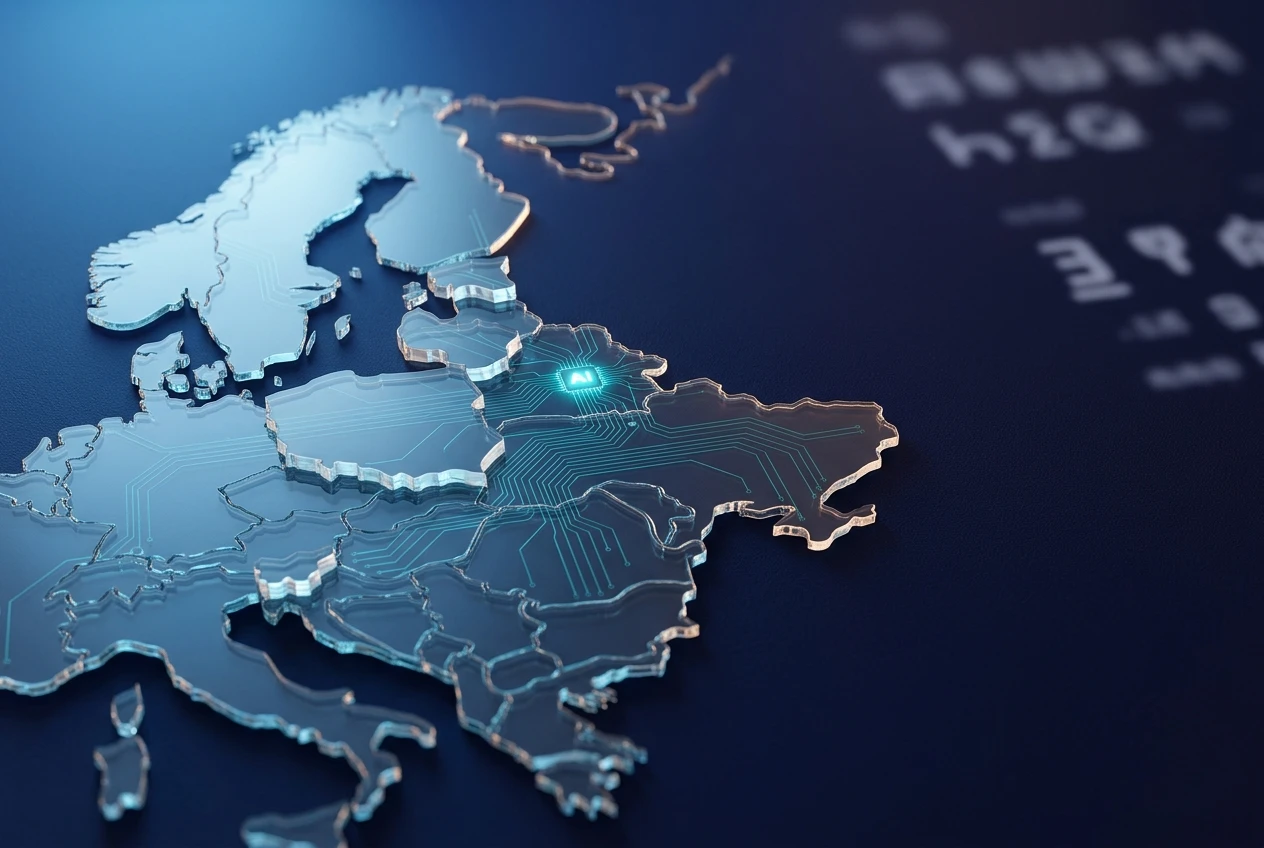
The CEE AI Index 2026 puts Estonia at the top of Central and Eastern Europe’s new artificial intelligence (AI) readiness ranking, ahead of Slovenia, Lithuania, Poland and Czechia. AI Chamber, working with The Recursive Media and supported by Europe Cloud, assessed 11 countries through 33 indicators and 363 data points across governance, resources and deployment.
The ranking gives small states a stronger place in Europe’s AI debate. Estonia leads on institutional maturity, Lithuania scores on open data and talent demand, and Slovenia shows research depth while Poland supplies the scale in computing, publications and workforce.
The Scorecard Rewards Institutions Before Scale
AI Chamber launched the index after months of work on a region that often appears in European AI coverage as a labor pool or lower-cost development base. The new ranking asks a narrower question: which countries have built the public systems, talent supply, data access and deployment capacity needed to develop and host AI safely.
The answer starts in the north. Estonia’s first-place finish follows years of investment in digital public services and state capacity. Slovenia’s second place comes from research intensity and science, technology, engineering and mathematics capacity. Lithuania’s third place is tied to open data governance and demand for AI professionals. Poland, the region’s largest AI market by the index’s description, comes fourth.
- 73 points for Estonia in the Environment pillar, the index’s governance and digital infrastructure category.
- 65 points for Poland in the same pillar, placing it second on that measure.
- 64 points for Lithuania in Environment, close enough to turn governance into a regional race.
Those numbers do more than rank ministries. They put compliance teams, data offices and public procurement rules into the same conversation as supercomputers and startups. That is where the smaller countries have room to surprise investors who still sort the region by population and gross domestic product.
Small States Took the First Three Places
The index’s top five gives a quick view of the split. Three smaller countries took the podium. Poland and Czechia followed with scale, commercial depth and compute assets, but neither displaced the smaller public-sector performers.
| Country | Rank | Strongest Signal in the Index | Read Across the Region |
|---|---|---|---|
| Estonia | 1 | Institutional maturity, enterprise uptake and digital public services | A small state with a long digital-government record |
| Slovenia | 2 | Research intensity and STEM capacity | A research-heavy market with a EuroHPC route into compute |
| Lithuania | 3 | Open data governance and AI talent demand | A public-data case that now has an AI ranking attached |
| Poland | 4 | HPC capacity, publications and workforce scale | The largest market, with gaps in test environments and education links |
| Czechia | 5 | Commercialisation and enterprise deployment | A deployment peer for Poland in the top group |
Lithuania’s place also fits a wider European data trend. The European Data Portal’s 2025 Open Data Maturity report publishes country factsheets across policy, portals, quality and impact, the same kind of public-data plumbing that AI systems need before companies can build on top of state information.
Estonia’s outside evidence points the same way. The European Commission’s Digital Decade country report said AI use among Estonian businesses more than doubled in 2024, from 5.19% in 2023 to 13.89%, while 52.6% of businesses adopted cloud. The index is giving that public-services base a regional AI label.
Poland Supplies the Scale and Misses the Podium
Poland’s fourth place will be read differently in Warsaw than in Tallinn. The country received 56.17 points overall in the index, with 65 in Environment, 49 in Resources and 55 in Deployment. AI Chamber credits Poland with the region’s largest high-performance computing (HPC, supercomputer capacity used for large AI workloads), the highest volume of AI research publications and the largest pool of AI specialists.
High-performance computing is where Poland’s size shows up outside the index. The European Commission’s AI Factories policy page lists Poland among the countries selected for new AI Factory sites in both the March and October rounds of the EuroHPC programme. The same page says EU and participating-country investment in supercomputing infrastructure and AI Factories will reach 10 billion euros over the 2021 to 2027 period.
That makes Poland useful to the rest of the region even when it does not lead the ranking. A Slovene lab, a Lithuanian data agency or an Estonian startup may still rely on compute links and cross-border access. The same dynamic runs through Europe’s broader tech sovereignty push around cloud, chips and power, where capacity has to be shared across borders because no single CEE market can finance the whole stack alone.
AI Act Deadlines Put Governance to Work
The ranking lands while the European Union (EU) AI Act is moving from statute to supervision. The European Commission’s AI Act implementation timeline says the law entered into force on 1 August 2024, with prohibited AI practices and AI literacy duties applying from 2 February 2025 and governance rules plus general-purpose AI (GPAI, broad model systems used across many downstream services) obligations applying from 2 August 2025.
The same Commission page says the act will be fully applicable on 2 August 2026, with exceptions. After the political agreement on AI simplification reached on 7 May 2026, rules for systems in high-risk areas such as biometrics, critical infrastructure, education, employment, migration, asylum and border control are due to apply from 2 December 2027. Systems embedded into products such as lifts or toys move to 2 August 2028.
Central and Eastern Europe has been building the conditions that serious AI investment requires: governance frameworks, talent pipelines, and in several markets, infrastructure that is already operational. What has been missing is the data to make that case with precision
Tomasz Snażyk, chief executive of AI Chamber, said that in the release accompanying the index. His point fits the scoreboard’s structure. A country can announce an AI strategy, but the index gives higher marks where an agency can coordinate rules, data, infrastructure and business adoption at the same time.
Compute Is Moving Outward From the Core
Europe’s compute programme has started to move CEE countries into the infrastructure map. EuroHPC’s March and October selections spread AI Factory projects across Poland, Bulgaria, Slovenia, Lithuania, Romania and Czechia, along with Western European sites. The pattern matters because training, testing and deployment support will sit closer to universities, small companies and public bodies that used to depend on larger western hubs.
- Bulgaria is tied to BRAIN++ in Sofia, built around a next-generation Discoverer++ supercomputer and a hub for government, education and private companies.
- Lithuania is tied to LitAI Factory in Vilnius, with services for AI workloads, data storage, accelerator access and sectors including cybersecurity, green energy, smart industry and digital health.
- Romania is tied to RO AI Factory in Bucharest, with a stated focus on moving small and medium-sized enterprises from passive adoption into active AI work.
- Slovenia is tied to SLAIF, with IZUM, the Jožef Stefan Institute and ARNES connected to a new supercomputer system near Maribor.
The index does not hand all of those countries the same score. Bulgaria ranks near the bottom, while Slovenia ranks second. That split is useful. It shows how EU-backed hardware can narrow one constraint while governance, talent and commercial adoption keep producing different national results.
Company Adoption Runs Ahead of Audit Readiness
The country index also has a company-level backstory. In AI Chamber’s CEE SME survey, the group surveyed 3,259 employees of small and medium-sized enterprises (SMEs, in this survey companies with up to 250 employees) across the same 11-country region.
The survey found broad use, thin depth and weak compliance preparation:
- More than three quarters of surveyed companies said they used AI, but only 25% used it on a large scale.
- 39% of AI users said they knew the AI Act’s provisions, while 8% of companies said they were ready for an audit.
- 61% of employees said they were actively looking for ways to use AI at work, and 40% of companies cited a lack of qualified personnel as the main barrier to deeper deployment.
That company data makes the new country ranking less abstract. Estonia can score high on state capacity, and Poland can lead on compute, while many firms still treat AI as a departmental tool. The AI Act will turn that habit into a paperwork and risk-control problem for employers using systems in hiring, education, credit, health and public services.
Can the Ranking Pull Money East?
Europe’s funding base is still concentrated. The EU’s Funding the AI Economy report said AI accounted for nearly half of global venture capital (VC, private startup funding) in the first half of 2025, while AI’s share of total European VC rose to 27%. Between 2020 and 2025, the United States dedicated 34% of its 1.33 trillion euros in VC to AI, while Europe allocated 18% of 252 billion euros.
The same report said EU investors supply most early funding for EU AI startups below 10 million euros, but their participation falls to 26% in AI deals above 25 million euros. It also said more than two thirds of AI VC is captured by 10 metropolitan hubs, led by Paris with 8 billion euros between 2020 and 2025, while AI funding is reaching emerging markets including Poland, Lithuania and Romania.
That is where the index could be used first: by funds looking for a compliance-ready place to put early checks, by governments wanting to compare agency capacity, and by founders deciding where to hire. The region already has signs of that financing layer, including Credo Ventures’ 88 million dollar CEE fund for early-stage founders.
The first scorecard gives investors a shortlist. The next edition will be judged by where the money lands.


Bitget BGBTC Upgrade Turns Idle Bitcoin Into Daily Yield

FFXIV Switch 2 Port Brings Portability With a Second Bill

MacBook Air Delays Reveal AI Memory Crunch Repricing Laptops

Bitcoin BIP-110 Soft Fork Dies on Tiny Miner Support

CXMT LPDDR6 Push Locks In Mobile DRAM Split

Snapchat Hands Spotlight Priority to Human Creators Over AI Farms

Sheriffs Hold Out as Trump Weighs Ethics Deal on CLARITY Act

Apple Upgrade Turns Flagship Buys Into Monthly Leases With Klarna

Trump Iran Threat Wiped $238M Crypto Longs Then Flipped

Blanche Fund Deal Clears Path as DOJ Power Decides CLARITY Fate

Kalshi Loses Major NY Prediction Markets Ruling to Judge Torres

Fed Minutes Cite AI Demand as Inflation Risk, Put a 2026 Hike Back on the Map

Marker AI Writing Startup Lands $13M Seed Led by Index Ventures

Dota 2 Esports World Cup 2026: Spirit Defends $2M Title In Paris

Meta’s Muse Spark 1.1 Beats Rivals on Price, Trails on Coding

ARC Intelligence Closes €4M Seed Round in Roughly a Week

CS2 Premier Season 5 Lands With Cache and a C4 Damage Rework

Finto Picks Munich Over Silicon Valley After YC, Raises $3.4M

Backrooms Returns to Theaters as the Everything Must Go Edition

Trump Calls Iran ‘Islamic Republic of Japan’ as Ceasefire Ends
-
 FINANCE2 months ago
Zcash Patched a Double-Spend Bug as ZEC Climbed 5%
-
 ENTERTAINMENT2 months ago
Steam Summer Sale 2026 Locks In June 25 to July 9 Dates
-

 FINANCE1 month ago
CLARITY Act Final Text Expected This Weekend as 60-Vote Hurdle Looms
-
 NEWS3 months ago
Meta Adds AI Replies to Threads, But Users Can’t Block It
-
 ENTERTAINMENT3 months ago
‘Widow’s Bay’ Review: Apple TV’s Sleeper Horror-Comedy Earns Its Fog
-
 NEWS5 months ago
U.S. Navy Deploys Solar-Powered Lightfish Drone to Patrol Oceans
-
 NEWS8 months ago
FolderFresh Review: This Free Tool Automates Windows File Organizing
-
 FINANCE4 weeks ago
Kalshi Loses Major NY Prediction Markets Ruling to Judge Torres