
FINANCE
Charles Schwab Backs the CLARITY Act as Odds Collapse
Charles Schwab’s $13 trillion brokerage is publicly pushing the CLARITY Act just as its odds of clearing the Senate before August recess sank to 37 percent.

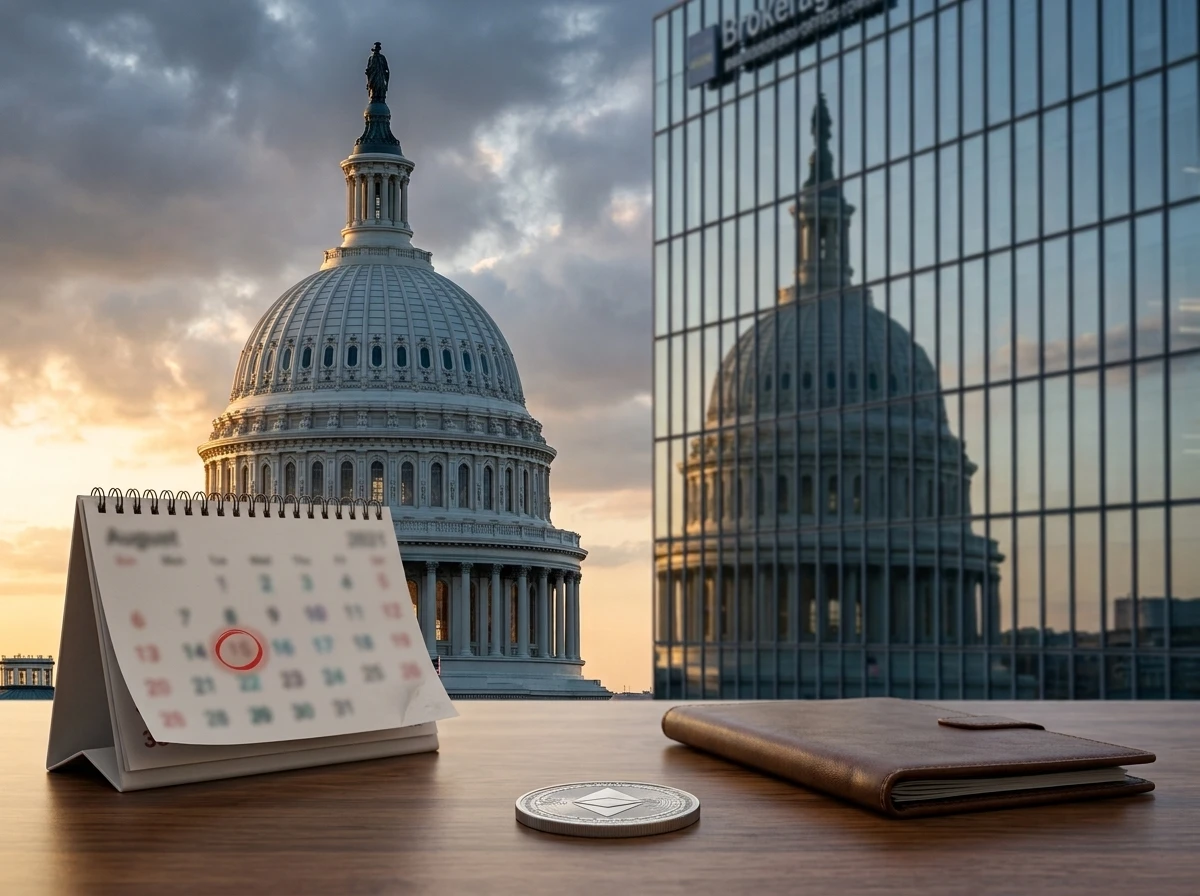
Charles Schwab, the brokerage giant managing $13 trillion in client assets, has publicly backed the CLARITY Act, the crypto market structure bill fighting for a Senate vote before August recess. Its support lands as prediction markets put the bill’s odds of becoming law this year at just 37%, down from 82% in February.
Jim Ferraioli, director of digital currencies research and strategy at the Schwab Center for Financial Research (SCFR), the firm’s in-house markets research unit, called it “a critical moment for the long-awaited Clarity Act.” What he did not say directly is that Schwab’s own crypto trading arm, rolled out to millions of retail accounts earlier this year, is already operating on the assumption that Washington finishes the job.
Why Does Schwab Need This Bill to Pass?
Schwab needs it because its new crypto brokerage business is running ahead of the law. The firm built Schwab Crypto on today’s patchwork of SEC and CFTC guidance, and a durable federal rulebook would remove the risk that either regulator later claims jurisdiction it does not currently have. Ferraioli said U.S. lawmakers “appear poised to finally drag the market structure bill across the goal line,” a framing that doubles as investor reassurance for a product Schwab has already shipped.
The scale of that bet is significant on its own terms.
- 39 million Schwab brokerage accounts gained the option to buy Bitcoin and Ethereum directly once Schwab Crypto rolled out, an offering now live in 48 states across the retail base.
- 75 basis points is what Schwab charges per crypto trade, with Schwab Premier Bank acting as custodian and Paxos, an OCC-regulated infrastructure firm, handling execution.
- $13 trillion in total client assets is the base Ferraioli’s team is trying to protect with a clear federal rulebook.
- 15 to 9 was the Senate Banking Committee’s May vote to advance the bill, a bipartisan margin that has not yet carried over to the floor.
Schwab’s asset base has grown since Schwab Crypto’s April debut, when Forbes pegged the firm’s total client assets near $12 trillion. That the number is now $13 trillion says less about crypto specifically than about a brokerage whose core business increasingly includes it.
The Odds Just Cratered
Schwab’s statement did not arrive in a vacuum. It landed days after Senate Majority Leader John Thune told reporters he no longer expects a floor vote before lawmakers leave town.
I would like to at least get Clarity started. We’ll see where the votes are.
Thune said that Thursday, an admission that cooled a process the White House had hoped to finish by early August. Republicans hold 53 Senate seats, short of the 60 needed for cloture, meaning they need roughly seven Democratic votes to move the bill at all.
Patrick Witt, executive director of the White House Crypto Council, has kept pushing regardless. “There’s that first week of August that the Senate is in session,” he said, arguing a floor vote could still happen before the break. Witt nearly left the negotiating table entirely this month over a scheduled military training obligation before deferring it to stay through the CLARITY Act talks, a sign of how thin the White House’s bench on this bill has become.
Where the Senate Deal Is Stuck
Two disputes are doing most of the damage. One is jurisdictional, the other is about money that flows directly to consumers.
| Regulator | New Authority Under the Bill | What It Covers |
|---|---|---|
| Securities and Exchange Commission (SEC) | Digital securities oversight | Tokens still tied to securities-style offerings and issuer obligations |
| Commodity Futures Trading Commission (CFTC) | Digital commodities oversight | Most blockchain-native tokens once they trade on secondary markets, plus provisional registration for exchanges, brokers and dealers |
That jurisdictional split is largely settled text. The harder fight is over stablecoin yield: a banking-industry-backed provision would bar crypto platforms from paying interest to customers who hold stablecoins on their books, a business line ARK Invest has already staked money on through its recent stake in stablecoin issuer Circle. Layered on top is a government ethics dispute over rules for public officials’ crypto holdings, a provision Democrats have named as the price of their votes but which a merged Senate draft currently omits.
The Administration formalized its position months ago in a formal statement backing the bill’s underlying goals, without resolving either fight. Retail exposure is exactly what worries some financial commentators watching from outside the crypto industry; Fox Business’s Charles Payne has separately pushed for stronger investor education as brokerages open complex products to mainstream account holders, a concern that applies directly to the millions of Schwab clients now able to tap crypto with a few screen taps.
From a House Landslide to a Senate Logjam
The bill’s path shows how far sentiment has swung, and how Schwab’s own timeline overlaps it.
- July 17, 2025: The House passes the Digital Asset Market Clarity Act 294 to 134 and sends it to the Senate.
- April 16, 2026: Charles Schwab announces Schwab Crypto, its spot Bitcoin and Ethereum trading platform, months before Congress finishes the rulebook the firm says it needs.
- May 2026: The Senate Banking Committee advances the House-passed bill’s Senate text by a vote of 15 to 9.
- June 1, 2026: The bill is formally reported in the Senate, per official congressional records.
- July 23, 2026: Thune tells reporters he does not expect a floor vote before the August recess.
A 294-vote House majority has not translated into a Senate supermajority. That gap, not any single objection, is why the bill is stuck.
A Delay Would Barely Move Bitcoin’s Price
A delay looks like the more likely outcome now, and Ferraioli was blunt about what that would and would not mean. “Failure to pass the bill before the Senate’s August 10 summer recess could delay it until after the midterms,” he said. Senate leaders had hoped to open floor debate by August 7 to leave room before that recess; missing that window pushes the calendar toward November’s midterm elections and whatever legislative time remains after them.
Ferraioli said that outcome “likely wouldn’t have much impact on bitcoin’s price, given that it sits near the bottom of a longish bear market.” Passage would matter more on the upside: he expects the “institutional adoption” narrative to “come alive again, perhaps driving bitcoin higher in the short term.” For Schwab, the more durable stakes sit off the price chart entirely, in whether 39 million account holders keep trading crypto under rules nobody can later unwind.
Frequently Asked Questions
What Would the CLARITY Act Change for Investors?
It would give exchanges, brokers and dealers a provisional federal registration to operate under while the SEC and CFTC finish full rulemaking, rather than leaving platforms to rely on incomplete state-by-state and case-by-case guidance, as many do today.
Does Schwab Crypto Work Without the CLARITY Act Already?
Yes. Schwab Crypto launched in April under existing securities and commodities law, with Schwab Premier Bank as custodian and Paxos handling trade execution. The CLARITY Act would not turn the platform on; it would lock in the legal footing it currently operates on informally.
Why Is Stablecoin Yield Such a Big Fight?
Banks argue that letting crypto platforms pay interest on stablecoin balances would pull deposits out of the traditional banking system, since a stablecoin paying yield competes directly with a savings account. That single amendment, more than the SEC-CFTC jurisdictional split, has been the toughest sticking point in Senate talks.
Could the CLARITY Act Still Pass After the Midterms?
Technically yes, either in a lame-duck session or under a newly seated Congress, but a changed Senate math after November’s midterm elections could reopen provisions already negotiated, including the ethics language Democrats want restored.
How Many States Can Use Schwab Crypto Right Now?
Schwab Crypto is live in 48 states after a phased rollout that began with Schwab employees before expanding to eligible retail brokerage accounts, according to the company’s own announcement.
Disclaimer: This article is for informational purposes only and does not constitute investment, legal or regulatory advice. Crypto assets and pending legislation both carry significant uncertainty, so consult a licensed financial professional before acting, and treat all figures here as accurate only as of publication.


Conor Oberst’s Trump Writer’s Block Exposes a Bigger Crisis

Siemens Wires Its Chip Software Into NVIDIA’s Quantum Agents

Pixel 11 Price Hikes Reveal Memory Chipmakers’ Record Profits

Charles Schwab Backs the CLARITY Act as Odds Collapse

Nodes Upgrading to XRP Ledger’s xrpld 3.2.0 Fall Out of Sync

Trump Halts Iran Strikes as Bitcoin Stays Stuck Near $64K

ChatGPT’s Health Push Repeats a Bet That Killed Two Rivals

Crypto Rallies on Iran Truce While Fed Hike Odds Triple

Samsung’s New Lockout Rule Targets Thieves and Police Forensic Tools

Gemini Daily Brief Tests Custom Prompts, a Year Behind Samsung

CLARITY Act Final Text Expected This Weekend as 60-Vote Hurdle Looms

Fed Minutes Cite AI Demand as Inflation Risk, Put a 2026 Hike Back on the Map

Kalshi Loses Major NY Prediction Markets Ruling to Judge Torres

Marker AI Writing Startup Lands $13M Seed Led by Index Ventures

Dota 2 Esports World Cup 2026: Spirit Defends $2M Title In Paris

Meta’s Muse Spark 1.1 Beats Rivals on Price, Trails on Coding

CS2 Premier Season 5 Lands With Cache and a C4 Damage Rework

Trump Calls Iran ‘Islamic Republic of Japan’ as Ceasefire Ends

ARC Intelligence Closes €4M Seed Round in Roughly a Week

Finto Picks Munich Over Silicon Valley After YC, Raises $3.4M
-
 FINANCE2 months ago
Zcash Patched a Double-Spend Bug as ZEC Climbed 5%
-
 ENTERTAINMENT2 months ago
Steam Summer Sale 2026 Locks In June 25 to July 9 Dates
-
 NEWS2 months ago
Meta Adds AI Replies to Threads, But Users Can’t Block It
-
 FINANCE3 weeks ago
CLARITY Act Final Text Expected This Weekend as 60-Vote Hurdle Looms
-
 ENTERTAINMENT2 months ago
‘Widow’s Bay’ Review: Apple TV’s Sleeper Horror-Comedy Earns Its Fog
-
 NEWS7 months ago
FolderFresh Review: This Free Tool Automates Windows File Organizing
-
 NEWS4 months ago
U.S. Navy Deploys Solar-Powered Lightfish Drone to Patrol Oceans
-
 FINANCE3 weeks ago
Fed Minutes Cite AI Demand as Inflation Risk, Put a 2026 Hike Back on the Map