
FINANCE
Trump Halts Iran Strikes as Bitcoin Stays Stuck Near $64K
Trump ordered a halt to Iran strikes after 13 days, but Bitcoin held flat near $64,300 as Fed rate hike odds and a split Fed committee overshadow the pause.

President Donald Trump ordered the U.S. military to stand down from strikes on Iran on Sunday, breaking a streak of 13 consecutive days of attacks, according to an Axios report. The pause landed hours after Omani officials wrapped a second day of talks with Iranian counterparts in Tehran over a narrower arrangement to reopen the Strait of Hormuz to normal shipping.
Bitcoin barely reacted. The token traded near $64,300 on Monday, up less than 1% and still well off the $66,000 high it touched before Brent crude, the global oil benchmark, crossed $100 a barrel earlier this month. Traders are watching Wednesday’s Federal Reserve meeting more closely than the war itself: odds of at least one 2026 rate hike have climbed to 72% on Polymarket, up from around 65% two weeks ago.
Thirteen Strikes, Then a Sudden Halt
The order marks the first day without American strikes on Iran since fighting reignited in mid-July, when a ceasefire framework Pakistan had brokered in June collapsed after an attack on a commercial vessel near the Strait of Hormuz. Axios reported the U.S. president had been weighing a much larger wave of strikes before choosing to pause instead.
What happens next is genuinely unclear. Iran has said its priority right now is defending itself, not negotiating, even as its diplomats keep talking to Oman about shipping.
- What we know: Trump ordered a halt to strikes on Sunday, ending a 13-day run of daily attacks, per Axios; the order followed two days of talks between Omani and Iranian deputy foreign ministers in Tehran; Iran’s foreign ministry called those talks productive.
- What’s unconfirmed: Whether the pause covers just one day or a longer stand-down; whether Iran will expand talks beyond shipping; whether renewed Saudi-Houthi clashes could pull Washington back in.
Trump signaled openness to broader talks with Iran during a recent appearance at the White House Correspondents’ Association dinner. Iran’s public posture has not matched that tone.
Oman’s Narrower Deal Takes Shape
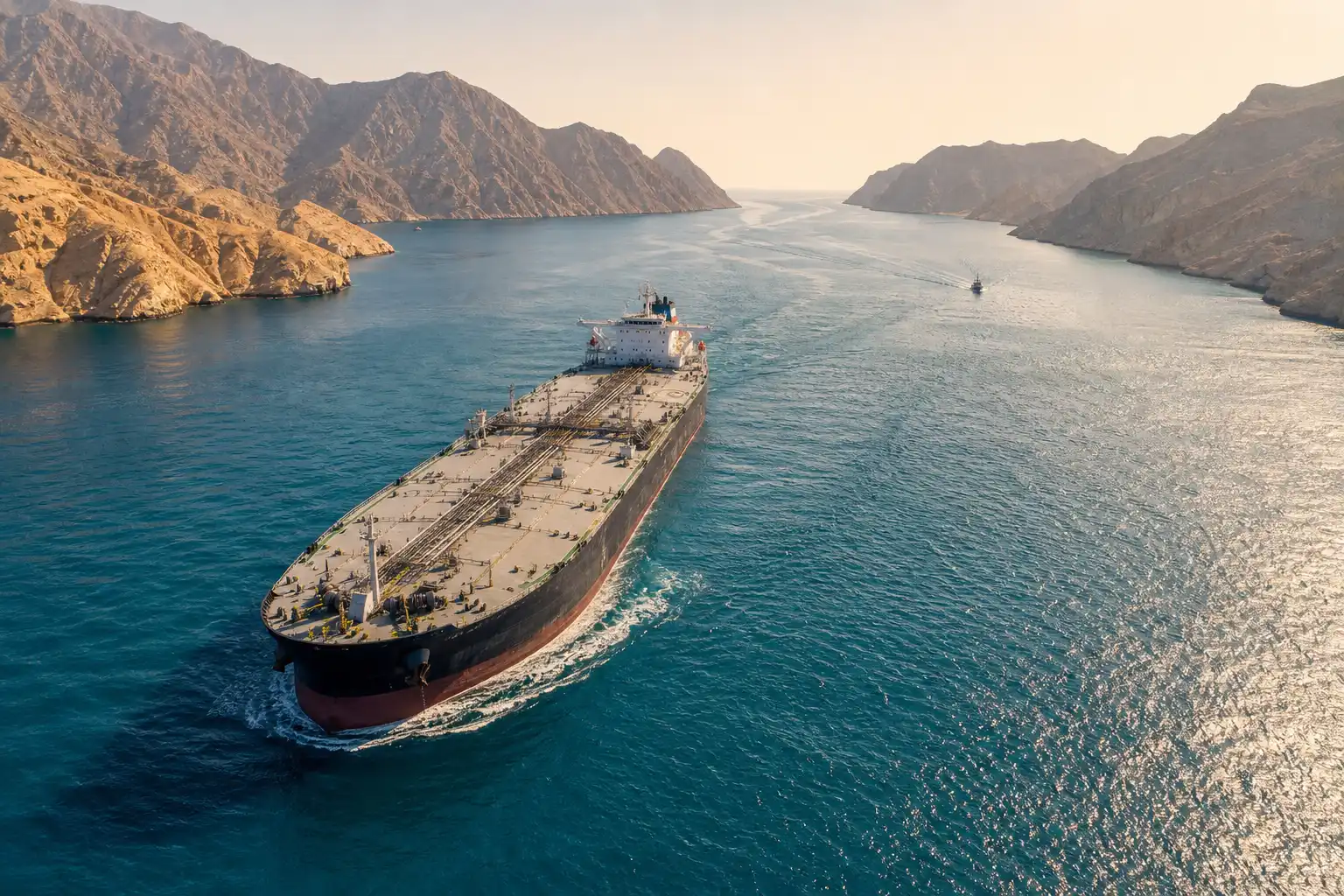
The Tehran talks are not aimed at a full ceasefire. They are aimed at something narrower: a working arrangement for vessel transit through Hormuz that both sides can live with while the wider war stays unresolved.
Iranian Foreign Ministry spokesman Esmaeil Baqaei called the negotiations “productive,” though he said more time is needed before any agreement is final. The framework under discussion centers on a few core points.
- Mutual respect for both countries’ sovereign rights over their coastal waters
- A shared operational framework meant to guarantee secure maritime transit through the strait
- Iran taking a larger role managing vessel transit, in exchange for fewer restrictions on shipping
That last point is the crux of it. Iran has effectively been asking for control over how ships move through waters it partly borders, in exchange for letting more of them through. Whether Gulf shippers and their insurers accept that trade is still an open question.
Bitcoin Skips the Relief Rally It Staged in June
Compare this moment to the last one. When Trump reopened talks with Iran in June, Bitcoin rebounded sharply above $64,000 within hours, a fast, clean relief trade on hopes the war was ending. This time, the same category of news, a pause in strikes plus active diplomacy, produced almost nothing. Bitcoin’s up-less-than-1% move on Monday is closer to noise than relief.
The gap tells its own story. In June, traders were pricing an end to the war. Now they have watched that ceasefire collapse once already, in early July, and they know oil has spent weeks near $100 a barrel regardless of what happens at the negotiating table this week. A pause in strikes does not un-print three weeks of expensive crude.
Bitcoin has spent this entire stretch range-bound between roughly $62,000 and $66,000, based on trading data reported through the week, more sensitive to shifting Fed-hike odds than to individual headlines from the war itself.
Warsh’s Committee Splits Nine Ways on a Hike
That sensitivity has a source. At its June meeting, the Federal Reserve held its target rate at 3.5% to 3.75%, but its own projections showed a committee already leaning toward tightening: nine of the Fed’s eighteen policymakers penciled in at least one hike by year-end, against eight who saw no change and one who wanted a cut. The median projection puts the fed funds rate at 3.8% by December, above where it sits today.
Fed Chair Kevin Warsh runs Wednesday’s meeting, his second since taking the gavel earlier this year. Warsh used the ECB’s Sintra forum to draw a public line on Fed independence from Trump, a stance that matters more than usual right now: a war Trump escalated is the same war now pushing his own Fed chair toward a rate hike Trump has historically opposed.
Pricing for Wednesday itself still leans toward a hold, but not unanimously so. The Chicago Mercantile Exchange’s FedWatch tool (CME FedWatch priced a 61.3% chance of a hold as of July 25, a notably shakier consensus than prediction markets show for the same meeting, a gap that says as much about how jumpy this pricing has gotten as any single number does.
| Signal | What It Measures | Reading | As Of |
|---|---|---|---|
| Polymarket, 2026 hike | At least one Fed hike this year | 72% Yes | Jul 27 |
| CME FedWatch | Fed holds rates at Wednesday’s meeting | 61.3% hold | Jul 25 |
| Fed dot plot | Median year-end 2026 rate projection | 3.8% | Jun 17 |
| Current target range | Federal funds rate today | 3.5% to 3.75% | Jun 17 |
How Much Oil Moves Through Hormuz?
About a fifth of the world’s oil ordinarily passes through the Strait of Hormuz, and even a partial disruption ripples through prices everywhere. The U.S. Energy Information Administration (EIA) says flows fell almost 30% year over year in the first quarter of 2026, to 14.6 million barrels a day, as fighting disrupted tanker traffic.
That is down from the roughly 20.9 million barrels a day that moved through the strait in the first half of 2025, before this conflict began, according to the EIA’s chokepoint analysis of global oil transit routes. There is no easy workaround. The alternative pipeline and overland routes that exist can only carry a fraction of what the strait normally handles.
Insurers have already started repricing that risk. Reported tanker claims tied to the conflict pushed oil past $91 a barrel weeks before it eventually crossed $100, as underwriters adjusted premiums for ships willing to run the strait at all.
The conflict has also spread beyond Hormuz. Strikes between Saudi Arabia and the Iran-backed Houthis have continued, and the Houthis are now disrupting shipping through the Bab al-Mandab Strait as well, widening the map of chokepoints under strain at the same time.
Next Comes a Live Fed Decision
Wednesday brings the meeting itself, arriving with the truce still just a day old and unconfirmed beyond that. Prediction markets currently put the odds of no change at Wednesday’s meeting at roughly 92%, well above CME’s own hold estimate, which suggests most traders expect Warsh’s committee to wait for more data before moving.
What happens between now and then is mostly out of markets’ hands. Whether the strikes pause holds depends on Tehran and Washington, not on oil prices or Polymarket odds. Iran, for its part, has said its only focus right now is defending itself.
Frequently Asked Questions
What triggered the latest round of U.S. strikes on Iran?
Strikes resumed in mid-July after an attack on a commercial vessel near the Strait of Hormuz, which broke a ceasefire framework Pakistan had brokered in June. That collapse set off the 13-day run of daily U.S. strikes that ended with Sunday’s pause.
Is there now a ceasefire between the U.S. and Iran?
No. Sunday’s order halted strikes for that day; officials have not confirmed whether it extends further, and Iran has not announced any reciprocal stand-down of its own defensive posture.
Why does Bitcoin react to Fed rate hike odds?
Higher rates make it more expensive to borrow and reduce appetite for volatile assets like crypto. Even so, spot Bitcoin ETFs kept absorbing inflows through mid-July even as prices dipped, according to CoinDesk reporting, suggesting some longer-term buyers are looking past the war entirely.
When could the Fed actually hike rates in 2026?
Prediction markets see it as more likely later in the year than at Wednesday’s meeting, with October and September currently the leading months on Polymarket. Traders are also pricing roughly an 80% chance of zero rate cuts happening at all this year.
What is the Bab al-Mandab Strait and why does it matter here?
It is the narrow passage between Yemen and the Horn of Africa linking the Red Sea to the Gulf of Aden, a separate chokepoint from Hormuz. Houthi forces based in Yemen have targeted shipping there before, and their renewed involvement widens the conflict’s reach well beyond the Gulf.
Disclaimer: This article is for informational purposes only and is not investment advice; crypto and commodity prices are volatile and sensitive to fast-moving geopolitical events, so consult a licensed financial adviser before trading, and note figures here are accurate as of publication on July 27, 2026.


Conor Oberst’s Trump Writer’s Block Exposes a Bigger Crisis

Siemens Wires Its Chip Software Into NVIDIA’s Quantum Agents

Pixel 11 Price Hikes Reveal Memory Chipmakers’ Record Profits

Charles Schwab Backs the CLARITY Act as Odds Collapse

Nodes Upgrading to XRP Ledger’s xrpld 3.2.0 Fall Out of Sync

Trump Halts Iran Strikes as Bitcoin Stays Stuck Near $64K

ChatGPT’s Health Push Repeats a Bet That Killed Two Rivals

Crypto Rallies on Iran Truce While Fed Hike Odds Triple

Samsung’s New Lockout Rule Targets Thieves and Police Forensic Tools

Gemini Daily Brief Tests Custom Prompts, a Year Behind Samsung

CLARITY Act Final Text Expected This Weekend as 60-Vote Hurdle Looms

Fed Minutes Cite AI Demand as Inflation Risk, Put a 2026 Hike Back on the Map

Kalshi Loses Major NY Prediction Markets Ruling to Judge Torres

Marker AI Writing Startup Lands $13M Seed Led by Index Ventures

Dota 2 Esports World Cup 2026: Spirit Defends $2M Title In Paris

Meta’s Muse Spark 1.1 Beats Rivals on Price, Trails on Coding

CS2 Premier Season 5 Lands With Cache and a C4 Damage Rework

Trump Calls Iran ‘Islamic Republic of Japan’ as Ceasefire Ends

ARC Intelligence Closes €4M Seed Round in Roughly a Week

Finto Picks Munich Over Silicon Valley After YC, Raises $3.4M
-
 FINANCE2 months ago
Zcash Patched a Double-Spend Bug as ZEC Climbed 5%
-
 ENTERTAINMENT2 months ago
Steam Summer Sale 2026 Locks In June 25 to July 9 Dates
-
 NEWS2 months ago
Meta Adds AI Replies to Threads, But Users Can’t Block It
-
 FINANCE3 weeks ago
CLARITY Act Final Text Expected This Weekend as 60-Vote Hurdle Looms
-
 ENTERTAINMENT2 months ago
‘Widow’s Bay’ Review: Apple TV’s Sleeper Horror-Comedy Earns Its Fog
-
 NEWS7 months ago
FolderFresh Review: This Free Tool Automates Windows File Organizing
-
 NEWS4 months ago
U.S. Navy Deploys Solar-Powered Lightfish Drone to Patrol Oceans
-
 FINANCE3 weeks ago
Fed Minutes Cite AI Demand as Inflation Risk, Put a 2026 Hike Back on the Map