
FINANCE
CLARITY Act Nears a Senate Vote as the Math Gets Tougher
Summer Mersinger predicts a swift CLARITY Act Senate vote, but Lindsey Graham’s death and sliding odds show the whip count got harder, not easier.

Summer Mersinger says the Senate could vote on the CLARITY Act within days. The former Commodity Futures Trading Commission (CFTC) commissioner, who now runs the crypto industry’s biggest lobbying group as CEO of the Blockchain Association, made that prediction twice last week, once on the Thinking Crypto podcast and again at a Washington summit.
Both times she called it the one yard line. Since she said it, the Senate’s Republican majority has lost a member to a sudden death, prediction markets have turned more skeptical of passage rather than less, and the merged bill text that finally dropped this month left out the one provision Senate Democrats call a precondition for their votes.
What the CLARITY Act Would Actually Change
The Digital Asset Market Clarity Act, formally H.R. 3633, would settle a question that has hung over crypto for a decade: whether a given token is a security regulated by the Securities and Exchange Commission or a commodity regulated by the CFTC. Digital commodities, including Bitcoin and, depending on a maturity test, Ether, would fall under CFTC oversight for spot and cash markets. Assets sold to fund a central team would stay with the SEC. Payment stablecoins would remain with banking regulators under the GENIUS Act framework already in place.
The bill has already traveled further than any previous crypto market structure effort. The House passed it 294 to 134 in July 2025, with more than seventy Democrats crossing party lines, before the Senate Banking Committee advanced its own version 15 to 9 in May 2026. It now sits at Calendar No. 423 on the Senate’s legislative docket, eligible for floor action whenever Majority Leader John Thune schedules it.
Mersinger has pitched the bill as consumer protection first. In a July op-ed arguing the bill could have prevented another FTX, she wrote that customers deserve to know whether their assets sit segregated from a platform’s own funds before that platform fails, not after.
Republicans Lost a Vote They Cannot Replace
Senate passage requires 60 votes to break a filibuster under Senate Rule XXII. Republicans held 53 seats when the Banking Committee voted in May. They hold 52 now, after Senator Lindsey Graham died on July 12 from an aortic dissection. Senator Mitch McConnell has also missed recent votes because of an undisclosed hospitalization, adding one more variable to a chamber that was already thin.
Even with full Republican unity, that math needs eight Democratic votes. It gets harder from there. Senators Josh Hawley of Missouri and Rand Paul of Kentucky are both expected to vote no on substantive grounds regardless of party, which pushes the realistic Democratic requirement closer to ten.
Only two Democrats backed the bill when it left committee, Ruben Gallego of Arizona and Angela Alsobrooks of Maryland, and both attached conditions rather than promising support for final passage.
| Measure | May 14 Committee Vote | Today |
|---|---|---|
| Republican Senate seats | 53 | 52, after Graham’s death |
| Democrats on record in favor | 2 (Gallego, Alsobrooks) | Still 2, both conditional |
| Democratic votes needed for cloture | About 7 | 8 to 10 |
| Polymarket 2026 passage odds | Roughly 74 percent | 35 to 48 percent |
| Ethics provision status | Van Hollen fix voted down 11 to 13 | Left out of merged draft entirely |
Three separate disputes sit between the current headcount and 60 votes.
- Ethics and conflicts of interest – whether officials, including the president, should be barred from personal crypto holdings while in office.
- Section 604 developer protections – whether shielding non custodial software from money transmitter rules makes criminal investigations harder, a concern the National District Attorneys Association has raised directly with Senate leadership.
- Stablecoin yield – whether crypto platforms can offer interest like rewards that banking groups say will pull deposits out of traditional banks.
Blockchain Association organized a letter from 160 former national security and law enforcement officials urging the Senate to move on the bill despite that developer protection fight.
Trump’s Own Crypto Fortune Is the Last Roadblock
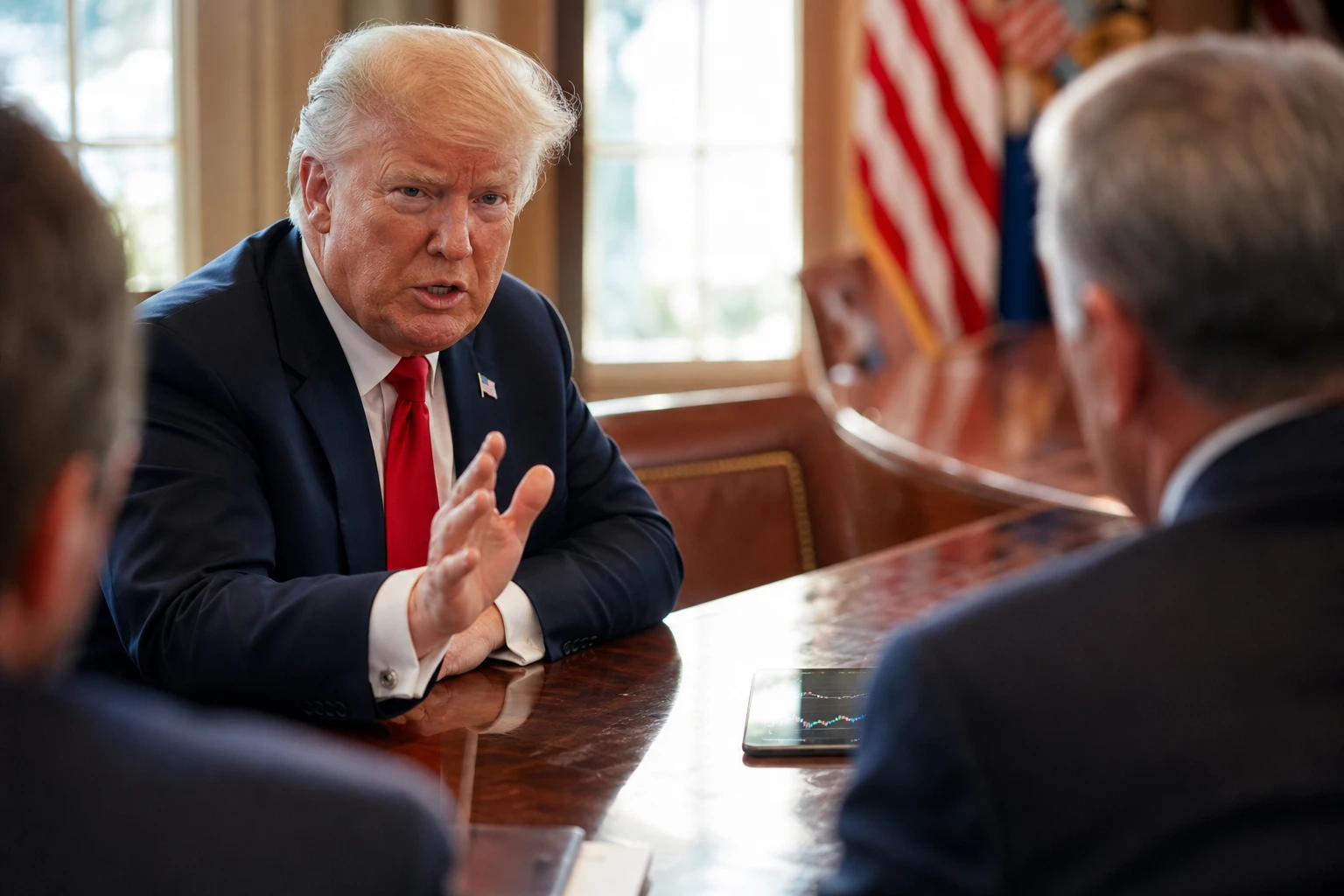
The ethics dispute is, by Mersinger’s own account, the last major sticking point. “My understanding is this is on the ethics piece, which is kind of one of the last outstanding issues to get worked out,” she said. “You’ve got to have an ethics deal that the president will sign.”
The Office of Government Ethics released President Trump’s financial disclosure on July 1, showing approximately $1.4 billion in crypto related income for 2025, including $635 million from licensing his memecoin and more than $500 million from World Liberty Financial token sales. Some estimates, including one attributed to Reuters, put the Trump family’s total crypto related haul since he returned to office as high as $2.3 billion.
Federal law does not actually require him to address it. Title 18, Section 208 of the U.S. Code bars executive branch officials from participating in matters touching their own financial interests, but Congress carved the president and vice president out of that requirement decades ago. Most presidents since Jimmy Carter have used blind trusts anyway. Trump has not.
Democrats want that gap closed for crypto specifically as a condition of their votes. An amendment from Senator Chris Van Hollen that would have barred senior officials from holding crypto business interests failed 11 to 13 in the Banking Committee markup, and the merged draft released this month left the issue out entirely. Senators Chris Murphy, Van Hollen and Jeff Merkley responded with a press conference formally opposing the bill over its “failure to rein in President Donald Trump’s corrupt crypto schemes,” warning of what they called growing political corruption in Washington.
Senator Kirsten Gillibrand of New York, one of the chamber’s more crypto friendly Democrats, has pushed to make it illegal for a sitting president to issue or sponsor any digital asset. Elizabeth Warren, the Banking Committee’s ranking Democrat, has been sharper still.
Blow a hole in our securities laws that have protected investors since 1929.
Warren made the comment describing what she calls the bill’s tokenization loophole, arguing it could expose retirees and pension holders to risks securities law was written to prevent. The White House position, as crypto adviser Patrick Witt has described it, is to accept ethics language applied “across the board, from the president to the intern” but reject anything that singles out Trump by name. That standoff has not moved in weeks.
What Crypto Already Gave Up on Yield
A second dispute drew less public attention but cost the industry more, according to Mersinger. Banking groups spent months lobbying to tighten the GENIUS Act’s ban on issuer paid interest for stablecoins, worried that crypto platforms would find a workaround and pull deposits out of traditional banks. Coinbase alone earns roughly $1.35 billion a year in USDC rewards revenue, the kind of payout banks argue amounts to interest by another name.
Senator Thom Tillis brokered a compromise on the yield language that Alsobrooks and others accepted in committee. Mersinger said the industry did not come out ahead. “Crypto gave up a lot in that yield agreement,” she said. “It was not a win for crypto.”
She said lawmakers now treat that fight as settled, whatever banks still want. “People really aren’t interested in reopening that agreement,” she said. The American Bankers Association and five other banking trade groups said in a joint statement after the May markup that they would keep pushing to tighten the rules, warning that stablecoin offerings “are expected to draw away bank deposits and threaten local lending and economic activity across the country.”
Mersinger rejected that framing outright. “The argument of deposit flight just makes no sense at all,” she said, arguing that community banks serve a different customer base and that stablecoin reserves stay inside the banking system regardless of who issues the token.
How a Bipartisan Bill Got This Far
The bill’s momentum did not appear overnight. When the House passed its version in July 2025, Blockchain Association called it an important milestone for the industry. Ten months of Senate negotiation followed.
- May 14, 2026: The Senate Banking Committee advances the bill 15 to 9, with Gallego and Alsobrooks joining every Republican on the panel.
- June 1, 2026: The bill is formally placed on the Senate Legislative Calendar as General Order No. 423.
- June 2, 2026: Blockchain Association delivers its law enforcement letter to Senate leadership.
- July 1, 2026: Trump’s financial disclosure shows roughly $1.4 billion in 2025 crypto income.
- July 4, 2026: The White House’s original signing target passes with no floor vote scheduled.
- July 12, 2026: Senator Lindsey Graham dies, narrowing the Republican margin to 52.
- July 14, 2026: The merged Banking and Agriculture Committee draft drops without ethics language.
- July 16, 2026: Trump meets Senate Republicans at the White House on ethics, and Mersinger predicts a vote within days.
After the Banking Committee’s vote in May, Mersinger called the outcome a defining moment for American leadership and said the bill was moving swiftly toward the floor. It has sat on the calendar for seven weeks since.
Galaxy Bets Big While Prediction Markets Turn Skeptical
Wall Street’s crypto desks and the retail prediction crowd are not reading the odds the same way this month.
- Galaxy Digital’s research team has kept passage odds near 60 percent and backed that view with a 10 million dollar institutional prediction market trade, even after trimming its estimate down from an earlier, higher figure.
- Polymarket traders price 2026 passage between 35 and 48 percent, down from roughly 74 percent a month earlier and 82 percent back in February.
- TD Cowen and Beacon Policy Advisors have warned that missing the August recess could push passage into 2027 or end the 2026 path entirely.
The spread matters because it reflects two different bets. Galaxy’s desk is pricing in Washington’s habit of finding a last minute deal under deadline pressure. The Polymarket crowd is pricing in what it has actually watched happen since February: a coalition that keeps needing more time, not less.
The Price of Missing August 7
Recess begins around August 7, and the chamber is not expected back in session until roughly mid September. Mersinger said the calendar leaves little room for slippage. “It does get a lot harder going into the election season,” she said, raising the prospect of a lame duck Congress and shifting political priorities if lawmakers run out the clock.
She called the current window the best chance the bill will get. “This window is probably all the stars are aligned, and this is the time to do it,” she said. Senator Lummis has been blunter about the alternative, warning that missing both remaining floor windows this month could push comprehensive market structure legislation to 2030 or kill it outright when the current Congress ends.
A miss would also stall what Mersinger considers the next fight. She described stablecoins, CLARITY and tax reform as a three legged stool. “Stablecoins was the first, CLARITY is the second, and then tax reform,” she said, calling an overhaul of digital asset tax rules critically important because the existing code “was not written for digital assets.”
Frequently Asked Questions
What Does the CLARITY Act Actually Regulate?
It sorts every digital asset into one of three legal buckets: digital commodities under the CFTC, investment contract assets under the SEC, and payment stablecoins under the GENIUS Act’s banking framework. That builds on a March 2026 joint interpretive release in which the SEC and CFTC had already classified 16 major tokens, including Bitcoin, Ether, XRP and Solana, under a five category taxonomy. The CLARITY Act would write those classifications into statute so a future administration cannot undo them without a new law.
How Is the CLARITY Act Different From the GENIUS Act?
The GENIUS Act, signed into law on July 18, 2025, governs a single product: payment stablecoins. The CLARITY Act governs the entire market’s classification question, which determines registration, custody and disclosure rules for exchanges, brokers and dealers. The GENIUS Act’s own one year rulemaking deadline landed on July 18, 2026, the same week the Senate returned to work on CLARITY.
Which Senators’ Votes Are Still Up for Grabs?
Beyond Gallego and Alsobrooks, floor strategists keep returning to the same names: Mark Warner of Virginia, who has worked with Republicans on earlier crypto drafts, along with Kirsten Gillibrand, Catherine Cortez Masto, Cory Booker, Chris Coons and Raphael Warnock. None has publicly committed to a yes vote on final passage.
What Happens if the Senate Misses the August 7 Deadline?
Senator Lummis has warned that missing this month’s remaining floor windows could push meaningful crypto market structure legislation to 2030, or kill the current bill entirely once the 119th Congress ends in January 2027, forcing supporters to restart the entire process in a new Congress.
Mersinger calls this the one yard line. The Democratic whip count, as things stand today, says the industry still needs several more yards than her metaphor allows.


Veridue Raises $4 Million to Speed Energy Deal Diligence

Healey Adds a £150m Rung for Northern Scale-Ups

Ten Deals Took Most of Europe’s August Tech Money

Holmes Hired Fielder to Film Her Last Days

Molten Bets £100m of Plc Cash on Late-Stage Tech

Garlinghouse Cited Dutch Gold, and London Got the Bars

byFounders Bets $4.3 Million on Fluencify After $2M ARR

Alpha Gang Puts A-List Stars on a Zellner Wager

Angel Bets a Recut PG-13 Chase on Ritchson and Wilson

Flex IT and T1A Combine to Own Corporate Device Supply

Walter’s TWG Insists No Fraud as Insurer Probes Force Cleanup

30-Year Yield Hits 5.32% Highest Since 2007 as Debt Supply Locks In Costs

PCE Stays at 3.7% as Gas and Tariffs Outrun Coming Revisions

Evernorth S-4 Clears Path for Active XRP Treasury on Nasdaq

Astute’s $1.2M bet makes B2B creator deals feed AI discovery

Strategy Parks $1.59B Cash While Bitcoin Stack Stays Flat

Instinct Hits $2.5 Billion as AI Agent Access Sparks Trust Fights

Oracle’s 2.8 GW Bloom Deal Exposes the AI Power Bypass

CLARITY Act Cloture Opens a Door Ethics Still Blocks

Amber’s €7M locks Mittelstand knowledge inside Europe
-
 FINANCE3 months ago
Zcash Patched a Double-Spend Bug as ZEC Climbed 5%
-
 ENTERTAINMENT3 months ago
Steam Summer Sale 2026 Locks In June 25 to July 9 Dates
-

 FINANCE2 months ago
CLARITY Act Final Text Expected This Weekend as 60-Vote Hurdle Looms
-
 NEWS4 months ago
Meta Adds AI Replies to Threads, But Users Can’t Block It
-
 ENTERTAINMENT5 months ago
Extraction 3 Is Officially Coming to Netflix in 2027
-

 NEWS3 months ago
YouTube Shorts is testing a heart in place of the thumbs-up
-

 NEWS1 month ago
Senators Force Apple Off Chinese Memory as Big Three Cash In
-

 NEWS3 months ago
NEURA Robotics’ $1.4B Series C Redraws Europe’s Physical AI Bet