
NEWS
Eleview Execs Get Prison for Illegal Russia Tech Exports
Nayandin and Borisenko received prison sentences in February 2026 for running three schemes that funneled more than $6 million of US technology to Russia.

Oleg Nayandin and Vitaliy Borisenko walked out of a federal courthouse in Alexandria, Virginia in February 2026 with prison sentences tied to a freight forwarding business they had run from a warehouse in Chantilly. Prosecutors had charged the pair, along with their company Eleview International Inc., with running three parallel schemes to funnel more than $6 million of controlled U.S. technology to Russia after the Commerce Department tightened export rules in February 2022.
Nayandin, 54, of Fairfax, received a three-year prison term. Borisenko, 39, of Vienna, received a one-year term. Eleview, the Virginia freight forwarder they ran, was ordered to pay a $125,000 fine and serve three years of probation, with mandatory export-control training built into the sentence.
Three Routes, One Destination
The case rests on three evasion schemes, each anchored in a different country that borders or sits close to Russia. Between approximately February 2022 and June 2023, the defendants shipped through all three routes, in most cases after the Commerce Department imposed stricter export controls following Russia’s further invasion of Ukraine.
| Country | Approximate value | Shipments | Items |
|---|---|---|---|
| Turkey | $1.48 million | 23 | Telecommunications equipment |
| Finland | $3.45 million | 83 | Goods and electronic components |
| Kazakhstan | $1.47 million | approximately 52 | Controlled dual-use items |
The Turkey scheme moved telecommunications equipment to a false end user in Turkey, with the equipment intended for a Russian telecommunications company that supplied Russia’s Federal Security Service, or FSB. The equipment, prosecutors said, had military applications, including use by the Russian military to create and expand communication networks in its war effort against Ukraine.
The Finland scheme moved goods through Eleview’s e-commerce website, routed to a Finnish entity that neither purchased nor sold goods. The defendants affixed a Russian postal service tracking number to each package before consolidating them onto pallets, so the Russian postal service could ferry the package to the end customer in Russia. Some of those shipments carried the same type of electronic component found on Russian “suicide” drones used to destroy Ukrainian tanks and jets.
The Kazakhstan scheme moved goods through a Kazakh entity that advertised delivery to Russia. The items included controlled dual-use goods, including electronic test instruments such as oscilloscopes that fall under U.S. export controls.
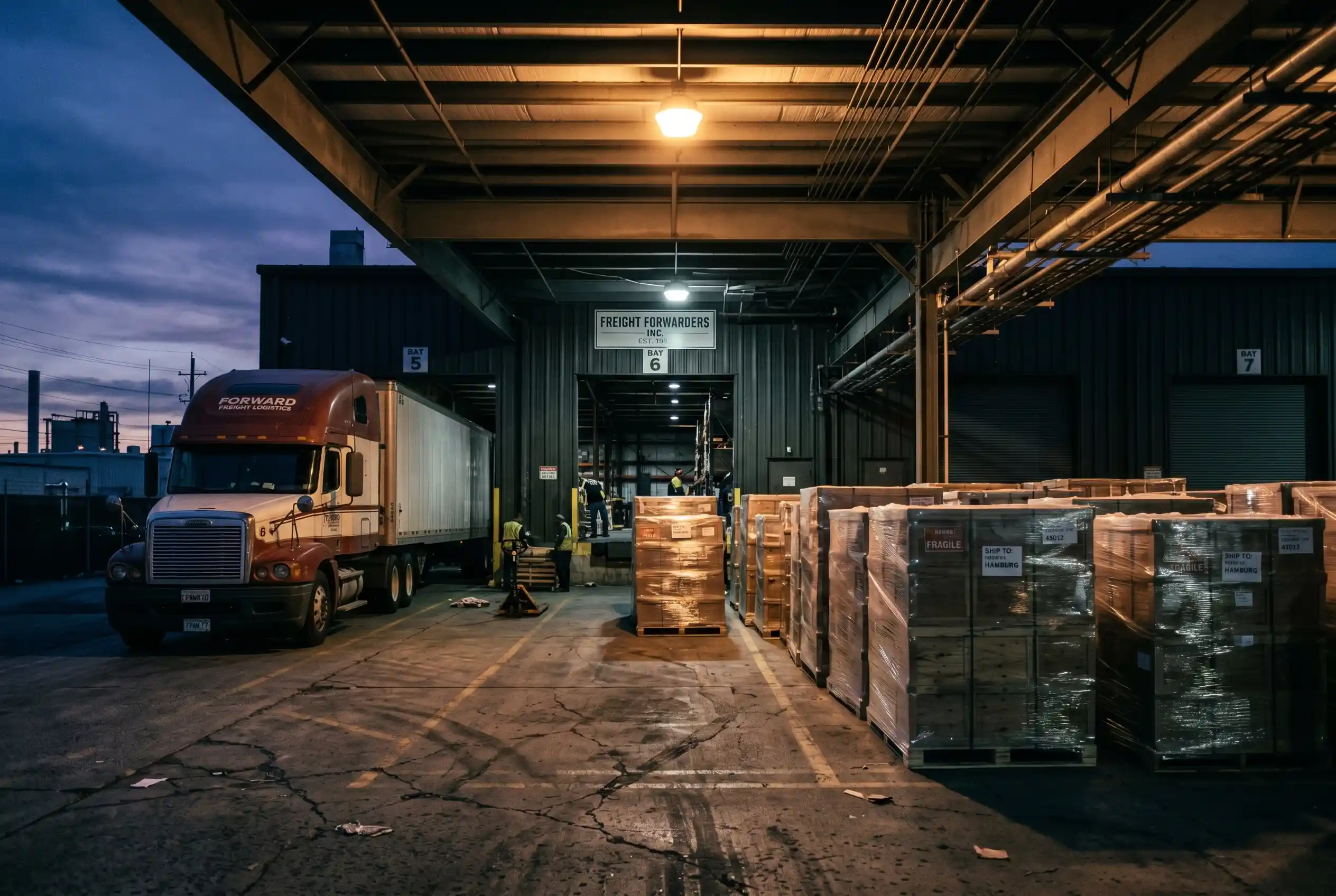
The Pipeline Inside Chantilly
Eleview’s role was not to manufacture anything. It was to make sanctioned American goods look like ordinary packages. The company ran an e-commerce website that let Russian customers order U.S. goods directly from U.S. retailers, with the items shipped to Eleview’s warehouse in Chantilly, Virginia.
Eleview’s staff then consolidated the packages and reshipped them, often using other freight forwarders as intermediaries, in exchange for a fee. After the Department of Commerce imposed stricter export controls in February 2022, the defendants began routing items through Turkey, Finland, and Kazakhstan while listing those countries as the ultimate destinations on export documentation.
To keep the pipeline running, the defendants made numerous false statements to the Department of Commerce and to other freight forwarders about the end users and ultimate consignees of the items in the shipments. The Commerce Department’s Bureau of Industry and Security had warned Eleview directly. BIS Special Agents reached out to the company in March 2022 about new export control restrictions tied to Russia, and continued to provide written guidance on red flags, screening, and know-your-customer obligations. The shipments kept moving.
“We must not allow critical systems and technologies to be transferred to anyone who may use them against America and our global partners,” U.S. Attorney Jessica D. Aber for the Eastern District of Virginia said when the charges were unsealed. “Violations of the laws that protect our national security will be met with ardent prosecution.”
From Complaint to Sentence
The case moved through the federal courts over more than a year. A criminal complaint was unsealed in the Eastern District of Virginia, charging Eleview, Nayandin, and Borisenko with conspiracy to violate the Export Control Reform Act. At the time, prosecutors said each defendant faced a maximum penalty of 20 years in prison.
Eleview, Nayandin, and Borisenko each pleaded guilty on October 28, 2025 to one count of conspiracy to violate the Export Control Reform Act. The pleas came alongside a parallel administrative settlement with BIS, in which the company and the two men admitted to violations of the Export Administration Regulations and consented to a $125,000 civil penalty that was suspended and credited dollar-for-dollar against the criminal fine.
Sentencing came in February 2026 in Alexandria, in the Eastern District of Virginia. The court imposed a $125,000 fine on Eleview (reduced from $600,000 under an ability-to-pay analysis), three years of probation for the company, a three-year term for Nayandin, and a one-year term for Borisenko. The sentences fell well short of the 20-year maximum each defendant had originally faced.
The Agencies Behind the Case
The investigation was run by the Commerce Department’s Bureau of Industry and Security and Homeland Security Investigations, with prosecution handled by the Justice Department’s National Security Division and the U.S. Attorney’s Office for the Eastern District of Virginia. Assistant U.S. Attorneys and Trial Attorney Garrett Coyle of the National Security Division’s Counterintelligence and Export Control Section prosecuted the case under Case No. 1:25-cr-46.
The work was coordinated through two interagency bodies. The Disruptive Technology Strike Force, co-led by the Justice and Commerce Departments, targets illicit actors seeking to acquire critical technology. Task Force KleptoCapture is the Justice Department’s enforcement arm for the sanctions, export restrictions, and economic countermeasures imposed after Russia’s invasion of Ukraine. Special Agent in Charge Derek W. Gordon of Homeland Security Investigations in Washington, D.C., framed the case in broader terms when the charges were unsealed.
Export control evasion schemes put the American public at risk by concealing the true recipient.
Derek W. Gordon, Special Agent in Charge, Homeland Security Investigations, Washington, D.C., in the Justice Department’s announcement of the charges.
What the Sentence Includes
The fines were not the only consequence. The plea agreements and the BIS settlement also imposed a three-year suspended denial of export privileges against Eleview, Nayandin, and Borisenko, suspended during the three-year probationary period. The suspension stays in place provided the company and the two men satisfy a list of conditions: pay the civil penalty, complete export compliance training within three months and annually for three years, comply with the terms of the DOJ plea agreements, and do not commit additional violations of the export rules.
Eleview’s $125,000 criminal fine had been reduced from $600,000, with the reduction tied to an ability-to-pay analysis, and the company did not receive voluntary disclosure or cooperation credit. As Assistant Secretary for Export Enforcement Matthew S. Axelrod of BIS put it when the charges were unsealed: “This company allegedly used not one, not two, but three different schemes to illegally transship sensitive American technology to Russia.” The full sentencing details are laid out in the Eastern District of Virginia press release, alongside the BIS administrative settlement announcement from October 2025.


Capital Clusters and the Dual Tracks of European Tech Finance

Microsoft Shrinks Windows 11 Memory for 8GB PCs

XRP Ledger Brings Back Bugged Features Fixed for Institutions

The Shards Trailer Turns Ellis Nightmare Into Murphy Glamour

WhatsApp Folder Hides Business Messages After Hours

Mova LiDAX Ultra 3000 AWD Cracks the Robot Mower Moat

Urban Arrow FamilyNext Turns Costco Runs Into Bike Trips

Reddit Builds Spoken Video Layer to Reclaim Its Own Viral Stories

Nuggit £5m Fund Treats YouTube Channels as Real Businesses

Galaxy Z Fold 8 Makes Foldables Daily Drivers but Drops Flex Mode

CLARITY Act Final Text Expected This Weekend as 60-Vote Hurdle Looms

Kalshi Loses Major NY Prediction Markets Ruling to Judge Torres

Fed Minutes Cite AI Demand as Inflation Risk, Put a 2026 Hike Back on the Map

Marker AI Writing Startup Lands $13M Seed Led by Index Ventures

Dota 2 Esports World Cup 2026: Spirit Defends $2M Title In Paris

Meta’s Muse Spark 1.1 Beats Rivals on Price, Trails on Coding

ARC Intelligence Closes €4M Seed Round in Roughly a Week

CS2 Premier Season 5 Lands With Cache and a C4 Damage Rework

Backrooms Returns to Theaters as the Everything Must Go Edition

Finto Picks Munich Over Silicon Valley After YC, Raises $3.4M
-
 FINANCE2 months ago
Zcash Patched a Double-Spend Bug as ZEC Climbed 5%
-
 ENTERTAINMENT2 months ago
Steam Summer Sale 2026 Locks In June 25 to July 9 Dates
-
 FINANCE4 weeks ago
CLARITY Act Final Text Expected This Weekend as 60-Vote Hurdle Looms
-
 NEWS3 months ago
Meta Adds AI Replies to Threads, But Users Can’t Block It
-
 ENTERTAINMENT2 months ago
‘Widow’s Bay’ Review: Apple TV’s Sleeper Horror-Comedy Earns Its Fog
-
 NEWS5 months ago
U.S. Navy Deploys Solar-Powered Lightfish Drone to Patrol Oceans
-
 NEWS8 months ago
FolderFresh Review: This Free Tool Automates Windows File Organizing
-
 FINANCE4 weeks ago
Kalshi Loses Major NY Prediction Markets Ruling to Judge Torres