
NEWS
Gemini’s Four Voice Sliders Leak as Apple’s Siri Beats It to Market
Leaked code shows Google testing four sliders, Speed, Energy, Formality and Warmth, to customize Gemini’s voice, though the feature isn’t working yet.

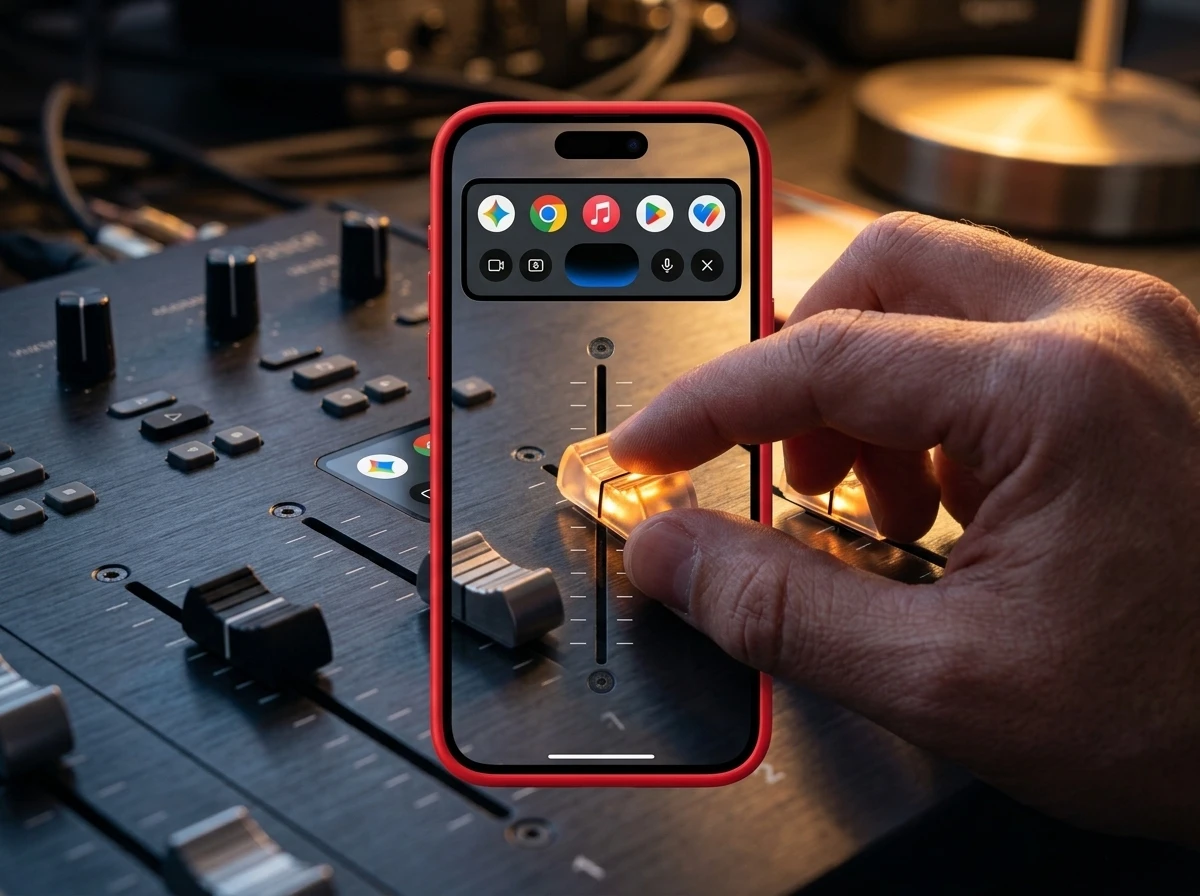
Google is building a four-slider control panel that would let Gemini users dial the assistant’s Speed, Energy, Formality and Warmth, according to code found in the latest Android beta. The strings turned up inside Google app version 17.41.12, and testers say none of the sliders change anything yet. Once switched on, the same voice profile would follow a user into both Gemini Live and everyday chat replies.
Apple already lets iPhone beta testers tune Siri’s pace and expressivity, running on foundation models built partly from Gemini’s own underlying technology. OpenAI added voice warmth controls to ChatGPT seven months ago. Gemini’s four-dial plan is the most ambitious version of this idea so far. It just isn’t turned on yet.
Four Sliders Hiding Inside Gemini’s Code
The find comes from the Google-focused news site 9to5Google. Digging through the Google app’s 17.41.12 beta build, its teardown turned up string labels for a new voice customization menu, one each for Speed, Energy, Formality and Warmth, all filed under a shared internal code tag.
The strings share one internal prefix in Google’s code, tagged “robin,” hinting that the whole voice project carries its own internal name before it ever reaches a settings menu.
Three of the four dials share one scale: low, medium and high. Speed works differently, offering slow, normal and fast so Gemini does not talk over a user or drag its feet through an answer. Android Authority’s own testers reason that Speed is likely to govern simple words-per-minute pacing, while Energy is a separate dial for expressiveness layered on top, so a slow voice could still sound lively or a fast one could still sound flat.
Here is what each control is built to touch, based on the labels Google has written into its own code:
| Slider | Range | What It Changes |
|---|---|---|
| Speed | Slow, Normal, Fast | How quickly Gemini talks, so it does not talk over you or drag its feet |
| Energy | Low, Medium, High | How animated or flat the delivery feels during a back and forth conversation |
| Formality | Low, Medium, High | Shifts between a casual tone and a direct, professional briefing style |
| Warmth | Low, Medium, High | Adds familiarity and friendliness, often paired with Formality for a relaxed trip-planning tone |
The setting is built to stick. Once a user lands on a combination, it is supposed to follow them into Gemini Live’s real-time conversations and into ordinary tap-to-listen chat replies, rather than resetting with each new session.
That would be a real change from how Gemini works today. The assistant currently lets users swap between preset Gemini voices inside the mobile app’s settings, but the picker offers no further tuning once someone lands on one they like.
A Feature That Doesn’t Work Yet
Fellow Android outlet Android Authority ran its own teardown of the same 17.41.12 build and pulled up the same four labels. Its testers even spotted a small interface detail Google is testing alongside the sliders: individual Gemini voice names fade in and out as a user swipes through the list.
Outlets like these decompile the Android app file Google uploads to the Play Store, a process that exposes human-readable text strings for buttons, menus and labels long before a feature reaches a public settings screen.
Findings pulled from unreleased code carry a standard warning. A teardown can point toward features a company is building, but those features do not always reach the public, and Google has not announced this toolkit or attached a date to it.
Here is where the leak stands, based on two separate code reviews:
What We Know
- Strings for Speed, Energy, Formality and Warmth exist inside Google app version 17.41.12, found independently by 9to5Google and Android Authority.
- The sliders are meant to apply across both Gemini Live and standard chat, using one saved profile instead of separate settings for each surface.
- Neither outlet could get a dial to change the actual sound of a voice. The controls are not yet wired to any audio output.
What’s Unconfirmed
- Whether Google will ship the feature at all, since work-in-progress code sometimes never reaches a public release.
- Any launch date. Google has only confirmed a related, separate plan for regional dialect support, teased at its developer conference.
Google has not commented on either teardown. The code strings remain the only public confirmation the project exists.
Why Is Every Assistant Suddenly Getting a Personality Dial?
Because voice personalization has turned into the newest front in the assistant wars. ChatGPT added sliders for warmth and enthusiasm in December 2025. Apple is testing Pace and Expressivity controls for Siri in a live iOS 27 beta. Gemini’s four-dial system would be the deepest of the three, if Google finishes wiring it up.
Apple moved first among the two that have actually shipped anything. In iOS 27 beta 3, Apple enabled Pace and Expressivity voice controls that had been labeled “coming soon” in earlier developer builds.
OpenAI got there earlier still. ChatGPT’s voice settings let users adjust the assistant’s warmth and enthusiasm, rolled out in December 2025 alongside separate options for base style and tone, months before either Apple or Google reached the public with anything similar.
Apple’s version also reaches further into daily life than Gemini’s does on paper. The customization carries into Maps and Safari as well as Siri itself, and stretches across CarPlay, AirPods, Apple Watch and Vision Pro. Google’s version, once it ships, stays inside the Gemini app and Gemini Live, without touching Search, Chrome or Maps.
The prize is a bigger share of daily conversations. Assistants that sound naturally suited to a task keep people talking to them instead of switching to a rival app, and Gemini Live is built for real-time spoken conversation, the kind of use where a voice that talks too fast or sounds flat is hard to tune out.
Apple Shipped Gemini’s Idea First
Here is the twist. The Siri overhaul that beat Gemini to a public voice-personality slider runs on intelligence partly built from Google’s own models. Apple’s foundation models behind iOS 27 are the direct result of a partnership in which Apple used technology behind Gemini’s models to build its next generation of on-device intelligence.
The more powerful on-device model, reserved for the iPhone 17 Pro and iPhone Air, is what makes a customizable Siri voice possible in the first place. Testers can already tweak expressivity and pace on that hardware, weeks before Google has shipped anything similar inside its own app.
Because the customization depends on that on-device model, only iPhone 17 Pro and iPhone Air owners get it at first. Gemini’s version, if it ships, is pure software, so it could reach any phone running a current Google app update, no new hardware required.
Google built the intelligence. Apple shipped the feature.
The Ten Voices Gemini Is Phasing Out
Gemini’s voice options have already been through one overhaul this year. Google shipped a Neural Expressive redesign with new voices, then began retiring its original lineup this spring.
Gemini’s previous voice options are going away, so you won’t see them here anymore.
Google’s own in-app messaging used that line to label the platform’s first voices as “Legacy voices,” according to 9to5Google’s April report. The retiring cast covers Gemini’s entire original lineup:
- Ursa
- Nova
- Vega
- Pegasus
- Orion
- Eclipse
- Capella
- Lyra
- Dipper
- Orbit
Some of this already existed in smaller form. Gemini Live already picked up temporary speed and accent tweaks that reset with every new conversation, part of a native-audio update Google rolled out last October. The new sliders add permanence instead. A combination is designed to persist across sessions rather than clearing the moment a chat restarts.
What Happens When Google Flips the Switch
Google has not set a release date. The company has confirmed only one adjacent piece of the roadmap: regional dialect support, teased at its developer conference to help Gemini match a user’s local speech patterns, also without a firm timeline.
The voice lineup keeps shifting even before the sliders arrive. Google added two new voice options after that same developer conference, building on the Neural Expressive redesign already underway.
A public rollout would reach an enormous audience instantly. Gemini grew to 900 million monthly active users by May 2026, up from 750 million just months earlier, so a change to how the assistant sounds would land in front of nearly a billion people inside a single app update.
Gemini Live’s real-time voice mode already reaches more than 40 languages, according to AI market tracker Gradually AI, giving Google a wide surface to test the sliders on once they are switched on. For non-English speakers, the payoff could be bigger still. Pairing tone sliders with regional dialect support would let Gemini match not just what a user wants to hear, but how their region expects it to sound.
The broader voice assistant market is projected to top 44 billion dollars this year, and every major player is racing to make its assistant sound less like software.
Google is testing other Gemini Live changes on a parallel track. A separate beta is exploring a push-to-talk mode for Gemini Live, another sign the assistant’s voice interface is being rebuilt piece by piece rather than in one release.
For now, the count stands where it started. Gemini’s four sliders exist only as inert code in a beta build, while Siri’s two are already live in public hands.


Nvidia Buys Hugging Face, the Platform That Turned It Down

OpenAI Names GPT-6 Astra AGI, Then Locks It Down

Relay Q Bets a $150 Puck Can Beat Dictation Apps

Accel Backs Atira to Automate Industrial Sales Engineering

Beyerdynamic Hides a Spare Battery in the Aventho Y

Lummis Pushes the CLARITY Act to Export Wyoming’s Crypto Banks

AI Exposure Turns a Cloud Beat Into a Selloff

Citadel’s XRP ETF Filing Looks Like Dealer Inventory

Revolut’s OCC Nod Starts an 18-Month US Bank Clock

British Business Bank’s Zinc Fund Will Mint 80 Startups

Walter’s TWG Insists No Fraud as Insurer Probes Force Cleanup

30-Year Yield Hits 5.32% Highest Since 2007 as Debt Supply Locks In Costs

PCE Stays at 3.7% as Gas and Tariffs Outrun Coming Revisions

Astute’s $1.2M bet makes B2B creator deals feed AI discovery

Strategy Parks $1.59B Cash While Bitcoin Stack Stays Flat

SpaceX Stock Rebound Tests Real Demand Before Huge Unlock

The 20% Savings Ideal Meets a 2.7% Reality Check

Monzo chair Gary Hoffman exits after board revolt fallout

Amber’s €7M locks Mittelstand knowledge inside Europe

AI data centers win as RAM kits jump nearly 500 percent
-
 FINANCE3 months ago
Zcash Patched a Double-Spend Bug as ZEC Climbed 5%
-
 ENTERTAINMENT3 months ago
Steam Summer Sale 2026 Locks In June 25 to July 9 Dates
-

 FINANCE2 months ago
CLARITY Act Final Text Expected This Weekend as 60-Vote Hurdle Looms
-
 NEWS4 months ago
Meta Adds AI Replies to Threads, But Users Can’t Block It
-

 NEWS3 months ago
YouTube Shorts is testing a heart in place of the thumbs-up
-

 NEWS1 month ago
Senators Force Apple Off Chinese Memory as Big Three Cash In
-

 NEWS3 months ago
NEURA Robotics’ $1.4B Series C Redraws Europe’s Physical AI Bet
-
 ENTERTAINMENT5 months ago
Extraction 3 Is Officially Coming to Netflix in 2027