
NEWS
GeForce NOW Streams Onimusha’s Demo as India Exits Beta
NVIDIA’s GeForce NOW is streaming the Onimusha: Way of the Sword demo ahead of its September launch, the same week India’s beta access ended.

NVIDIA’s GeForce NOW cloud gaming service started streaming a demo of Capcom’s Onimusha: Way of the Sword this week, weeks before the samurai action game even ships. The same rollout pushed GeForce NOW out of beta in India for good, closing a three month early access run that began in April.
NVIDIA wants cloud streaming treated as a day one launch platform for players everywhere, not a fallback for people without a gaming rig. India is the toughest test of that pitch yet, arriving just months after NVIDIA quietly capped how many hours any subscriber can play each month.
A Twenty-Year Franchise Streams Before It Even Ships
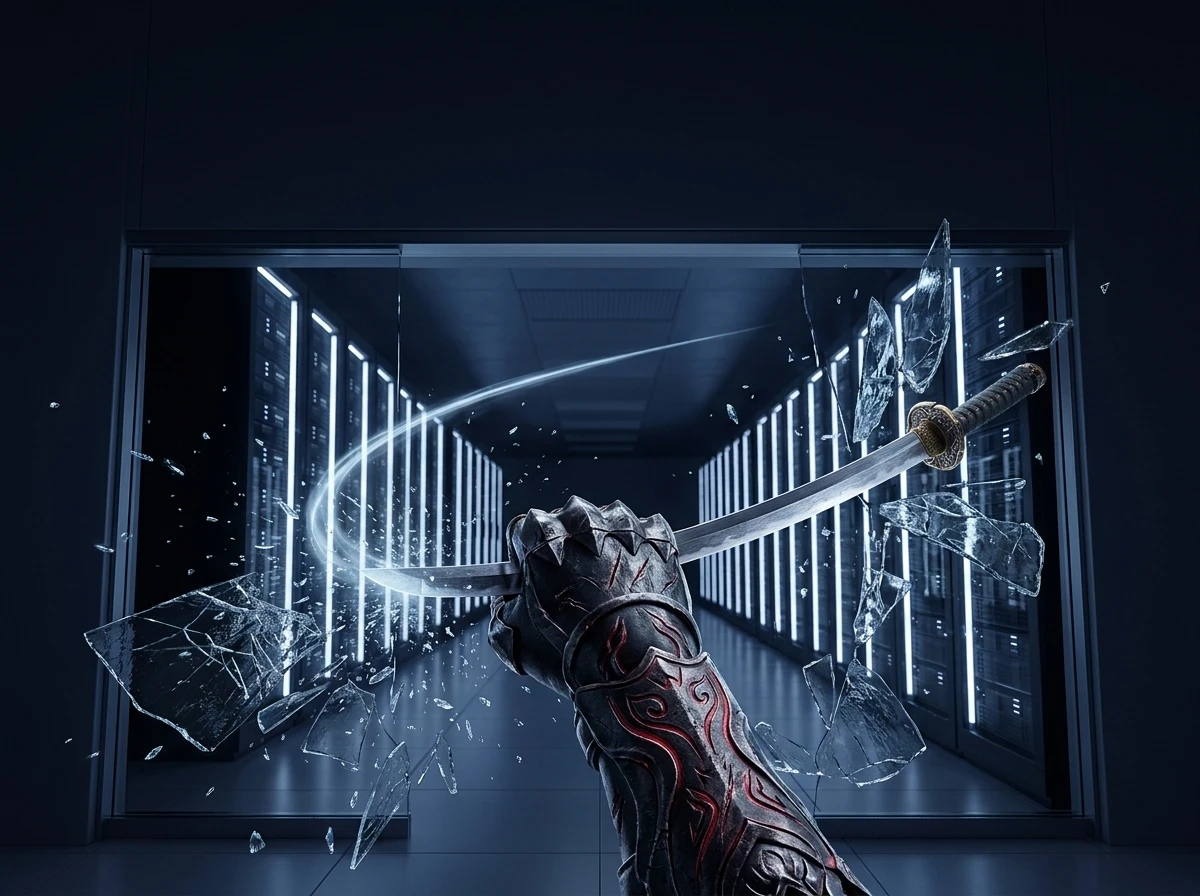
Onimusha: Way of the Sword is Capcom’s first mainline entry in the series since Onimusha: Dawn of Dreams in 2006. That is a two decade gap for a franchise built on sword duels against demonic Genma in a haunted, fictionalized version of Edo era Japan.
A demo landed on Steam back in June, and as of this week, GeForce NOW members can stream that same demo straight from the cloud with no download required. NVIDIA says the full game will arrive in the cloud the day it launches, letting Ultimate tier subscribers run it on RTX 5080 class servers across PCs, Macs, handhelds, phones and TVs.
That tier also unlocks ray tracing, DLSS upscaling and NVIDIA Reflex, along with higher resolutions and priority access to servers during busy hours. For a swordplay game built around split second parries, that server priority matters more than it would for a slower genre.
The game’s hero is a version of the real historical swordsman Miyamoto Musashi, modeled on Toshiro Mifune, the Japanese film actor famous for playing samurai on screen. Capcom spent two years negotiating with Mifune’s estate to secure his likeness for the character before development could move forward.
Four More Titles Join the Queue
Onimusha is not the only new arrival. NVIDIA added four more titles to the service this week, though none carry quite the same name recognition.
- Denshattack! – a runaway train action game that launched on Steam and Xbox July 15 and is also included with Xbox Game Pass.
- The Mound: Omen of Cthulhu – a new Lovecraftian horror release, also live on Steam since July 15.
- Heave Ho 2 – the physics based party game sequel, new to Steam on July 16.
- Fogpiercer – arriving on Steam and Xbox Game Pass July 17.
It is a lighter week than usual for the service. More titles are likely before the month is out, and NVIDIA has said as much itself, framing quieter weeks as a normal part of the release calendar rather than a slowdown.
So, Does Onimusha Launch September 3 or September 4?
NVIDIA’s blog post lists the streaming debut as Thursday, September 3. Capcom’s own release schedule, updated July 2, sets the worldwide launch for Friday, September 4 instead. The one day gap likely comes down to NVIDIA folding a fast moving Capcom announcement into its standing Thursday update format rather than any real change of plan.
September 4 is the date that matters for anyone buying the game outright. Capcom itself moved the release date up to September 4, three weeks earlier than first planned, and the reasoning is mostly about traffic.
The original September 25 slot would have dropped Onimusha into one of the busiest weeks of the year, sharing shelf space with Remedy’s self-published revival of Control, plus new entries in the Dune Awakening, Silent Hill and Dragon Quest franchises. The new date only rubs up against The Blood of Dawnwalker, a single new IP release landing the day before.
On its official site, Capcom framed the shift as a response to player enthusiasm.
Thank you to everyone who played the demo and shared your warm messages of feedback and support.
Capcom’s official Onimusha page framed the schedule change as a reward for player enthusiasm, saying the earlier date was meant to get the game into players’ hands sooner. It is a small shift in a 2026 calendar that keeps getting more crowded the closer the year runs toward November, when GTA 6’s arrival reshapes release planning across the rest of the industry.
India Graduates From Its Beta Era
The India news is smaller in headline terms but bigger in scope. GeForce NOW launched in India as a waitlisted beta on April 16, moved fully out of that beta on July 15, and now sells two paid tiers with no waitlist at all.
Performance costs ₹999 a month, roughly $11. Ultimate costs ₹1,999 a month during the current early access pricing window. Day passes run ₹399 and ₹799 for players who want a single session rather than a subscription.
Subscribers get 100GB of free storage for games installed through the service’s Install-to-Play feature, with paid add ons running ₹299 for 200GB, ₹499 for 500GB and ₹799 for a full terabyte. Members who held a beta pass get a one time 20% discount on their first three months once that pass expires.
NVIDIA says the local servers run on GeForce RTX 5080 SuperPODs built on its Blackwell architecture, delivering up to 62 teraflops of compute and a 48GB frame buffer per server. The company claims that setup performs nearly triple a PlayStation 5 Pro’s raw output.
That is a notable claim in a market where a huge share of players still game on phones and modest laptops rather than dedicated consoles. Some local reporting ties the rollout’s low latency infrastructure to a partnership with Reliance Jio, India’s largest telecom operator, though NVIDIA has not detailed that arrangement in its own materials.
The Trade-Off Behind Cloud Gaming’s Big Promise
GeForce NOW’s pitch has always been that a subscription beats buying hardware. That pitch got more complicated in January, when NVIDIA capped every subscription at 100 hours a month. Performance tier subscribers who go over that limit pay $2.99 for another 15 hours. Ultimate subscribers pay $5.99 for the same extra block.
For casual players, the 100 hours barely registers. Playing three hours a day works out to roughly 91 hours a month, still under the limit. Four hours a day pushes a player past it fast enough to trigger real extra charges.
That math changes for anyone treating GeForce NOW as a primary gaming setup rather than an occasional one. One analysis found Ultimate subscribers streaming six hours a day would outspend a discounted PS5 Pro within a year. Stretch that same usage across five years, and the subscription costs more than building a high end gaming PC from scratch.
None of that erases what cloud streaming does well. GeForce NOW has generally drawn positive reviews since its 2020 launch, when Ars Technica called it a “stunner.” Reviewers who tested the RTX 5080 server upgrade found the cloud version nearly indistinguishable from a local PC, with lag showing up mainly when 4K streaming and frame generation ran at the same time.
Where GeForce NOW Sits Among Cloud Rivals
GeForce NOW is not the only way to stream a game instead of installing it. NVIDIA has run some version of this service since 2013, when it launched as NVIDIA Grid for Shield devices, years before rebranding to GeForce Now in 2015.
Two rivals dominate the rest of the market, and each works on a different model than NVIDIA’s bring your own library approach.
| Service | Typical Monthly Cost | Game Access | Performance Ceiling |
|---|---|---|---|
| GeForce NOW Ultimate | $19.99 (₹1,999 in India) | Stream games you already own on Steam, Epic, Xbox and other stores | Up to 5K at 120fps, or 360fps at 1080p |
| Xbox Cloud Gaming | Included in Game Pass Ultimate (about €14.99) | Game Pass catalog only, not a personal library | Capped at 1080p and 60fps |
| Shadow | About €30 | A full rented Windows PC, install anything | Varies by assigned hardware tier |
The distinction matters. Xbox Cloud Gaming hands subscribers access to whatever sits in the Game Pass catalog that month. GeForce NOW instead streams titles a player already owns on Steam, the Epic Games Store, Battle.net, GOG or a linked Xbox and Ubisoft account.
Capcom has leaned into that model more than most publishers. Monster Hunter Stories 3: Twisted Reflection streamed at launch on GeForce NOW back in March, and the studio’s recent crossover pairing Resident Evil with Monster Hunter shows how far the company will mix its franchises to keep them relevant. Onimusha fits the same pattern, a dormant series revived and pushed onto every platform Capcom can reach.
The series has history to lean on. Cumulative Onimusha sales have topped 9.1 million units sold since 2001, according to Capcom’s own figures, giving the publisher a clear reason to keep the franchise alive across as many storefronts and services as it can.
Frequently Asked Questions
Is the Onimusha: Way of the Sword demo free to play on GeForce NOW?
Yes. The demo has been free on Steam since June, and GeForce NOW streams that same build without requiring a purchase of the full game. Players who finish the demo and keep their save data receive a bonus item, a charm called Kubi Akari, once they buy the full release.
How is GeForce NOW priced in India now that it is out of beta?
Performance costs ₹999 a month and Ultimate costs ₹1,999 a month, both during the current early access pricing window, with day passes available for shorter sessions. NVIDIA has also added UPI payment support alongside standard billing, aimed at India’s mobile first payment habits.
What happens after GeForce NOW’s 100-hour monthly cap?
Subscribers who pass 100 hours in a month can buy extra blocks of 15 hours rather than losing access outright. Someone playing about three hours a day stays under the cap for free, but four hours a day, close to 122 hours a month, adds roughly $16 in Performance tier overage charges.
Do I need to own Onimusha: Way of the Sword to stream the full game?
Yes. GeForce NOW works on a bring your own game model, so streaming the full release still requires buying it on a supported storefront such as Steam, the Epic Games Store or Xbox. Once purchased, Ultimate members can start playing the moment Capcom’s launch window opens on September 4.


Nvidia Buys Hugging Face, the Platform That Turned It Down

OpenAI Names GPT-6 Astra AGI, Then Locks It Down

Relay Q Bets a $150 Puck Can Beat Dictation Apps

Accel Backs Atira to Automate Industrial Sales Engineering

Beyerdynamic Hides a Spare Battery in the Aventho Y

Lummis Pushes the CLARITY Act to Export Wyoming’s Crypto Banks

AI Exposure Turns a Cloud Beat Into a Selloff

Citadel’s XRP ETF Filing Looks Like Dealer Inventory

Revolut’s OCC Nod Starts an 18-Month US Bank Clock

British Business Bank’s Zinc Fund Will Mint 80 Startups

Walter’s TWG Insists No Fraud as Insurer Probes Force Cleanup

30-Year Yield Hits 5.32% Highest Since 2007 as Debt Supply Locks In Costs

PCE Stays at 3.7% as Gas and Tariffs Outrun Coming Revisions

Astute’s $1.2M bet makes B2B creator deals feed AI discovery

Strategy Parks $1.59B Cash While Bitcoin Stack Stays Flat

SpaceX Stock Rebound Tests Real Demand Before Huge Unlock

The 20% Savings Ideal Meets a 2.7% Reality Check

Amber’s €7M locks Mittelstand knowledge inside Europe

Monzo chair Gary Hoffman exits after board revolt fallout

AI data centers win as RAM kits jump nearly 500 percent
-
 FINANCE3 months ago
Zcash Patched a Double-Spend Bug as ZEC Climbed 5%
-
 ENTERTAINMENT3 months ago
Steam Summer Sale 2026 Locks In June 25 to July 9 Dates
-

 FINANCE2 months ago
CLARITY Act Final Text Expected This Weekend as 60-Vote Hurdle Looms
-
 NEWS4 months ago
Meta Adds AI Replies to Threads, But Users Can’t Block It
-

 NEWS3 months ago
YouTube Shorts is testing a heart in place of the thumbs-up
-

 NEWS1 month ago
Senators Force Apple Off Chinese Memory as Big Three Cash In
-

 NEWS3 months ago
NEURA Robotics’ $1.4B Series C Redraws Europe’s Physical AI Bet
-
 ENTERTAINMENT5 months ago
Extraction 3 Is Officially Coming to Netflix in 2027