
ENTERTAINMENT
Kat Dennings Marvel Face Scan Sparks Major AI Debate

Kat Dennings has officially confirmed that Marvel Studios possesses a complete digital scan of her body and face. The actress revealed this startling detail during a recent interview on the set of her new sitcom. This admission has ignited a fresh firestorm of debate regarding the use of artificial intelligence and digital likenesses in Hollywood.
Inside the Digital Scan and Marvel System
Dennings dropped this bombshell while speaking with Entertainment Tonight on the set of Shifting Gears. She has been a staple in the Marvel Cinematic Universe since her debut as Darcy Lewis in the 2011 film Thor. She later reprised her role in several projects including WandaVision.
She admitted that the studio keeps her on file.
“I am in the system,” Dennings laughed when asked about her future in the franchise. The actress explained that she does not necessarily need to be physically present on a set for the studio to utilize her likeness. Marvel has already captured the necessary data to insert her character into scenes.
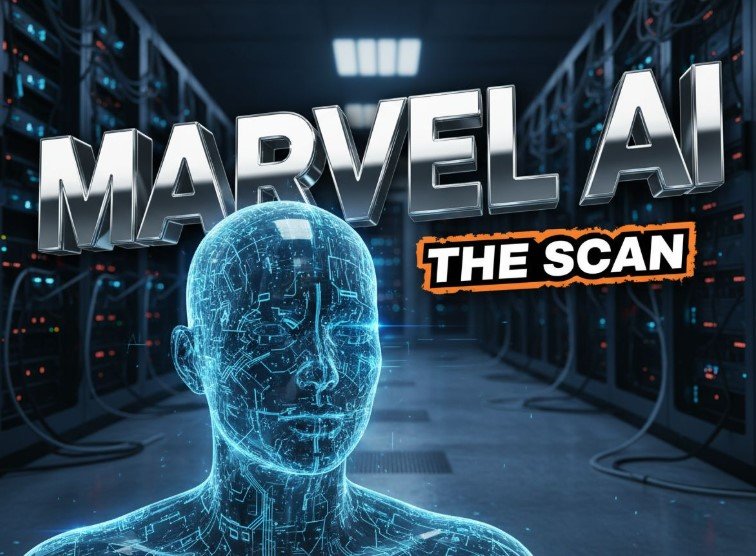
digital face scanning technology mesh screen
“They could put me in anything they want at this point.”
— Kat Dennings via Entertainment Tonight
This revelation comes as fans eagerly await news on upcoming blockbusters like Avengers: Doomsday. The studio often uses these scans for visual effects or background continuity. However, the casual nature of her comment highlights a massive shift in how movies are made today. Actors are no longer just performers. They are becoming digital assets stored in a secure server for indefinite use.
Why Studios Are Scanning Actors for Future Films
The practice of scanning actors is not entirely new. It has slowly become a standard clause in contracts for major franchise films. Visual effects teams use a technology called photogrammetry to create hyper-realistic 3D models of the cast.
These digital doubles serve several practical purposes for the production team.
- Safety Protocols: Digital doubles perform dangerous stunts that would put the actual actor at risk of injury.
- Schedule Flexibility: Studios can add a character to a background shot without calling the actor back for expensive reshoots.
- De-aging Effects: The scans allow artists to manipulate the age of a character for flashbacks or time-travel storylines.
- Merchandise Creation: High-resolution scans help companies create accurate action figures and video game characters.
This technology offers undeniable benefits for efficiency and spectacle.
The downside is that it removes the human element from the performance.
Filmmakers can technically manipulate an actor’s face to show emotions they never actually acted out. This blurs the line between a genuine performance and a computer-generated fabrication.
The Growing Fear of AI Replacements in Hollywood
While Dennings joked about her situation, other industry veterans are sounding the alarm. The fear is that studios will eventually replace background actors and even supporting stars with AI-generated clones. This specific issue was a central sticking point during the historic 2023 SAG-AFTRA strike.
Nicolas Cage recently expressed deep concern about this technology.
The legendary actor warned that young actors must protect their digital rights vigorously. He described the use of AI as “terrifying” and emphasized that his performance is his personal property. Cage worries that studios could take his face and body to create movies he never agreed to make.
Robert Downey Jr. has taken an even stricter stance.
The Iron Man star recently stated he intends to sue any executive who attempts to recreate his likeness using AI. His legal team is prepared to protect his image long after he is gone. These differing reactions show a clear divide in Hollywood. Some actors see it as a convenient tool while others view it as an existential threat to their art form.
Legal Rights and the Fight for Digital Ownership
The conversation around digital scans goes beyond just movie magic. It is a complex legal battle about consent and compensation. The new union contracts now distinguish between a “Employment-Based Digital Replica” and an “Independently Created Digital Replica.”
Studios must now obtain clear consent.
They cannot simply use a scan from one movie to create a performance in another movie without paying the actor. The rules state that the digital double must be used for the specific project the actor was hired for. Any use outside of that scope requires a new deal and new payment.
| Type of Use | Requirement |
|---|---|
| Fixing a Scene | Allowed within the original contract scope. |
| New Movie Role | Requires specific consent and additional pay. |
| Post-Mortem Use | Requires consent from the actor’s estate. |
These regulations provide a safety net that did not exist a few years ago. However, technology moves faster than the law.
There is still fear regarding “perpetual rights” clauses.
Some contracts might try to trick newer actors into signing away their likeness for eternity. This is why high-profile stars like Dennings speaking out is so important. It brings awareness to the “system” that many fans do not know exists.
What This Means for the Future of Cinema
The revelation from Kat Dennings serves as a wake-up call for moviegoers. We are entering an era where seeing an actor on screen does not mean they were ever on set. The magic of cinema is evolving into a mix of reality and digital engineering.
This could change how we consume stories.
Imagine a future where you can choose which actor plays the lead role in a movie on your streaming service. Or imagine a cinematic universe that never ends because the actors never actually age or retire. It sounds like science fiction. But the technology is already sitting in a Marvel server room right now.
The industry is at a crossroads. We must decide if we value the human soul of a performance or the visual perfection of a digital scan. For now, Kat Dennings is “in the system,” ready to be deployed whenever the Avengers need her next.
We want to hear your thoughts on this digital evolution. Do you think it is cool that Marvel can add actors digitally, or does it ruin the movie magic for you?
Share your opinion in the comments below. If you are discussing this on social media, use the hashtag #AIinHollywood to join the global conversation.


Capital Clusters and the Dual Tracks of European Tech Finance

Microsoft Shrinks Windows 11 Memory for 8GB PCs

XRP Ledger Brings Back Bugged Features Fixed for Institutions

The Shards Trailer Turns Ellis Nightmare Into Murphy Glamour

WhatsApp Folder Hides Business Messages After Hours

Mova LiDAX Ultra 3000 AWD Cracks the Robot Mower Moat

Urban Arrow FamilyNext Turns Costco Runs Into Bike Trips

Reddit Builds Spoken Video Layer to Reclaim Its Own Viral Stories

Nuggit £5m Fund Treats YouTube Channels as Real Businesses

Galaxy Z Fold 8 Makes Foldables Daily Drivers but Drops Flex Mode

CLARITY Act Final Text Expected This Weekend as 60-Vote Hurdle Looms

Kalshi Loses Major NY Prediction Markets Ruling to Judge Torres

Fed Minutes Cite AI Demand as Inflation Risk, Put a 2026 Hike Back on the Map

Marker AI Writing Startup Lands $13M Seed Led by Index Ventures

Dota 2 Esports World Cup 2026: Spirit Defends $2M Title In Paris

Meta’s Muse Spark 1.1 Beats Rivals on Price, Trails on Coding

CS2 Premier Season 5 Lands With Cache and a C4 Damage Rework

ARC Intelligence Closes €4M Seed Round in Roughly a Week

Finto Picks Munich Over Silicon Valley After YC, Raises $3.4M

Backrooms Returns to Theaters as the Everything Must Go Edition
-
 FINANCE2 months ago
Zcash Patched a Double-Spend Bug as ZEC Climbed 5%
-
 ENTERTAINMENT2 months ago
Steam Summer Sale 2026 Locks In June 25 to July 9 Dates
-
 FINANCE4 weeks ago
CLARITY Act Final Text Expected This Weekend as 60-Vote Hurdle Looms
-
 NEWS3 months ago
Meta Adds AI Replies to Threads, But Users Can’t Block It
-
 ENTERTAINMENT2 months ago
‘Widow’s Bay’ Review: Apple TV’s Sleeper Horror-Comedy Earns Its Fog
-
 NEWS5 months ago
U.S. Navy Deploys Solar-Powered Lightfish Drone to Patrol Oceans
-
 NEWS8 months ago
FolderFresh Review: This Free Tool Automates Windows File Organizing
-
 FINANCE4 weeks ago
Kalshi Loses Major NY Prediction Markets Ruling to Judge Torres