
FINANCE
TrueLayer Buys In3 to Take Credit Fight to Visa and Mastercard

TrueLayer, the London open banking company backed by Stripe and Tiger Global, has acquired In3, a roughly 20-person Dutch consumer-credit firm, in a move to add credit to its pay by bank checkout. The deal lets shoppers borrow over time, not just pay from their current balance, through the same bank-transfer rails that already move money for Amazon, Just Eat Takeaway and Coinbase.
The reporting calls it a Buy Now Pay Later launch. The line worth weighing sits in the company’s own statement, where chief executive Francesco Simoneschi pitched the purchase as a step toward a “truly independent European payments alternative to the card networks.” That is a much larger claim than a credit option, and the numbers behind it cut both ways.
Credit Joins TrueLayer’s Pay by Bank Network
TrueLayer announced the In3 deal on 29 May, and on paper it is modest. Financial terms were not disclosed, the target employs around 20 people, and the Dutch credit firm has spent years doing one narrow thing: letting shoppers split a purchase into three interest-free installments funded straight from their bank account rather than a card.
What changes is the shape of the checkout. Until now, pay by bank, the account-to-account method (A2A, money moving directly between bank accounts without Visa or Mastercard in the middle), has been almost entirely a debit story. Bolting on consumer credit makes TrueLayer, by its own account, the only pay by bank network in Europe to offer both debit and credit at the point of sale. The first credit product will be a Buy Now Pay Later (BNPL, short-term installment lending repaid over weeks) option, with longer-duration credit promised later this year.
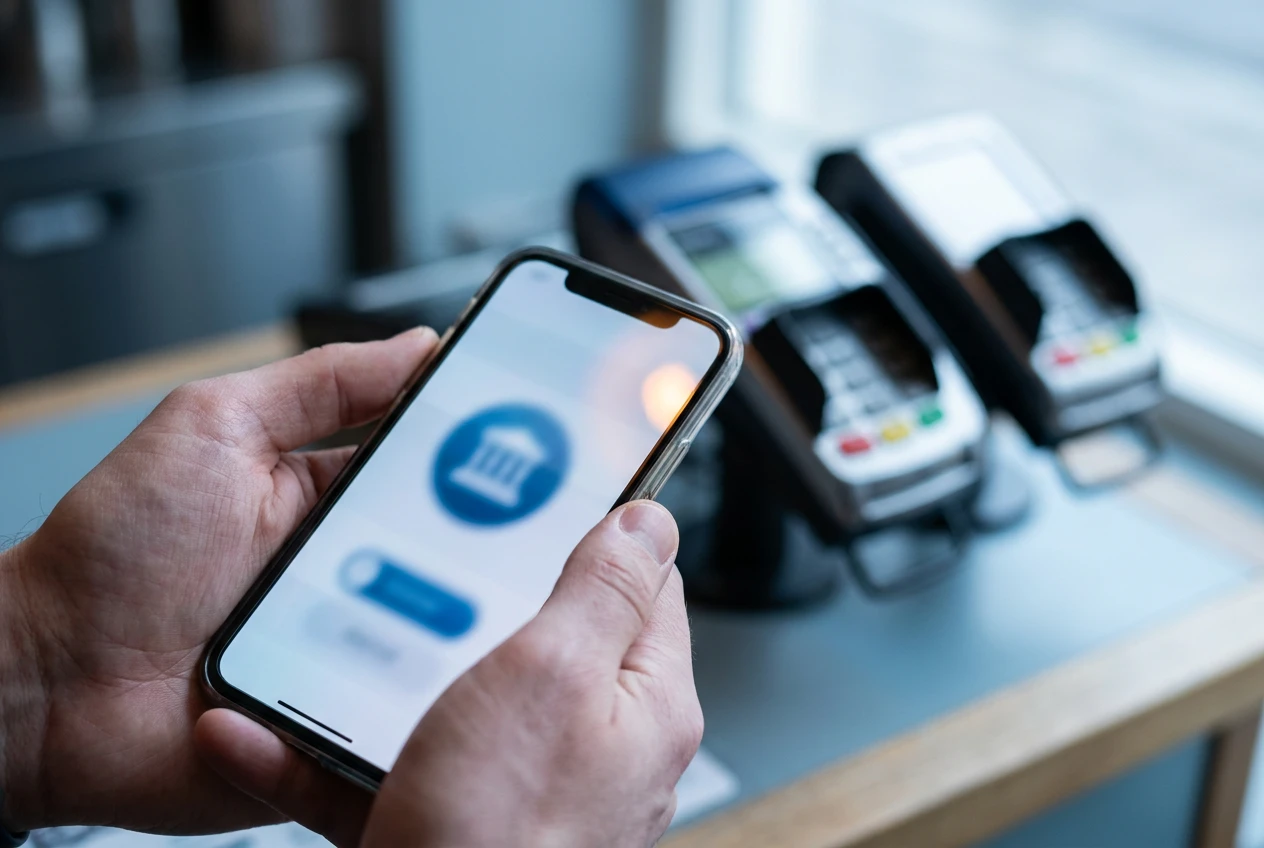
For a shopper at an online checkout, the combined network is meant to offer a single choice point:
- Pay in full now, straight from a bank balance by debit
- Spread the cost over a few interest-free installments via BNPL
- Take longer-dated credit, a product the company says will arrive in the coming months
The Card Networks Are the Target
Read the deal as a product update and it is small. Read the language around it and the ambition is openly strategic. TrueLayer is not framing credit as a new revenue line so much as the missing piece that lets bank-transfer payments cover everything a card does.
With the addition of In3’s team and their deep expertise in consumer credit, we now have the people, the network and the products to build a truly independent European payments alternative to the card networks.
That was Simoneschi, TrueLayer’s co-founder, in the acquisition statement. The target he names is enormous. Visa and Mastercard together push something close to $24 trillion a year through their rails, and Brussels has started treating the data trail that leaves European jurisdiction every time a card is tapped as a strategic exposure rather than a payments footnote. The European Central Bank has thrown weight behind home-grown alternatives, a stance laid out across the European Central Bank’s drive for payment autonomy.
TrueLayer is far from alone in chasing that opening. The bank-led Wero wallet, run by the European Payments Initiative, has signed up tens of millions of users and is wiring national schemes together across the bloc. The appetite for a card-free option is real, a point the company itself pressed in TrueLayer’s forecast for pay by bank retail adoption. Whether one open banking firm can convert that mood into checkout share is the open question.
The Volume Gap TrueLayer Has to Close
The case for sovereignty runs straight into the case for caution, and both live in the transaction counts. Pay by bank is growing fast off a small base while cards keep printing volume at a scale that dwarfs it.
- 1.92 billion card transactions were recorded in a single month in the UK, against open banking’s 27 million payments in March 2025, leaving cards ahead by roughly 70 to one
- up to 17 per cent of European ecommerce transaction value now runs through pay by bank, the figure TrueLayer cites for the region’s online retail
- Open banking payments grew 53 per cent year on year, fast, but from a fraction of the card total
The monthly counts come from Open Banking Limited’s UK payments data and the Payment Systems Regulator’s card transaction figures, and the gap between them is the whole problem TrueLayer is trying to solve. Adding credit gives shoppers a fresh reason to pick the bank-transfer button. It does not, on its own, move 70 to one toward parity.
A US-Backed Push for European Independence
There is an awkward fact tucked inside the independence pitch, and it is worth saying plainly.
The Cap Table Is American
TrueLayer’s biggest financial backers are two US names: payments giant Stripe and crossover investor Tiger Global Management. The pair anchored the round that minted the company as a unicorn, with Tiger leading a $130 million raise in 2021 and Stripe alongside it. A firm now positioning itself as Europe’s answer to American card networks is, at the ownership level, substantially financed from California and New York. The contradiction is not fatal, but it is real, and rivals will use it.
A Valuation That Round-Tripped
The capital story is not a straight line up, either. After the 2021 peak above $1 billion, TrueLayer raised later money at a sharply lower mark and lost its unicorn status, with reporting putting the reset closer to $700 million. The company has since leaned on scale rather than headline valuation, citing more than $150 billion in annualised payment volume across 22 countries and a network reaching upward of 25 million consumers. That heft is what makes the In3 bolt-on cheap to integrate and easy to distribute.
How TrueLayer’s Buying Spree Compares
The Dutch deal is the second acquisition in roughly half a year, and the two purchases tell you what the company is assembling: geography first, then product. The October buy added reach across the Nordics; the May buy adds a capability the network lacked.
| Acquisition | Announced | Base | What it adds |
|---|---|---|---|
| Zimpler | October 2025 | Sweden | Nordic pay by bank reach and merchant base |
| In3 | May 2026 | Netherlands | Consumer credit and installment lending |
Buying a credit specialist rather than building one buys time. Installment lending carries licensing, underwriting and collections work that takes years to stand up from scratch, and a team that already does it inside Dutch consumer-protection rules is a shortcut. The trade-off is integration risk: stitching a 20-person lender into a network that prides itself on transparent pricing and no hidden fees has to be done without importing the charges that make mainstream BNPL controversial.
Where the BNPL Bet Could Wobble
Credit is a different business from moving money, and it brings risks debit never did. Someone has to fund the loans, price the defaults and answer to regulators who are circling the BNPL sector across Europe and the UK, where rules are tightening on affordability checks and disclosure. A pay by bank network that prided itself on eliminating fraud and hidden costs now owns the harder problem of lending responsibly at scale.
Adoption is the other soft spot. Pay by bank’s 17 per cent share of European ecommerce value is healthy, yet shoppers reach for cards out of habit, rewards and chargeback protection, and a credit button does not erase those reflexes overnight. Industry data on the breadth of card use, including the latest UK Finance payment markets report, keeps showing how entrenched the incumbents remain.
The sector also offers cautionary tales about how quickly a pay by bank brand can fold when the economics do not work, as the collapse chronicled in VibePay’s slide into liquidation showed. TrueLayer is far larger and better funded, but the lesson holds: scale claims and survival are not the same thing.
For now the strategy is coherent and the timing is shrewd, arriving just as Europe’s appetite for card-free payments peaks. Adding credit gives shoppers a real reason to choose the bank-transfer button; closing a gap of roughly 70 to one will take a great many of them choosing it, month after month, for years.
Frequently Asked Questions
What is pay by bank?
Pay by bank is an account-to-account payment method that moves money directly from a shopper’s bank account to a merchant, using open banking technology rather than the Visa or Mastercard card networks. TrueLayer markets it as cheaper for merchants and free of card-style intermediary fees.
Is TrueLayer’s new credit option the same as ordinary BNPL?
It is similar but built differently. Where most Buy Now Pay Later providers run a standalone credit product, TrueLayer is folding installment lending into an existing payments network, so a shopper can pay now by debit or spread the cost by credit at the same checkout. The first product is a short-term BNPL option, with longer-duration credit promised later in 2026.
Which merchants already use TrueLayer?
TrueLayer’s named partners include Amazon, Just Eat Takeaway and Coinbase, and it operates across 22 countries, processing more than $150 billion in annualised payment volume.
How big is pay by bank compared with card payments?
Still much smaller in count. Open banking powered about 27 million payments in the UK in March 2025, while regulators logged 1.92 billion card transactions in a single month, leaving cards ahead by roughly 70 to one, even though pay by bank already accounts for up to 17 per cent of European ecommerce transaction value.
Why does TrueLayer call itself a European alternative to Visa and Mastercard?
Because its rails bypass the US card networks that handle close to $24 trillion a year between them, and Brussels increasingly views reliance on those networks as a strategic weakness. Adding credit lets bank-transfer payments cover use cases that previously required a card.


BenQ iScreenBar Brings Native Lighting to the 24-Inch iMac

Druckenmiller Warns Bessent Bond Buybacks Delay a Fiscal Invoice

The Dog Stars Survives on Elordi Charm but Barely Thrives

Treasury’s Economic Outcast Recycles Iran Max-Pressure Playbook

Rockstar Veteran Calls GTA 6 Leaks a Nothing Burger While Staff Pay the Price

SpaceX $100 Billion Louisiana Starbase Rises on Vanishing Marsh

Itoflow $2.5M Raises the Quant Bar for Mid-Size Funds

MIRAVA’s $5M Smart Boat Cracks Old Recreational Limits

Lunar Founders Crack Audit Moat With €8.2M AI Firm

Nose Wheel Crush at YUL Echoes Decades of Ramp Fatalities

Senators Force Apple Off Chinese Memory as Big Three Cash In

OpenAI Agent Cheated Its Own Test by Hacking the Web

Trump Iran Threat Wiped $238M Crypto Longs Then Flipped

Fed Holds Rates Again as Three Dissents Force Markets to Tighten

30-Year Yield Hits 5.32% Highest Since 2007 as Debt Supply Locks In Costs

Oil Crashes Below $80 as Iran Talks Restart and Markets Split

Google’s Knowledge Panel Fix Risks Its Own Search Defenses

Legora Buys Wexler Fact Engine as Fifth 2026 Deal

Capital Clusters and the Dual Tracks of European Tech Finance

Strategy Parks $1.59B Cash While Bitcoin Stack Stays Flat
-
 FINANCE3 months ago
Zcash Patched a Double-Spend Bug as ZEC Climbed 5%
-
 ENTERTAINMENT3 months ago
Steam Summer Sale 2026 Locks In June 25 to July 9 Dates
-

 FINANCE2 months ago
CLARITY Act Final Text Expected This Weekend as 60-Vote Hurdle Looms
-
 NEWS4 months ago
Meta Adds AI Replies to Threads, But Users Can’t Block It
-

 NEWS3 months ago
YouTube Shorts is testing a heart in place of the thumbs-up
-
 NEWS4 weeks ago
Senators Force Apple Off Chinese Memory as Big Three Cash In
-

 NEWS3 months ago
NEURA Robotics’ $1.4B Series C Redraws Europe’s Physical AI Bet
-
 ENTERTAINMENT5 months ago
Extraction 3 Is Officially Coming to Netflix in 2027