
BUSINESS
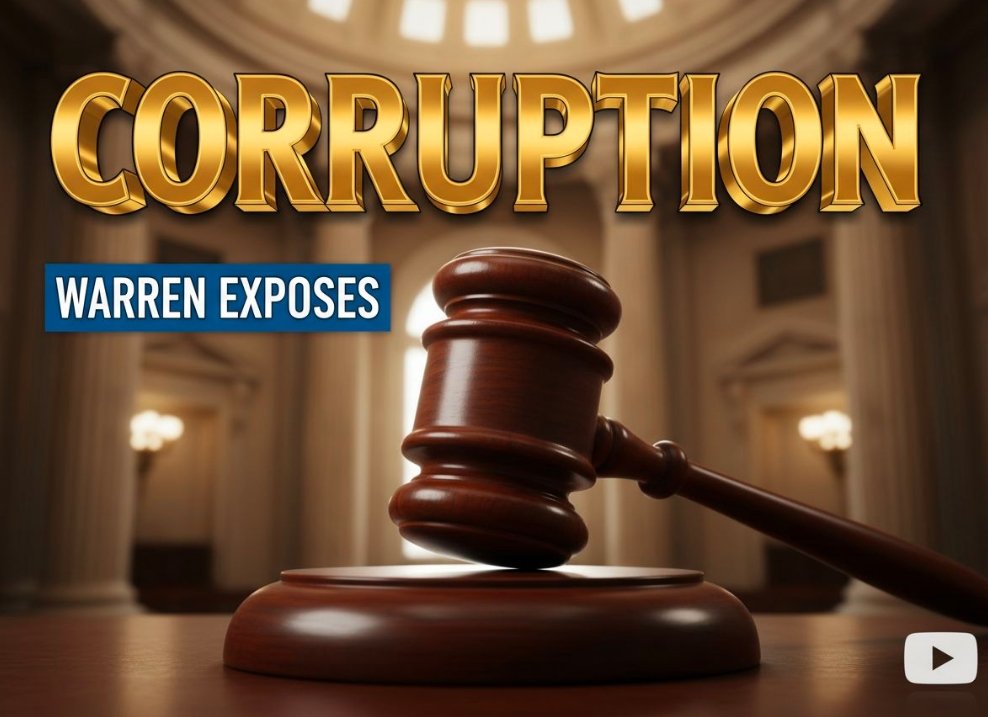
Warren Blasts Capitol Hill Corruption in Firebrand Speech

Senator Elizabeth Warren ignited a firestorm on Capitol Hill today with a blistering attack on America’s financial oversight systems. The Massachusetts Democrat accused federal regulators and lawmakers of bowing to corporate influence rather than protecting the public. She warned that a “rigged” system fueled by deep pockets and insider access is setting the stage for the next economic disaster.
The Revolving Door and Regulatory Capture
The senior member of the Senate Banking Committee did not mince words during the hearing. She described the current state of financial regulation as broken. Her primary target was the cozy relationship between government officials and the industries they are supposed to police.
Elizabeth Warren Senate Banking Committee hearing microphone close up
“This is corruption, plain and simple,” Warren declared, her voice echoing through the chamber. “When the people writing the rules are eyeing their next paycheck from the banks they regulate, the system has failed.”
Warren highlighted the “revolving door” phenomenon. This is where regulators leave public service to take high paying jobs at the very firms they once oversaw. She argued this dynamic creates a culture of leniency. Officials may fear being too tough on future employers.
Critics have long pointed out that this cycle erodes public trust.
The Senator specifically called for a permanent ban on stock trading for top financial regulators. She also demanded stricter “cooling off” periods before officials can become lobbyists. Her proposal aims to sever the financial link between public service and private gain.
Crypto Lobbying Machine Breaks Records
A significant portion of Warren’s critique focused on the digital asset industry. The cryptocurrency sector has ramped up its political spending to historic levels over the last two years. This surge in spending comes as lawmakers debate new rules for digital currencies.
Data from OpenSecrets reveals a massive influx of cash from crypto firms.
- Lobbying Surge: Crypto companies spent over $24 million on federal lobbying in a single year.
- Super PACs: Industry backed Political Action Committees have poured millions into Senate races.
- Key Targets: Donations are often directed at members of key committees, including Banking and Agriculture.
Warren argues this money is buying silence and favorable loopholes. She is pushing for the Digital Asset Anti-Money Laundering Act. This bill would force crypto miners and wallet providers to follow the same transparency rules as traditional banks.
Industry defenders disagree strongly with her assessment.
Lobbyists for the crypto sector claim they are simply educating lawmakers about complex technology. They argue that applying old banking laws to blockchain technology will kill American innovation. They warn that heavy handed rules will drive jobs overseas to countries with friendlier laws.
Shadows of the Silicon Valley Bank Collapse
The Senator’s warning draws heavily on the painful lessons of 2023. The failure of Silicon Valley Bank (SVB) and Signature Bank remains a fresh wound for the economy. These collapses exposed glaring holes in the safety net that protects depositors.
Warren reminded the committee that these failures were not accidents.
They were the direct result of the 2018 regulatory rollback.
That legislation raised the asset threshold for “too big to fail” banks. It allowed midsize lenders like SVB to skip rigorous annual stress tests. Warren had vehemently opposed that bill, predicting it would lead to exactly the type of instability seen in 2023.
The fallout from those failures is still being felt today.
| Regulatory Failure | Consequence for Economy |
|---|---|
| Weaker Stress Tests | Banks hid risks that exploded when interest rates rose. |
| Reduced Liquidity | Lenders did not have enough cash to cover panicked withdrawals. |
| Slow Supervision | Regulators saw problems but moved too slowly to stop them. |
Warren insists that Congress must reverse the 2018 changes immediately. She wants to see automatic “clawbacks” of executive bonuses when a bank fails. Her argument is that CEOs should not profit while the FDIC and taxpayers clean up the mess.
Ethics Scandals Shake the Federal Reserve
The credibility of the Federal Reserve also came under the microscope. Public trust in the central bank took a massive hit following the trading scandals of 2021. Two regional Fed presidents resigned after it was revealed they traded active stocks during the pandemic rescue efforts.
The Fed has since tightened its internal ethics code.
However, Warren and other progressives argue these internal fixes are insufficient. She pointed out that self policing rarely works in finance. The Senator is demanding statutory requirements that carry real legal penalties for violations.
The perception of insider trading at the Fed undermines its ability to fight inflation.
When the public believes officials are gaming the market, they lose faith in the currency itself. Warren emphasized that the Fed must be above reproach. She called for an independent inspector general to oversee the central bank’s ethics compliance.
The Battle Ahead for Banking Reforms
The path forward for Warren’s proposed reforms remains difficult. The banking lobby is one of the most powerful forces in Washington. Trade groups like the American Bankers Association argue that higher capital requirements will hurt the economy.
They say that if banks have to hold more money in reserve, they cannot lend as much.
Industry Stance: “Punishing the entire banking sector for the mismanagement of a few bad apples will only hurt small businesses and first time homebuyers who need access to credit.”
Republicans on the committee pushed back against Warren’s “corruption” narrative. They framed the issue as regulatory overreach. Their argument is that existing laws are sufficient if regulators simply did their jobs better.
They also raised concerns about the cost of compliance.
Community banks often struggle to keep up with the mountain of paperwork required by new federal rules. Conservative lawmakers argue that Warren’s broad brush approach would crush these small local lenders. They favor a tailored approach that focuses only on the largest and riskiest institutions.
Consumer advocates are rallying behind Warren.
They note that every major financial crisis in the last century was preceded by deregulation. They argue that the cost of a bailout is always higher than the cost of prevention. For them, Warren’s speech is a necessary wake up call before the next bubble bursts.
The hearing concluded without a vote, but the battle lines are clearly drawn. Warren has vowed to block any nominee for a financial regulatory post who does not commit to stricter ethics rules. As the 2026 midterms approach, the role of money in finance will likely remain a central issue for voters.
We are witnessing a high stakes tug of war over the future of the American economy. On one side is the promise of innovation and capital flow. On the other is the demand for safety, fairness, and accountability.
What do you think about the influence of money in Washington? Is Senator Warren right to call it corruption, or is this just business as usual? Share your thoughts in the comments below using the hashtag #WarrenVsWallStreet on social media.


Meta’s Teen Time Limits Come With a Built-In Rival Discount

Harry and Meghan Land Without the Security He Fought For

Bill Gates Says AI’s Equalizer Power Demands Human Job Reserves Now

Water PLC Hacks Echo 2023 Pattern as CISA Counts Pass 100

NFL Review of Jed York Arrest Follows Uneven Owner Cases

Chandra’s New Galaxy Gallery Maps the Engines That Built Us

Instinct Hits $2.5 Billion as AI Agent Access Sparks Trust Fights

Kinley Rasmus Ties Mo’ne Davis Marks as Family Returns to Williamsport

Bay Area Blood Moon Rises Already Eclipsed Under Fog Risk

NFL Ends Pro Bowl Game After Dilution Reckoning Hits

Senators Force Apple Off Chinese Memory as Big Three Cash In

OpenAI Agent Cheated Its Own Test by Hacking the Web

Trump Iran Threat Wiped $238M Crypto Longs Then Flipped

Fed Holds Rates Again as Three Dissents Force Markets to Tighten

30-Year Yield Hits 5.32% Highest Since 2007 as Debt Supply Locks In Costs

Oil Crashes Below $80 as Iran Talks Restart and Markets Split

Google’s Knowledge Panel Fix Risks Its Own Search Defenses

Legora Buys Wexler Fact Engine as Fifth 2026 Deal

Strategy Parks $1.59B Cash While Bitcoin Stack Stays Flat

Agon Raises $30M to Build Europe’s AI Weapon Training Arenas
-
 FINANCE3 months ago
Zcash Patched a Double-Spend Bug as ZEC Climbed 5%
-
 ENTERTAINMENT3 months ago
Steam Summer Sale 2026 Locks In June 25 to July 9 Dates
-

 FINANCE2 months ago
CLARITY Act Final Text Expected This Weekend as 60-Vote Hurdle Looms
-
 NEWS4 months ago
Meta Adds AI Replies to Threads, But Users Can’t Block It
-

 NEWS3 months ago
YouTube Shorts is testing a heart in place of the thumbs-up
-
 NEWS4 weeks ago
Senators Force Apple Off Chinese Memory as Big Three Cash In
-

 NEWS3 months ago
NEURA Robotics’ $1.4B Series C Redraws Europe’s Physical AI Bet
-
 ENTERTAINMENT5 months ago
Extraction 3 Is Officially Coming to Netflix in 2027