
FINANCE
BBC’s Personal Finance Push Is Bigger Than One Week
The BBC’s personal finance coverage runs from Scam Safe Week to a long-running Money Box archive. Here’s the full footprint UK households can use.

The BBC’s personal finance coverage stretches far beyond a single awareness campaign, even after the broadcaster turned a full week of its schedule over to scams from 22-28 November 2025. Underneath the headline Scam Safe Week sits Money Box on Radio 4, Wake Up to Money, a dedicated personal finance topic page on BBC News, podcasts on BBC Sounds, and recurring television money segments that have been building for years.
The result is a public broadcaster running what is, in practice, one of the UK’s largest free personal finance publishing operations. Most coverage stops at the November campaign; the wider footprint is the harder story.
The Week That Put the Build on Display
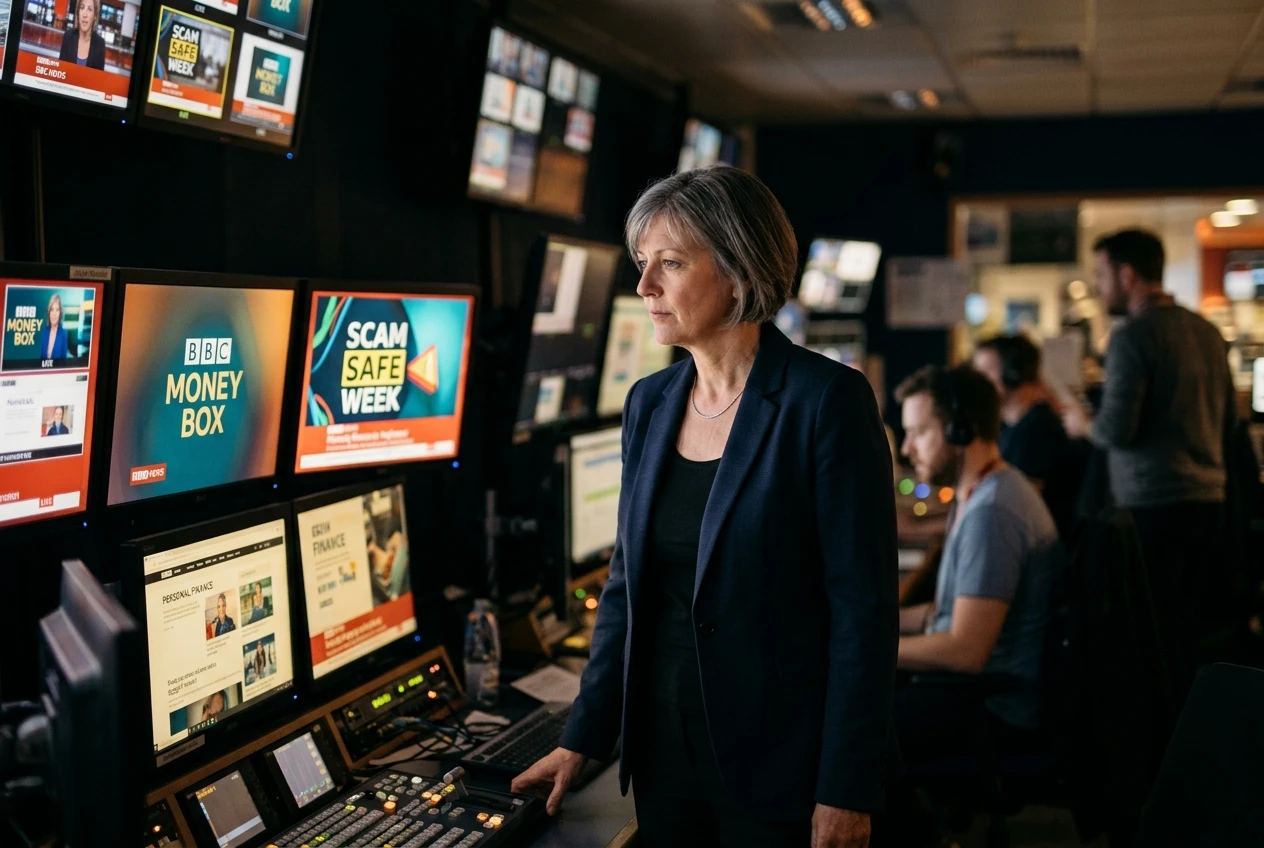
The clearest signal of how seriously the BBC is taking personal finance arrived in the form of Scam Safe Week, a coordinated seven-day push across TV, iPlayer, radio, Sounds and online that the BBC Media Centre announced on 28 October 2025. According to the BBC’s Scam Safe week programme announcement, the week brought together new and existing strands rather than launching a single flagship show.
The schedule ran across nearly every BBC outlet. Morning Live went live from the BBC’s Scam Safe roadshows each weekday with experts including Watchdog’s Matt Allwright and Scam Interceptors’ Nick Stapleton. Scam Interceptors dropped four brand-new episodes and aired weekdays at 2pm on BBC One during the week, with the wider series launching on BBC iPlayer on 3 November 2025. Rip Off Britain, with Gloria Hunniford, Julia Somerville and Louise Minchin, returned with specials on courier fraud, gift card cons, fake tickets and an AI romance scam that left one victim “tens of thousands of pounds out of pocket.” Countryfile, Bargain Hunt, The One Show, BBC Three, the BBC News at One and BBC breakfast bulletins all carried scam strands, alongside storylines on EastEnders and BBC One Northern Ireland’s Hope Street.
Radio carried equal weight. A special Money Box on Radio 4 explored the support available to scam victims, while Scam Secrets, It’s a Fair Cop and a drama called Scammer ran alongside contributions from Radio 1’s Life Hacks, Radio 1Xtra Talks with Richie Brave, Radio 2’s Scott Mills Breakfast Show, the Asian Network’s Everyday Hustle and the Radio 4 consumer strand You and Yours. BBC Chief Content Officer Kate Phillips framed the week in plain terms.
The BBC is dedicating a full week to being a trusted destination for advice, insight, and engagement on how to spot and stop scams.
Phillips, the senior executive responsible for all BBC TV and radio output, added that with fraud making up over 40% of all crime in the UK, “raising public awareness has never been more essential.” Her statement ran in the same BBC Media Centre announcement that listed the full schedule.
The Money Beat the BBC Built Over Years
Scam Safe Week was the spotlight, but the infrastructure underneath it predates the campaign by decades. The anchor of the BBC’s personal finance output is Money Box on BBC Radio 4, a weekly news and advice programme now fronted by Felicity Hannah. The programme’s online archive lists 1335 total episodes, with 736 currently available on BBC Sounds, and the production credits show Hannah as presenter alongside producer Craig Henderson and editor Jess Quayle. Past strands have covered pensions, scams, mortgages, child trust funds, blended family finances, fostering affordability and the so-called “death of retirement.”
Alongside it sits Wake Up to Money, a daily morning business and personal finance programme on BBC Radio 5 Live that has run for years and is also carried as a podcast. The Martin Lewis Podcast, hosted by the consumer finance journalist and broadcaster, lives on BBC Audio and combines material from his BBC Radio 5 Live show with extra material. The breadth of presenters signals intent: this is a standing personal finance desk, not an event.
The BBC’s online home for the beat is the Personal Finance topic page on BBC News, which currently carries rolling coverage of banks failing vulnerable customers, car finance compensation delays, energy bills, the state pension and consumer scams. A separate Your Money news stream pulls the same material together at bbc.co.uk/news/business/your_money, while television audiences meet recurring “Money Monday” segments on BBC Morning Live, where finance expert Laura Pomfret appears regularly per the BBC Morning Live social channels.
Where the Content Actually Lives
The footprint is easier to grasp as a table. The same week of November 2025 programming illustrates how the BBC moves the same personal finance story across platforms.
| Platform | Programme | Format |
|---|---|---|
| Television | Morning Live (BBC One) | Daily Money Monday segments plus Scam Safe roadshows |
| Television | Scam Interceptors (BBC One and iPlayer) | Weekday 2pm during Scam Safe week; full series on iPlayer from 3 November 2025 |
| Television | Rip Off Britain (BBC One) | Long-running strand with Scam Safe week specials |
| Radio | Money Box (BBC Radio 4) | Weekly news, advice and Scam Safe special |
| Radio | Wake Up to Money (BBC Radio 5 Live) | Daily morning business and personal finance |
| Podcasts | The Martin Lewis Podcast (BBC Audio) | On-demand consumer finance |
| Online | BBC News Personal Finance topic and Your Money stream | Rolling news and explainers |
BBC Sounds and BBC iPlayer host dedicated Scams and Fraudsters collections during the week, and the BBC’s social channels push content under the #BBCScamSafe hashtag, with bbc.co.uk/scamsafe as the hub. Wake Up to Money on BBC Audio is the cleanest example of the “repackage once, distribute many times” model: the same radio show also appears as a podcast and gets clipped for social.
Why a Public Broadcaster Is Filling This Gap
The Scam Safe Week partnership with UK Finance, the banking industry’s main trade body, was a first for both organisations. UK Finance’s announcement names the tie-up explicitly and signals why the BBC was the platform of choice. Public funding takes the sales pitch out of the content, and the BBC’s reach turns a banking industry campaign into a national conversation.
UK Finance’s Managing Director of Economic Crime, Ben Donaldson, put the rationale in plain language.
We are excited to be an official partner of the BBC’s Scam Safe Week 2025, helping to bring awareness to financial fraud and help provide key advice on how the public can protect themselves.
Donaldson framed the partnership around the Take Five to Stop Fraud campaign and the Dedicated Card and Payment Crime Unit, both industry programmes that now reach a BBC-sized audience per UK Finance’s partnership announcement for Scam Safe week. The trade body supplied case studies, data and assets; the BBC supplied the distribution. That split matters in a market where much financial advice online carries affiliate links or product placements.
The Financial Pressures Behind the Push
The personal finance expansion lands in the middle of the BBC’s own financial squeeze. The corporation is several years into a savings programme that the most recent annual report and accounts put at more than £1 billion over five years, against a backdrop of a real-terms funding freeze for the World Service and ongoing pressure on the licence fee model. Inside the content division, Chief Content Officer Kate Phillips told staff the BBC estimates around 100 jobs will be cut by the end of the financial year, per the Herald Scotland’s reporting on a staff memo.
That tension shapes the expansion. New output has to be built from existing teams and partnerships rather than new headcount. The UK Finance tie-up, the strand-led BBC Three documentaries and the consolidation of personal finance under the BBC’s personal finance topic page all read as efficient answers to that constraint. The BBC is also centralising related beats, as its recently launched housing market hub shows the same consolidation logic for property coverage.
What UK Households Are Actually Getting
The test of the build is the everyday content a reader or listener can pull from it on a Wednesday afternoon. Recent Money Box strands have included “Making Tax Digital: Your questions answered,” “How to manage your finances as a blended family,” “I lost £250,000 to a crypto scam,” “I gave my kids £300 to see what they would do with it,” and “Your travel money nightmares: ‘My ‘invalid’ passport cost me £1,500.'” The topics that recur across formats tend to fall into a small set.
- Pensions and retirement planning, including the state pension age and workplace opt-outs
- Mortgages, house buying and the housing market
- Scam awareness and fraud prevention
- Household bills, from energy price caps to fuel costs and water
- Savings accounts and investing basics
- Tax changes, including Making Tax Digital and Spring Statement reactions
The pitch is practical rather than aspirational. The BBC does not pick stocks or recommend products; it explains the system and the headlines. The trade-off, as one LinkedIn piece by Felicity Hannah put it when BBC management cut the Wednesday Money Box Live programme, is that audience trust depends on staying out of the sales funnel that dominates the rest of the personal finance internet. (AI tools increasingly sit on the consumer side of that funnel, with AI personal finance tools still needing a human brake for account access and scam risk.)
Frequently Asked Questions
Is BBC personal finance content really free?
Yes. The BBC is funded by the UK licence fee, and its personal finance output across television, radio, BBC Sounds, BBC iPlayer and bbc.com is available to UK audiences without a subscription or paywall.
How do I find BBC personal finance content?
Listeners can find Money Box on BBC Radio 4 (Wednesdays, 3pm, presented by Felicity Hannah) and as a podcast on BBC Sounds. News and explainers live at the BBC’s personal finance topic page and the Your Money stream. Scam-specific content sits at bbc.co.uk/scamsafe during Scam Safe Week.
What is Scam Safe Week?
A week of coordinated BBC programming, first run in 2023 and back in 2025 from 22-28 November. The 2025 edition featured new episodes of Scam Interceptors, a special Money Box episode, Scam Secrets on Radio 4 and contributions from Morning Live, Countryfile, Rip Off Britain and EastEnders, per the BBC Media Centre announcement.
Is Money Box still on air?
Yes. BBC Radio 4’s Money Box has been running for decades; the archive holds 1335 episodes, with 736 currently available on BBC Sounds, per the programme’s BBC page.
Why does the BBC cover personal finance?
The BBC frames personal finance as part of its public service remit. In her 28 October 2025 statement on Scam Safe Week, Chief Content Officer Kate Phillips said the BBC aims to be “a trusted destination for advice, insight, and engagement,” citing the fact that fraud makes up “over 40% of all crime in the UK.”
The Open Question
The unresolved piece is whether the BBC’s personal finance footprint holds against its own financial pressures and against commercial rivals pushing paid advice and affiliate-linked content. UK Finance described the 2025 partnership as “the first time,” implying a possible repeat in 2026, but a repeat depends on budgets and on whether the BBC’s content division can absorb further cuts while keeping the personal finance desk intact.


NFL Preseason Week 2 Quietly Tests the Schemes That Matter

Alonso’s Towering Drive Stands Foul and Flips Orioles Momentum

US Debt Crosses $40 Trillion as Interest Crowds the Budget

Trevon Diggs Joins Seahawks on One-Year Deal After Cowboys Exit

Pixel Watch 5 Turns Passive Trends Into Early Health Alerts

Pixel 11 Pro Fold Sleek Build Undercuts Its Own Unfolding Appeal

Tugboat Wilkinson’s Scoreless Debut Pays Off Giants’ Bailey Trade

Brown Shines for Pats as Love for Eagles Meets Trade Reality

Pixel Watch 5 Turns Wrist Data Into Early Metabolic Alerts

Resistance Stars Pay the Price in Democratic Primaries

Senators Force Apple Off Chinese Memory as Big Three Cash In

OpenAI Agent Cheated Its Own Test by Hacking the Web

Trump Iran Threat Wiped $238M Crypto Longs Then Flipped

30-Year Yield Hits 5.32% Highest Since 2007 as Debt Supply Locks In Costs

Fed Holds Rates Again as Three Dissents Force Markets to Tighten

Oil Crashes Below $80 as Iran Talks Restart and Markets Split

Google’s Knowledge Panel Fix Risks Its Own Search Defenses

Legora Buys Wexler Fact Engine as Fifth 2026 Deal

Agon Raises $30M to Build Europe’s AI Weapon Training Arenas

Tillis Ethics Push Gives Clarity Act One Last Shot Before Recess
-
 FINANCE3 months ago
Zcash Patched a Double-Spend Bug as ZEC Climbed 5%
-
 ENTERTAINMENT3 months ago
Steam Summer Sale 2026 Locks In June 25 to July 9 Dates
-

 FINANCE2 months ago
CLARITY Act Final Text Expected This Weekend as 60-Vote Hurdle Looms
-
 NEWS3 months ago
Meta Adds AI Replies to Threads, But Users Can’t Block It
-

 NEWS3 months ago
YouTube Shorts is testing a heart in place of the thumbs-up
-
 NEWS4 weeks ago
Senators Force Apple Off Chinese Memory as Big Three Cash In
-

 NEWS2 months ago
NEURA Robotics’ $1.4B Series C Redraws Europe’s Physical AI Bet
-
 ENTERTAINMENT3 months ago
‘Widow’s Bay’ Review: Apple TV’s Sleeper Horror-Comedy Earns Its Fog