
FINANCE
SEC Custody Rewrite Flips the 2023 Gensler Script for Crypto
SEC’s deregulatory custody amendments for advisers and funds reverse the restrictive 2023 effort, targeting October proposal to end years of holding uncertainty.

The U.S. Securities and Exchange Commission sent its draft amendments to custody rules for investment advisers and funds to the White House on August 25, targeting a formal proposal in October that would clarify how those firms hold crypto assets and strip outdated requirements. The filing carries an economically significant tag and an explicit deregulatory label under Executive Order 14192.
The move reverses the direction of the agency’s last major custody push three years earlier.
What the White House Filing Says
The Office of Information and Regulatory Affairs is reviewing the package under RIN 3235-AN46, titled Amendments to the Custody Rules. The public abstract on the regulatory agenda states the Division of Investment Management is considering amendments or new rules under the Investment Advisers Act of 1940 and the Investment Company Act of 1940 “to improve and modernize the regulations around the custody of advisory client and fund assets, including to address in each case crypto assets.”
It notes that advisers and investment companies have already raised questions about compliance with current custody requirements. The rulemaking would clarify the crypto framework “as well as make other modernizations needed to remove burdens from certain outdated provisions that are no longer needed to provide investor protection given the evolution in the markets and security trading and holding practices.”
- Priority: Economically Significant
- EO 14192 designation: Deregulatory
- Target stage: NPRM October 2026
- Small entities: Businesses affected; regulatory flexibility analysis required
Full text remains confidential until OIRA clears it and the Commission votes to publish. Bloomberg first reported the transmission; subsequent coverage by The Block and others confirmed the same abstract language.
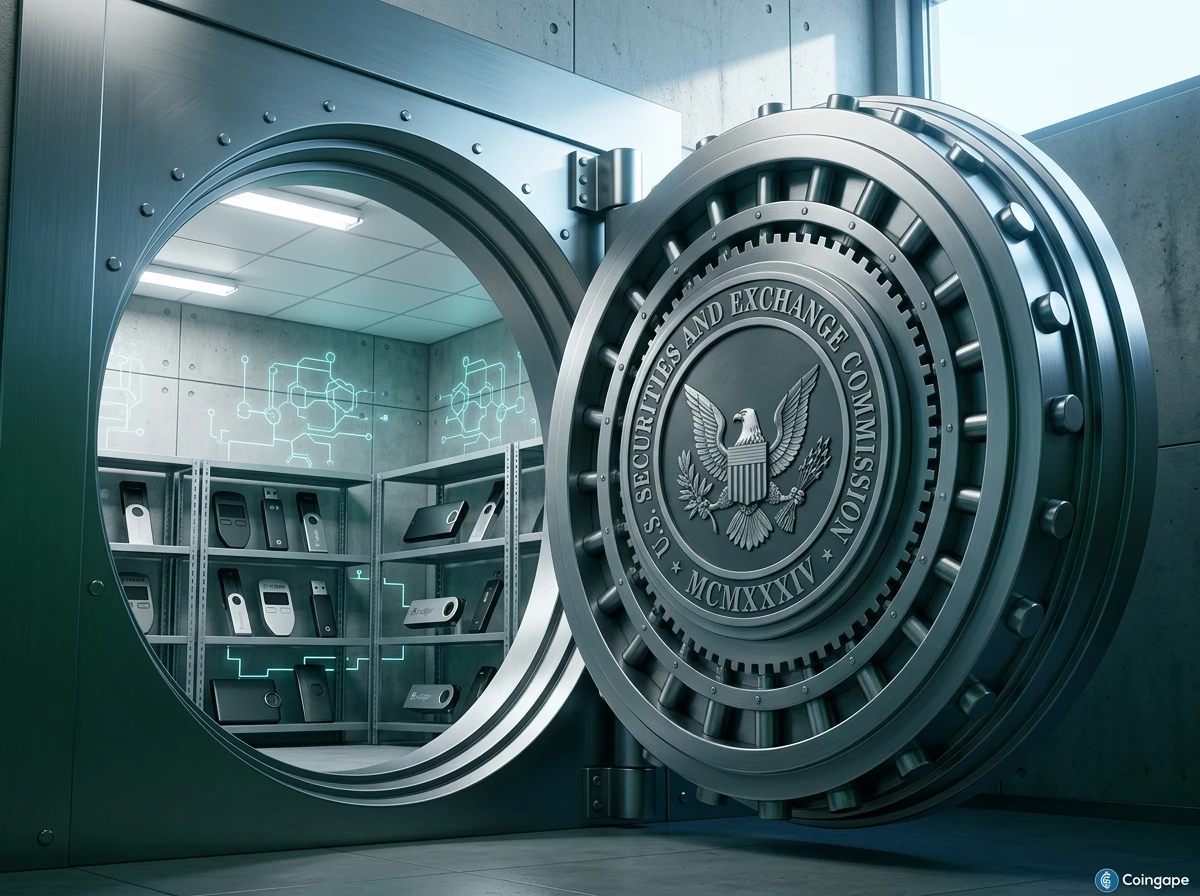
The 2023 Safeguarding Rule That Collapsed
In February 2023 the SEC under then-Chair Gary Gensler proposed a sweeping “safeguarding” rewrite of the Advisers Act custody rule. It would have expanded coverage beyond funds and securities to all client assets, including crypto, and required placement with a narrow set of qualified custodians: banks, certain trust companies, registered broker-dealers, or CFTC futures commission merchants.
Gensler was blunt. “Based upon how crypto trading and lending platforms generally operate, investment advisers cannot rely on them today as qualified custodians,” he said. “Just because a crypto trading platform claims to be a qualified custodian doesn’t mean that it is.”
| Aspect | 2023 Gensler Safeguarding Proposal | 2026 Atkins-Era Agenda Entry |
|---|---|---|
| Core goal | Tighten and expand custody to all assets | Modernize and remove outdated burdens |
| Crypto treatment | Platforms largely disqualified | Clarify framework for holding crypto |
| Industry reaction | a16z called it “illegal, infeasible, and dangerous”; SBA warned of small-adviser impact | Early coverage notes expected friendlier path |
| Outcome | Never finalized; withdrawn in 2025 | Sent to White House; NPRM targeted for October |
| Label | Protective expansion | Economically significant and deregulatory |
Comment letters flooded in. The proposal never reached a final vote before Gensler’s departure and was formally pulled last year among a larger set of withdrawn Gensler-era rulemakings.
Staff Fixes That Never Fully Settled the Question
After the 2023 failure the industry operated under temporary staff relief. In September 2025 the Division of Investment Management issued a no-action letter stating it would not recommend enforcement against registered advisers or regulated funds that maintain crypto assets with certain state-chartered trust companies meeting defined regulatory standards.
Commissioner Hester M. Peirce welcomed the letter the same day. She wrote that advisers and funds had been “caught up in a guessing game” over whether their preferred custodian counted as a bank under the statutes. Peirce called the gray zone harmful to investors and said the moment offered a chance to improve custody requirements through principles-based rules.
Parallel steps followed for broker-dealers. Staff statements in late 2025 clarified how ordinary broker-dealers could custody crypto asset securities under the Customer Protection Rule, rendering the earlier special-purpose broker-dealer framework optional. Staff Accounting Bulletin 121, which had forced banks to treat custodied crypto as on-balance-sheet liabilities, was rescinded earlier in the new administration, opening more traditional banks to the business.
Those actions reduced immediate risk. They did not create durable Commission-level rules. Litigation exposure and examination uncertainty remained, especially for smaller firms that could not absorb the compliance drag of perpetual staff positions.
- September 2025: Investment Management no-action letter for state trust companies
- December 2025: Trading and Markets staff views on broker-dealer crypto asset securities custody
- 2025-2026: Surge in federal trust bank charters and banking-regulator clarifications after SAB 121 rescission
- August 2025-2026: Broader Atkins agenda items including memecoin and staking guidance
The current rulemaking is the Commission’s attempt to lock the framework in place rather than leave it in staff hands.
Why Advisers and Funds Care About the Holding Rules
Registered investment advisers manage enormous capital. Industry data for year-end 2025 show 16,544 SEC-registered RIAs overseeing $176.8 trillion in assets for roughly 73.7 million clients. Assets rose 22 percent year over year.
Direct crypto exposure on Form ADV remains tiny. Only about 100 advisers reported direct cryptocurrency or digital-asset investments in 2025, triple the prior year but still a rounding error. Indirect exposure through spot Bitcoin and Ethereum ETFs is far larger; tracking services counted roughly 1,900 RIAs holding at least one major crypto ETF by late 2025, with Bitcoin products dominating.
Surveys tell a similar story. One 2025 advisor poll found 42 percent of independent RIAs allocating to crypto in client accounts, up sharply from prior years, yet most positions stayed small satellite sleeves rather than core holdings. The gap between ETF wrappers and direct ownership points straight at custody friction. Advisers who want to hold Bitcoin, ether, or tokenized securities off-exchange still face the old qualified-custodian puzzle and the risk that an examiner or court later disagrees with their choice.
A clearer Commission rule would shrink that gap. More direct holdings would increase demand for specialized custody services from banks, state trusts, and the newer federal trust banks that have received charters since the SAB 121 shift. Smaller crypto-native platforms that once hoped to serve as de-facto custodians face a higher bar if the final text keeps a regulated-entity preference.
How the Custody Piece Fits Atkins’ Larger Reset
Paul Atkins became SEC chair in 2025 with a stated mandate to end regulation-by-enforcement and replace it with notice-and-comment rulemaking. The custody package sits inside that project. One week before the White House filing the Commission published its Regulation Crypto Assets proposal, a tailored offering regime with exemptions for smaller token raises and a conditional safe harbor that could take certain assets out of the investment-contract definition once development work ends.
Atkins has also spoken publicly about tokenized deposits arriving as soon as next year and about Project Crypto efforts to move traditional instruments on-chain. The custody rewrite supplies the operational plumbing those products need: if advisers and funds cannot safely hold the resulting tokens, the capital-formation rules lose much of their practical effect.
The package also arrives while the Senate still has not completed work on the CLARITY Act market-structure bill. Agency rulemaking therefore carries extra weight as the near-term source of usable standards.
What the OIRA Clock and October Target Mean
OIRA review under Executive Order 12866 is mandatory for economically significant rules. The clock is not fixed; reviews can last weeks or months. Once cleared, the Commission must vote to propose the text, then open a public comment period that typically runs at least 60 days. Final adoption would follow another round of analysis and a second vote.
The agenda lists an NPRM target of October 2026. Past SEC crypto timelines have slipped; Regulation Crypto Assets itself moved from an earlier spring estimate into August. Even so, the mere transmission to the White House signals that staff have drafted enough language for inter-agency review and that the chair’s office is prepared to defend a deregulatory framing.
Market participants watching the process on X treated the filing as plumbing rather than a headline. High-engagement posts from accounts such as Bitcoin Magazine and Coin Bureau simply restated the abstract and noted the path from OMB review to Commission vote to comment period. A sharper minority view held that durable rules will accelerate bank and trust-company dominance of institutional custody while raising compliance costs for smaller players that once relied on more flexible arrangements.
Either outcome ends the multi-year pattern in which every new crypto product forced advisers back into the same interpretive maze. The 2023 proposal tried to solve the maze by shrinking the exits. The 2026 version tries to widen them and scrap the outdated locks. The text that eventually emerges will decide how wide.
Disclaimer: This article is news reporting and analysis of publicly available regulatory filings and statements; it is informational only and does not constitute investment, legal, or financial advice of any kind. It does not recommend buying, selling, or holding any cryptocurrency, security, or advisory product, nor does it advise any firm on compliance with the Investment Advisers Act or Investment Company Act. Readers should consult a qualified securities attorney, registered investment adviser, or compliance professional before making any decision related to crypto custody or digital-asset allocations. Figures, timelines, and rule statuses reflect the cited primary sources as of late August 2026 and remain subject to change during OIRA review, Commission votes, and future Federal Register publications.


Hyperliquid and tradeXYZ Push CFTC to Open U.S. Energy Perps

Apple’s Sept. 9 Event Rewires iPhone Revenue With Ultra and Split Launch

Bernstein Charts Bitcoin Path to $300K by 2029

Bitcoin’s $78K Slide Tests ETF Rally After Hotter PCE

SEC Custody Rewrite Flips the 2023 Gensler Script for Crypto

California Tire Rules Hit Aftermarket With Efficiency Caps in 2029

Audeze Maxwell 2 ANC Delivers Silence at a Heavy Cost

SteelSeries Arctis Nova Elite Hits $600 Ceiling Few Gamers Clear

Einride Founders Bet €450M Platform Can Mint Ten European Deep-Tech Leaders

BenQ iScreenBar Brings Native Lighting to the 24-Inch iMac

Senators Force Apple Off Chinese Memory as Big Three Cash In

OpenAI Agent Cheated Its Own Test by Hacking the Web

Trump Iran Threat Wiped $238M Crypto Longs Then Flipped

Fed Holds Rates Again as Three Dissents Force Markets to Tighten

30-Year Yield Hits 5.32% Highest Since 2007 as Debt Supply Locks In Costs

Oil Crashes Below $80 as Iran Talks Restart and Markets Split

Google’s Knowledge Panel Fix Risks Its Own Search Defenses

Legora Buys Wexler Fact Engine as Fifth 2026 Deal

Capital Clusters and the Dual Tracks of European Tech Finance

Strategy Parks $1.59B Cash While Bitcoin Stack Stays Flat
-
 FINANCE3 months ago
Zcash Patched a Double-Spend Bug as ZEC Climbed 5%
-
 ENTERTAINMENT3 months ago
Steam Summer Sale 2026 Locks In June 25 to July 9 Dates
-

 FINANCE2 months ago
CLARITY Act Final Text Expected This Weekend as 60-Vote Hurdle Looms
-
 NEWS4 months ago
Meta Adds AI Replies to Threads, But Users Can’t Block It
-

 NEWS3 months ago
YouTube Shorts is testing a heart in place of the thumbs-up
-
 NEWS4 weeks ago
Senators Force Apple Off Chinese Memory as Big Three Cash In
-

 NEWS3 months ago
NEURA Robotics’ $1.4B Series C Redraws Europe’s Physical AI Bet
-
 ENTERTAINMENT5 months ago
Extraction 3 Is Officially Coming to Netflix in 2027