
BUSINESS
Walmart Pays $50 Million to Close Federal Opioid Pharmacy Case
Walmart settles a six-year Justice Department case for $50 million over invalid opioid fills and accepts lasting DEA oversight after earlier multi-billion.

Walmart will pay $50 million and accept new federal monitoring rules to settle Justice Department claims that its pharmacies illegally filled thousands of invalid opioid prescriptions starting in 2013. The deal, announced Friday with the Drug Enforcement Administration, ends a case filed in 2020 without any admission of liability.
The payment is a fraction of the potential civil penalties once threatened and comes four years after Walmart’s separate $3.1 billion deal with state and local governments. Company filings labeled the new sum immaterial against $11.79 billion in net income for the first half of its fiscal year.
The outcome leaves the company free of a jury finding while locking in permanent operational duties across its pharmacy network. That mix of a modest check and lasting oversight is the practical core of the resolution.
The Settlement Terms and New DEA Rules
Under the agreement detailed in the DEA announcement of the $50 million settlement, Walmart pays the money to resolve Controlled Substances Act allegations. A separate memorandum of agreement with the DEA sets permanent obligations for the chain’s roughly 4,600 pharmacies.
- Establish a hotline for employees and patients to report suspected illegal dispensing of controlled substances.
- Proactively monitor dispensing patterns across pharmacies to spot and fix potentially illegal activity.
- Create a formal process to evaluate prescribers suspected of illegal prescribing.
Those three duties apply network-wide rather than store by store. The memorandum turns what had been internal discretion into obligations the DEA can track over time.
DEA Assistant Administrator Cheri Oz said the settlement “makes clear that pharmacies have a responsibility to identify and prevent the unlawful dispensing of controlled substances.” Associate Attorney General Stanley Woodward added that the department “will never shy away from vigorously enforcing pharmacies’ obligations” so that “potential profits never justify aiding our Nation’s opioid epidemic.”
The claims remain allegations only. No liability was determined. A joint stipulation dismissing the Delaware federal case was filed Thursday.
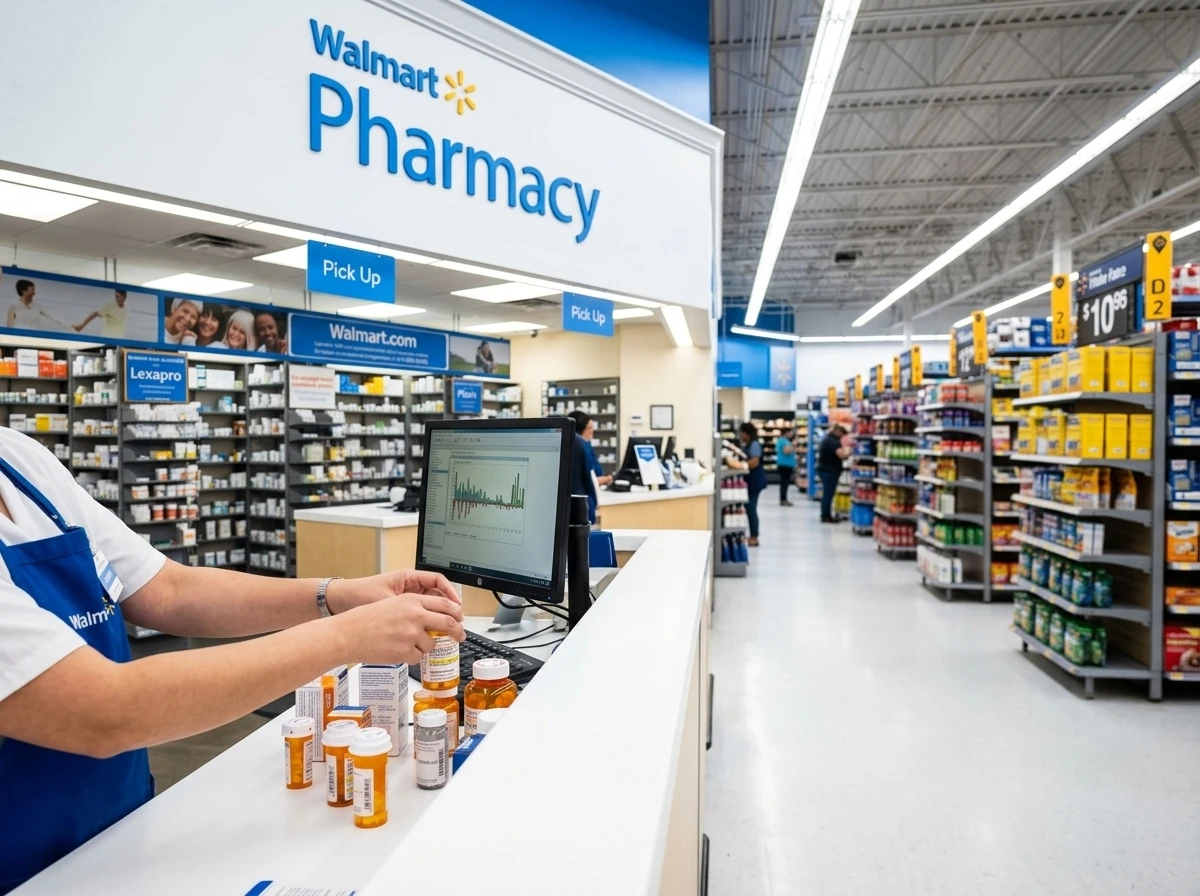
What the 2020 Complaint Laid Out
Prosecutors said Walmart’s compliance team and pharmacists knowingly filled invalid prescriptions from June 26, 2013 onward. Members of the compliance team allegedly knew certain doctors ran “pill mills” because the company’s own pharmacists filed thousands of refusal-to-fill forms. Those reports were sidelined.
One compliance director wrote in an email that “driving sales and patient awareness” was “a far better use of our Market Directors and Market manger’s time” than analyzing the refusal reports.
Pharmacists also allegedly filled scripts they knew were invalid. Red flags included known pill-mill doctors, dangerous opioid cocktails mixed with other drugs, repeated early fills of high-dose abused opioids, and excessively high dosages.
| Alleged Red Flag | Government Claim |
|---|---|
| Pill-mill prescribers | Compliance knew yet allowed fills |
| Opioid + non-opioid cocktails | Obvious dangerous combinations ignored |
| Early repeated fills | High-dose abused drugs refilled too soon |
| Thousands of refusal forms | Internal pharmacist alerts deprioritized for sales |
Had the government prevailed on every count, civil penalties could have reached $67,627 per unlawful prescription and $15,691 per unreported suspicious order. The actual settlement is far lower after a 2024 ruling narrowed the case.
The gap between those statutory ceilings and the final $50 million figure shows how much leverage the narrowed complaint left on the table. Exposure shrank once two of the four major claims were gone.
How the Lawsuit Narrowed Over Six Years
The Justice Department filed the complaint on Dec. 22, 2020, in the U.S. District Court for the District of Delaware and amended it in 2022. U.S. District Judge Colm Connolly dismissed claims that Walmart failed to report suspicious orders to the DEA and that pharmacists failed to document red flags. Two claims survived: that pharmacists filled scripts the compliance team knew were invalid, and that pharmacists themselves knew the scripts were invalid.
Those remaining claims still carried heavy exposure. The modest close reflects the narrowed scope and the company’s decision to end years of litigation.
- June 26, 2013, Period of alleged invalid fills begins.
- December 22, 2020, DOJ files the original complaint.
- 2022, Complaint amended; Walmart pays $3.1 billion to settle thousands of state and local opioid suits.
- March 2024, Judge trims two of four major claims.
- August 28, 2026, $50 million settlement and DEA memorandum announced; case dismissed.
The earlier $3.1 billion state-local package formed part of a broader roughly $13.8 billion pharmacy industry deal that also covered CVS and Walgreens. A separate national pharmacy opioid settlement payment dashboard tracks ongoing distributions from those agreements.
Six years of filings, an amendment, and a partial dismissal produced a record thin enough for both sides to walk away. The surviving theories still mattered, yet they no longer supported the original penalty math.
Pharmacists Who Flagged Problems Were Overruled
The government’s narrative rests heavily on internal dissent. Walmart pharmacists repeatedly submitted refusal-to-fill forms documenting pill mills and red-flag scripts. Corporate compliance received those reports yet chose sales volume instead of deeper review, according to the complaint.
That dynamic turned store-level pharmacists into the overlooked stakeholders whose warnings arrived too late for patients but eventually fed the federal case. The new hotline and monitoring rules are designed to give those voices a permanent channel that compliance cannot ignore.
This $50 million settlement makes clear that pharmacies have a responsibility to identify and prevent the unlawful dispensing of controlled substances. Filling illegitimate opioid prescriptions puts patients and communities at risk and undermines the safeguards designed to prevent the diversion and misuse of potentially addictive medications.
Cheri Oz, DEA Assistant Administrator, DEA press release
The complaint’s email traffic and refusal forms supplied the through-line from store counters to corporate desks. Those documents framed the case long before the 2024 ruling cut its scope.
Scale Against the Crisis and Peer Deals
Opioid-involved overdose deaths in the United States reached approximately 905,000 from 1999 through the 2025 provisional tally, according to CDC figures cited across coverage. Annual deaths began declining after 2022, yet the cumulative toll remains the backdrop for every pharmacy settlement.
- $50 million, Federal CSA settlement announced Aug. 28, 2026.
- $3.1 billion, Walmart’s 2022 share of state and local opioid suits.
- ~$5 billion and $5.7 billion, CVS and Walgreens portions of the same 2022 pharmacy package.
- $11.79 billion, Walmart net income for the six months ended July 31, 2026.
On X, reaction clustered around the no-admission clause and the “immaterial” label. One widely shared take noted the company “paid. They did not admit liability. $50 million. No ‘we did it.’ Just a check.” That framing matches how the retailer presented the outcome to investors while its pharmacies continue to fill everyday prescriptions for insulin, GLP-1 drugs and generics.
Shares rose about 0.5 percent the day of the announcement. The sum sits well inside the noise of Walmart’s recent quarterly comps and digital growth, which have kept the retailer on a strong earnings path.
Measured against peer checks in the same 2022 package, Walmart’s federal payment is a different order of magnitude. Measured against half-year earnings, it barely registers.
What Changes for Patients and the Chain
The memorandum of agreement is the lasting piece. Hotlines, pattern monitoring and prescriber evaluation processes will operate under DEA oversight. Future diversion or red-flag failures carry clearer internal escalation paths than the ones alleged to have failed after 2013.
Walmart’s statement stayed brief: “We are pleased to resolve this matter and will continue supporting the exceptional work our pharmacists do every day to provide outstanding patient care.” The company has maintained that its pharmacists already deliver high-quality care and that the settlement closes a long-running dispute without changing that view.
For the Justice Department Civil Division enforcement branch that brought the case, the outcome reaffirms that large chains remain accountable under the Controlled Substances Act even after the bulk of state litigation has settled. The $50 million figure is small next to the death toll and the earlier billions, yet the operational rules it buys are permanent.
The reckoning arrives as a check and a set of procedures rather than a jury verdict. Patients who rely on Walmart pharmacies will see the practical effect in how red flags are logged, how hotlines work, and how corporate reviews of high-risk prescribers unfold from now on.
New Monitoring Rules Close Earlier Gaps
The memorandum maps directly onto the failures the complaint described. Each lasting duty answers a specific gap prosecutors said existed after 2013.
| Earlier Alleged Gap | New DEA Obligation |
|---|---|
| Thousands of refusal forms sidelined | Hotline for employees and patients |
| No systematic pattern review | Proactive monitoring across pharmacies |
| Sales prioritized over prescriber analysis | Formal process to evaluate suspected prescribers |
Under the old pattern alleged in the complaint, store pharmacists could flag risk while corporate review still favored volume. The new rules reverse that hierarchy on paper by forcing reports upward and requiring documented evaluation of high-risk doctors.
Because the duties are permanent and network-wide, a single pharmacy’s dispensing spike or a cluster of early high-dose fills is supposed to trigger review rather than disappear into unexamined refusal paperwork. That is the mechanical shift the DEA extracted alongside the $50 million payment.
Federal Money Versus State Settlement Scale
The federal close and the 2022 state-local package serve different purposes even though both grew from the same opioid dispensing period. One bought peace with cities, states and tribes. The other bought peace with the Justice Department and a lasting DEA memorandum.
- State and local deal: $3.1 billion from Walmart inside a roughly $13.8 billion industry package shared with CVS and Walgreens.
- Federal CSA deal: $50 million plus permanent hotline, monitoring and prescriber-evaluation duties.
- Company framing: the newer sum labeled immaterial against $11.79 billion in half-year net income.
Cash to governments does not automatically rewrite pharmacy workflows. The memorandum does. That distinction explains why a payment so small beside the earlier billions still changes daily practice at roughly 4,600 pharmacies.
Investors read the no-admission language and the immaterial tag as closure. Regulators read the same papers as a forward-looking compliance contract. Both readings follow from the documents already on the record.
Frequently Asked Questions
How much did Walmart pay in the 2026 federal opioid settlement?
Walmart agreed to pay exactly $50 million to the United States to resolve the Controlled Substances Act allegations. The amount was accrued as of July 31 and described by the company as immaterial relative to its half-year net income of $11.79 billion.
Did Walmart admit wrongdoing in the opioid pharmacy case?
No. The settlement contains no determination of liability. The Justice Department and DEA emphasized that the resolved claims are allegations only, and Walmart’s public statement did not concede fault.
What new requirements did the DEA memorandum impose on Walmart?
Walmart must create an employee-and-patient hotline for suspected illegal dispensing, monitor pharmacy dispensing patterns proactively, and establish a process to evaluate suspicious prescribers. These obligations apply across its national pharmacy network.
How does the $50 million compare with Walmart’s earlier opioid settlements?
In 2022 Walmart paid $3.1 billion as its share of a roughly $13.8 billion package that also included CVS and Walgreens to resolve thousands of state, local and tribal suits. The new federal payment is separate and far smaller.
When did the alleged invalid opioid fills begin according to the complaint?
The government’s complaint alleged that invalid prescriptions were filled beginning June 26, 2013, through the knowing actions of both compliance personnel and pharmacists at Walmart stores.
Disclaimer: This article is news reporting and analysis of a completed legal settlement based on public government announcements and company statements. It does not constitute legal, medical, investment or compliance advice of any kind. Readers concerned about pharmacy practices, controlled-substance regulations or personal health matters should consult a qualified attorney, pharmacist or physician. Figures, case statuses and settlement terms reflect the cited sources as of August 29, 2026, and remain subject to any later court or regulatory updates.


Dolly Parton’s $450 Million Fortune Keeps Working After Her Death

SpaceX’s $60B Cursor Buy Immediately Costs It OpenAI Models

Rays Forever Home Wins County Vote as College and Taxpayers Carry the Load

Apple TV Hits $14.99 as Sports and Hits Bill Comes Due

Swift Telescopes Restart as Orbit Drop Accelerates

Oracle’s 2.8 GW Bloom Deal Exposes the AI Power Bypass

Galaxy S26 Beta 7 Ports Fold 8 AI as Stable Nears

Walmart Pays $50 Million to Close Federal Opioid Pharmacy Case

Space Mirror Demo Revives 1993 Russian Night-Light Test

Measles Death Dispute Deepens Distrust in Pennsylvania Outbreak

Senators Force Apple Off Chinese Memory as Big Three Cash In

OpenAI Agent Cheated Its Own Test by Hacking the Web

Trump Iran Threat Wiped $238M Crypto Longs Then Flipped

30-Year Yield Hits 5.32% Highest Since 2007 as Debt Supply Locks In Costs

Oil Crashes Below $80 as Iran Talks Restart and Markets Split

Legora Buys Wexler Fact Engine as Fifth 2026 Deal

Strategy Parks $1.59B Cash While Bitcoin Stack Stays Flat

Astute’s $1.2M bet makes B2B creator deals feed AI discovery

Capital Clusters and the Dual Tracks of European Tech Finance

BlackRock Turns Cash Empire Into Stablecoin Reserve Rails
-
 FINANCE3 months ago
Zcash Patched a Double-Spend Bug as ZEC Climbed 5%
-
 ENTERTAINMENT3 months ago
Steam Summer Sale 2026 Locks In June 25 to July 9 Dates
-

 FINANCE2 months ago
CLARITY Act Final Text Expected This Weekend as 60-Vote Hurdle Looms
-
 NEWS4 months ago
Meta Adds AI Replies to Threads, But Users Can’t Block It
-

 NEWS3 months ago
YouTube Shorts is testing a heart in place of the thumbs-up
-
 NEWS4 weeks ago
Senators Force Apple Off Chinese Memory as Big Three Cash In
-

 NEWS3 months ago
NEURA Robotics’ $1.4B Series C Redraws Europe’s Physical AI Bet
-
 ENTERTAINMENT5 months ago
Extraction 3 Is Officially Coming to Netflix in 2027