
NEWS
Apple Defused Its DOJ Antitrust Case Before Settlement Talks Began
Apple already fixed four of five DOJ monopoly complaints on its own before settlement talks opened, leaving the Apple Watch’s Android snub unresolved.

Apple and the U.S. Department of Justice have opened early settlement talks over the 2024 lawsuit accusing the iPhone maker of running an illegal smartphone monopoly, Bloomberg reported this week. Draft agreements have already changed hands.
Four of the five practices the government challenged are already gone. Apple rewrote them itself, months before any settlement was on the table. The one holdout, the Apple Watch’s refusal to pair with Android phones, is now being fought in a separate lawsuit that will not end just because Washington and Cupertino shake hands.
Sixteen States and an 88-Page Monopoly Complaint
The case, United States and Plaintiff States v. Apple Inc., No. 2:24-cv-04055, was filed in the U.S. District Court for the District of New Jersey on March 21, 2024. The Justice Department was joined by 16 other state and district attorneys general in an 88-page complaint accusing Apple of illegally maintaining monopoly power over smartphones.
An amended complaint filed June 11, 2024 added Indiana, Massachusetts, Nevada and Washington, pushing the group of co-plaintiffs to twenty alongside the DOJ. Then-Attorney General Merrick Garland said Apple had maintained monopoly power in the smartphone market “not simply by staying ahead of the competition on the merits, but by violating federal antitrust law.” Then-Assistant Attorney General Jonathan Kanter accused the company of leaning on “a series of ‘Whac-A-Mole’ contractual rules and restrictions.”
New Jersey Attorney General Matthew Platkin, whose office helped bring the case, put it more bluntly: “Apple’s dominance in the smartphone market is not an accident,” he said in the announcement. A New Jersey federal judge denied Apple’s motion to dismiss in June 2025, letting the case move into discovery. That is where things started shifting in Apple’s favor.
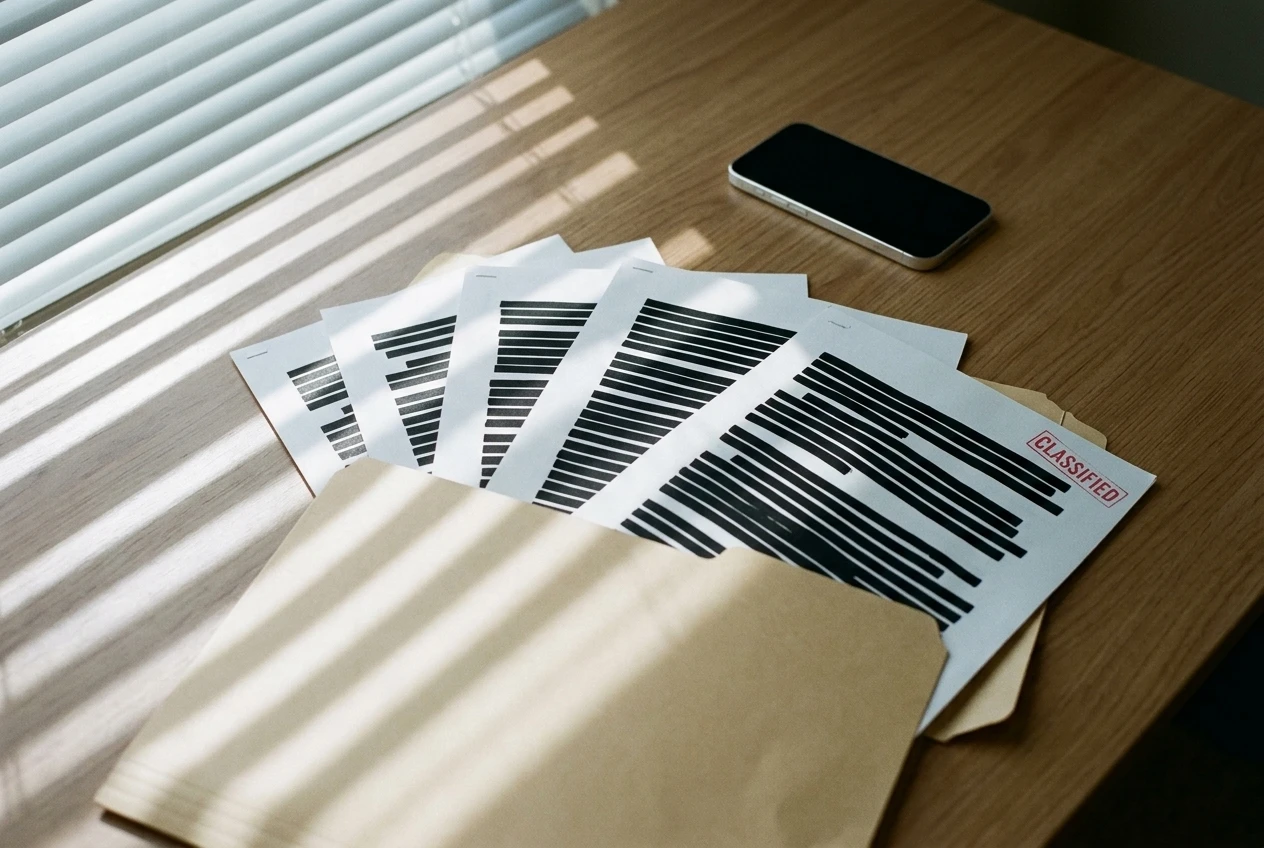
Four Complaints Down, One to Go
The 2024 complaint rested on five specific chokepoints: super apps, cross-platform messaging, cloud game streaming, digital wallets and smartwatches. Over roughly a year, Apple addressed four of them through its own platform updates, not through any court order.
| Original 2024 Complaint Area | What Apple Changed | Current Status |
|---|---|---|
| Super apps | Opened a mini-apps program for developers | Resolved |
| Messaging | Added support for Google’s RCS standard in Messages | Resolved |
| Cloud gaming | Allowed cloud streaming game apps in the App Store | Resolved |
| Digital wallets | Opened the iPhone’s NFC chip to third-party wallet apps | Resolved |
| Smartwatches | Eased how rival smartwatches interact with the iPhone | Unresolved; Apple Watch still will not pair with Android |
The Antitrust Division’s own case file still lists the smartwatch allegation among the live claims. Nothing in the docket shows it resolved. That gap is not an accident of timing. It is the one place Apple has decided not to bend.
The Apple Watch Still Won’t Talk to Android
Apple’s public position, reported by 9to5Mac in 2024 and cited in later academic work, was that the company studied Android interoperability for three years and concluded it was not technically feasible. A team of researchers disagreed. In a paper hosted on arXiv, they built a working Android app that pairs with an Apple Watch, reverse-engineering the connection Apple said could not be built.
That gap has already produced a new lawsuit that has nothing to do with the DOJ. Reincubate filed a private antitrust complaint against Apple in the same New Jersey district court on January 27, 2026, case number 2:26-cv-00828. The 75-page filing argues Apple’s grip over iOS, macOS, watchOS, tvOS and visionOS lets it dictate whether its devices talk to competing platforms, entrenching its smartphone dominance and spilling into laptops, tablets and smartwatches. It seeks treble damages, not just an injunction.
A DOJ settlement, however it ends up worded, cannot make that private case disappear. Whatever Apple and the government agree to, the smartwatch fight keeps running under a different case number.
An Unconfirmed Appointment Now Runs Antitrust
The DOJ’s posture shifted sharply once Stanley Woodward, the department’s Associate Attorney General and third-ranking official, took direct control of the Antitrust Division in mid-June 2026. Attorney General Todd Blanche signed a memo authorizing Woodward to exercise the powers of the assistant attorney general for antitrust, replacing acting head Omeed Assefi, according to a Reuters dispatch.
The move drew notice for how quietly it happened.
there was no formal announcement, no White House action or U.S. Senate consultation
Law360’s Bryan Koenig wrote that in a July 9, 2026 piece examining Woodward’s takeover. Woodward had already built a track record in the role. Global Competition Review credited him with leading the department’s approval of Hewlett Packard Enterprise’s acquisition of Juniper Networks, a deal that drew scrutiny from lawmakers. The Capitol Forum described his continued grip on the division as a sign of continued light-touch antitrust enforcement with consequences for major corporate deals well beyond Apple.
An antitrust chief who clears big mergers and never faced Senate questioning is now the person deciding whether to negotiate with Apple instead of trying the case in front of a jury.
New Leverage From Fourteen Federal Agencies
Apple picked up a separate procedural win just before the settlement talks became public. Jose Linares, a retired federal judge serving as Special Discovery Master, ruled on July 14, 2026 that Apple can pursue records from more than a dozen federal agencies about how they evaluate, buy and use smartphones and wearables. The government had tried to block the request, arguing the agencies were irrelevant to a consumer smartphone case and that some material was classified.
Linares rejected that argument, finding the government had failed to point to any specific national security concern tied to the request. Agencies covered by the ruling include:
- The Central Intelligence Agency
- The Federal Bureau of Investigation
- The National Security Agency
- The Department of Defense, commonly known as the Pentagon
- The Department of Homeland Security
- NASA
Apple’s theory is straightforward. If spy agencies and the military pick iPhones for security and reliability, that undercuts the government’s own claim that Apple’s restrictions are anticompetitive rather than legitimate product choices. The ruling is not unlimited. Agencies can still withhold specific documents by listing them on a privilege log, and any dispute over those withheld files goes back to Linares.
What Would an Apple-DOJ Settlement Actually Include?
No settlement terms have been made public yet. Bloomberg’s sources describe draft agreements changing hands and multiple offers from Apple this year, but caution that a deal is not guaranteed, and any final agreement would still need to satisfy twenty state and district co-plaintiffs, not just the federal government.
- What’s confirmed: talks are formally underway, and draft settlement materials have been exchanged in recent weeks
- What’s confirmed: Apple has made multiple settlement offers so far this year
- What’s confirmed: no trial would start before 2027 regardless of how the talks go
- What’s unconfirmed: whether the Apple Watch’s Android snub is even part of the negotiation
- What’s unconfirmed: whether all twenty state and district co-plaintiffs would sign onto a DOJ-only deal
- What’s unconfirmed: any financial terms, penalties or compliance monitoring the agreement might include
Every confirmed fact points toward Apple negotiating from strength. Every unconfirmed one is a place the company has room to hold its ground.
Apple’s Case Keeps Citing Microsoft’s Playbook
Court filings in the case draw an explicit line back to United States v. Microsoft Corp., the 1990s case that ended in a consent decree rather than the breakup a trial court had once ordered. Plaintiffs in the Apple case argue Apple’s conduct mirrors Microsoft’s old tactics and, in their telling, goes further. If history repeats, a negotiated settlement with behavioral conditions, not a forced breakup, is the far more likely outcome here too.
There is an ocean’s difference between how the two governments regulating Apple have behaved. European regulators have already forced Apple to open sideloading and alternative app stores under the bloc’s gatekeeper rules, years ahead of anything Washington has required. The DOJ case only ever sought injunctive relief and cost recovery, never damages, so a settlement was always the likelier endpoint next to a jury trial.
If the talks collapse anyway, the case heads toward a trial that, by every estimate on the New Jersey federal docket, will not start before 2027.
Frequently Asked Questions
Is Apple facing a financial penalty in this case?
No damages claim was ever part of it. The original complaint sought injunctive relief, meaning court-ordered changes to Apple’s conduct, plus reimbursement of litigation costs and fees, not monetary damages for consumers or competitors.
What is the Reincubate lawsuit, and how does it relate to the DOJ case?
Reincubate filed its own antitrust complaint against Apple in the same New Jersey court on January 27, 2026, case number 2:26-cv-00828, arguing Apple’s control over its operating systems blocks interoperability with Android and PCs. It is a separate private case that a DOJ settlement cannot resolve.
Does a settlement change anything for Apple users in Europe?
Not directly. This case is a U.S. Sherman Act matter covering conduct in the American market. The European Union’s Digital Markets Act already forced Apple to allow sideloading and alternative app stores across the bloc, independent of whatever Washington decides.
Which states are involved, and could they block a deal?
Twenty states and the District of Columbia are co-plaintiffs alongside the DOJ, including California, New York, New Jersey, Michigan and Tennessee. State attorneys general act independently of the federal government, so a DOJ-only settlement would not automatically bind them.
When would the case go to trial if talks fail?
No trial would begin before 2027 under current case scheduling. That timeline gives both sides room to keep negotiating without an imminent courtroom deadline forcing their hand.


Nvidia Buys Hugging Face, the Platform That Turned It Down

OpenAI Names GPT-6 Astra AGI, Then Locks It Down

Relay Q Bets a $150 Puck Can Beat Dictation Apps

Accel Backs Atira to Automate Industrial Sales Engineering

Beyerdynamic Hides a Spare Battery in the Aventho Y

Lummis Pushes the CLARITY Act to Export Wyoming’s Crypto Banks

AI Exposure Turns a Cloud Beat Into a Selloff

Citadel’s XRP ETF Filing Looks Like Dealer Inventory

Revolut’s OCC Nod Starts an 18-Month US Bank Clock

British Business Bank’s Zinc Fund Will Mint 80 Startups

Walter’s TWG Insists No Fraud as Insurer Probes Force Cleanup

30-Year Yield Hits 5.32% Highest Since 2007 as Debt Supply Locks In Costs

PCE Stays at 3.7% as Gas and Tariffs Outrun Coming Revisions

Astute’s $1.2M bet makes B2B creator deals feed AI discovery

Strategy Parks $1.59B Cash While Bitcoin Stack Stays Flat

The 20% Savings Ideal Meets a 2.7% Reality Check

Amber’s €7M locks Mittelstand knowledge inside Europe

SpaceX Stock Rebound Tests Real Demand Before Huge Unlock

Monzo chair Gary Hoffman exits after board revolt fallout

AI data centers win as RAM kits jump nearly 500 percent
-
 FINANCE3 months ago
Zcash Patched a Double-Spend Bug as ZEC Climbed 5%
-
 ENTERTAINMENT3 months ago
Steam Summer Sale 2026 Locks In June 25 to July 9 Dates
-

 FINANCE2 months ago
CLARITY Act Final Text Expected This Weekend as 60-Vote Hurdle Looms
-
 NEWS4 months ago
Meta Adds AI Replies to Threads, But Users Can’t Block It
-

 NEWS3 months ago
YouTube Shorts is testing a heart in place of the thumbs-up
-
 NEWS1 month ago
Senators Force Apple Off Chinese Memory as Big Three Cash In
-

 NEWS3 months ago
NEURA Robotics’ $1.4B Series C Redraws Europe’s Physical AI Bet
-
 ENTERTAINMENT5 months ago
Extraction 3 Is Officially Coming to Netflix in 2027