
FINANCE
BitMine’s Ether Buying Slows as Its Own Stock Falls Below Treasury Value
BitMine’s ether buying slowed as its stock fell below the value of its own $11.5 billion treasury, triggering an $86 million share buyback.

BitMine Immersion Technologies added just 7,430 ETH last week, one of its smallest weekly buys yet, and spent nearly $86 million buying back its own shares instead. The ether treasury firm’s holdings now stand at 5,777,468 coins, worth roughly $10.8 billion, and chairman Tom Lee tied the slower pace directly to the buyback.
Robinhood’s own market data pegged BMNR’s market capitalization at roughly $9.46 billion this past week. BitMine itself says its crypto, cash and side bets are worth $11.5 billion. That gap, an implied discount of nearly 18%, is why the company is buying its own stock instead of more ether.
Seven Thousand Ether, Then a Bigger Trade
BitMine, the Norwalk, Connecticut based Ethereum treasury company chaired by Wall Street strategist Tom Lee, bought 7,430 ETH over the past week. That is a fraction of the hundreds of thousands of tokens it has scooped up in some earlier weeks since launching the strategy on June 30, 2025.
Instead, the bulk of new capital went toward repurchasing about 5.5 million common shares for close to $86 million, at an average price of $15.6156, under the company’s $4 billion buyback authorization. “We view the purchase of our common shares as accretive to shareholder value,” Bitmine disclosed $11.5 billion in crypto, cash and side bets in the same release quoting Lee.
A week earlier, BitMine had reported 5.77 million ETH worth $11.3 billion in total holdings. Lining the two updates up side by side shows exactly where the money went.
| Metric | July 12 Update | July 19 Update |
|---|---|---|
| ETH Holdings | 5,770,038 ETH | 5,777,468 ETH |
| Bitcoin | 206 BTC | 207 BTC |
| Cash and Marketable Securities | $482 million | $385 million |
| Eightco Holdings Stake | $69 million | $58 million |
| Beast Industries Stake | $180 million | $180 million |
| Total Disclosed Value | $11.3 billion | $11.5 billion |
Cash and securities fell by about $97 million between the two updates. The 5.5 million share buyback alone cost close to $85.9 million, and the new 7,430 ETH added roughly $13.9 million more. Add those together and they come to almost exactly the cash that left the balance sheet.
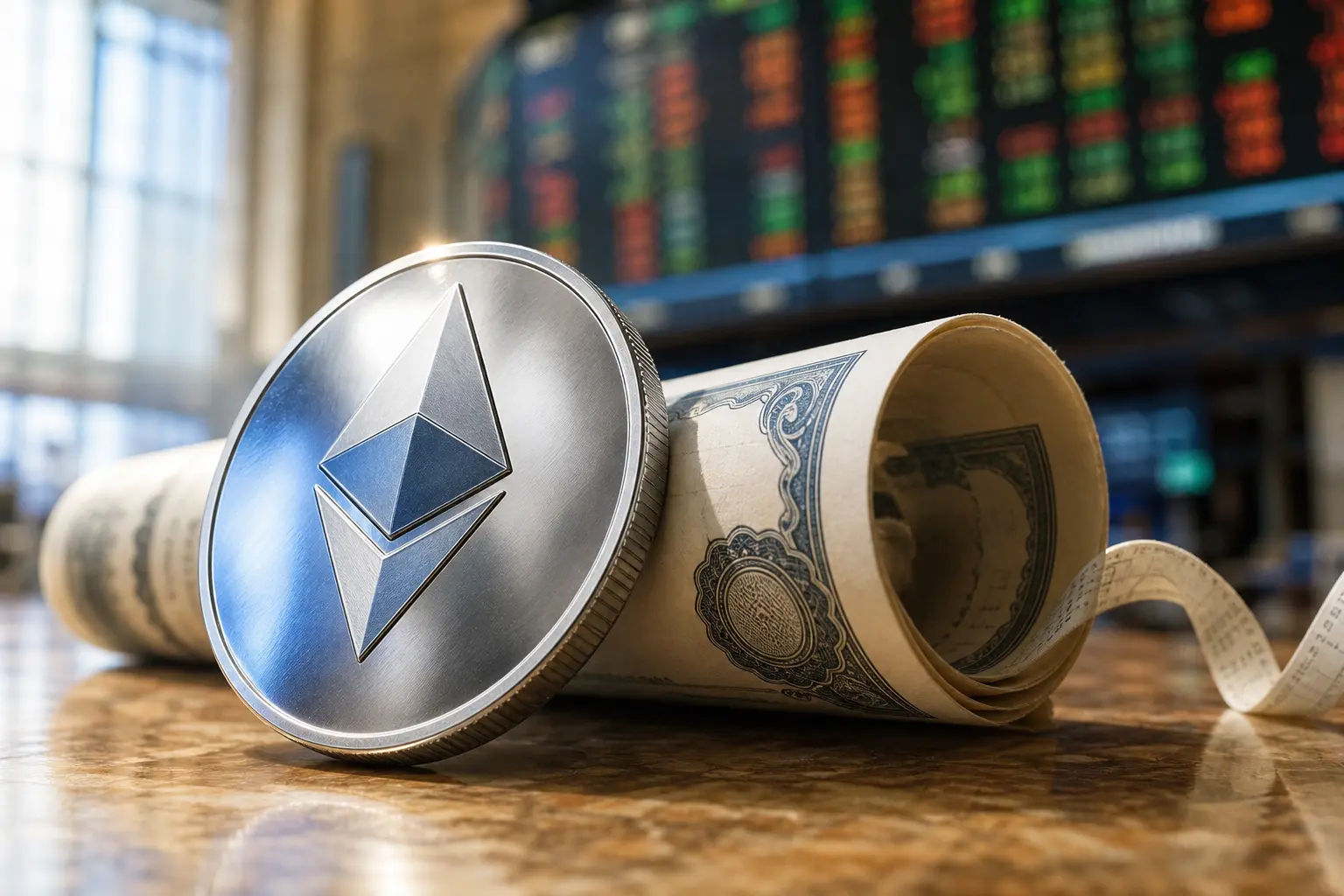
Why Is BitMine Buying Its Own Stock Instead of More Ether?
BitMine’s stock now trades for less than the crypto and cash sitting on its own balance sheet. That gap, known in treasury circles as a discount to net asset value, is the entire reason buybacks suddenly make more sense than buying more ether.
The arithmetic is simple once the two numbers sit next to each other. Robinhood listed BMNR’s market capitalization at about $9.46 billion against a $15.73 share price this past week, implying roughly 601 million shares outstanding. Divide that by BitMine’s own $11.5 billion asset figure and the stock works out to an implied multiple of about 0.82, an 18% discount to its own treasury.
That is a sharp reversal. As recently as April, BitMine’s stock traded at a premium of about 35% above the value of its ether holdings, according to a investor relations page where Lee argued Ethereum is entering its 2.0 era and macro headwinds, not fading conviction, explain crypto’s weak year.
Analysts and traders read the flip differently. A pseudonymous researcher who goes by Ceteris at crypto research firm Delphi Digital described the standard playbook bluntly on social media.
- Ceteris, Delphi Digital: “Usual flow here is: mNAV premium = sell shares, accumulate treasury asset. mNAV discount = sell treasury asset, buy shares.”
- Benzinga’s market analysis: framed the discount as a cheaper backdoor into ether exposure, since buying BMNR stock now buys a claim on the same coins at a lower implied price than the token itself.
- DL News reporting: found some ether bulls read the pivot away from pure accumulation as a red flag rather than smart capital discipline.
BitMine has not framed it that way. Lee has repeatedly said the company still intends to keep buying ether every week, and this week’s purchase, however small, kept that streak alive.
SharpLink Wrote This Playbook First
BitMine did not invent the discount-triggered buyback. Rival ether treasury firm SharpLink built its entire capital strategy around the same rule almost a year earlier.
SharpLink authorized a $1.5 billion buyback in August 2025 specifically for periods when its stock traded at or below the value of its ETH holdings. By September, the company had followed through, repurchasing about 939,000 shares at an average of $15.98. In the filing announcing that move, the company said it was rather than issue equity while trading below NAV, choosing buybacks over new share sales instead.
SharpLink has kept applying that same logic since, even as it keeps adding ether. The firm’s own 10,000 ETH purchase at $1,611 came during a stretch when Ethereum was heading toward a third straight red quarter, the kind of environment where discount dynamics tend to bite hardest.
The two companies now describe near identical rules for when to buy shares versus when to buy coins.
- No dilution below NAV, since selling new shares while trading at a discount shrinks existing holders’ ether per share.
- Buybacks funded by cash and staking income, not new debt, at both firms.
- Accumulation resumes once a premium returns, the trigger both companies say flips the strategy back toward buying crypto.
Staking Has Become the Real Business
BitMine has staked about 4.92 million ETH, roughly 85% of its total treasury, through its in house Made in America Validator Network, or MAVAN. The platform generated a 2.67% seven day annualized yield last week.
At that rate, BitMine projects around $247 million in annualized staking revenue. That figure could climb toward $290 million if the entire treasury eventually gets staked.
Staking already dwarfs everything else on the income statement. In the quarter ended May 31, BitMine reported $45.7 million from staking and validation, representing 98% of total quarterly revenue.
That cash flow is precisely what lets BitMine run two capital programs at once. Staking income, not new share sales, is increasingly what funds both the ether purchases and the buybacks.
Ninety Six Percent of the Way to Five Percent
BitMine’s ether stack now equals about 4.8% of Ethereum’s roughly 120.7 million token supply, putting the company about 96% of the way toward its stated goal of controlling 5% of all ether in circulation, a campaign Lee branded the Alchemy of 5%.
The climb has been fast by any measure. BitMine held about 625,000 ETH in late July 2025, a month after launching the strategy. Two weeks later, on August 10, that figure had already grown past 1.15 million. It now sits at 5,777,468.
Slowing the pace of purchases to fund buybacks means the final push toward 5% will take longer than the earlier trajectory suggested. Existing shareholders benefit from a below NAV buyback in the short run. The marquee accumulation target, the thing that made BitMine famous in the first place, gets pushed further out.
BitMine remains the largest corporate holder of ether in the world and the second largest crypto treasury overall, behind Strategy, which reportedly holds 843,775 bitcoin worth about $55 billion.
What Monday’s Rally Priced In
BMNR shares traded about 2.7% higher, near $16.12, during Monday’s session, putting the stock above the average price BitMine paid for its own shares in the latest buyback. The stock was added to the Russell 1000 large cap index on June 26, and its preferred shares trade separately on the NYSE under the ticker BMNP.
Wall Street sentiment has cooled from the stock’s early run. Robinhood data drawn from S&P Global Market Intelligence show BMNR shares sank 51% in the first half of the year, and price targets have followed the stock down.
Ether itself traded near $1,871, still about 62% below its all time high of $4,946.05. At $16.12, Monday’s close sat comfortably above the $15.6156 BitMine paid for its own stock. It remains far below the $71.74 high the shares touched over the past year, down more than three quarters from that peak.
Frequently Asked Questions
What is BitMine’s Alchemy of 5% plan?
It is BitMine’s stated goal of accumulating 5% of Ethereum’s total circulating supply, which stands at roughly 120.7 million ETH. The company’s 5,777,468 ETH holdings represent about 4.8% of that supply, putting it around 96% of the way to the target.
What does it mean when a treasury stock trades below its mNAV?
mNAV compares a company’s market capitalization to the value of the assets it holds. A reading below 1 means the market values the company for less than its crypto and cash are worth, the condition both BitMine and SharpLink say makes buybacks a better use of cash than buying more crypto.
How does BitMine’s ether stack compare with Strategy’s bitcoin holdings?
Strategy, the largest corporate crypto treasury, reportedly holds 843,775 bitcoin worth about $55 billion, more than BitMine’s roughly $10.8 billion in ether. BitMine ranks as the largest ether specific treasury and the second largest crypto treasury overall.
Has BitMine missed a week of ether buying since it started?
No. Lee has said the company has purchased ETH every week since launching the treasury strategy on June 30, 2025, a streak now stretching past 50 consecutive weeks, including the reduced but still positive purchase covered here.
What is MAVAN and why does it matter for BitMine’s revenue?
MAVAN, the Made in America Validator Network, is BitMine’s in house Ethereum staking platform. It already generates the vast majority of the company’s revenue and is expected to eventually expand beyond BitMine’s own treasury to serve outside institutional clients and other proof of stake networks.
Disclaimer: This article is for informational purposes only and does not constitute investment advice. Cryptocurrency and equity markets, including BMNR shares and ether, are highly volatile, and all figures are accurate as of publication.


Replit Opens Its London Office Inside an AI Crowd

Straight Circle Trailer Lands Without a U.S. Date

Anemo Labs Bets £700,000 on an AI Sense of Smell

Nintendo Prices the Zelda 40th Switch 2 at $519

Copilot Capital Buys the Autopilot Already Running 90 GW

Ground A Raises €9.1 Million for a Pallet Laser

Gibney’s Musk Film Opens in Venice Without Its Subject

Torvalds Blames AI for a Full-Fat Linux 7.3-rc2

Dexter Returns Sharper, Older, and Stuck Between Killers

Meta’s Muse Agent Can Spend Before the Privacy Lock

Walter’s TWG Insists No Fraud as Insurer Probes Force Cleanup

30-Year Yield Hits 5.32% Highest Since 2007 as Debt Supply Locks In Costs

PCE Stays at 3.7% as Gas and Tariffs Outrun Coming Revisions

Evernorth S-4 Clears Path for Active XRP Treasury on Nasdaq

Astute’s $1.2M bet makes B2B creator deals feed AI discovery

Strategy Parks $1.59B Cash While Bitcoin Stack Stays Flat

CLARITY Act Cloture Opens a Door Ethics Still Blocks

Instinct Hits $2.5 Billion as AI Agent Access Sparks Trust Fights

Oracle’s 2.8 GW Bloom Deal Exposes the AI Power Bypass

AI data centers win as RAM kits jump nearly 500 percent
-
 FINANCE3 months ago
Zcash Patched a Double-Spend Bug as ZEC Climbed 5%
-
 ENTERTAINMENT3 months ago
Steam Summer Sale 2026 Locks In June 25 to July 9 Dates
-

 FINANCE2 months ago
CLARITY Act Final Text Expected This Weekend as 60-Vote Hurdle Looms
-
 NEWS4 months ago
Meta Adds AI Replies to Threads, But Users Can’t Block It
-
 ENTERTAINMENT5 months ago
Extraction 3 Is Officially Coming to Netflix in 2027
-

 NEWS3 months ago
YouTube Shorts is testing a heart in place of the thumbs-up
-

 NEWS1 month ago
Senators Force Apple Off Chinese Memory as Big Three Cash In
-

 NEWS3 months ago
NEURA Robotics’ $1.4B Series C Redraws Europe’s Physical AI Bet