
NEWS
Zalando Joins Sereact’s $116 Million Bet Against Humanoid Robots
Zalando’s strategic investment pushes Sereact’s Series B to $116 million, backing wheeled warehouse robots over humanoid hype to automate Europe’s returns problem.

Zalando has taken a strategic stake in Sereact, the Stuttgart robotics startup whose machines fold and sort its returned clothing, pushing Sereact’s Series B to $116 million. The Berlin based fashion retailer joins a round first led by Headline in April, and Sereact has now raised more than $145 million since it opened its doors in 2021.
The deal lands as rivals chasing legged humanoid robots collect valuations in the tens of billions on almost no revenue. Sereact bet against that path years ago, choosing wheels over legs and real warehouse data over simulation. Zalando’s money, and a rejection BMW just handed a humanoid rival, suggest that bet is paying off.
Zalando’s Money Comes With a Returns Problem Attached
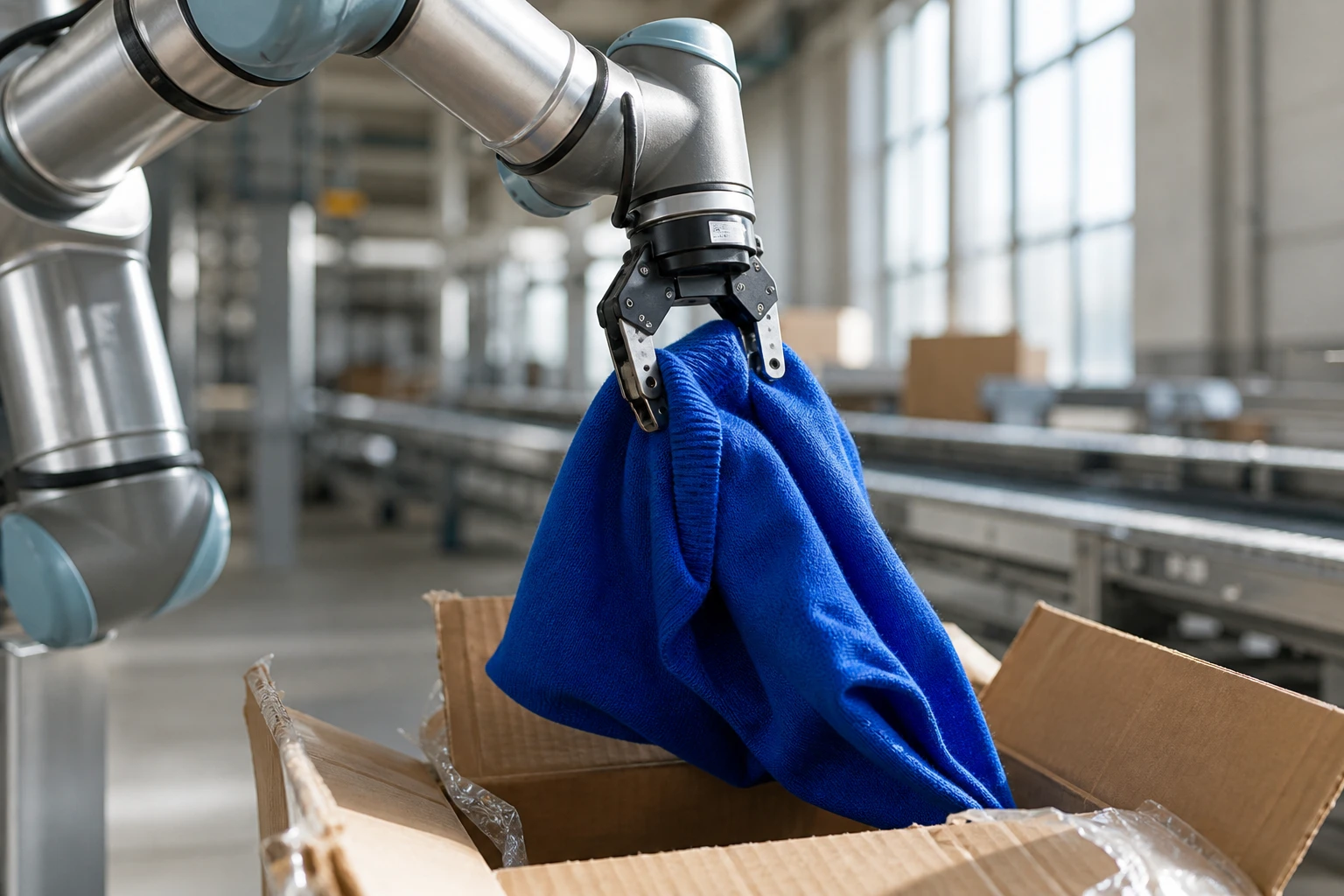
Sereact builds what it calls physical AI: software and hardware that lets warehouse robots see an object, reason about it, and act, without a programmer writing new code for every task. Its brain, called Cortex, already runs single arm picking cells, dual arm return stations, wheeled humanoid systems and a 3D perception tool called Sereact Lens.
Zalando is not a new face to Sereact. The retailer already runs Sereact’s dual arm machines, which open boxes, pull items out, fold garments and process returns with little human help. Ralf Gulde, Sereact’s co-founder and chief executive, told tech.eu that once word of the financing spread, Zalando’s team saw a specific opening in packing and returns handling.
Masood Choudhry, Zalando’s senior vice president of fulfilment, framed the check as more than a customer relationship.
This strategic investment underscores Zalando’s commitment to supporting European technology companies, driving industry innovation, and shaping the standards of modern e-commerce.
Choudhry made that statement in comments shared with tech.eu around the announcement. Sereact says its robots run about 30 percent cheaper than manual processing in most regions, backed by a price guarantee tied to the cost per return.
The financing history shows a company that has raised money in short, escalating bursts.
- January 2025: Sereact closes a $26 million round to expand early Cortex deployments.
- April 2026: Headline leads a new Series B, joined by Bullhound Capital, Daphni and Felix Capital, plus returning backers Air Street Capital, Creandum and Point Nine, taking the round past $110 million.
- June 2026: Sereact opens its first US office, in Boston.
- July 2026: Zalando joins the Series B as a strategic investor, pushing the round to $116 million and total funding past $145 million.
Trevor Neff, a growth partner at Headline, called physical AI one of the largest opportunities his firm has seen in a generation, betting it will reshape global supply chains and manufacturing.
A Wheeled Bet Against the Humanoid Gold Rush
Gulde is blunt about what Sereact will not build. Legged humanoid robots, he argues, are expensive, mechanically fragile and limited by battery life. During an interview with tech.eu, he showed a foot injury caused by a walking humanoid robot, evidence he uses to make his case against machines that balance on two legs while carrying loads.
His alternative is dual robotic arms mounted on wheeled platforms. They cannot tip over, carry bigger batteries and have already logged more than a billion picks in live warehouses. Meanwhile, the humanoid side of robotics is awash in capital chasing a much shakier commercial record.
Figure AI, the humanoid maker founded by Brett Adcock, surpassed $1 billion in Series C funding at a $39 billion valuation last year. Apptronik and AI2 Robotics have each closed similarly outsized rounds, and Agility Robotics is now going public through a merger with a SPAC, according to TechCrunch reporting on the sector.
| Company | Form Factor | Latest Capital Signal | Real World Evidence |
|---|---|---|---|
| Sereact | Wheeled dual arm robots | $145M+ raised, Zalando joins as strategic investor | 200+ live systems, over 1 billion picks |
| Figure AI | Legged humanoid | $39B valuation on $1B+ Series C | Roughly 150 robots shipped in 2025, per industry estimates |
| Apptronik | Modular humanoid | $5.5B valuation on a $935M round | Manufacturing and logistics pilots, no pick volume disclosed |
| Agility Robotics | Bipedal Digit robot | Going public via SPAC merger | Over 100,000 tote handling cycles logged, per Sacra data |
The clearest sign of where industrial buyers are actually placing bets came from BMW. According to a TechMarketBriefs analysis of Figure’s prospects, BMW picked AEON, a wheeled humanoid built by Hexagon Robotics, for its first European humanoid pilot at its Leipzig plant, passing over Figure’s legged Figure 03. The same analysis noted Figure’s valuation sits on shipment volumes still in the low hundreds of units.
Why Do Half of Zalando’s Orders Come Back?
Roughly half of everything Zalando ships gets sent back, a rate the company itself discloses. That single number explains why returns, not picking, became the wedge that pulled Zalando into Sereact’s cap table.
Zalando’s own corporate site states that an average of 50 percent of items ordered are returned across its markets, a figure the company says has stayed fairly stable even as the business has grown. Size mismatches account for around a third of that volume.
Bitkom, Germany’s digital industry association, found that 29 percent of shoppers admit to ordering multiple sizes or colors of the same item, planning to return whatever does not fit. A 2021 study from Bamberg’s Otto-Friedrich University put the scale in physical terms: roughly one in four parcels in German online retail comes back, adding up to some 530 million returns involving more than 1.3 billion items, most of them clothing.
The money at stake is not small either. German shoppers send back 5.5 billion euros worth of goods (roughly $6 billion) each year, according to Business of Fashion. Gulde points to a legal wrinkle that makes the problem worse for Sereact’s customers than it might be elsewhere: in Europe, retailers generally cannot simply destroy returned merchandise, so every item has to be unpacked, inspected and processed by hand or by a machine built to do it.
The Billion-Pick Flywheel Behind Cortex
Sereact’s technical story starts with a specific moment. After transformer based models emerged and ChatGPT showed what was possible, Gulde and co-founder Marc Tuscher built what they called PickGPT in early 2023, which they describe as the first commercially available vision-language-action model for robotics.
Gulde and Tuscher met in school and later collected more than a billion motion data points while completing doctorates at the University of Stuttgart’s control engineering institute, according to the university’s own account of the startup’s rise. That model has since evolved into Cortex 2.5, the platform running today.
The scaling has been fast. As of April, when Headline’s round closed, Sereact’s own figures put its footprint at just over 100 live systems and roughly 500 million cumulative picks. By July, both numbers had roughly doubled: more than 200 systems live across Europe and over a billion picks completed.
Gulde describes the advantage as a flywheel. Every robot deployed with a paying customer feeds fresh data back into Cortex, strengthening the model for the next deployment. Large language models had the entire internet to learn from. Physical AI has no equivalent, so Sereact built its own by deploying first and expanding one use case at a time rather than trying to solve every task simultaneously.
How Many Robots Does Europe’s Labor Gap Need?
Europe’s warehouses are short on workers, and the shortfall is structural rather than seasonal, driven by an aging workforce that shows no sign of being replaced fast enough by younger hires willing to do repetitive physical labor.
- 7 million working age people Germany is projected to lose by 2035 as its labor force ages out, according to industry analysis of national demographic data.
- 270,000 unfilled transport and storage vacancies across the EU, concentrated in Germany, Poland and Italy, per the European Commission’s Labour Market Monitor.
- 40 to 60 percent annual turnover in typical warehouse picking roles, among the highest of any job category tracked in the sector.
Transport and storage rank among the top five sectors for labor shortages across the EU, with Germany singled out as one of the hardest hit, according to the European Labour Authority’s most recent shortage report. Workers over 55 now make up close to a third of the sector’s workforce.
Gulde frames automation as the only realistic answer left. Demographic pressure on supply chains will only build, he argues, particularly across Central Europe, and a strategic check from a company the size of Zalando reads to him as a market signal that operational excellence and robotics adoption now go together.
What Sereact Still Has Not Proven
Not every number in this story comes with outside verification, and it is worth being plain about which parts rest on Sereact’s own reporting.
- Confirmed: Zalando is a named strategic investor and a paying Sereact customer already running its returns machines.
- Confirmed: BMW selected a wheeled humanoid over a legged rival for its first European humanoid pilot.
- Unconfirmed: Sereact’s pick counts and system totals are company reported, with no independent audit made public.
- Unconfirmed: Neither company has disclosed how large a check Zalando actually wrote within the $116 million total.
The regulatory picture around Sereact’s more ambitious plans is also unsettled. Legged humanoids still cannot be commercially deployed across the EU without meeting CE marking and machinery safety rules that are themselves still being written. Gulde has warned that a single serious accident anywhere in the industry could damage public trust in robotics broadly, a risk he says shaped Sereact’s decision to stay wheeled for now.
Boston Now, Assembly Lines Next
Sereact opened its first US office in Boston in June, and North American expansion is the company’s stated priority for the next year. Gulde calls the US a huge, unified market he wants to fill with far more deployed robots.
The next technical leap is what Sereact calls a shift from try and see to plan and try. Using a learned model of physics, the next generation of Cortex will let a robot simulate several possible actions before moving, ranking each for risk and efficiency the way a person instinctively avoids stacking a heavy bottle on top of eggs while unpacking groceries.
Gulde says today’s models are not quite ready for harder, contact rich work like assembly, but he expects that to change as more deployment data comes in. For now, the company is sticking to the milestone path that got it this far: prove one job, gather the data, then move to the next.
Frequently Asked Questions
What Does Physical AI Mean in Sereact’s Terminology?
Physical AI describes artificial intelligence built to control real machines rather than generate text or images. Sereact’s version, called Cortex, turns what a robot’s cameras see into physical movements such as picking, folding or placing an item, without a human writing new code for each task.
How Big Is Europe’s Warehouse Automation Market?
Europe’s warehouse automation market was worth $6.79 billion in 2026 and is projected to grow to $15.43 billion by 2031, according to Mordor Intelligence, expanding at nearly 18 percent a year as labor shortages push operators toward robotics.
Has Zalando’s Stock Market Value Ever Been Higher?
Yes. Zalando’s market capitalization hit an all time high of $28.4 billion in 2021, during the pandemic driven shift to online shopping, according to Statista, before easing back once physical stores reopened.
Does Sereact Have Any Confirmed US Warehouse Customers?
Not publicly yet. Sereact opened its Boston office in June, but as of a spring industry analysis, no American production deployments had been named, even as North America remains the company’s stated next growth target.


The House Cancels September Votes and Strands the CLARITY Act

Ascentiz Recruits Developers Around Its Modular Exoskeleton at IFA

Saylor’s Bitcoin Speech Claim Needs a Statute

Zeit AI Raises €5 Million for the Mid-Market Data Layer

Onwards and Sideways Turns Five Good Years Into a Joke

The Galaxy Watch 9 Splits Samsung’s Watch Update Path

Rightcharge Raises £500,000 as Fleets Drift Onto Public Chargers

Early Payment Discounts Hand Buyers a 37 Percent Return

AI Score Raises $5.4 Million as Security Alumni Watch Agents

Sony’s PlayStation Settlement Pays Users in Store Credit

Walter’s TWG Insists No Fraud as Insurer Probes Force Cleanup

30-Year Yield Hits 5.32% Highest Since 2007 as Debt Supply Locks In Costs

PCE Stays at 3.7% as Gas and Tariffs Outrun Coming Revisions

Astute’s $1.2M bet makes B2B creator deals feed AI discovery

Evernorth S-4 Clears Path for Active XRP Treasury on Nasdaq

Strategy Parks $1.59B Cash While Bitcoin Stack Stays Flat

Amber’s €7M locks Mittelstand knowledge inside Europe

SpaceX Stock Rebound Tests Real Demand Before Huge Unlock

The 20% Savings Ideal Meets a 2.7% Reality Check

AI data centers win as RAM kits jump nearly 500 percent
-
 FINANCE3 months ago
Zcash Patched a Double-Spend Bug as ZEC Climbed 5%
-
 ENTERTAINMENT3 months ago
Steam Summer Sale 2026 Locks In June 25 to July 9 Dates
-

 FINANCE2 months ago
CLARITY Act Final Text Expected This Weekend as 60-Vote Hurdle Looms
-
 NEWS4 months ago
Meta Adds AI Replies to Threads, But Users Can’t Block It
-

 NEWS3 months ago
YouTube Shorts is testing a heart in place of the thumbs-up
-
 ENTERTAINMENT5 months ago
Extraction 3 Is Officially Coming to Netflix in 2027
-

 NEWS1 month ago
Senators Force Apple Off Chinese Memory as Big Three Cash In
-

 NEWS3 months ago
NEURA Robotics’ $1.4B Series C Redraws Europe’s Physical AI Bet