
NEWS
Nvidia Pays $12.93 Billion as Europe’s Funding Splits
Nvidia’s $12.93 billion Hugging Face purchase landed in a week when European tech funding was already down 63 percent from July and only a few AI names still.

Nvidia agreed on 3 September to buy Hugging Face for $12.93 billion. That single cheque landed in a week when most European tech companies were still living off August’s thin print.
A weekly tracker counted more than 50 European funding deals worth over €4.6 billion, plus more than 10 exits. Almost all of the weight sat in AI. Wonderful, the Amsterdam-based agent platform, raised $550 million at a $5 billion value. London’s Nscale closed about $3 billion of rated debt for two U.S. campuses. Everyone else spent August inside a 63 percent drop from July.
A $12.93 Billion Bid for the Open-Model Hub
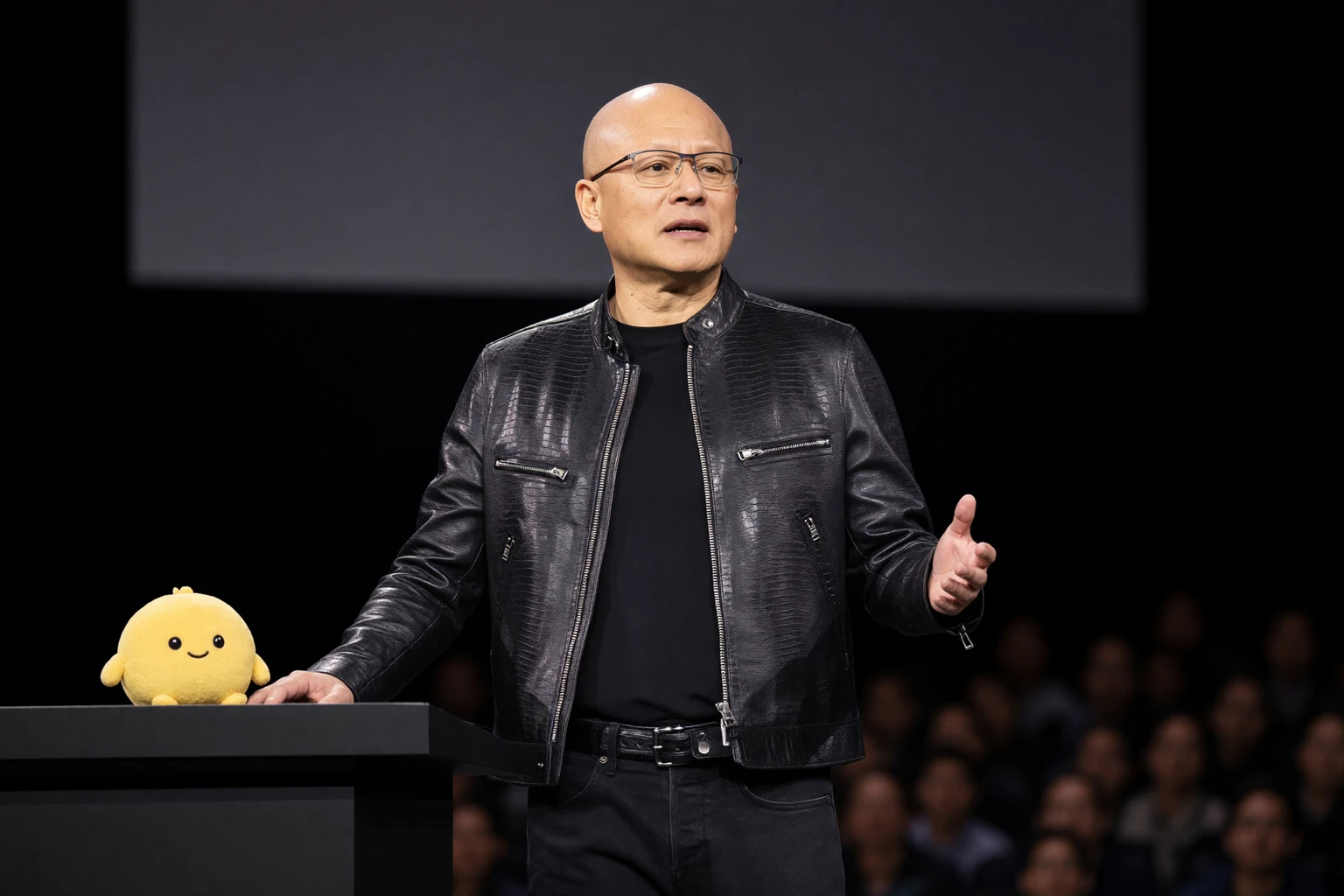
Jensen Huang, Nvidia’s chief executive, wrote that the company had agreed to acquire Hugging Face for $12,930,300,000. About $11.9 billion goes to Hugging Face investors. Up to $1 billion is an equity retention pool for staff who join Nvidia. The companies expect the deal to close in the first half of 2027, subject to regulators.
The extra digits are not a rounding error. Huang posted the price as $12,930,300,000, the same 129303 run as the hugging-face emoji in Unicode. Clément Delangue, Hugging Face’s co-founder and chief executive, treated that as intentional.
Delangue, Julien Chaumond and Thomas Wolf started the company in 2016. It was a teen chatbot before it became the library where developers dump models, datasets and apps. A 2023 round of $235 million put the last widely cited private value at $4.5 billion.
THE PLATFORM NVIDIA BOUGHT
- Builders: More than 18 million developers, researchers and creators use the site.
- Files: They share more than 3 million models, 500,000 datasets and 1 million applications.
- Customers: More than 200,000 companies discover, test and deploy models there.
- Nvidia’s own pile: The chipmaker has put more than 500 models and more than 250 open datasets on the same shelves, and calls itself the largest contributor.
Huang promised the shop stays open. Developers, he wrote, will still pick their models, clouds and chips, and “NVIDIA compute will not be required to build on or deploy through Hugging Face.”
Together, we will scale Hugging Face’s platform, strengthen its infrastructure and expand access to AI for developers and institutions worldwide.
Jensen Huang, chief executive, NVIDIA blog, 3 September 2026
He thanked Delangue in public the same morning.
https://x.com/JensenHuang/status/2095482647355244762
Delangue said open-source AI had reached the point where it can sit beside closed APIs, and that it still needs more compute, support and visibility to do that at scale. That, he wrote, is why the founders went to Huang. The staff are staying. The goal he set was 100 million builders who own their models instead of renting them.
https://x.com/ClementDelangue/status/2095482998674112733
Access is the easy promise. Ranking is the harder one. Hugging Face became the default library because every model shop and every chip vendor could post there on the same terms. If search, routing or default hardware start to lean toward Nvidia silicon, that trust moves. Huang’s note does not say who will set those defaults after 2027.
Wonderful Hit $5 Billion Before Turning Two
Wonderful closed a $550 million Series C on 2 September at a $5 billion value, led again by Insight Partners. Salesforce joined for the first time. Index Ventures, IVP, Vine Ventures, 9Yards and Bessemer Venture Partners came back. In March the same company raised $150 million at $2 billion, so 2026 cash-in now totals $700 million.
Bar Winkler is chief executive and Roey Lalazar is chief technology officer. They founded the firm in early 2025, first in Israel, now with headquarters in Amsterdam. The company says it has about 650 employees and is live in more than 35 markets. The product started as a customer-service agent for companies that do not work in English. It now sells what Wonderful calls an AI operating system: a layer that ties agents, workflows and apps to a company’s own data and tools, with engineers sitting on site until the first job is in production.
Lalazar said the stack is modular on purpose, so a customer can keep the systems it already runs, pick models per job, and own what it builds. The new money, the company said, goes to product speed and to hiring more of those forward-deployed engineers.
That is the winner profile in this market. Wonderful is not a seed story. It is a late-stage AI vendor with a headcount, a second nine-figure round inside six months, and a U.S. software house on the cap table. The companies that cannot show production agents in 30-plus countries did not get a call like this in August.
How Nscale Funded Two U.S. Campuses With Debt
Nscale, the London AI cloud, said on 31 August it had closed approximately $3 billion in aggregate commitments across two senior secured delayed-draw term loans. Both facilities carry investment-grade ratings with stable outlooks. J.P. Morgan and Goldman Sachs ran the books. The cash is for GPU halls in the United States, not for another European equity round.
THE TWO U.S. CAMPUSES NSCALE IS BUILDING
| Campus | Loan | What it pays for |
|---|---|---|
| Ward County, Texas | Up to $1.85 billion | Nvidia GB300 and VR200 systems, about 200 MW of IT load, liquid cooling |
| Madison, North Carolina | Up to $1.2 billion | Retrofit of a 96-acre site, GPUs and networking, up to 40 MW |
A company that can borrow at investment grade does not live in the same market as a seed founder waiting on a term sheet. The loans read like power and real-estate paper. The chips going into Texas are Nvidia’s.
On 4 September, people briefed on the process said Nscale was also lining up about $3.5 billion before a U.S. listing, including convertible notes and a possible Nvidia cheque. Nscale, Goldman Sachs, Third Point and Nvidia did not confirm that package.
WHAT WE KNOW
- Closed debt: The Texas and North Carolina loans were announced on 31 August with named arrangers and ratings.
- Use of proceeds: The company said the money buys GPUs, networking, storage and cooling at those two sites.
WHAT IS UNCONFIRMED
- Pre-IPO stack: The $3.5 billion figure, the Third Point lead and the Nvidia slice were described by people familiar with talks, not by the company.
- Listing timing: A New York float has been discussed around this raise; no prospectus is public.
If that second pile lands, Nvidia would be both Nscale’s chip supplier and a pre-IPO cheque-writer, in the same week it agreed to buy Hugging Face. That is one firm sitting on the model library, the accelerator, and the British cloud building U.S. halls to run them.
August Funding Fell 63 Percent From July
The monthly tally is the other half of the week. European tech companies raised €3.2 billion across 165 deals in August. July’s print was €8.6 billion across 267 rounds. Funding fell about 63 percent. Deal count fell about 38 percent. Thirty-two of the August rounds still have no disclosed value.
AUGUST AGAINST JULY
| Measure | July 2026 | August 2026 |
|---|---|---|
| Capital raised | €8.6 billion | €3.2 billion |
| Funding rounds | 267 | 165 |
Ten companies still raised more than €100 million each. The largest of those was Sweden’s Lovable, at $400 million in a Series C that doubled its value to $13 billion. Artificial intelligence led the month by sector, at €677.1 million. The United Kingdom led by country, at €1.4 billion across 51 deals. August recorded 37 exits, 12 of them in Germany and six in the United Kingdom.
Summer always thins the calendar. The shape underneath it is older than August. PitchBook’s European venture figures for the first half of 2026 put artificial intelligence at 60.3 percent of deal value, the first half-year in which AI took a majority. Seed volume had already been falling. The August print is that split by the month: a few large AI names, a long tail that did not price.
FNZ, the London wealth-management platform, was the week’s large non-AI cheque, and it was not a growth round in the Wonderful sense. On 1 September it took US$450 million in new equity funding from existing holders, including La Caisse, CPP Investments, Generation Investment Management and Motive Partners. The firm says it runs $2.5 trillion of assets for more than 30 million end customers. Blythe Masters, group chief executive, said the capital is there so FNZ can keep a transformation plan pointed at profit, after selling a German bank, a Luxembourg fund platform and a Swiss core-banking line. That is repair money from people who already own the stock.
Can Londoners Hail a Driverless Taxi Yet?
From 3 September, riders who request UberX, Uber Electric or Uber Comfort in London may be offered a Wayve car at the same fare, with a trained Transport for London private-hire driver still in the front seat. Uber and Wayve called it the first time autonomous trips are available in the United Kingdom. It is not a driverless service. Airports are off limits. Fully empty cars wait on a separate government process, and the Automated Vehicles Act is not due to be fully in force until the second half of 2027.
Wayve, founded in London in 2018, trained its system on the city’s own roads. The launch cars are electric Ford Mustang Mach-E vehicles with the Wayve AI Driver and surround sensors. Uber designed an in-car screen in 64 languages. The pair have a plan to put Wayve software on Uber in 12 markets, with Nissan Leaf cars using Nvidia DRIVE Hyperion due later in Tokyo.
HOW A WAYVE RIDE WORKS
- The offer: The app may pair you with a Wayve car; you can switch to a normal Uber before it arrives.
- The fare: There is no extra charge, and the price is shown up front.
- The map: Trips can run anywhere in London except airports, with no small geofence.
- The human: A TfL-licensed driver stays on board for this phase.
- The list: More than 140,000 Londoners have already opted in under Trip Preferences.
That waitlist is the demand. The fleet at launch is, in Wayve’s own words, a small number of vehicles, to grow with “rider demand, readiness, and regulation.” Heidi Alexander, the transport secretary, called it a milestone for British kit on London roads. Jonathan Reynolds, the business secretary, said the cars use homegrown AI.
We’re proud to introduce the Wayve AI Driver to the public for the first time right here in London, our home city and one of the most complex driving environments in the world.
Alex Kendall, chief executive and co-founder, Wayve press statement, 3 September 2026
Sarfraz Maredia, Uber’s global head of autonomous mobility, said the supervised autonomous rides in London are the start of a wider rollout, not the finished product. For now the British self-driving story that actually reached civilians still has a person holding a licence in the left-hand seat.
Palantir’s Karp Backs Fedorov’s Defence Bet
While civilian seed stayed quiet, defence tech kept attracting names. Mykhailo Fedorov, the former Ukrainian defence minister, has been in Washington raising for a vehicle he says will not be a classic venture fund. It would buy into Ukrainian defence firms and also start new ones around kit the front line still lacks. Alex Karp, Palantir’s chief executive, has agreed to be an early backer, in a personal capacity, after years of work with Fedorov.
Fedorov has named three opening bets.
FEDOROV’S FIRST THREE BETS
- Battlefield robots: Machines meant to pull soldiers off the most exposed ground.
- Jet interceptors: Fast, cheap drones built to catch jet-powered attack drones.
- Low-cost missiles: Weapons that use AI and do not need a Western inventory price.
He has also floated a swap in which Ukrainian teams help the United States stand up an attack-drone fleet in return for more Patriot interceptors. The fund itself has no public size, no close date and no disclosed carry. It is a pitch, not a round. In a week when European software money bunched into a few AI names, this is the other buyer still writing cheques: war, and the people who sell software into it.
Nvidia’s Hugging Face deal is not due to close until the first half of 2027, the same window in which Britain still expects to finish the rules for cars with no safety driver. Until then the week’s largest number is a promise, the London robotaxi still has a person in front, and the August tally remains the last full month we can count.


The House Cancels September Votes and Strands the CLARITY Act

Ascentiz Recruits Developers Around Its Modular Exoskeleton at IFA

Saylor’s Bitcoin Speech Claim Needs a Statute

Zeit AI Raises €5 Million for the Mid-Market Data Layer

Onwards and Sideways Turns Five Good Years Into a Joke

The Galaxy Watch 9 Splits Samsung’s Watch Update Path

Rightcharge Raises £500,000 as Fleets Drift Onto Public Chargers

Early Payment Discounts Hand Buyers a 37 Percent Return

AI Score Raises $5.4 Million as Security Alumni Watch Agents

Sony’s PlayStation Settlement Pays Users in Store Credit

Walter’s TWG Insists No Fraud as Insurer Probes Force Cleanup

30-Year Yield Hits 5.32% Highest Since 2007 as Debt Supply Locks In Costs

PCE Stays at 3.7% as Gas and Tariffs Outrun Coming Revisions

Astute’s $1.2M bet makes B2B creator deals feed AI discovery

Strategy Parks $1.59B Cash While Bitcoin Stack Stays Flat

Evernorth S-4 Clears Path for Active XRP Treasury on Nasdaq

Amber’s €7M locks Mittelstand knowledge inside Europe

SpaceX Stock Rebound Tests Real Demand Before Huge Unlock

The 20% Savings Ideal Meets a 2.7% Reality Check

AI data centers win as RAM kits jump nearly 500 percent
-
 FINANCE3 months ago
Zcash Patched a Double-Spend Bug as ZEC Climbed 5%
-
 ENTERTAINMENT3 months ago
Steam Summer Sale 2026 Locks In June 25 to July 9 Dates
-

 FINANCE2 months ago
CLARITY Act Final Text Expected This Weekend as 60-Vote Hurdle Looms
-
 NEWS4 months ago
Meta Adds AI Replies to Threads, But Users Can’t Block It
-

 NEWS3 months ago
YouTube Shorts is testing a heart in place of the thumbs-up
-
 ENTERTAINMENT5 months ago
Extraction 3 Is Officially Coming to Netflix in 2027
-

 NEWS1 month ago
Senators Force Apple Off Chinese Memory as Big Three Cash In
-

 NEWS3 months ago
NEURA Robotics’ $1.4B Series C Redraws Europe’s Physical AI Bet