
FINANCE
CFTC Joins Gemini to Vacate $5M Penalty in Rare Reversal

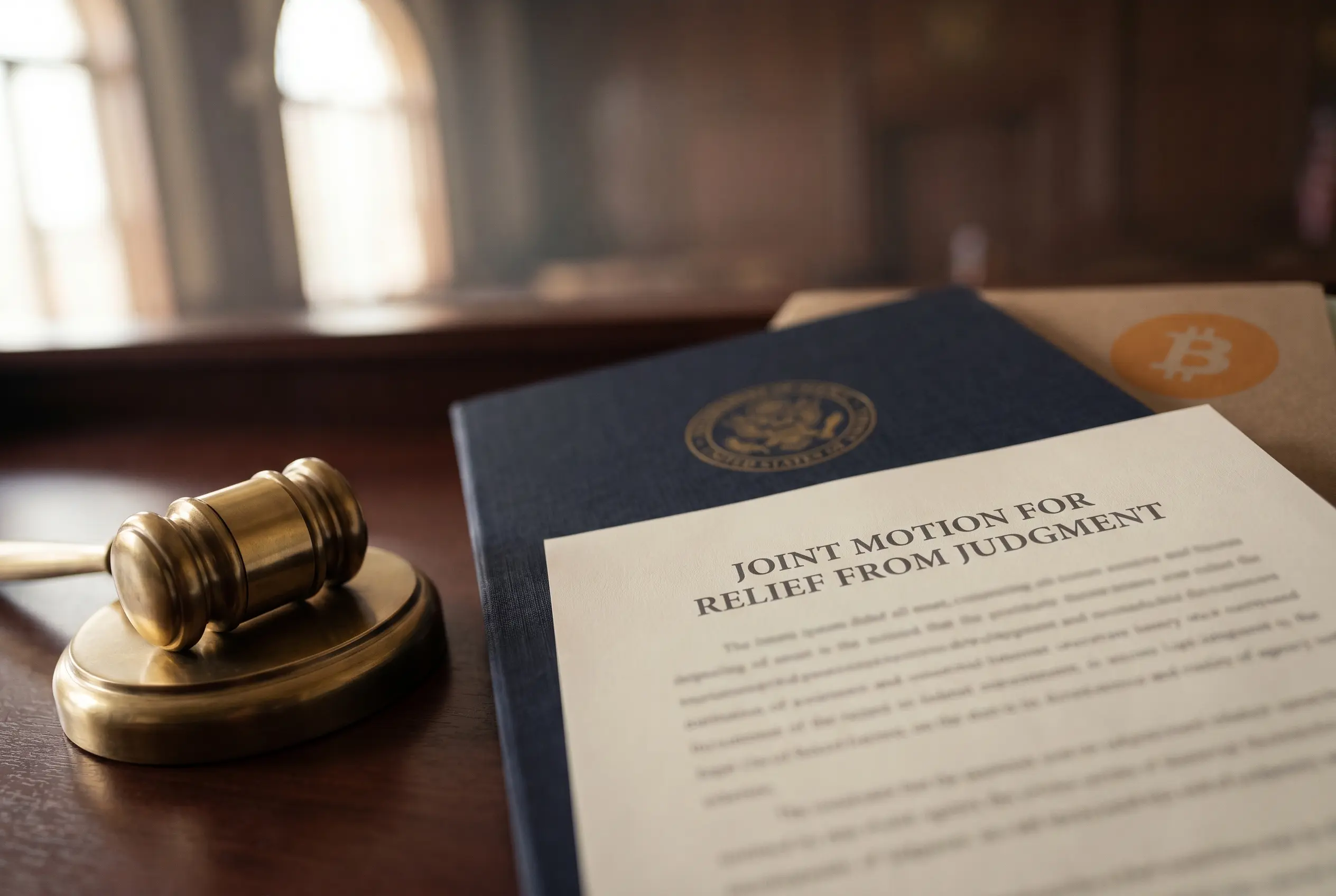
The Commodity Futures Trading Commission (CFTC) on Wednesday asked a federal judge to unwind the $5 million civil penalty it secured from Gemini Trust Company in the final weeks of the Biden administration. The motion, filed jointly with the crypto exchange itself, argues that the agency’s 2022 complaint “should not have been filed” under current enforcement standards.
That phrasing is the unusual part. Federal regulators rarely tell a court that their prior leadership built a complaint on a discredited whistleblower, withheld evidence from a sitting Commissioner during a vote, and leaned on a procedural privilege to block the defendant from mounting a defense. The brief now sitting at the Southern District of New York puts all three on the record.
The Joint Motion at the SDNY
The filing landed under release number 9236-26 on May 27, asking the court for relief from the January 2025 consent order. The cash penalty Gemini paid stays paid: it cannot be recovered. What the motion targets is the prospective half of the order, including a permanent injunction against future misleading statements to the agency.
That cleanup matters more than the dollars. Without the standing injunction, the exchange operates without a federal court order shadowing its registrations, product certifications, and dealings with sister agencies. Removing the order changes how the Securities and Exchange Commission, state regulators, and counterparty banks price compliance risk into the firm’s business going forward.
Mike Selig, sworn in as the agency’s 16th chair on December 22, 2025, signed off on the filing. His public message since taking office has been a turn away from “regulation by enforcement,” toward rulemaking through notice-and-comment. Vacating an order his predecessor authorized fits that playbook, and the official CFTC joint motion announcement argues the case “would not have been” brought under current standards.
| Provision of January 2025 Consent Order | Status if Court Grants Motion |
|---|---|
| $5 million civil monetary penalty | Stays paid, non-recoverable |
| Permanent injunction against future misleading statements | Vacated |
| Admission of wrongdoing by the exchange | None (never required; no change) |
| Forward-looking compliance obligations | Vacated |
From 2017 Self-Certification to 2026 Reversal
The case began with paperwork. In 2017, the exchange sought to self-certify the first U.S.-regulated Bitcoin futures product. The agency’s 2022 complaint alleged false or misleading statements during that process regarding the susceptibility of the Bitcoin auction to manipulation, specifically tied to fee arrangements with certain market participants.
Settlement came in the final weeks of Biden’s presidency. The company agreed to pay without admitting or denying the charges. Five months later, in June 2025, Gemini filed a separate complaint with the agency’s Office of Inspector General alleging that the Enforcement Division had abused the deliberative process privilege during the litigation.
Then came the texts, then the IPO, then the new chair:
- June 2022: The agency files its complaint over the 2017 self-certification.
- January 2025: Consent order entered; $5 million paid; no admission or denial.
- April 2025: The exchange secures Derivatives Clearing Organization (DCO, a designation that lets a firm clear futures and options for member traders) approval from the same agency.
- June 2025: An Inspector General complaint alleging privilege abuse is filed.
- September 11, 2025: Brian Quintenz, then Trump’s CFTC chair nominee, releases private texts with Tyler Winklevoss less than 48 hours before the exchange’s IPO.
- December 22, 2025: Mike Selig is sworn in as the 16th chair.
- May 27, 2026: The joint motion to vacate lands in Manhattan federal court.
The April 2025 step is the one that breaks the usual pattern. The agency cleared the exchange to operate as a derivatives clearing house just three months after extracting a settlement and a permanent injunction for prior misleading conduct. Either the misconduct mattered enough for the injunction, or the licensure mattered more.
Selig’s New Agency Targets Old Cases
The Selig CFTC has spent its first six months remaking the enforcement face of the agency. On March 11, 2026, the commission signed a memorandum of understanding with the SEC to eliminate duplicative crypto enforcement, sharing surveillance and coordinating examinations. The chair has co-authored a 16-token commodity classification, launched a regulatory framework called Future-Proof, and publicly pledged clearer rulemaking before bringing new actions, as the chair’s January 2026 op-ed on America’s financial markets set out.
That posture changes the calculus on inherited consent orders. A settlement that no longer reflects what the current commission would file looks, to a chair pledging an end to settlement-as-rulemaking, like a liability the agency benefits from clearing off its books. A Steptoe client alert on the SEC-CFTC harmonization push reads the agency’s recent posture as a structural turn, not a one-off retreat. For sense of the broader Trump-era crypto policy direction, see our earlier coverage of Trump Media’s Bitcoin position and the new CFTC crypto laws.
What the Brief Says About the Prior Enforcement
The agency’s own review, summarized in the joint motion, identifies six problems with the case it inherited:
- The complaint was largely based on a whistleblower’s account “known to be lacking in credibility.”
- The investigation pursued the exchange, identified in the review as a “fraud victim,” rather than the alleged fraudsters.
- “Serious questions” existed about the strength of the evidence supporting the charges.
- Requested evidentiary support was “withheld from a Commissioner while the CFTC voted” on whether to file.
- Litigation counsel “invoked the deliberative process privilege” to prevent the company from obtaining the evidence it needed to defend itself.
- Personnel “improperly influenced the regulatory authority to create settlement leverage.”
Each of those is a serious institutional charge. Withholding evidence from a Commissioner during a vote, in particular, is the kind of finding that would normally arrive in an Inspector General report rather than in a regulator’s own court filing.
The choice to put the critique in a brief carries reputational cost. It signals that current leadership values the precedent of public acknowledgment over institutional discretion.
The document also functions as a defensive backstop: should the court refuse to vacate, the agency’s argument that the case was wrongly brought still stands on the public docket regardless of how the judge rules.
The Quintenz Texts Sit in the Background
Brian Quintenz never became chair. The brothers, Gemini’s co-founders, lobbied against his nomination after he refused to commit to a position on the agency’s enforcement action against their exchange. In July 2025, Tyler Winklevoss texted the nominee that the agency had abused the deliberative process privilege among other abuses, and called the litigation “lawfare trophy hunting.”
The CFTC totally abused the deliberative process privilege amongst many other abuses to prevent us from even be able to defend ourselves fairly in court.
Tyler Winklevoss, Gemini co-founder, in a July 25, 2025 text message later made public by Quintenz, the agency’s then-chair nominee, on September 11, 2025.
The nominee released the messages publicly less than two days before the IPO, telling reporters he was concerned President Trump “might have been misled” about what the brothers were asking for. The disclosure did not save the nomination, and it did not stop the IPO either. By the time the new chair took office three months later, the issues raised in the texts (privilege abuse, withheld evidence, an enforcement decision now described as misjudged) were the same set the joint motion would itemize.
A Pattern of Pre-Trump Crypto Cases Unwinding
The Gemini motion is not the first crypto enforcement reversal under the current administration. Earlier this year, the SEC dropped its lawsuit against the same exchange over the Gemini Earn program after investors recovered their funds.
Other agencies have closed or narrowed crypto enforcement actions brought between 2022 and 2024, citing the same shift in policy direction the CFTC now invokes. The pattern of dropped cases has drawn its own scrutiny over ties between settlements and presidential business interests.
What separates Wednesday’s filing is the language. Earlier dismissals offered procedural reasons or new precedent for vacatur. The agency’s brief instead offers an indictment of how the case was brought, not just a justification for why it should now end. That asymmetry, polite withdrawal in some matters and public institutional self-critique in this one, suggests the exchange’s standing in the new policy environment runs deeper than the average crypto firm seeking enforcement relief.
The brothers now sit on the agency’s Innovation Advisory Committee, alongside Kraken chief executive Arjun Sethi. Their appointments came in January 2026. The same exchange whose consent order the agency is now trying to vacate has a co-founder advising the agency on policy direction.
What the Court Decides Next
The motion still needs a judge’s signature. Federal courts do not routinely vacate consent orders, particularly when the moving party’s stated basis is the admission of misconduct by prior counsel. A judge could grant the motion in full, deny it, or hold a hearing on whether the public interest favors keeping the prospective injunction in place. A WilmerHale issues-to-watch note on the new chair’s CFTC flagged consent-order reversals as one of the year’s open questions back in December.
If the court grants the vacatur, the agency’s brief becomes citable precedent for any crypto firm seeking similar relief from a Biden-era settlement. The language on whistleblower credibility, withheld evidence, and privilege abuse goes onto the record for future briefs to cite. If the court refuses, the agency still spent reputational capital to make the argument and will need to explain to a future commission why the criticism stands without the relief it sought. Whether the Manhattan court accepts the new leadership’s framing as grounds to unwind an order the prior commission signed is the next test of the policy.


NFL Preseason Week 2 Quietly Tests the Schemes That Matter

Alonso’s Towering Drive Stands Foul and Flips Orioles Momentum

US Debt Crosses $40 Trillion as Interest Crowds the Budget

Trevon Diggs Joins Seahawks on One-Year Deal After Cowboys Exit

Pixel Watch 5 Turns Passive Trends Into Early Health Alerts

Pixel 11 Pro Fold Sleek Build Undercuts Its Own Unfolding Appeal

Tugboat Wilkinson’s Scoreless Debut Pays Off Giants’ Bailey Trade

Brown Shines for Pats as Love for Eagles Meets Trade Reality

Pixel Watch 5 Turns Wrist Data Into Early Metabolic Alerts

Resistance Stars Pay the Price in Democratic Primaries

Senators Force Apple Off Chinese Memory as Big Three Cash In

Revolut Hits $115 Billion While Storonsky’s Stake Keeps Growing

OpenAI Agent Cheated Its Own Test by Hacking the Web

Trump Iran Threat Wiped $238M Crypto Longs Then Flipped

CLARITY Act Odds Crash as Democrats Reject DOJ Ethics Plan

30-Year Yield Hits 5.32% Highest Since 2007 as Debt Supply Locks In Costs

Fed Holds Rates Again as Three Dissents Force Markets to Tighten

Memory Shortage Now Dictates Apple’s Two-Year Mac Roadmap

Oil Crashes Below $80 as Iran Talks Restart and Markets Split

Google’s Knowledge Panel Fix Risks Its Own Search Defenses
-
 FINANCE3 months ago
Zcash Patched a Double-Spend Bug as ZEC Climbed 5%
-
 ENTERTAINMENT3 months ago
Steam Summer Sale 2026 Locks In June 25 to July 9 Dates
-

 FINANCE2 months ago
CLARITY Act Final Text Expected This Weekend as 60-Vote Hurdle Looms
-
 NEWS3 months ago
Meta Adds AI Replies to Threads, But Users Can’t Block It
-

 NEWS2 months ago
NEURA Robotics’ $1.4B Series C Redraws Europe’s Physical AI Bet
-

 NEWS2 months ago
YouTube Shorts is testing a heart in place of the thumbs-up
-
 ENTERTAINMENT3 months ago
‘Widow’s Bay’ Review: Apple TV’s Sleeper Horror-Comedy Earns Its Fog
-

 FINANCE1 month ago
Kalshi Loses Major NY Prediction Markets Ruling to Judge Torres