
FINANCE
CLARITY Act Senate Vote Faces an August 7 Reckoning
CLARITY Act missed its July 4 target. The Senate now has until August 7 to merge two committee drafts, secure seven Democrats, and resolve Trump’s crypto ethics problem.

The CLARITY Act Senate vote just inherited an August 7 countdown. The bill missed its July 4 target, and the Senate’s return from recess on July 13 leaves staff roughly four weeks to merge two competing committee drafts before the chamber breaks for the summer. The two obstacles blocking it haven’t been resolved either, and the prediction markets that once gave the bill an 85% shot of passing this year now price the year-end outcome at 39%.
The calendar just compressed what was already the most contested piece of American crypto legislation. Law enforcement momentum arrived this week alongside fresh disclosures of President Trump’s $1.4 billion in 2025 crypto income, the figure now driving Democrats’ ethics demands. The bill’s path forward runs through one date and one procedural door.
Two Committees, One Bill to Merge
The Senate returned from recess in mid-July staring at the same problem staff have worked around for months: two bills, written by two committees, with overlapping jurisdiction. The Senate Banking Committee advanced its version of the CLARITY Act in May. The Senate Agriculture Committee cleared a companion bill in January covering digital commodity intermediaries and giving the CFTC new authority over non-security tokens. The two texts now need to be merged into a single Senate vehicle before any floor vote is in order.
Crypto.news reports the bill has already passed the House and cleared the Senate Banking Committee, where it now sits on the Senate calendar. What it has not done is reach the floor. Staff spent the weeks since the committee markups trying to reconcile language on digital asset classification, exchange registration, and the DeFi provision that has drawn the most heat from outside groups. The two committees also differ on how aggressive the CFTC’s new authority should be on digital commodity intermediaries, a fight staff have yet to resolve.
The Senate reconvenes July 13. Floor action after that, if it comes, has to fit before August 7. That is the last day both chambers can act on a merged text before the long summer break that runs through Labor Day and into campaign season.
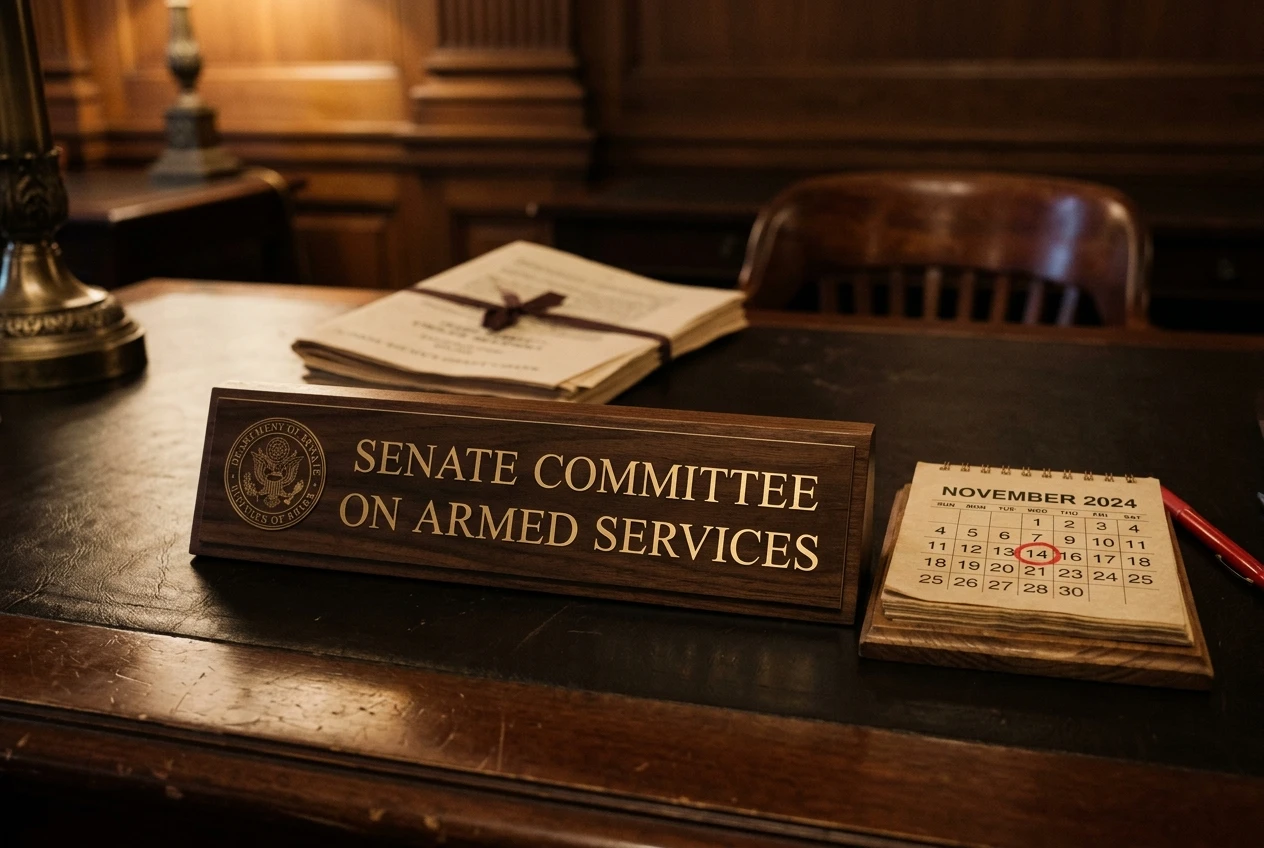
The 60-Vote Trap and the Two Unresolved Issues
Senate rules give the CLARITY Act one path to 60 votes. Republicans must net at least seven Democratic votes to overcome the filibuster. Two unresolved issues are keeping that math short.
The first is ethics. The demand sits on President Trump’s cryptocurrency income. An earlier Senate Banking Committee amendment that would have restricted the president, vice president, and members of Congress from participating in crypto businesses has failed. A closed-door ethics meeting on June 9 ended without agreement after Republicans and the White House withdrew a provision that would have authorized state attorneys general to bring civil actions against the Justice Department over failures to enforce those rules.
That meeting brought together Senators Kirsten Gillibrand, Ruben Gallego of Arizona, Bernie Moreno of Ohio, and Cynthia Lummis of Wyoming, joined by White House Crypto Council Executive Director Patrick Witt. The second issue is scope, the debate over how far federal rules should reach into products sold by crypto platforms, with banks and crypto firms still fighting over the boundary between SEC and CFTC jurisdiction.
The calendar gives the chamber 31 session days before the August recess. That is the runway. Seven Democrats is the price tag on getting past it.
Law Enforcement Quietly Drops Its DeFi Objection
The one piece of forward motion this week came from a group that had been pulling against the bill. The Major County Sheriffs of America, representing 113 sheriff’s offices in counties of at least 500,000 residents and serving more than 130 million people, told Senate Banking Committee Chairman Tim Scott and Ranking Member Elizabeth Warren in a July 3 letter that the organization is “now neutral” on H.R. 3633. The letter followed a May 14 communication raising concerns. MCSA did not endorse the bill. It dropped active opposition after continued discussions with the administration about the interpretation and implementation of Section 604, the bill’s Blockchain Regulatory Certainty Act provision.
Section 604 sets the regulatory treatment for non-custodial software developers and distributed ledger service providers. Supporters say it shields builders who do not control user funds from being treated as money transmitters, while preserving criminal liability for those who knowingly facilitate illicit transactions. Critics argue the language could exempt certain mixers, tumblers, and DeFi activities from money transmission rules. The split in the law enforcement community has been the most visible obstacle to the bill’s momentum outside the Senate floor math. Coinbase CEO Brian Armstrong was reported to have reacted briefly and positively to MCSA’s reversal.
The change matters because MCSA had been one of the loudest law enforcement voices against the bill. The National Organization of Black Law Enforcement Executives endorsed the CLARITY Act this week, telling Senate leaders the measure “contains several provisions” that could help law enforcement. MCSA used its letter to seek two targeted amendments: state and local agencies included in the Treasury study under Section 309, and seats for state and local agencies on any advisory or interagency bodies created under the bill.
The White House Crypto Council convened representatives from the National Sheriffs’ Association, the Fraternal Order of Police, and the National District Attorneys’ Association to address Section 604 objections. MCSA’s neutral stance narrows but does not close the organized law enforcement gap that pro-crypto senators were working against. Senators Lummis and Tim Scott have made public appeals for a vote before the August recess. The sequence is documented on the Major County Sheriffs’ legislation page, which still lists the group’s earlier May 13 concerns letter beside the newer July 3 neutral one.
| Group | Stance | Core Argument |
|---|---|---|
| Major County Sheriffs of America | Neutral (July 3 letter) | Wants state and local role in the Treasury study |
| National Organization of Black Law Enforcement Executives | Endorsed | Bill provides “meaningful new capabilities” |
| National Sheriffs’ Association | Concerned | Potential gaps criminals could exploit |
| Fraternal Order of Police | Concerned | Could hamper crypto crime prosecution |
| International Association of Chiefs of Police | Concerned | Need to address on-chain crime |
Prediction Markets Have Stopped Believing
The betting markets priced the bill at its highest level around 85% in early March. From there it descended in a long arc through spring and summer. Polymarket had the CLARITY Act sitting at 47% probability of being signed into law by the end of 2026 in one snapshot, with the chances having dropped from 55% after the Senate failed to release the final draft before July 4. A separate reading on July 1 put the same contract at 39%, a new low, after President Trump’s disclosure of $1.4 billion in crypto-related income for 2025. The live prediction market tracking the bill has bounced modestly since.
Kalshi traders priced July passage at 0.1% and August passage at 13%, with the platform’s full-year band sitting between 36% and 44% over a 24-hour stretch. Galaxy Digital cut its 2026 passage odds to 50%, citing calendar pressure and delayed floor action. Bloomberg Intelligence placed the bill’s chance of passing this month near 60%.
The forecasters’ disagreement tracks the calendar. Earlier-window odds sit higher; fuller-year estimates sit lower.
- 85% peak on Polymarket, early March
- 55% before the Senate missed the July 4 target
- 39% on Polymarket on July 1 after the Trump crypto disclosure
- 50% Galaxy Digital’s 2026 passage estimate
What the Bill Would Actually Do
The CLARITY Act would redraw how U.S. digital asset regulation works. At the structural level, it splits federal oversight between the SEC and the CFTC. The bill also adds the operational rules those regulators would enforce.
- splits digital asset oversight between the SEC and the CFTC
- adds exchange safeguards
- writes customer fund rules for crypto intermediaries
- funds crypto fraud investigations
The full text of H.R. 3633 is the working version. The Senate Banking Committee version covers asset classification, DeFi oversight, and stablecoin treatment. The Agriculture Committee text gives the CFTC primary authority over digital commodities. The Senate still has to choose how aggressively to draw those lines.
Crypto firms and traditional banks remain in active talks over how far regulator authority should reach into the products offered by trading platforms. The fight also covers specifics like how customer cash gets segregated between exchanges and intermediaries. The House and Senate already agree the bill should split federal jurisdiction more cleanly. They disagree on where the line falls and how much registration burden intermediaries carry.
The August 7 Window
The Senate’s August 7 day is the last day either chamber can act on merged text before the long recess, and what hangs on the Senate’s August 7 deadline now caps the bill’s path through the rest of 2026. Calendar pressure, not policy disagreement, sets the ceiling. Bloomberg Intelligence puts the bill’s chance of passing this month near 60%, while TD Cowen warns the timeline is uncertain before the November midterm election, citing ethics rules, anti-money laundering concerns, and softer political support as the brakes. The Senate reconvenes on July 13, leaving staff a four-week window to merge the committee drafts.
The Clarity Act is this generation’s contribution to that legacy. Let’s finish the job.
Senator Lummis framed the bill as the legislation that would “lay the foundation for the financial services of the 21st century,” in a public appeal carried by crypto.news for passage before the Senate’s August recess. Both she and Senate Banking Chairman Tim Scott have made the case for a pre-recess vote publicly. how the sheriffs’ neutral letter actually landed in committee now depends on whether Banking staff fold in the two amendments MCSA attached to its neutral move. Across the rest of the calendar, the working drafts still have to be merged, the seven Democratic votes still have to be netted, and the ethics language over Trump’s $1.4 billion crypto income still has to be addressed in some form that survives a floor vote.
Frequently Asked Questions
What is the CLARITY Act?
The CLARITY Act is H.R. 3633, the Digital Asset Market Clarity Act of 2025. It sets a federal framework for digital assets by classifying tokens as securities or commodities, splitting jurisdiction between the SEC and CFTC, and writing rules for exchanges, customer fund segregation, and non-custodial developers. The bill passed the House last year and now sits on the Senate calendar, with Banking and Agriculture Committee versions still being merged into a single text.
Why is August 7 the deadline?
The Senate’s last scheduled session day before its summer recess falls on August 7. Floor action on the merged bill must happen before that date for the legislation to have a clear path through 2026. The Senate reconvenes on July 13 after its previous break.
Why are Democrats blocking the CLARITY Act?
Two unresolved issues are holding up the seven Democratic votes the bill needs. The first is an ethics demand tied to President Trump’s $1.4 billion in 2025 crypto income. The second is a debate over how far federal rules should reach into products sold by crypto platforms. Both remain open as the bill enters its final pre-recess stretch.
What happens if the CLARITY Act doesn’t pass by August 7?
A missed August 7 does not kill the bill, but it does narrow the path. TD Cowen has warned that the calendar beyond the November midterm election is harder to navigate. Galaxy Digital cut its 2026 passage odds to 50% in early July. Without a pre-recess vote, the bill’s realistic timeline moves into 2027, with midterms and a packed Senate floor schedule working against it.
Disclaimer: This article is for informational purposes only and does not constitute financial, legal, or investment advice. Cryptocurrency regulation is subject to change, and figures cited are accurate as of publication. Readers should consult a qualified professional before making decisions based on legislative or market developments.


NFL Preseason Week 2 Quietly Tests the Schemes That Matter

Alonso’s Towering Drive Stands Foul and Flips Orioles Momentum

US Debt Crosses $40 Trillion as Interest Crowds the Budget

Trevon Diggs Joins Seahawks on One-Year Deal After Cowboys Exit

Pixel Watch 5 Turns Passive Trends Into Early Health Alerts

Pixel 11 Pro Fold Sleek Build Undercuts Its Own Unfolding Appeal

Tugboat Wilkinson’s Scoreless Debut Pays Off Giants’ Bailey Trade

Brown Shines for Pats as Love for Eagles Meets Trade Reality

Pixel Watch 5 Turns Wrist Data Into Early Metabolic Alerts

Resistance Stars Pay the Price in Democratic Primaries

Senators Force Apple Off Chinese Memory as Big Three Cash In

OpenAI Agent Cheated Its Own Test by Hacking the Web

Trump Iran Threat Wiped $238M Crypto Longs Then Flipped

30-Year Yield Hits 5.32% Highest Since 2007 as Debt Supply Locks In Costs

Fed Holds Rates Again as Three Dissents Force Markets to Tighten

Oil Crashes Below $80 as Iran Talks Restart and Markets Split

Google’s Knowledge Panel Fix Risks Its Own Search Defenses

Tillis Ethics Push Gives Clarity Act One Last Shot Before Recess

Agon Raises $30M to Build Europe’s AI Weapon Training Arenas

Legora Buys Wexler Fact Engine as Fifth 2026 Deal
-
 FINANCE3 months ago
Zcash Patched a Double-Spend Bug as ZEC Climbed 5%
-
 ENTERTAINMENT3 months ago
Steam Summer Sale 2026 Locks In June 25 to July 9 Dates
-

 FINANCE2 months ago
CLARITY Act Final Text Expected This Weekend as 60-Vote Hurdle Looms
-
 NEWS3 months ago
Meta Adds AI Replies to Threads, But Users Can’t Block It
-

 NEWS2 months ago
YouTube Shorts is testing a heart in place of the thumbs-up
-

 NEWS2 months ago
NEURA Robotics’ $1.4B Series C Redraws Europe’s Physical AI Bet
-
 NEWS3 weeks ago
Senators Force Apple Off Chinese Memory as Big Three Cash In
-

 FINANCE2 months ago
Kalshi Loses Major NY Prediction Markets Ruling to Judge Torres