
NEWS
The Pokémon Fitbit Air Fights Nintendo’s $54.99 Sleep Tracker
Google’s $129.99 Pokémon Sleep Fitbit Air is a $30 Pikachu skin; Nintendo’s $54.99 GO Plus + still holds exclusive Sleep bonuses.

Google starts shipping the Fitbit Air Special Edition Pokémon Sleep on September 15 for $129.99 in the US and Japan. The screenless tracker is the May Fitbit Air pebble in a Sleepy Blue strap with a sleeping Pikachu silk print.
That $30 premium does not change the sensors. It puts Google Health in the path of a game that already passed 30 million downloads, while Nintendo’s $54.99 pillow gadget still holds the extras inside Pokémon Sleep.
The Band Is a $30 Pikachu Skin
Google opened preorders August 27 at the Google Store and Target, and named Sierra Salinas, Google Health product marketing manager, on the post. The special edition is sold only in the US and Japan, and it is meant for ages 13 and up. Hardware is the same 5.2 g pebble that went on sale May 26 for $99.99, now paired with a Sleepy Blue textile strap and a champagne gold buckle.
The Google Store sells the Air as a full tracker in three styles, Classic at $99.99, Stephen Curry at $129.99, and Pokémon Sleep at $129.99. There is no Sleepy Blue strap on the accessory list, so anyone who already bought the May Air buys a second pebble to get the print. In Japan the same split is ¥16,800 for the standard Air and ¥19,800 for Sleepy Blue.
THE POKÉMON AIR PRICE STACK
- US special edition: $129.99, $30 above the $99.99 Classic Air.
- Japan special edition: ¥19,800, ¥3,000 above the ¥16,800 Classic Air.
- Shared extras: Sleepy Blue print, a Pikachu Incense code, and the same three-month Premium trial the May Air already included.
- Where it sells: US and Japan only, Google Store and Target, with shipping on September 15.
Pokémon Sleep’s own news post is blunt about the one in-game extra. The box includes a Pikachu Incense serial code that can be redeemed once, stays valid through January 9, 2029, and must be collected from the Gift Box within 30 days. The game already accepted Fitbit sleep through Health Connect; the incense is what this SKU adds.
The Google Fitbit Air Special Edition Pokémon Sleep is available to preorder starting today and releasing September 15!
It features a band with a Pokémon Sleep design and sleeping Pikachu label.Rest your best with Fitbit Air & #PokemonSleep! Learn more: https://t.co/yrh5Yo4eXP pic.twitter.com/m4PN0J0SZ7
— Pokémon Sleep (@PokemonSleep) August 27, 2026
0 over Classic Air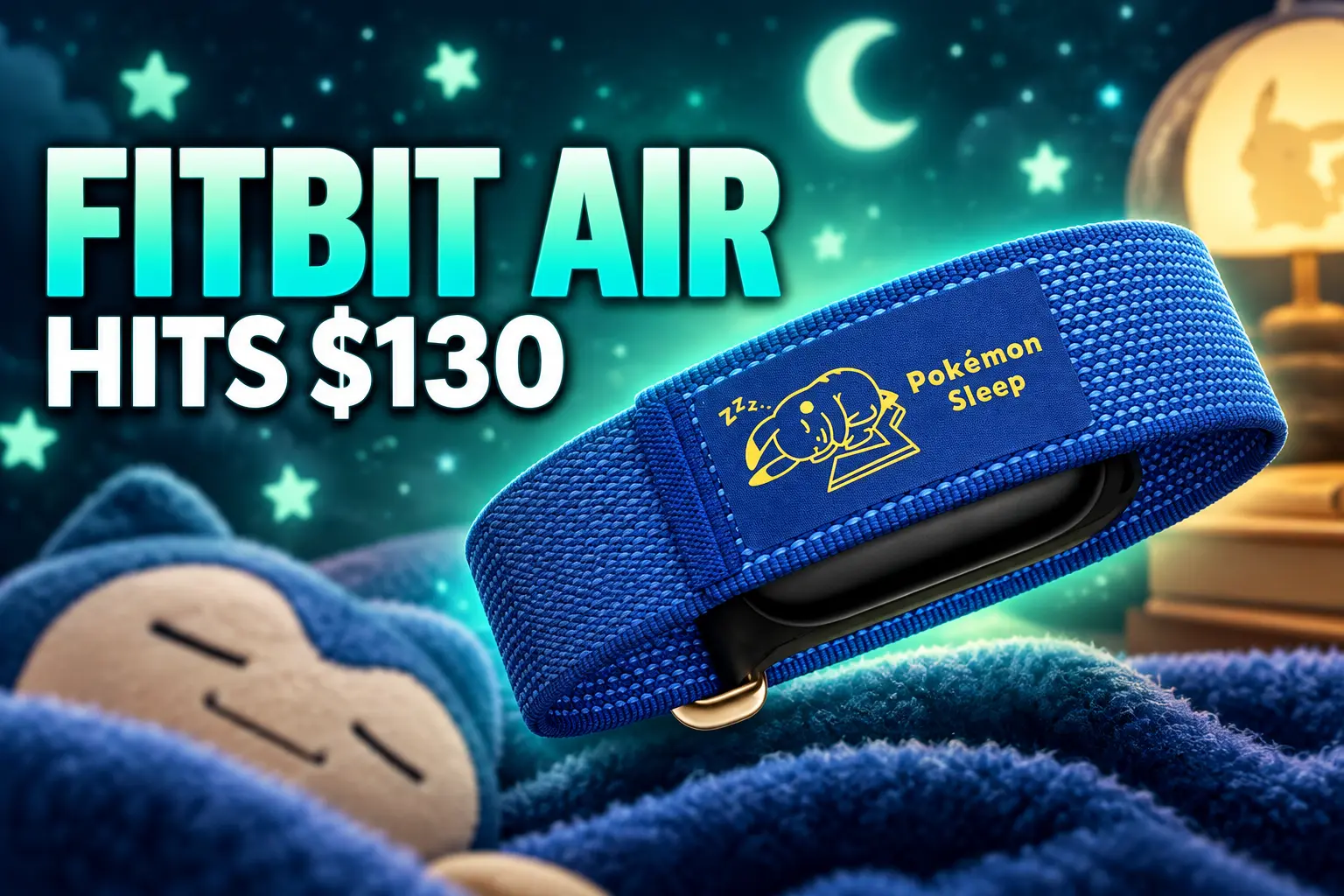
Nintendo’s Pillow Gadget Still Holds Exclusive Perks
Pokémon Sleep did not wait for Google to invent overnight play. The Pokémon GO Plus +, sold by The Pokémon Company for $54.99 at Pokémon Center when it is in stock, sits on the mattress beside the pillow and reads motion. Pair it in the app and the home-screen icon switches to GO Plus +. Sessions under 90 minutes do not count.
That cheaper gadget still pays out bonuses the Fitbit edition does not list.
WHAT GO PLUS + STILL GIVES SLEEP PLAYERS
- Helper on the team: A nightcap Pikachu helper bonus joins Snorlax and gathers Berries, and friendship rises with more nights on the device.
- Profile stamp: A nightcap Pikachu icon lands on the account after pairing.
- Paid currency: Up to 500 diamonds based on sleep logged with GO Plus + after version 1.10.0.
- GO crossover: Spin PokéStops in Pokémon GO, then tap the icon on that Pikachu for extra Berries in Sleep.
GO Plus + also refuses other sleep apps. It is a Nintendo-shaped sensor for two Pokémon titles, not a heart-rate tracker. Google is selling a full health pebble into the same morning ritual, and it is asking more than double the US list price to do it.
What Google Health Gets From Pokémon Sleep
Google Health writes the night into Health Connect on Android or Apple Health on iOS, and Pokémon Sleep reads that sleep duration each morning. The same path, Google said, works with all Pixel and Fitbit wearables, so the collab is an on-ramp, not a locked sensor. Setup is three steps: allow Google Health to write sleep, pair the device inside Pokémon Sleep settings, then wear the band to bed.
Health Connect Writes the Night Into Two Phones
The Air itself works with Android 11 or iOS 16.4 and needs a Google account. Pokémon Sleep’s pairing note is tighter on Android, calling for Android 14 or later to import Fitbit sleep. A phone that can run the tracker may still fail the game link until the OS catches up.
Google Fitbit app into Google Health swap on May 19 is the other half of the deal. Sleep players who never wore a Fitbit now have a reason to install that app on iPhone and Android, because the game’s morning research wants a sleep score from somewhere. Naps count as well as the overnight session.
When you wake up, your Sleep Score, calculated from sleep duration tracked from Google Health, multiplies Snorlax’s Strength to generate “Drowsy Power.”
Sierra Salinas, Google Health Product Marketing Manager, Google product blog
Helper Pokémon collect Berries by day and raise Snorlax’s Strength. The sleep score is the multiplier. Higher Drowsy Power means more Pokémon, and rarer sleep styles, around Snorlax in the morning. That loop is the game’s, not a Fitbit-only trick.
A Coach That Goes Paid After the Trial
Every Air, including this one, includes a three-month Google Health Premium trial. After that the plan renews at $9.99 a month unless it is cancelled. The Pokémon footnote closes the offer on May 26, 2027, limits it to new and returning users, and allows one trial per customer. Gemini-powered Health Coach sits behind that paywall. Heart rate, sleep stages, and steps stay on the free app.
The trial is not a Pokémon exclusive. Google already bundled the same three months with the $99.99 Air in May. Treating it as a collab gift double-counts a perk the cheap SKU already had.
Drowsy Power Does Not Care Which Sensor You Wear
Put the three official overnight options next to each other and the $30 question gets a straight answer. The special edition matches Curry on price and matches the Classic Air on sensors. GO Plus + is the only one with a helper Pokémon baked in, and the only one that lives on the pillow instead of the wrist.
THE OVERNIGHT SENSOR SCORECARD
| Device | Price | Sleep extras | Where it sits | What it measures |
|---|---|---|---|---|
| Fitbit Air Pokémon Sleep | $129.99 (¥19,800) | Pikachu Incense code | Wrist, all day | Heart rate, SpO2, skin temperature, sleep stages |
| Fitbit Air Classic | $99.99 (¥16,800) | None unique | Wrist, all day | Same pebble as the Pokémon SKU |
| Pokémon GO Plus + | $54.99 US; ¥6,578 Japan lottery | Nightcap Pikachu, icon, up to 500 diamonds | Mattress by the pillow | Motion only, no heart rate |
Google’s pebble also stores seven days of minute-by-minute motion, 30 days of daily totals, and heart rate at two-second intervals. Battery life is up to seven days, a full charge takes 90 minutes, and five minutes on the USB-C cable is rated for one day. Water rating is 50 meters. Those figures are the Air’s, not a Pokémon upgrade.
The one physical catch sits on the strap. Google’s spec sheet lists a 130-190 mm Pokémon wrist size for the Sleepy Blue band, against 130-210 mm for the other textile straps. Wrists at the top of the normal Air range do not fit this collab. In the box are the tracker, the band, and a USB-C cable. The housing is recycled polycarbonate and PBT; the Curry band’s extra water-resistant coating is not on this one.
Japan Is Still Lottery-Selling the Older Tracker
Three years after GO Plus + launched, Japan is still running drawings to buy one. Rakuten Books took lottery entries from September 2 through September 9 at ¥6,578, with winner sales on September 14, the day before the Fitbit ships. Pokémon Center’s US listing sits at $54.99 and out of stock. Scarcity is the accessory’s actual product story.
Google is walking into that shortage with a $129.99 wristband that also does cardio load, Afib alerts, and a silent Smart Wake buzz. For a Sleep player who only wants Drowsy Power, the $99.99 Air already writes the same Google Health file. For a player who wants the nightcap Pikachu, the Fitbit does not replace GO Plus +. The people squeezed are large-wrist buyers, anyone outside the US and Japan, and May Air owners who only wanted the print.
Japan’s secondary market already priced the collab as a flip. Standard Air units have been selling near or under list at buy-up shops, while Sleepy Blue preorders were being held for resale because the print is limited and the ship date had not arrived. That is merch math, not sleep-science math. Pokémon Sleep’s official site said the game had 30 million downloads worldwide on April 27, 2026, after a late-July 2023 launch, which is the installed habit Google is paying a license to sit on.
Boxes Land in the Same Week as Mewtwo
The ship date sits inside a packed Pokémon week. Sleep version 3.8.0 landed September 8 and 9 to prep Unexplored Realm Research, with a 3.8.1 bug-fix build on September 10. Researchers start hunting Mewtwo sleep styles on September 14. The Fitbit follows on September 15. The 30th Celebration trading-card set goes on sale September 16.
THE WEEK THE BOXES LAND
- September 14, 2026: Pokémon Sleep opens Unexplored Realm Research for Mewtwo, and Rakuten winner sales for GO Plus + begin in Japan.
- September 15, 2026: Google starts shipping the Fitbit Air Special Edition Pokémon Sleep in the US and Japan.
- September 16, 2026: The 30th Celebration trading-card expansion goes on sale worldwide.
- September 19-23, 2026: Google Store Omotesando runs a free, lottery-entry Pikachu greeting for the launch.
Google Japan posted the Omotesando greeting for September 19 through 23 at the flagship in Jingumae, free with a prior draw. That is the one public event attached to the band, and it is a store appearance, not a hardware unlock.
╭━━━━━━━━━━━━━╮
ピカチュウに会いに行こう!
╰━━━━━━v━━━━━━╯
Google Fitbit Air 限定モデル、
Pokémon Sleep 発売記念
グリーティング開催します。日程:9/19 (土)〜23 (水)
場所:Google Store 表参道
参加費:無料 (事前抽選制)お申し込み受付中!
詳細↓ https://t.co/iNciurgI4D pic.twitter.com/KLDCSC07Cc— Google Japan (@googlejapan) September 2, 2026
Buy the Sleepy Blue Air if the strap is the point and a second Google Health pebble is acceptable. Buy the $99.99 Air if the goal is Drowsy Power plus heart rate. Keep GO Plus + if the nightcap Pikachu and diamond cap still matter, and if a mattress clip beats a wrist strap. Google wins the Health account either way. Nintendo still owns the helper on the pillow.
Disclaimer: This article is news reporting on a consumer tracker and a mobile game, and it is for information only. It is not medical advice, and it is not a recommendation to buy the Fitbit Air, Google Health Premium, or Pokémon Sleep items. Sleep stages, heart-rate readings, and SpO2 figures on this device are wellness tools, not a diagnosis or treatment; talk with a qualified physician before changing sleep, exercise, or care based on a wearable. Subscription prices, trial rules, stock, and ship dates follow the company pages cited here and can change after September 15, 2026.

UPI MDR Delay Hands Traders the Calendar After Paytm Falls

Google Messages Builds Nine In-Chat Games After Samsung’s Exit

Anthropic’s $100 Million Academy Trains the Firms That Bill Both Sides

Toyota’s Electric C-HR Leaves the Cheap Twin to Subaru

Markets Bet the Fed Skips October After Hawkish Minutes

The Orchard Bug Forced Zcash to Open an Empty Pool

The $5.99 Game That Won Steam’s 2026 Summer Sale

Don Lee Joins Hemsworth as Extraction 3 Starts Shooting

YouTube Shorts Retires Dislikes and Swaps Likes for Hearts

NEURA Robotics Is Spending Its $1.4B on a Machine Stack
-
 NEWS4 months ago
The Orchard Bug Forced Zcash to Open an Empty Pool
-
 GAMING4 months ago
The $5.99 Game That Won Steam’s 2026 Summer Sale
-
 ENTERTAINMENT6 months ago
Don Lee Joins Hemsworth as Extraction 3 Starts Shooting
-
 NEWS4 months ago
YouTube Shorts Retires Dislikes and Swaps Likes for Hearts
-
 NEWS4 months ago
NEURA Robotics Is Spending Its $1.4B on a Machine Stack
-

 AUTO6 months ago
Kawasaki Bets the New Z1100 Against Its Own Supercharger
-

 BUSINESS5 months ago
Norway’s Export Bank Backs Nscale’s $790 Million Narvik Loan
-

 GAMING4 months ago
Game of Thrones Dragonfire Follows Boston’s Conquest Playbook