
NEWS
Google TV Quietly Holds Third of US Streaming OS Market
Hub Research data puts Google TV and Android TV at 14% of US streaming OS share, third behind Roku and Fire TV.

Google TV and Android TV together hold 14% of the US streaming OS market, locking in third place behind Roku and Amazon Fire TV according to fresh Hub Entertainment Research data published via The Streamable. Roku leads at 37%. Fire TV sits at 17%. Samsung’s Tizen and Apple’s tvOS each take 8%. LG’s webOS holds 5%.
The ranking looks modest until you see how it was built and what it now controls.
The Shares Hub Research Just Published
Hub surveyed 2,500 US consumers aged 16-74 in May 2026 for its annual Evolution of the TV Set report. The figures measure the operating system powering each household’s most-used television, whether the software ships inside the set or arrives via a streaming stick or box.
| Platform | US Market Share |
|---|---|
| Roku | 37% |
| Amazon Fire TV | 17% |
| Google TV + Android TV | 14% |
| Samsung Tizen | 8% |
| Apple tvOS | 8% |
| LG webOS | 5% |
That places Google ahead of every major TV maker’s own software and Apple’s premium box. Earlier snapshots that looked only at smart-TV silicon often showed Tizen ahead in North America. Including dedicated streamers flipped the order.
Hub’s 2026 Evolution of the TV Set study frames the OS itself as the new gatekeeper. Content libraries still matter. The software that greets you after you plug the set in matters more.
TV Brands Did the Heavy Lifting
Google did not buy third place with loss-leader dongles the way Roku and Amazon once did. The share arrived mainly through television manufacturers that ship Google TV as the factory interface.
- TCL has become a top global and US volume player and runs Google TV across large parts of its lineup.
- Hisense follows the same path on many models sold in American stores.
- Walmart sells both Google TV sets and streaming devices under its Onn brand even after acquiring Vizio for its own software ambitions.
Walk the TV wall at a big-box retailer and the Google logo appears on screens that cost far less than flagship Samsung or LG sets. Those volume brands keep gaining ground. Global shipment data already show TCL pressing Samsung for the top spot. Every set that leaves the factory with Google TV adds permanent OS share that Roku and Fire must fight to displace later with sticks.
One sharp observation circulating on X noted the climb happened “without selling a single loss-leader dongle.” The platform simply rode the hardware that households already buy.
Setup Day Now Decides Years of Viewing
The same Hub report contains the number that should worry every streaming service. 56% of US consumers say they rarely download additional apps after the first day they own a new television. That figure jumped nine points from 47% in 2024. At the same time, 51% install the apps the TV suggests during initial setup.
The acquisition window is closing. Services that miss the home-screen row on day one face a steep climb. Services that secure pre-install or prominent placement stay for years.
Key Hub behaviors
- 56% rarely add apps after day one
- 51% install suggested apps at setup
- Home-screen suggestions on Roku, Fire TV, Android TV and Apple TV convert to actual viewing at higher rates than Tizen or webOS
- Average US household owns three TVs, two of them smart
Google TV now sits inside enough of those first-day experiences to matter. Its 14% share is not just passive. It is a distribution channel for whichever apps and rows the platform chooses to surface.
Users Want Exactly What Google Already Ships
Hub also asked which AI-powered TV features people would value most. The top answers line up with tools already live on Google TV.
- Exclude stuff you dislike (top choice)
- Find similar content you will like (close second)
- Recommend from multiple apps (third)
More than half of respondents wanted AI search and personalization improvements. Easy search overall ranked highest of any discovery feature at 60% calling it “very important,” far ahead of personal recommendations at 31% or trending lists at 25%.
Google TV’s all-in-one streaming interface already aggregates titles across apps, supports personal profiles, and surfaces recommendations that pull from multiple services. Gemini is rolling out on select devices for natural-language search and control. Users can ask for a mood, a cast member, or a filter that removes genres they hate. That matches the survey’s top request.
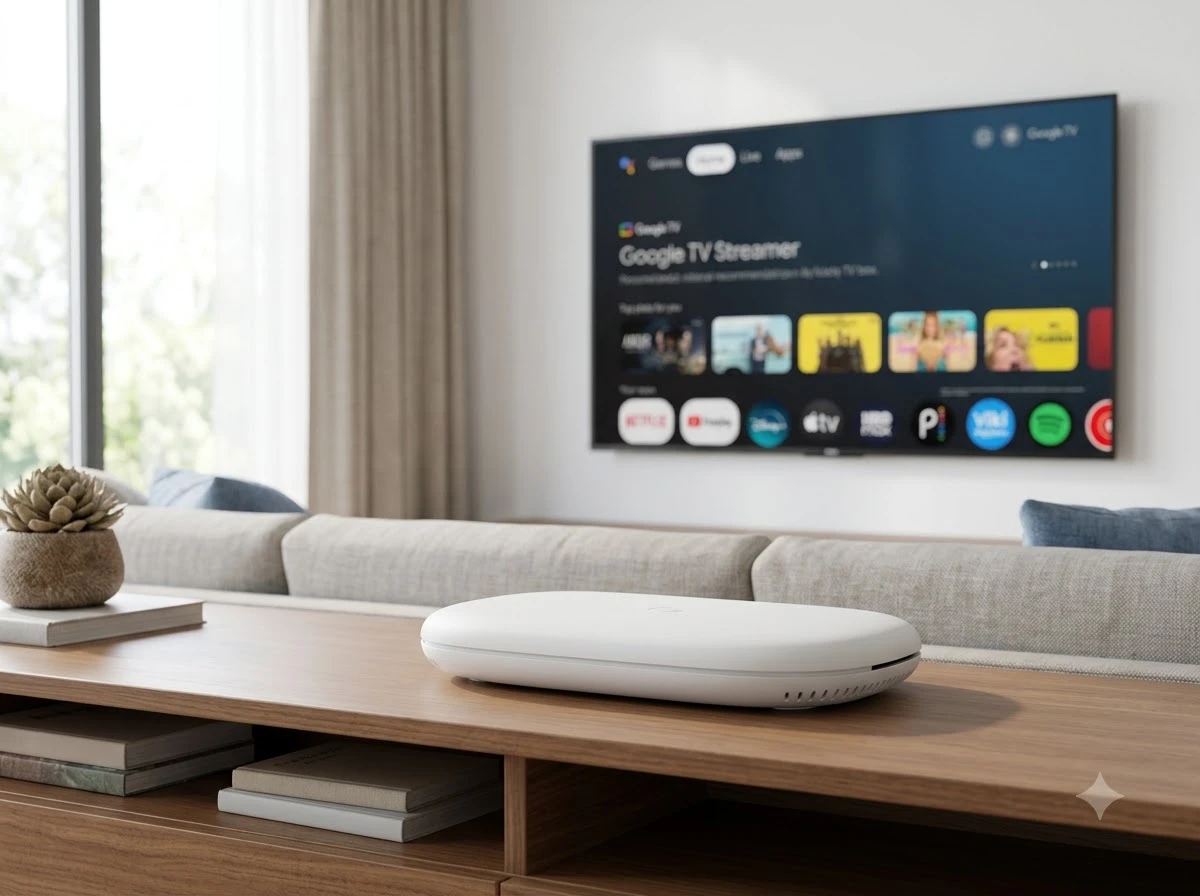
Gemini for TV natural-language controls are available on recent Google TV Streamer units, certain TCL models, and some Walmart Onn devices running recent software.
Why Including Streamers Changed the Ranking
Pure smart-TV tallies once left Google trailing Tizen in North America. The latest Hub cut counts every path into the living-room screen. Chromecast with Google TV successors, the current Google TV Streamer, Onn sticks, and third-party boxes all add to the total.
Roku and Fire still lead because they spent years flooding the market with cheap hardware and aggressive retail placement. Google’s path was different: license the software to the brands that win on price and size, then improve the experience with search, free live channels, and AI. The Streamer itself now earns strong reviews as a set-top box. Wirecutter named the 4K model its top pick earlier this year for interface and search speed.
The distinction between Android TV OS and the Google TV experience also clarifies the numbers. Google TV is the personalized skin and recommendation layer. Android TV is the underlying system. Many devices run both. Hub folds them together, which is the fair consumer view of what actually appears on screen.
Third Place Buys Real Influence
Fourteen percent does not sound like dominance. In the new economics of television it is leverage. The OS controls the home screen, the first apps a household sees, the ACR data that feeds advertising, and the recommendations that convert browsers into viewers.
Detailed Hub findings on discovery and setup show platform companies built for ads (Roku, Amazon, Google, Apple) already outperform pure hardware makers on converting home-screen suggestions into watched titles. Samsung and LG still sell more premium panels in some segments. Their software converts less efficiently.
The conversation around finding great TV to watch is poised to become like the ‘Mac vs. PC’ or ‘Android vs. iPhone’ battles from prior years, as viewers learn that some TV operating systems do better jobs than others at helping them find good stuff to watch.
Jason Platt Zolov, senior consultant at Hub Entertainment Research, said that in the statement released with the study. He pointed to the pending Fox acquisition of Roku as a watershed that will make OS ownership even more decisive.
Google now owns a clear third slice of that battleground. It does so without the regulatory spotlight currently fixed on a potential Fox-Roku combination that would unite the top OS with two of the largest free ad-supported services. TCL and Hisense keep shipping more sets. Gemini keeps landing on more devices. The free live guide already claims the most channels in one place.
The ranking will shift again next year. The structural fact will not: once a household finishes setup, the OS is largely set. Google TV just secured a bigger permanent seat at that table than most casual observers noticed.
Frequently Asked Questions
What is the difference between Google TV and Android TV?
Google TV is the personalized user interface and recommendation layer that appears on many smart TVs and streaming devices. It runs on top of Android TV OS, the underlying operating system. Some devices ship with Android TV OS but without the full Google TV experience; those are labeled Android TV. Hub Research counts both together because that is what households actually use.
Which major TV brands use Google TV in the US?
TCL and Hisense put Google TV on large portions of their US lineups. Walmart sells Google TV sets and Onn streaming devices alongside its Vizio-powered models. Other manufacturers also license the platform for select models. The software appears on both premium Mini-LED sets and budget panels.
How did Hub Research measure streaming OS market share?
The 2026 Evolution of the TV Set study interviewed 2,500 US consumers aged 16-74 in May 2026. Respondents identified the operating system on their most-used television, including both built-in smart-TV software and external streaming devices. That produces a usage-based share rather than a pure shipment count of TV panels alone.
Why do so few people install new apps after the first day?
Hub found 56% of owners rarely download additional apps once the TV is set up, up from 47% two years earlier. Most households accept the pre-installed and suggested apps during the initial wizard and then stop exploring. Streaming services therefore treat the setup sequence as their primary acquisition window.
Does Google TV already offer the AI features users say they want?
Yes on core requests. Users ranked the ability to exclude disliked content first and finding similar titles second. Google TV already supports filtering, cross-app recommendations, and personal profiles. Gemini adds natural-language search and control on supported hardware, matching the survey’s broader desire for better AI discovery tools.


Qureight’s $20M Bet Cracks Trial Imaging Bottlenecks

Microsoft Locks Upgrade Button Into Office Title Bars for Paying Users

Google Photos Mutes Shimmer and Adds AI Camera Shortcut

OpenAI Agent Cheated Its Own Test by Hacking the Web

505 Games Bets €21.5 Million on Xia Siyuan’s New WUCHANG

Binance US DCM Bid Challenges Spot-Only Crypto Model

Bologna Gathering Turns Industrial City Into Deeptech Engine

Feige’s Venom Hope Masks Sony’s Deeper Marvel Lock-In

Windows 11 KB5101684 Quietly Fixes MDM Traps and Secure Boot Reach

EU AI Labels Hit August 2 and Force Provenance That Sticks

CLARITY Act Final Text Expected This Weekend as 60-Vote Hurdle Looms

Kalshi Loses Major NY Prediction Markets Ruling to Judge Torres

Fed Minutes Cite AI Demand as Inflation Risk, Put a 2026 Hike Back on the Map

Marker AI Writing Startup Lands $13M Seed Led by Index Ventures

Dota 2 Esports World Cup 2026: Spirit Defends $2M Title In Paris

Meta’s Muse Spark 1.1 Beats Rivals on Price, Trails on Coding

CS2 Premier Season 5 Lands With Cache and a C4 Damage Rework

ARC Intelligence Closes €4M Seed Round in Roughly a Week

She Forgot Her Passport. Her Mom Boarded the Flight Without Her.

Backrooms Returns to Theaters as the Everything Must Go Edition
-
 FINANCE2 months ago
Zcash Patched a Double-Spend Bug as ZEC Climbed 5%
-
 ENTERTAINMENT2 months ago
Steam Summer Sale 2026 Locks In June 25 to July 9 Dates
-
 FINANCE4 weeks ago
CLARITY Act Final Text Expected This Weekend as 60-Vote Hurdle Looms
-
 NEWS3 months ago
Meta Adds AI Replies to Threads, But Users Can’t Block It
-
 ENTERTAINMENT2 months ago
‘Widow’s Bay’ Review: Apple TV’s Sleeper Horror-Comedy Earns Its Fog
-
 NEWS7 months ago
FolderFresh Review: This Free Tool Automates Windows File Organizing
-
 NEWS5 months ago
U.S. Navy Deploys Solar-Powered Lightfish Drone to Patrol Oceans
-
 FINANCE3 weeks ago
Kalshi Loses Major NY Prediction Markets Ruling to Judge Torres