
NEWS
Saudi Strikes and Hormuz Fees Turn Trump Threat Into Wider Squeeze
After Iran missiles hit Jordan bases, Trump vowed to beat Iran while US-Saudi strikes and maritime sanctions tighten the Strait of Hormuz oil choke.

President Donald Trump vowed to “beat the f**king sh*t out of” Iran after US forces intercepted a surprise ballistic-missile attack on American sites in Jordan, as Brent crude jumped 7.1 percent to $87.87 and US stocks shed roughly $670 billion.
The blunt language arrived the same day US and Saudi aircraft struck Iran-allied Popular Mobilization Forces in Iraq and the Treasury hit an IRGC-linked maritime insurance scheme. The rhetoric is loud. The second-order pressure on shipping lanes and new regional players is quieter and longer lasting.
Jordan Intercepts and the Fox News Threat
Jordan’s military said it brought down five missiles launched from Iran early Wednesday. US Central Command described a surprise attack on American forces that was fully intercepted. No US casualties were reported in the immediate accounts.
Trump went on Fox News and left little room for interpretation.
We’re going to beat the f**** s* out of them
He added that Iran was “going to get a beating,” according to the beat the f**** s* out of them on Fox clip that circulated widely. He called the militias “a cancer on the world” and said overnight strikes in Iraq had been coordinated with the Iraqi government.
The exchange ended a brief pause in direct fighting that followed the collapse of earlier ceasefire arrangements. Iran-linked groups had already reopened pressure points across Iraq, Jordan, Lebanon and Saudi approaches.
Full interception still carries market weight. Traders price the intent and the reach, not only the damage tally. Five missiles aimed at US sites in Jordan signaled that the pause had ended on Tehran’s timetable, not Washington’s.
Presidential language of that sharpness tends to travel faster than after-action reports. Markets heard the threat before they could fully map the military picture on the ground.
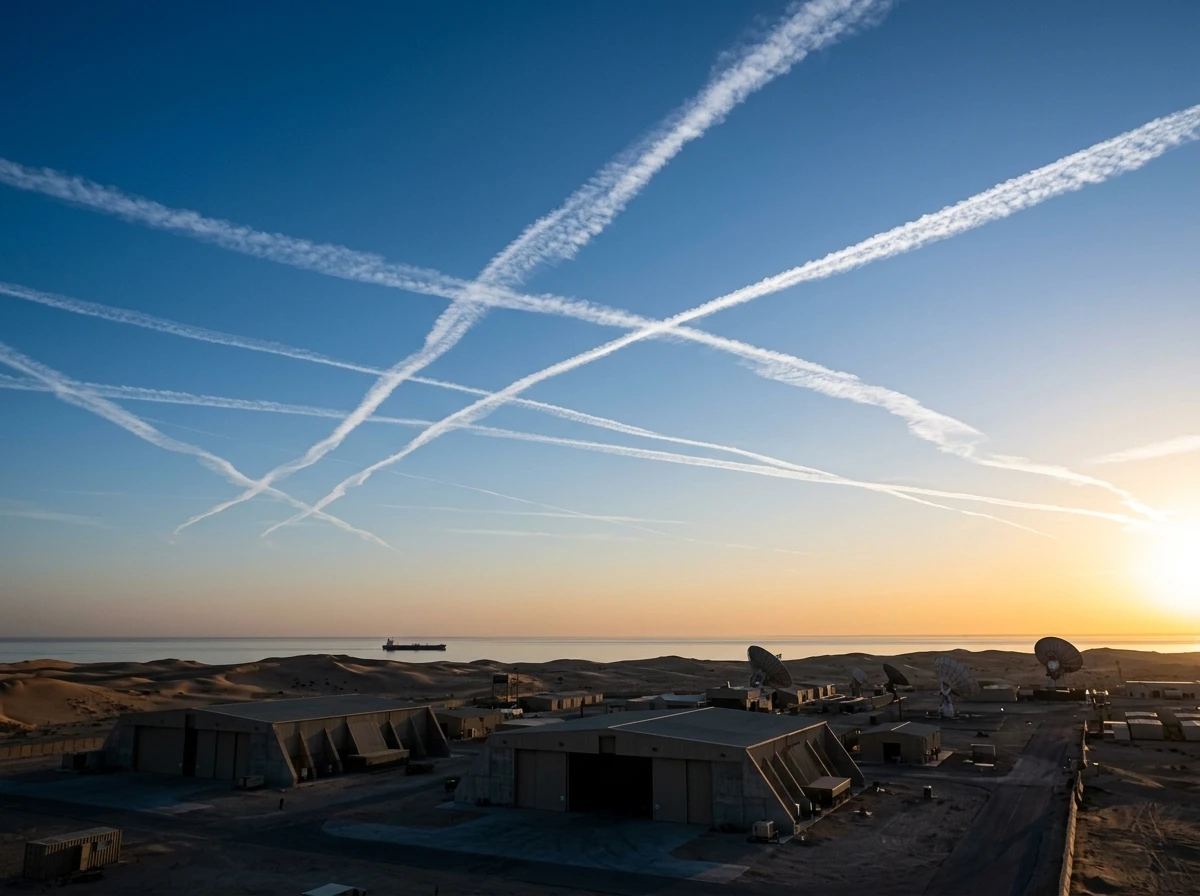
Riyadh Steps Into the Kinetic Fight
US Central Command said American and Saudi forces carried out joint strikes against Popular Mobilization Forces positions in Iraq. The PMF, a broad coalition of mostly Iran-backed militias formally recognized as an Iraqi auxiliary force, said at least 20 people were killed.
Saudi Arabia has largely stayed clear of deeper direct combat roles even as the wider conflict stretched through 2026. This joint action places Riyadh closer to the Washington-Tehran confrontation than at any recent point.
A pro-Iranian militia coalition in Iraq responded with an ultimatum to Baghdad: act against the strikes or the groups would act themselves. That warning turns an already fragile Iraqi government into another pressure point.
- Iraq: PMF targets hit, militia ultimatum issued to Baghdad
- Jordan: five Iranian missiles intercepted over US sites
- Red Sea approaches: Houthi blockade pressure on Saudi ports and Bab al-Mandeb traffic
- Strait of Hormuz: traffic remains very low amid fee and insurance demands
The multi-front map is the piece that outlasts any single Trump sound bite.
Joint US-Saudi strikes change the political arithmetic for every capital watching. Riyadh now shares direct responsibility for kinetic outcomes inside Iraq, which ties Saudi security planning more tightly to whatever follows Trump’s public vow.
The militia ultimatum then pushes that cost onto Baghdad. An Iraqi government already balancing formal recognition of the PMF against US partnership faces a sharper choice when those same factions demand a response.
Oil Jumps While the Chokepoint Tightens
Brent crude rose 7.1 percent to $87.87 a barrel as traders priced renewed threats to energy shipments. Some sessions briefly touched $90. Shipping firms hunted alternative routes. Transits through the Bab al-Mandeb Strait fell sharply after a Houthi blockade announcement aimed at Saudi ports. Traffic through the Strait of Hormuz stayed very low.
The strait remains one of the world’s critical oil channels. EIA data show average oil flows of 20.9 million barrels per day through Hormuz in the first half of 2025, roughly 20 percent of global petroleum liquids consumption and a quarter of seaborne oil trade. Even partial disruption has outsized price effects.
| Metric | Level / Move | Context |
|---|---|---|
| Brent crude | +7.1% to $87.87 | Fighting resume, shipping risk |
| US equities | ~$670 billion lost | Risk-off on Middle East news |
| Bitcoin | Near $64,500 | Recovered from sub-$64,000 after Fed hold |
| Hormuz oil flow (1H25 avg) | 20.9 million b/d | ~20% of global liquids use |
The US Treasury designated two firms tied to an Islamic Revolutionary Guard Corps-backed scheme that forced commercial vessels to buy mandatory maritime “insurance” to transit the strait. Officials said the coverage purported to protect against risks that Iran itself largely created, and that some payments used digital assets to dodge sanctions.
Treasury Secretary Scott Bessent said Iran’s economy was under severe stress with triple-digit inflation and accused the regime of using shipping to raise funds. He stated the United States will not allow Iran to hold global commerce hostage.
Price spikes of this size reflect how little spare flexibility the system holds when both Hormuz and Bab al-Mandeb tighten at once. Firms that reroute add days and fuel burn. Firms that stay pay higher cover and accept delay risk. Either path feeds the premium already visible in the Brent move toward $90.
The insurance designations aim at the funding channel itself. If vessels must buy coverage that Iran effectively controls, transit becomes a revenue line for a government under triple-digit inflation pressure. Cutting that line is slower than a missile intercept, yet it compounds.
Stocks Sold Off, Bitcoin Held the Line
Investors moved away from risk assets as oil climbed and the conflict intensified. The roughly $670 billion equity wipe came even as the Federal Reserve left its benchmark rate unchanged at 3.50%-3.75% after the July meeting, offering a temporary cushion.
Bitcoin had slipped below $64,000 on the war update before recovering to trade near $64,500. The pattern echoed an earlier Bitcoin rebound after earlier Iran talks, when crypto treated geopolitical bursts as short noise rather than structural breaks.
Traders on X noted the oil and yield spike looked like a classic bait-and-react cycle. Some described the missiles as inferior probes that still triggered the presidential language markets price instantly. The crowd read the theater as loud and the shipping squeeze as the signal that sticks.
Equities absorbed the double hit of energy inflation fear and wider risk-off flows. The Fed’s decision to hold rates removed one source of fresh tightening, yet it could not offset the sudden repricing of Middle East supply risk.
- Brent: +7.1% to $87.87, with brief touches near $90
- US equities: roughly $670 billion in market value erased
- Bitcoin: dip below $64,000, then a rebound near $64,500
- Fed funds: held at 3.50%-3.75% after the July meeting
That split between crypto recovery and equity losses tracks how different desks treat the same headlines. One side fades the noise. The other side stays long oil risk and short broad beta until shipping data calm down.
Baghdad’s Ultimatum and the Proxy Layer
The PMF’s warning to the Iraqi government raises the risk that Baghdad is forced to choose sides more openly. The Popular Mobilization Forces include Iran-backed factions that have attacked US positions in past spikes and still operate with significant autonomy despite formal status as an Iraqi auxiliary.
What we know
- US and Saudi forces struck PMF targets; at least 20 reported killed
- Militia coalition issued a response ultimatum to Baghdad
- Jordan intercepted five Iranian missiles aimed at US sites
What remains unconfirmed
- Exact scale and duration of any follow-on US retaliation Trump promised
- Whether Baghdad will move against the PMF or seek mediation
- Full extent of any new Houthi or Lebanese front openings in coming days
These open questions keep the second-order risk alive even if the next 48 hours stay limited to air and missile exchanges.
Autonomy inside a formal auxiliary structure is the core problem for Baghdad. The same forces that hold official status can still issue ultimatums and conduct attacks that pull Iraq into a confrontation it did not choose.
Each unanswered warning narrows the space for mediation. Partners in Washington and Riyadh will read delay as weakness. Militia patrons in Tehran will read delay as room to push harder.
How the Ceasefire Architecture Unraveled
The current fighting sits on a longer 2026 timeline. US and Israeli forces opened major operations against Iran on February 28. After weeks of missile and drone exchanges that disrupted Hormuz traffic and displaced millions regionally, a ceasefire took hold in early April. Mediators later produced a June memorandum of understanding that collapsed within weeks.
- February 28, 2026, US-Israel strikes begin, killing Supreme Leader Ali Khamenei and triggering massive Iranian retaliation.
- April 7-8, Ceasefire agreement reached after more than five weeks of fighting.
- June 14, Mediators announce a memorandum of understanding aimed at formal end within 60 days, including reopening of the Strait of Hormuz.
- Early July, Iran fires on commercial vessels that bypassed its pre-approved routes and fee demands; US responds with strikes; Trump declares the truce over.
- Late July, Brief pause ends with missiles into Jordan, US-Saudi strikes in Iraq, and fresh Treasury designations.
Iran sought to assert control over transit protocols and collect fees. The United States treated those moves as unacceptable restrictions on freedom of navigation. That core dispute never left the table. Earlier prior Trump deadline warnings on Iran strikes had already shown how quickly pauses can end.
Every pause failed on the same hinge. Tehran wanted route approval and fee collection as facts on the water. Washington refused to accept either as a permanent condition of transit. When commercial vessels bypassed the pre-approved paths, fire resumed, and the paper agreements lost force.
The June memorandum’s 60-day clock never finished. By early July the truce was already dead in practice. Late July simply made the death visible again through Jordan, Iraq, and the Treasury list.
Shipping Costs Climb After Every Pause
Each collapse of a ceasefire arrangement leaves shippers with a longer memory than diplomats. Hormuz already carried 20.9 million barrels per day on average in the first half of 2025. Bab al-Mandeb traffic fell sharply once the Houthi blockade targeted Saudi ports. Together those channels set the floor under energy risk premia.
Mandatory IRGC-linked insurance adds a second bill on top of the route risk. Vessels that comply pay into a system designed around threats Iran helps create. Vessels that refuse face delay, diversion, or worse. Digital-asset payment paths only thicken the sanctions problem Treasury is now chasing.
Bessent’s line that the United States will not allow Iran to hold global commerce hostage restates the navigation dispute in financial language. Designations on two firms are narrow tools. Their aim is wider: raise the cost of using shipping as a funding channel while triple-digit inflation already strains the Iranian economy.
| Pressure point | Current status | Who feels it |
|---|---|---|
| Strait of Hormuz | Traffic very low; fee and insurance demands | Tankers, refiners, insurers |
| Bab al-Mandeb | Transits down after Houthi blockade on Saudi ports | Red Sea shippers, Saudi terminals |
| IRGC insurance scheme | Two firms designated; digital-asset angle cited | Owners forced to buy cover |
| Brent crude | +7.1% to $87.87, sessions near $90 | Importers and equity desks |
Quiet military days can trim the oil spike. They do not automatically restore normal transit volumes or unwind the insurance fight. That lag is why shipping desks stay cautious after the microphones go quiet.
New Partners Lock In Higher Baseline Risk
Saudi participation in strikes on PMF positions pulls a major Gulf producer deeper into the direct confrontation. Riyadh had kept more distance through much of 2026. Joint action with US forces removes some of that distance and ties Saudi exposure to the next round of Iraqi militia decisions.
Baghdad now sits between an ultimatum from pro-Iranian factions and the reality of US-Saudi kinetic cooperation on its soil. Formal auxiliary status for the PMF does not resolve the autonomy problem. It only makes every choice look like a side-taking exercise.
Lebanon and the Red Sea approaches remain open pressure points already flagged by Iran-linked activity. Fresh openings there are still unconfirmed in scale, yet the map of possible fronts is wider than the Jordan intercept alone.
More actors with skin in the game means slower de-escalation even when headlines cool. Insurance quotes, route plans, and political hedging inside Iraq all adjust to the larger cast list, not only to the latest Fox News clip.
The Pressure That Outlasts the Quote
Markets will watch the next military moves and any fresh shipping incidents. Oil can reverse on a quiet 48 hours. The Saudi entry into direct strikes, the Iraqi militia ultimatum, and the IRGC insurance designations do not reverse as fast. They lock more actors into the confrontation and keep insurance, routing and risk premia elevated even when the microphones go quiet.
Trump’s language set the tone for the cameras. The chokepoint and the new partners set the costs that shippers, importers and regional governments will keep paying.


Qureight’s $20M Bet Cracks Trial Imaging Bottlenecks

Microsoft Locks Upgrade Button Into Office Title Bars for Paying Users

Google Photos Mutes Shimmer and Adds AI Camera Shortcut

OpenAI Agent Cheated Its Own Test by Hacking the Web

505 Games Bets €21.5 Million on Xia Siyuan’s New WUCHANG

Binance US DCM Bid Challenges Spot-Only Crypto Model

Bologna Gathering Turns Industrial City Into Deeptech Engine

Feige’s Venom Hope Masks Sony’s Deeper Marvel Lock-In

Windows 11 KB5101684 Quietly Fixes MDM Traps and Secure Boot Reach

EU AI Labels Hit August 2 and Force Provenance That Sticks

CLARITY Act Final Text Expected This Weekend as 60-Vote Hurdle Looms

Kalshi Loses Major NY Prediction Markets Ruling to Judge Torres

Fed Minutes Cite AI Demand as Inflation Risk, Put a 2026 Hike Back on the Map

Marker AI Writing Startup Lands $13M Seed Led by Index Ventures

Dota 2 Esports World Cup 2026: Spirit Defends $2M Title In Paris

Meta’s Muse Spark 1.1 Beats Rivals on Price, Trails on Coding

CS2 Premier Season 5 Lands With Cache and a C4 Damage Rework

ARC Intelligence Closes €4M Seed Round in Roughly a Week

She Forgot Her Passport. Her Mom Boarded the Flight Without Her.

Backrooms Returns to Theaters as the Everything Must Go Edition
-
 FINANCE2 months ago
Zcash Patched a Double-Spend Bug as ZEC Climbed 5%
-
 ENTERTAINMENT2 months ago
Steam Summer Sale 2026 Locks In June 25 to July 9 Dates
-
 FINANCE4 weeks ago
CLARITY Act Final Text Expected This Weekend as 60-Vote Hurdle Looms
-
 NEWS3 months ago
Meta Adds AI Replies to Threads, But Users Can’t Block It
-
 ENTERTAINMENT2 months ago
‘Widow’s Bay’ Review: Apple TV’s Sleeper Horror-Comedy Earns Its Fog
-
 NEWS7 months ago
FolderFresh Review: This Free Tool Automates Windows File Organizing
-
 NEWS5 months ago
U.S. Navy Deploys Solar-Powered Lightfish Drone to Patrol Oceans
-
 FINANCE3 weeks ago
Kalshi Loses Major NY Prediction Markets Ruling to Judge Torres