
ENTERTAINMENT
Mestia Film Festival Builds Quiet Power in Caucasus Peaks
The sixth Mestia International Short and Mountain Film Festival packed juries and masterclasses into a UNESCO Svaneti village.

The sixth Mestia International Short and Mountain Film Festival closed on 2 August 2026 after five days of screenings, masterclasses and mountain air at 1,500 metres in Georgia’s Svaneti province. More than 2,000 short and feature entries reached the programmers; a jury that included Golden Globe winner Siddiq Barmak and Korean cinematographer Kim Hyung-Koo judged the final slate.
Founder Khatuna Khundadze built the event in a UNESCO-listed valley that still feels more hiking outpost than red-carpet stop. The result is a compact festival already drawing producers who normally circle Cannes and Venice.
Svan Towers Meet a Thunderous River
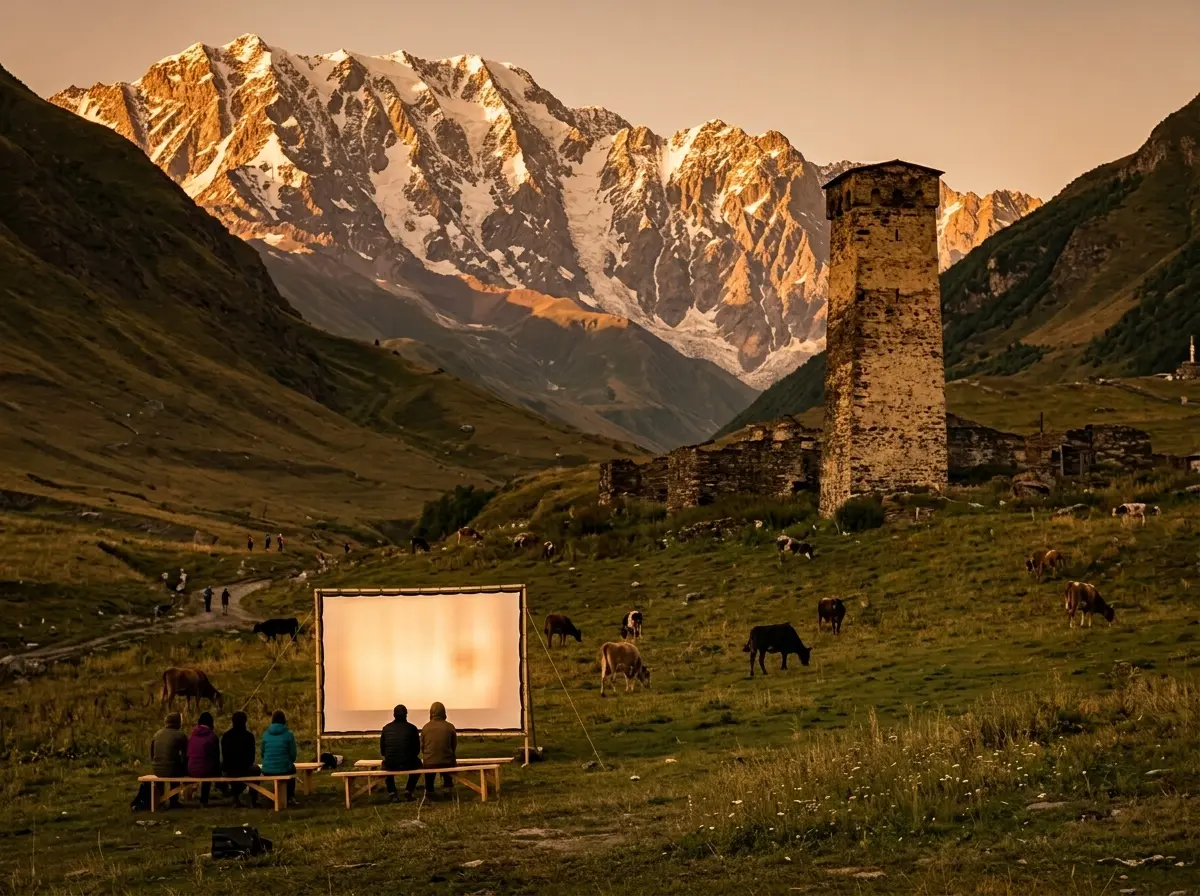
Mestia sits in Upper Svaneti, a region preserved by isolation and inscribed on the Upper Svaneti UNESCO World Heritage listing in 1996 for its medieval tower-houses and alpine landscape. The village of Chazhashi alone keeps more than 200 of the distinctive defensive towers.
A river runs through the centre of town. New hotels keep rising. Free concerts fill the park. Cows claim the sidewalks and the right of way. The drive from Tbilisi takes roughly seven hours; small planes operate only when weather allows. Visitors who make the trip describe a mix of Telluride-scale calm and raw Caucasus drama.
Tourism has climbed since the road improvements of the 2010s. Local businesses now cater to hikers and climbers from across Europe and Asia. The film festival slots neatly into that traffic without overwhelming the place.
Khundadze Bet on Now or Never
Khatuna Khundadze is director of Georgian Film, the government-run studio that ranks among the oldest continuous film operations in the region. She is the first woman to hold the post. Trained first as a doctor, she later studied art and directing in Stuttgart, spent years in Germany promoting Georgian culture, served briefly as a deputy culture minister, then returned to production.
As a girl she could see the twin peaks of Ushba from her hometown. The idea of a festival in Mestia stayed with her. Convincing local leaders in a traditionally patriarchal district took persistence. She found an ally in the mayor and launched the first edition in 2021 while COVID restrictions still limited travel.
During the pandemic, we were going crazy. We don’t know what to do. We need sometimes more independent art, something new. I think, ‘Now in this year. Now, or never. Now, or never.’
Khundadze told The Playlist through a translator. She wants the five or six former students who helped start the event to take the stage within five years so the festival outlives her daily presence.
Her longer record includes jury work at other mountain festivals and a steady push for Georgian stories on international screens. In one interview she said she loves good cinema regardless of the director’s gender, yet still feels happy when the filmmaker turns out to be a woman.
Five Days of Shorts, Peaks and Masterclasses
The full 2026 program and jury lineup mixed competition blocks with free public events. Opening night on 29 July screened the Canadian mountain film Robson. Closing night on 2 August revived Mikhail Kalatozishvili’s classic Jim Shvante (Salt for Svaneti).
Competition sections were tight by design: roughly twenty shorts under thirty minutes and five full-length mountain features. Special prizes covered best composer and best art director, categories rarely singled out elsewhere. The top mountain award carries the name of Mikheil Khergiani, the celebrated Svan alpinist known as the Tiger of the Cliffs.
| Day | Key Mountain Feature | Director / Origin |
|---|---|---|
| 29 July | Robson | Nicholas Strauss / Canada |
| 30 July | Jaar | Phurba Tshering Lama / India |
| 31 July | Girl Climber | Jon Glassberg / Austria |
| 1 August | Ashima | Kenji Tsukamoto / Japan |
| 2 August | Closing classic | Jim Shvante / Georgia |
Jaar later collected the Best Mountain Film prize, according to regional reports from the filmmakers’ home territory. Shorts ranged from Brazil and Spain to Georgia, India, Pakistan and Azerbaijan.
The jury brought genuine range: Afghan director Siddiq Barmak (Osama, Golden Globe winner, upcoming The Postman), Korean cinematographer Kim Hyung-Koo (Memories of a Murder, The Host), French producer Guillaume de Seille of Arizona Films, Turkish media executive Elif Dağdeviren, and Georgian animation organiser Mariam Kandelaki.
Co-Production Reality Checks in the Mountains
Masterclasses turned practical fast. Guillaume de Seille and Dany de Seille walked through international co-production mechanics and the press demands of the European circuit. Olena Yershova, whose credits include Anatolian Leopard (FIPRESCI at Toronto) and work with Georgian director Levan Koguashvili, dissected the path from one-page synopsis to major awards. Her next Koguashvili project, Guria, was headed to Venice.
Conversation kept circling the gatekeeping at Cannes and Venice. De Seille described smaller European titles losing slots when larger studio films hovered then withdrew. Yershova noted the frustration of being short-listed then dropped at the last combination of titles. Both stressed patience. Good films eventually find screens, they said, yet the timing still stings.
For American independents used to a different financing map, the sessions underlined that European public funds carry their own thick rulebooks. The grass is not automatically greener. Passion in the room stayed high anyway.
What the Festival Hands Out
Official competition sections and named prizes stay focused:
- International Mountain Film Competition, Mikheil Khergiani Prize
- International Shorts Competition, Best Short Film
- Special prizes for Best Composer and Best Art Director in both sections
- Retrospective Georgian shorts and a special program outside competition
The Mestia Center of Culture and Arts holds 180 seats indoors; its terrace handles nearly 500 for open-air screenings with mountain views. The founders deliberately created the first dedicated mountain-and-short festival in Georgia, a country already rich in film history but light on short-film platforms.
Past editions have hosted Reinhold Messner as guest of honor. Immersive-art curators from Cannes have appeared. The 2026 guest list stayed industry-heavy rather than celebrity-driven.
Young Hands and Local Stakes
Khundadze’s succession plan is unusually explicit. She has already told her translator and core team that she does not want to present every film in five years. The students who launched the festival with her are expected to step forward. That handoff is the long game: keep the event alive after the founder’s daily energy moves on.
Local impact is already visible. Filmmakers and executives fill hotels that once waited mainly for trekkers. Masterclasses give regional producers direct access to co-production contacts. Georgian shorts share screens with work from the Andes, the Himalayas and the Alps. The festival functions as both showcase and soft-power node for a country still navigating EU candidacy and complicated northern relations.
Svaneti’s tourism boom carries its own tensions: chalet-style new builds, rising rents, pressure on the very medieval fabric that earned UNESCO status. A carefully scaled cultural event can channel visitors without the crush of mass resorts. So far MIFF has stayed on the right side of that line.
- 2021, First edition launched during late COVID by Khundadze and the Center of Art & Culture of Mestia
- 2024, Reinhold Messner appears as guest of honor and leads a workshop drawing hundreds
- 29 July-2 August 2026, Sixth edition draws 2,000+ entries, international jury and focused masterclasses
- Next five years, Planned transition of presenting duties to the original young team
Tbilisi itself rewards a stopover: old-town balconies, sulphur baths, a waterfall inside the city, fast internet cafes full of digital nomads, and weekly EU-membership rallies. From there the mountains wait.
Comparable European film programming, such as the broader European film series programming that maps national cinemas through retrospectives, shows how focused curation can travel. Mestia simply plants that idea at altitude.
Access Remains Part of the Point
Getting there is still an adventure. Watch the cows. Check the weather before booking the short hop flight. Bring layers even in high summer. The payoff is a festival that feels closer to the films it shows than most urban events manage.
Khundadze’s festival founding details and team list a lean local staff handling logistics, selection and technical runs. International relations managers already speak the language of FilmFreeway submissions and co-prod markets. The infrastructure is modest by design and therefore portable.
If the next generation holds the line on scale and quality, Mestia could become the summer mountain stop that serious cinephiles plan around the way they once planned around Telluride or Locarno sidebars. The peaks are already there. The films are arriving. The handoff is the only remaining variable.
Frequently Asked Questions
Who founded the Mestia International Short and Mountain Film Festival?
Film director and producer Khatuna Khundadze founded it together with the Center of Art & Culture of Mestia NNLE; she remains festival director and is also the first female head of Georgian Film Studio.
When does the Mestia film festival take place each year?
The sixth edition ran 29 July to 2 August 2026; earlier editions have occupied late July or early August windows to catch stable summer weather in the high Caucasus.
What makes Upper Svaneti a UNESCO site?
The 1996 inscription recognises the exceptional mountain landscape of medieval villages and defensive tower-houses, with Chazhashi alone preserving more than 200 towers that served as both homes and fortifications.
Which prizes does the festival award?
The main mountain award is the Mikheil Khergiani Prize; shorts compete for Best Short Film, and both sections carry special prizes for Best Composer and Best Art Director.
How many films screen in competition?
Regulations limit the competition to approximately twenty shorts (under 30 minutes) and five full-length mountain features, selected from more than 2,000 submissions in 2026.


OpenAI Bets $300 Donut Speaker Can Seed Its Device Future

OpenAI Bets $300 Donut Speaker Can Seed Its Device Future

Dell Parks Flagship XPS 13 Chassis on Googlebook Platform

OpenAI Bets $300 Donut Speaker Can Seed Its Device Future

CLARITY Act Delay Leaves Crypto Bill Racing a Midterm Clock

Ethics Deal on CLARITY Act Could Force Trump Crypto Sale With Tax Deferral

Chrome Wins Netflix 4K on Windows 11 but Edge Keeps More

Tight Jobless Claims Cap Bitcoin Under $65,000 on Hike Odds

Maher Gasps at DSA Communists While Hollywood Stays Silent

Netflix Gets GTA 6 Extended Look Six Hours Before YouTube

Fed Minutes Cite AI Demand as Inflation Risk, Put a 2026 Hike Back on the Map

Marker AI Writing Startup Lands $13M Seed Led by Index Ventures

Meta’s Muse Spark 1.1 Beats Rivals on Price, Trails on Coding

Finto Picks Munich Over Silicon Valley After YC, Raises $3.4M

CS2 Premier Season 5 Lands With Cache and a C4 Damage Rework

Backrooms Returns to Theaters as the Everything Must Go Edition

Trump Calls Iran ‘Islamic Republic of Japan’ as Ceasefire Ends

IO Interactive Regains Project Fantasy, Closes Istanbul Studio

Kord’s £6.4M Series A Bets Identity and Payments Run on One Stack

Taiwan Margin Debt Climbs 160% as Locals Borrow Into the TSMC Rally
-
 FINANCE2 months ago
Zcash Patched a Double-Spend Bug as ZEC Climbed 5%
-
 ENTERTAINMENT2 months ago
Steam Summer Sale 2026 Locks In June 25 to July 9 Dates
-

 FINANCE1 month ago
CLARITY Act Final Text Expected This Weekend as 60-Vote Hurdle Looms
-
 NEWS3 months ago
Meta Adds AI Replies to Threads, But Users Can’t Block It
-
 ENTERTAINMENT3 months ago
‘Widow’s Bay’ Review: Apple TV’s Sleeper Horror-Comedy Earns Its Fog
-
 NEWS5 months ago
U.S. Navy Deploys Solar-Powered Lightfish Drone to Patrol Oceans
-
 FINANCE2 months ago
CLARITY Act Floor Vote Likely Shifts to August, Lummis Says
-

 FINANCE1 month ago
Kalshi Loses Major NY Prediction Markets Ruling to Judge Torres