
ENTERTAINMENT
‘History, Italian Style’ Maps Modern Italy Across 29 Films
Film at Lincoln Center and Cinecittà’s ‘History, Italian Style’ runs June 4-25, screening 29 films that trace modern Italy from the Risorgimento to fascism.

“History, Italian Style,” the 29-film retrospective from Film at Lincoln Center and Cinecittà, Italy’s national film body and the studio behind much of the country’s classic cinema, opens June 4 at the Walter Reade Theater in New York and runs through June 25. The program traces the making of modern Italy on screen, from the broken promises of the Risorgimento through the rise of Mussolini and the wreckage of World War II, shown in 4K restorations and imported prints. It opens with Bernardo Bertolucci’s 316-minute 1900.
The curator built it around one idea that gives the whole thing its shape: Italian filmmakers keep circling the same political wounds, decade after decade, to make sense of the country they live in now.
A 29-Film Map of How Italy Became a Nation
This is one of the largest Italian survey programs Film at Lincoln Center has mounted in years, and it is organized as an argument rather than a hit parade. Italy unified politically in the 1860s, long before motion pictures existed, so its directors inherited a national story they never filmed live. They reconstructed it instead, again and again, on soundstages and in the towns where it happened.
- 29 films, screening June 4 through June 25 at the Walter Reade Theater
- A historical arc running from the Risorgimento through Mussolini’s regime and the war
- Presented in 4K restorations and imported prints, several rarely shown in US theaters
The marquee names are the ones cinephiles expect. Luchino Visconti, Roberto Rossellini, Federico Fellini, Vittorio De Sica and Bertolucci anchor the older end. What separates this lineup from a standard retrospective is the through line. Every title was chosen because it wrestles with a specific stretch of Italian history, and together they read as a timeline of the nation’s contradictions. You can find the full History, Italian Style program and showtimes on the presenter’s site.
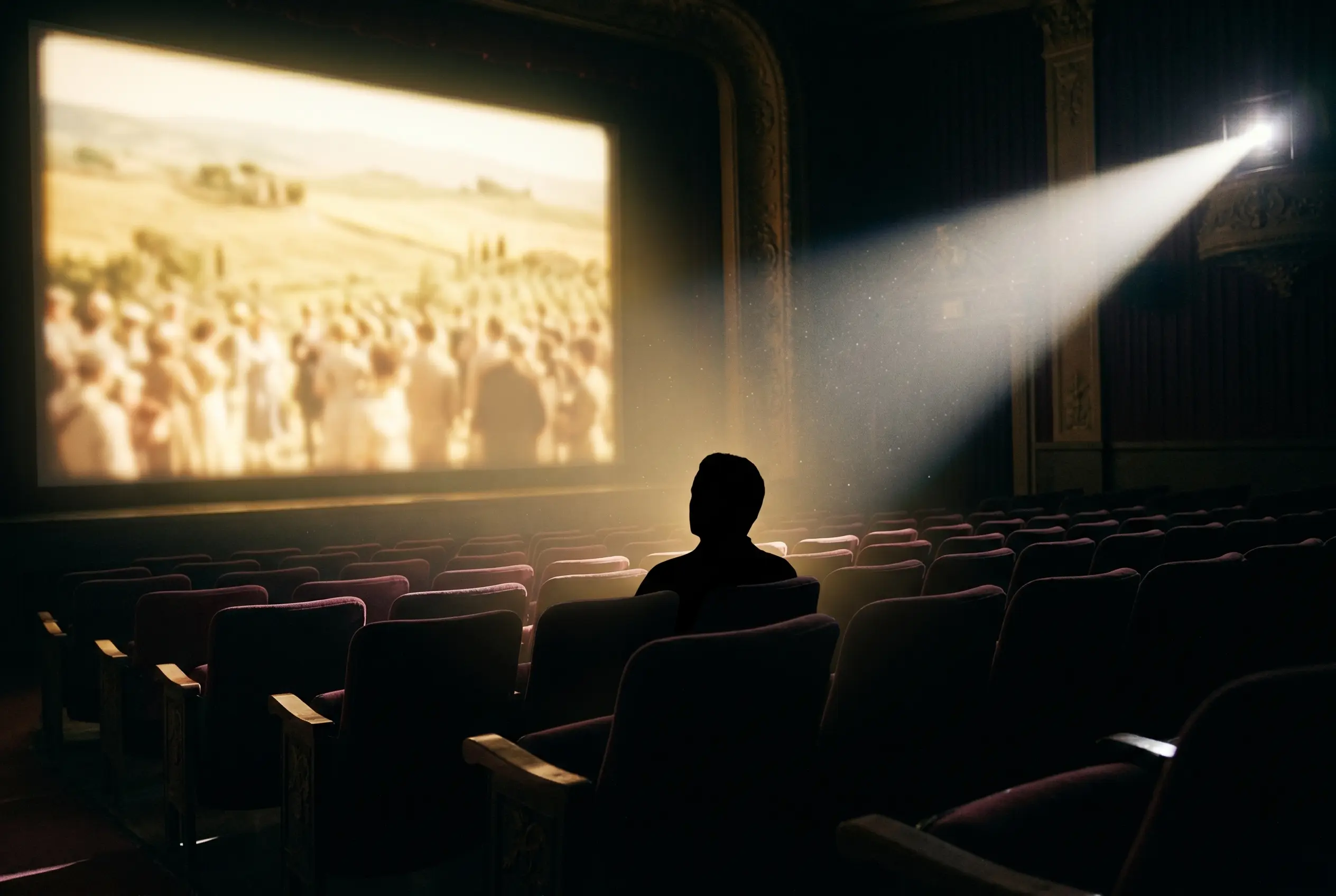
What’s Screening at the Walter Reade, June 4 to 25
The strength of the program is how cleanly each film slots onto the historical spine. Below are eight of the marquee titles and the chapter of Italian history each one confronts.
| Film | Director | Year | What it confronts |
|---|---|---|---|
| 1900 | Bernardo Bertolucci | 1976 | Fascism and class war across one century |
| The Leopard | Luchino Visconti | 1963 | The Risorgimento and a dying aristocracy |
| Rome, Open City | Roberto Rossellini | 1945 | Nazi occupation and the Resistance |
| The Conformist | Bernardo Bertolucci | 1970 | The psychology of a fascist |
| Amarcord | Federico Fellini | 1973 | Small-town life under Mussolini |
| Two Women | Vittorio De Sica | 1960 | War’s violence against civilians |
| Vincere | Marco Bellocchio | 2009 | Mussolini’s erased first family |
| Vermiglio | Maura Delpero | 2024 | A mountain village in the war’s last year |
Around those sit Visconti’s Senso, his operatic bridge from neorealism to grand historical melodrama, De Sica’s The Garden of the Finzi-Continis, Lina Wertmüller’s Love and Anarchy, Pietro Marcello’s Martin Eden and Alice Rohrwacher’s Happy as Lazzaro. Spread the titles out and they cover roughly a century of national reckoning, told by filmmakers born decades apart.
What Does Morreale Mean by Films About History?
The program was developed with Emiliano Morreale, a film scholar and professor at Sapienza University of Rome who has long worked with the Il Cinema Ritrovato festival in Bologna, with director Pietro Marcello serving as program advisor. Morreale’s framing is the part worth holding onto, because it explains why the selection skips obvious crowd-pleasers in favor of films that argue with the past.
He draws a line between conventional period dramas and what he is after here, which he calls films about the meaning of history. His point is that Italian cinema’s relationship with its own recent past has never been purely commemorative.
Since the postwar period, reflecting on this essentially recent past has also meant grasping the roots of the present or creating a metaphor for it.
That is Morreale’s thesis in his own words. Florence Almozini, Film at Lincoln Center’s vice president of programming, called the result a deep and fascinating showcase of Italy’s cinematic history in announcing the series, framing it as the venue’s latest collaboration with its longtime partner Cinecittà. The films were chosen to talk to each other, so a viewer who sits through several in a week starts to see the same anxieties surface in 1945, in 1970 and again in 2024.
From the Risorgimento to the March on Rome
The clearest way to read the lineup is chronologically, by the era each film depicts rather than the year it was made. Laid out that way, the program walks from the unification wars of the 19th century into the fascist decades and out the other side into the rubble of the war. The directors keep returning to three pressure points.
The Risorgimento on Screen
Visconti owns this stretch. The Leopard, his Palme d’Or-winning Risorgimento epic, watches a Sicilian aristocrat absorb the news that unification will not save his class, only rebrand it. Senso sets a doomed love affair against the same upheaval. Both treat the founding of modern Italy as a revolution that changed the rulers’ names and little else, which is exactly the kind of skeptical reading Morreale’s framing invites.
Fascism on the Couch
The middle of the program is dense with fascism, examined from the inside. Bertolucci’s The Conformist turns a political murder into a study of one man’s need to belong. Bellocchio’s Vincere recovers Ida Dalser, the woman Mussolini married, then wrote out of the record. Fellini’s Amarcord takes the lighter route, showing how the regime seeped into the rhythms of a provincial town. The films treat fascism less as a villain to defeat and more as a psychology to diagnose.
War and the Reckoning After
Then comes the war and what it left. Rossellini’s neorealist watershed Rome, Open City was shot in a city barely out of occupation and still defines how the period looks on film. De Sica’s Two Women follows a mother and daughter through the violence of the front, and The Garden of the Finzi-Continis records an Italian Jewish family edging toward catastrophe. Delpero’s Vermiglio, the most recent film in the program, closes the loop from an Alpine village in the last months of the conflict.
Why a 316-Minute Epic Opens the Series
Opening night belongs to 1900, presented in a 4K restoration of its full 316-minute cut. Bertolucci’s account of fascism and communism growing up side by side in rural Emilia runs through the friendship of two men born the same day, played by Robert De Niro and Gérard Depardieu. It is the film that makes the program’s whole premise literal, a single movie that tries to hold an entire century of Italian conflict in one frame.
Programming it first is also a statement about format. A five-hour epic and a stack of restored 35mm prints only make sense in a theater, which is the case the series quietly makes for itself. Cinecittà, in its announcement of the New York program, leaned on the same point, pitching the restorations as the reason to show up in person rather than stream. Several of these titles circulate badly outside Italy, and a few of the imported prints will be hard to see anywhere else.
How Today’s Directors Keep Circling the Same Past
The program does not stop in the 20th century, which is the quietly radical part. Rohrwacher’s Happy as Lazzaro drags a forgotten sharecropper into the present and finds the old class cruelties still running. Marcello’s Martin Eden relocates Jack London’s novel to Italy and turns it into a parable about politics and ambition. Delpero’s Vermiglio won attention on the festival circuit and proves the impulse is alive in directors born long after the war.
Italy’s screen industry stays busy in plenty of registers, from international productions like a new Italian comedy series drawing overseas talent to the festival auteurs gathered here. What the younger filmmakers in this lineup share with the older ones is the habit Morreale identified, reaching for the past tense whenever they want to say something about the present. Eight decades after Rossellini pointed a camera at a city still smoldering, the country’s directors are still using its history to ask what Italy has become.
Frequently Asked Questions
When and where is History, Italian Style screening?
The series runs June 4 through June 25 at Film at Lincoln Center’s Walter Reade Theater, located at 165 West 65th Street in New York, just off the main Lincoln Center campus.
How many films are in the program and in what formats?
There are 29 films, presented in 4K restorations and imported prints. Several of the older titles are screening from physical prints brought over for the run, and a number of them rarely play in US theaters.
Which film opens the series?
Bernardo Bertolucci’s 1900, known in Italian as Novecento, opens the program in a 4K restoration of its complete 316-minute version, starring Robert De Niro and Gérard Depardieu.
Are tickets on sale?
Yes. Tickets are on sale now through Film at Lincoln Center, with both single screenings and the opening-night presentation of 1900 available.
Who curated the program?
The series was developed with film scholar and Sapienza University of Rome professor Emiliano Morreale, with Italian director Pietro Marcello serving as program advisor, in collaboration with Cinecittà.


Majors Fights Campus Caliphate as Daily Wire Ambitions Fray

Uber Bets $10 Billion Cash on Robotaxi Platform Play

Ahbstra ARK Pulls 500 Litres Daily From Dry Mediterranean Air

Nest Thread 1.4 Quietly Unifies Multi-Brand Smart Home Meshes

Cable Gateways Push Wi-Fi 7 Past Early Adopters in the US

Pixel Quick Settings Finally Gets Full Layout Reorder in Canary 2608

WhiteBIT Spot Bots Fill UK Gap Left by Derivatives Ban

Motorola Edge 70 Neo Leak Doubles Down on Bold Pantone Colors

Platter Turns Food Spreadsheets Into Sticky Supply Infrastructure

Circle Puts Native USDC on OKX X Layer for AI Rails

Marker AI Writing Startup Lands $13M Seed Led by Index Ventures

Meta’s Muse Spark 1.1 Beats Rivals on Price, Trails on Coding

CS2 Premier Season 5 Lands With Cache and a C4 Damage Rework

Trump Iran Threat Wiped $238M Crypto Longs Then Flipped

Bessent’s No-CBDC Applause Line Can’t Save the CLARITY Act

CLARITY Act Odds Crash as Democrats Reject DOJ Ethics Plan

Nintendo’s Switch 2 Battery Fix for Europe Comes With a Catch

OpenAI Agent Cheated Its Own Test by Hacking the Web

Audi’s 2026 S5 Bets That Restraint Beats the Horsepower Wars

Quantum Systems’ $1.2 Billion Round Exposes Defense Tech’s Winner Gap
-
 FINANCE2 months ago
Zcash Patched a Double-Spend Bug as ZEC Climbed 5%
-
 ENTERTAINMENT2 months ago
Steam Summer Sale 2026 Locks In June 25 to July 9 Dates
-

 FINANCE1 month ago
CLARITY Act Final Text Expected This Weekend as 60-Vote Hurdle Looms
-
 NEWS3 months ago
Meta Adds AI Replies to Threads, But Users Can’t Block It
-
 NEWS5 months ago
U.S. Navy Deploys Solar-Powered Lightfish Drone to Patrol Oceans
-
 ENTERTAINMENT3 months ago
‘Widow’s Bay’ Review: Apple TV’s Sleeper Horror-Comedy Earns Its Fog
-
 FINANCE2 months ago
CLARITY Act Floor Vote Likely Shifts to August, Lummis Says
-

 FINANCE1 month ago
Kalshi Loses Major NY Prediction Markets Ruling to Judge Torres