
FINANCE
Judge Approves Musk’s $1.5M SEC Twitter Deal but Flags a ‘One-Time’ Question
A federal judge approved the SEC’s $1.5 million settlement with Elon Musk over delayed Twitter disclosures but called the deal a possible ‘one-time’ arrangement for the world’s richest man.

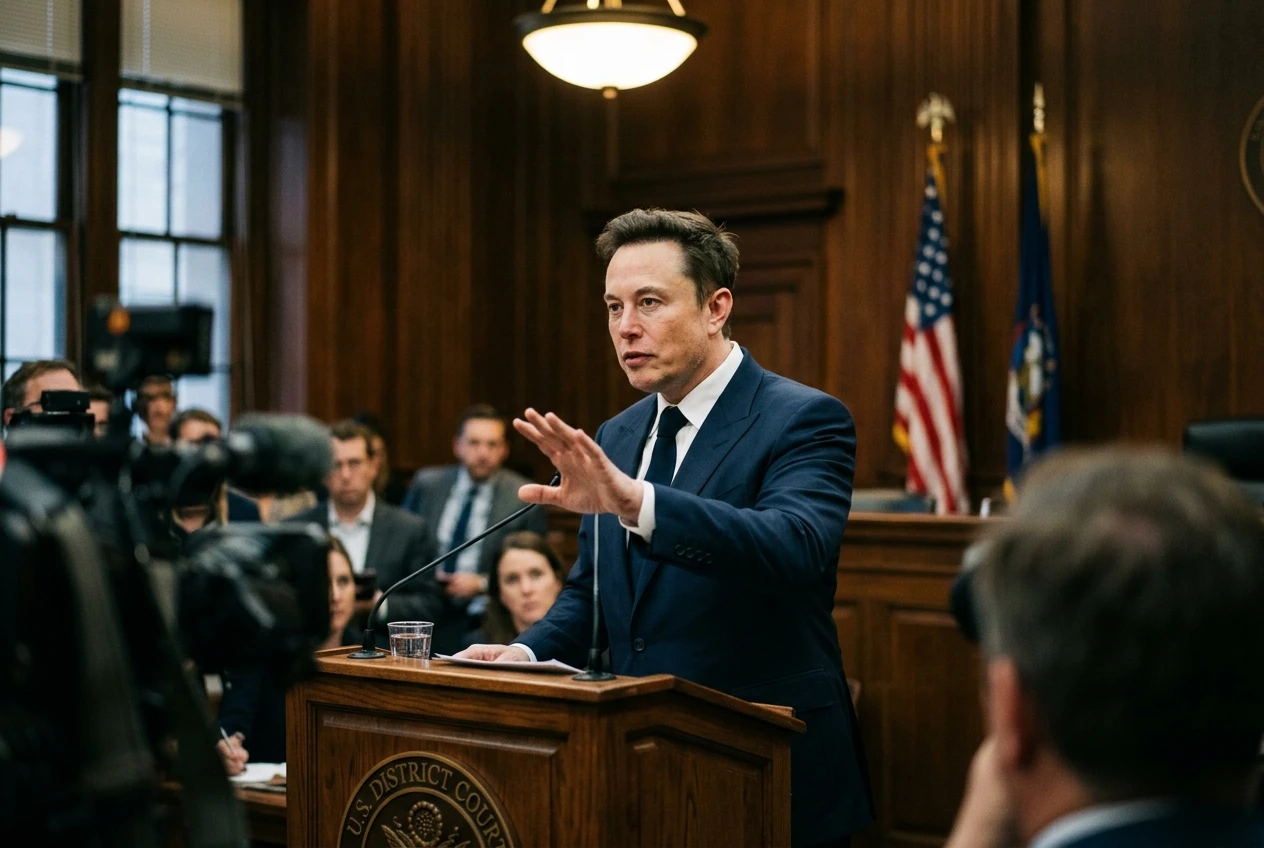
A federal judge in Washington, D.C., approved the U.S. Securities and Exchange Commission’s $1.5 million settlement with Elon Musk over his delayed disclosure of Twitter shares on Wednesday, but used the order to publicly question whether the deal was a one-time arrangement cut for the world’s richest man.
U.S. District Judge Sparkle Sooknanan, appointed to the bench by former President Joe Biden, entered the consent judgment over SEC claims that Musk took 11 days too long in March and April 2022 to disclose his early purchases of Twitter shares. The settlement requires a trust in Musk’s name to pay the civil penalty; Musk personally admits no wrongdoing, gives up no profits, and faces no personal injunction.
The Deal That Closed a Four-Year Case
The agreement was announced on May 4, weeks after former SEC enforcement chief Margaret Ryan left the agency following six months on the job. Ryan had clashed with agency leaders over the direction of the enforcement program, and her departure cleared the way for a softer landing in the Musk case.
Under the deal, the Elon Musk Revocable Trust pays $1.5 million, accepts a permanent injunction against future breaches, and becomes the sole defendant. The agency drops all claims against Musk personally. The settlement closes a case the SEC originally filed on January 14, 2025, six days before Biden left office, charging Musk under Section 13(d) of the Securities Exchange Act and Rule 13d-1. Musk had failed to have the suit dismissed, with the court rejecting his motion to dismiss in February 2026.
The consent judgment resolves the longest-running securities dispute tied to Musk’s 2022 takeover of Twitter, a deal that ended with him paying $44 billion in October 2022 and renaming the platform X. X is now part of Musk’s rocket and satellite company SpaceX.
How the Disclosure Timeline Works
Federal securities law treats large ownership disclosures as a strict-liability obligation. Once an investor crosses 5% of a public company’s shares, they have 10 days to file a Schedule 13D report with the SEC. The rule exists so the market can price in the possibility that a major holder could push for change at the company.
The SEC’s complaint, summarized in its January 2025 filing against Musk, alleged that Musk crossed the 5% Twitter threshold on March 14, 2022, with a 10-day clock that ran out on March 24, 2022. He did not file the required report until April 4, 2022, an 11-day gap during which he bought more than $500 million of additional Twitter stock at prices that did not yet reflect his position. By the end of the delay, he held a 9.2% stake.
Section 13(d) imposes a strict liability standard, which is why the SEC’s complaint did not have to prove Musk intended to deceive anyone. It had to prove the filing was late. Musk has said the delay was inadvertent.
The Judge’s ‘Significant Misgivings’
Sooknanan accepted the settlement but used the memorandum to flag what she called “red flags” in how it was assembled. The most pointed passages ran straight at the SEC’s enforcement choices.
She questioned why the agency dropped its earlier demand that Musk disgorge the alleged $150 million in unjust enrichment. The SEC told the court it had limited history of winning such relief in Section 13(d) cases, a position Sooknanan said “may or may not be fair,” adding that it left her to “query what that says about the propriety of settling in the first place.” She also flagged that the agency filed an amended complaint adding the trust as a defendant just three minutes before filing its motion seeking approval.
A court presented with a consent judgment is not a rubber stamp. But neither is it an ombudsman. Whether the Executive Branch (through the SEC) has done enough to hold Mr. Musk to account for his alleged violation is, like many other issues, for our citizenry to decide at the ballot box.
She then wrote the line that drew the most attention. “The court is left to wonder whether the SEC will afford other alleged securities-law violators such solicitude,” Sooknanan wrote. “Or is this a one-time deal designed for Mr. Musk negotiated without the involvement of the SEC lawyers litigating this case?” The SEC has said the settlement did not result from collusion and that the $1.5 million penalty is the largest ever imposed for a standalone Section 13(d) violation.
Who Pays, Who Pays Nothing
The gap between what the SEC says the delay cost and what the trust is paying sits at the heart of the ruling. Sooknanan did not soften it.
| Side | What they get | What they don’t get |
|---|---|---|
| Elon Musk Revocable Trust | $1.5M civil penalty paid; permanent injunction against future breaches | No admission of wrongdoing; no disgorgement; no personal finding against Musk |
| Twitter shareholders who sold March 25 to April 1, 2022 | No restitution mechanism in the settlement | Alleged losses tied to the SEC’s $150M underpayment figure |
| SEC enforcement record | Largest standalone Section 13(d) penalty on record | A disgorgement order; a precedent against a politically connected defendant |
The trust is the largest single holder of Tesla stock in the world, with holdings the SEC has previously valued at more than $180 billion. Musk is its sole grantor, trustee, and beneficiary. Forbes puts Musk’s personal net worth at $927.2 billion.
Why the Trust, Not Musk Personally
The choice to sue the trust instead of Musk individually is what lets the deal do what it does for Musk personally. Under the structure, the trust accepts the injunction and pays the fine, while Musk retains the public posture that the matter was resolved against an investment vehicle, not against him.
Sooknanan pressed that point directly at a status conference in May.
If the Trust is an alter ego or some extension of Mr. Musk, why isn’t relief running against Mr. Musk, as opposed to the Trust?
She stopped short of rewriting the settlement. Her written order acknowledged that the trust funded the Twitter share purchases and held the stock at the relevant time, and that the SEC’s public-benefit argument, that the injunction binds Musk when he acts through the trust, was enough to satisfy the minimum fairness standard. That standard, she wrote, is whether the proposed consent judgment “makes a mockery of judicial power,” a threshold the deal cleared only by a narrow margin.
Where the SEC Goes From Here
Sooknanan closed with the line that has defined the coverage: whether the SEC has done enough to hold Musk to account, she wrote, is “for our citizenry to decide at the ballot box.” That phrasing tied the enforcement outcome to a political question the courts cannot answer.
The settlement also lands against a backdrop of leadership turnover. The agency that filed the case in January 2025 operated under former chair Gary Gensler. The agency that settled it operates under new leadership, with a Republican White House in place and Musk a former outside adviser to President Donald Trump. Musk has called the case politically motivated.
What the ruling does not do is constrain future SEC action against other 13(d) violators. Sooknanan’s “one-time deal” question is a warning, not a holding. Her order did not impose conditions on the agency going forward, leaving the question of whether other investors will be treated the same way exactly where she said it belonged: unresolved. Musk’s other legal fights, including his recently concluded OpenAI suit, have ended less gently.


Replit Opens Its London Office Inside an AI Crowd

Straight Circle Trailer Lands Without a U.S. Date

Anemo Labs Bets £700,000 on an AI Sense of Smell

Nintendo Prices the Zelda 40th Switch 2 at $519

Copilot Capital Buys the Autopilot Already Running 90 GW

Ground A Raises €9.1 Million for a Pallet Laser

Gibney’s Musk Film Opens in Venice Without Its Subject

Torvalds Blames AI for a Full-Fat Linux 7.3-rc2

Dexter Returns Sharper, Older, and Stuck Between Killers

Meta’s Muse Agent Can Spend Before the Privacy Lock

Walter’s TWG Insists No Fraud as Insurer Probes Force Cleanup

30-Year Yield Hits 5.32% Highest Since 2007 as Debt Supply Locks In Costs

PCE Stays at 3.7% as Gas and Tariffs Outrun Coming Revisions

Evernorth S-4 Clears Path for Active XRP Treasury on Nasdaq

Astute’s $1.2M bet makes B2B creator deals feed AI discovery

Strategy Parks $1.59B Cash While Bitcoin Stack Stays Flat

Instinct Hits $2.5 Billion as AI Agent Access Sparks Trust Fights

Monzo chair Gary Hoffman exits after board revolt fallout

Oracle’s 2.8 GW Bloom Deal Exposes the AI Power Bypass

CLARITY Act Cloture Opens a Door Ethics Still Blocks
-
 FINANCE3 months ago
Zcash Patched a Double-Spend Bug as ZEC Climbed 5%
-
 ENTERTAINMENT3 months ago
Steam Summer Sale 2026 Locks In June 25 to July 9 Dates
-

 FINANCE2 months ago
CLARITY Act Final Text Expected This Weekend as 60-Vote Hurdle Looms
-
 NEWS4 months ago
Meta Adds AI Replies to Threads, But Users Can’t Block It
-
 ENTERTAINMENT5 months ago
Extraction 3 Is Officially Coming to Netflix in 2027
-

 NEWS3 months ago
YouTube Shorts is testing a heart in place of the thumbs-up
-

 NEWS1 month ago
Senators Force Apple Off Chinese Memory as Big Three Cash In
-

 NEWS3 months ago
NEURA Robotics’ $1.4B Series C Redraws Europe’s Physical AI Bet