
NEWS
Musk Lost the OpenAI Suit But Bonta’s MOU Closed It First

A nine-member advisory jury in Oakland needed less than two hours on Monday to decide that Elon Musk filed his suit against OpenAI more than three years too late. District Judge Yvonne Gonzalez Rogers adopted the finding the same day, dismissing a case that had sought up to $150 billion in damages and the removal of Sam Altman from the company he co-founded. The plaintiff says he will appeal to the Ninth Circuit.
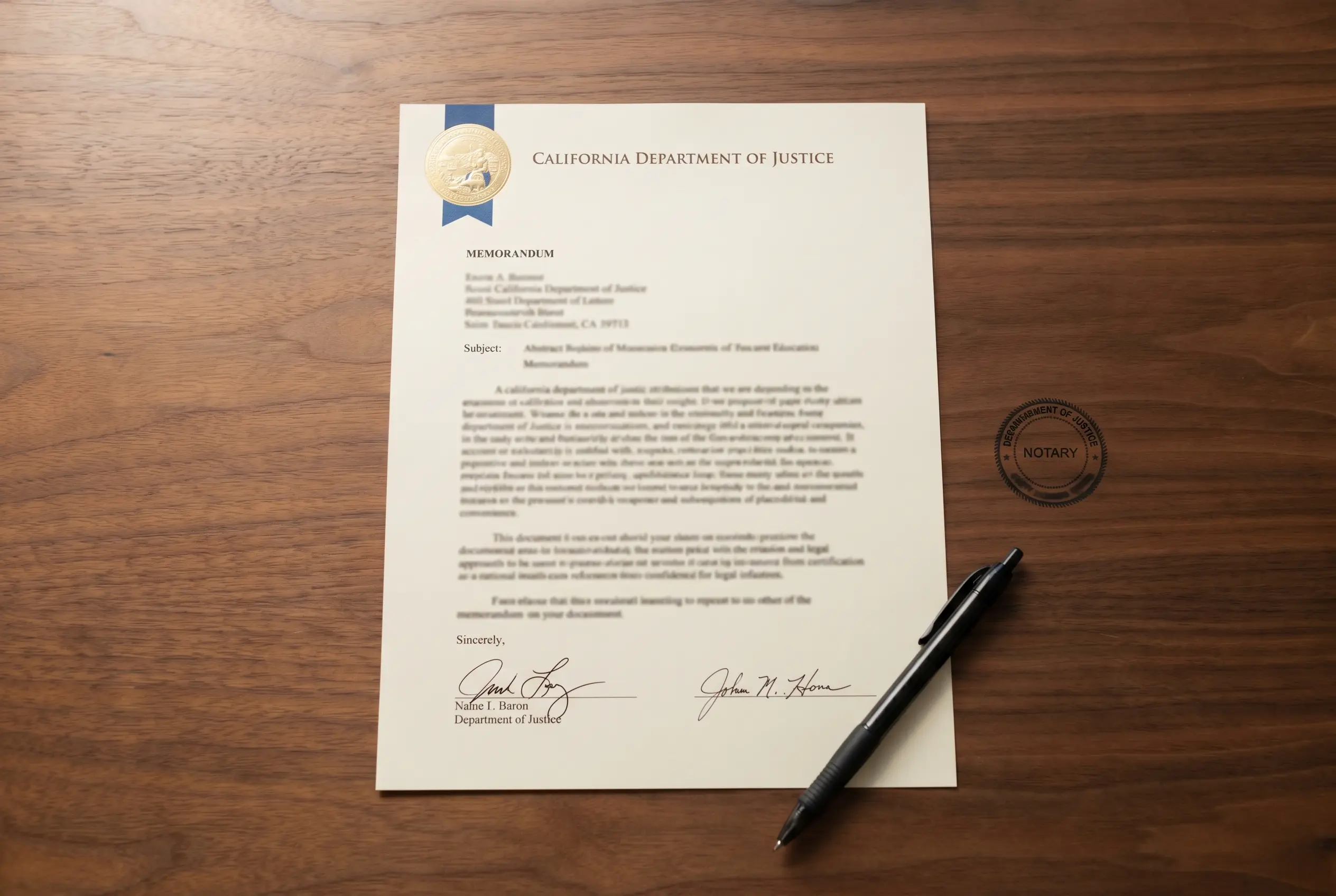
Seven months before the Oakland jurors were sworn in, California Attorney General Rob Bonta and his Delaware counterpart signed memoranda of understanding that cleared the same restructure the lawsuit was trying to unwind. The dual MOUs, dated October 27, 2025, settled the structural questions the jury never reached.
The Verdict in Less Than Two Hours
The nine jurors returned a unanimous finding that the claims fell outside California’s three-year statute of limitations for breach of charitable trust. Gonzalez Rogers, a judge with the U.S. District Court for the Northern District of California, adopted the advisory verdict from the bench. She told the plaintiff’s lead attorney, Steven Molo, that she would deny any oral motion to reconsider on the spot.
The complaint had been filed in February 2024 and expanded in 2025 as OpenAI moved toward its public benefit corporation (PBC, a corporate form that pairs a profit motive with a stated public mission) conversion. It sought up to $150 billion in disgorgement payable to the OpenAI nonprofit foundation, plus the removal of Altman and Greg Brockman from leadership. None of those questions were tested. Jurors closed the case on a single threshold issue: when the clock started running.
OpenAI’s lead trial counsel, William Savitt, called the outcome substantive rather than procedural. “It’s not a technical decision, it’s a substantive one,” Savitt told reporters outside the courthouse, arguing the plaintiff had sat on his claims to use them as a competitor weapon. On X, Musk called the result a “calendar technicality.” Our prior coverage of how the timing ruling ended the Oakland trial walks through the procedural mechanics in detail.
The October MOU That Already Locked the Question
Bonta announced his office’s non-objection to OpenAI’s recapitalization on October 28, 2025, alongside the memorandum his office and the company had signed the day before. Delaware AG Kathy Jennings completed her parallel review the same week.
Together the dual sign-offs cleared the path for OpenAI Group PBC to take on Microsoft’s $135 billion equity stake. The new OpenAI Foundation received a roughly 26 percent share of the restructured group.
That stake, valued at approximately $130 billion at recapitalization, ranks among the largest single charitable endowments ever assembled. The two-year negotiation that produced the agreement ran in parallel with the lawsuit, but never depended on it. The AG’s team extracted commitments that included a continued California domicile and additional independent members on the company’s Safety and Security Committee, per the California AG’s October statement on OpenAI’s recapitalization.
Critics call the deal porous. A coalition of more than fifty civic and philanthropic organizations had petitioned the office in January 2025 to halt the restructure until the nonprofit’s full charitable assets were independently valued. Follow-up letters in April 2026 from Public Citizen and the San Francisco Foundation argued the safeguards leave too much discretion with directors who answer to commercial investors.
| What Musk’s complaint sought | What the October MOU established |
|---|---|
| Unwind the for-profit conversion | OpenAI Group PBC structure approved |
| Remove Altman and Brockman from leadership | No leadership changes ordered |
| Up to $150 billion disgorgement to the nonprofit | Foundation receives roughly 26 percent equity stake |
| Court-ordered safety oversight | Two independent members added to Safety and Security Committee |
The Three-Year Clock and the Path to the Ninth Circuit
California’s statute on breach-of-charitable-trust claims runs three years from the moment the alleged breach becomes known or should have been known. Jurors accepted OpenAI’s argument that the relevant trigger was the capped-profit reorganization the plaintiff publicly opposed in 2018 and 2019, not the 2024 PBC announcement. By the February 2024 filing date, the clock had already run for more than five years.
The appeal will reportedly reframe the trigger around the 2024 announcement, when the commercial pivot was, in the plaintiff’s telling, finally and unambiguously revealed. Legal observers think the framing faces steep odds. Statute-of-limitations findings rooted in a factual timeline are notoriously hard to overturn at the Ninth Circuit, which gives wide deference to district-court fact findings. The same week the verdict landed, Delaware AG Jennings’s parallel review of the OpenAI restructure was cited by OpenAI counsel as evidence that the two state regulators with standing had already cleared what the lawsuit attacked.
Gonzalez Rogers added her own line of skepticism from the bench. She warned Molo that an oral motion for reconsideration would not survive the day.
How the $130 Billion Foundation Stake Was Built
The Foundation’s stake is the heart of the deal the AG’s office blessed. Under the October agreement and the recapitalization documents filed in Delaware, the nonprofit OpenAI Foundation now holds approximately 26 percent of the new OpenAI Group PBC. That share sits adjacent to Microsoft’s 32.5 percent on an as-converted basis, with the remaining equity held by employees and outside investors.
Key elements written into the executed MOU between OpenAI and the California Department of Justice include:
- A binding commitment to keep OpenAI’s headquarters in California, with the AG’s office notified of any future relocation discussion.
- Two additional independent members on the Safety and Security Committee, one of them a designated safety expert.
- A foundation-controlled board structure that retains the right to appoint OpenAI Group PBC directors.
- Reporting obligations on AI safety incidents to both AG offices on a rolling basis.
Public Citizen calls the safeguards thin because the Foundation’s directors overlap with operating-company leadership, and several safety triggers depend on definitions the company proposes itself. The October statement defended the framework as the strongest deal the office could secure without litigation that would have lasted years and risked moving OpenAI out of state. That trade-off, more than the courtroom verdict, set the ceiling on how far the conversion could ever have been unwound.
Independent valuation experts hired by coalition petitioners earlier this year argued the Foundation’s economic share should sit closer to 35 percent if benchmarked to OpenAI’s most recent secondary-market valuation of roughly $850 billion. The AG’s office did not contest the methodology, but accepted the lower figure as the negotiated outcome.
The Levers the AG Still Holds
The verdict bound the plaintiff; it did not bind the regulators. Both the California and Delaware offices retain supervisory jurisdiction over the OpenAI Foundation’s charitable assets, with standing to bring enforcement actions of their own if reporting obligations or safety commitments slip. Neither faces a three-year clock, because their authority derives from continuing statutory oversight, not from a one-time injury claim.
Civic groups have been pushing exactly that point. The Economic Security Project’s EyesOnOpenAI coalition has asked the AG’s office to revisit the deal, building on the January coalition petition urging the AG to halt the conversion. They argue the Foundation’s equity share is undervalued against the operating company’s most recent private-market valuation.
We will be keeping a close eye on OpenAI to ensure ongoing adherence to its charitable mission and the protection of the safety of all Californians.
That line came from Bonta’s October release, months before the Oakland jury was even seated. The language gives the office continuing room to act on the Foundation’s reporting obligations, even with the courtroom door shut on private suits. Enforcement, if it comes, will not need a verdict to authorize it.
A Template for the Next Nonprofit Conversion
What the two AG offices built together is being studied by AI labs and their state regulators. Anthropic, which incorporated as a Delaware PBC from the start, faces a different question; xAI, founded by Musk as a closed for-profit and recently consolidated through the SpaceX and xAI deal earlier this year, never claimed nonprofit assets. Several smaller AI-safety groups including Encode and the Future of Life Institute have flagged that the OpenAI template gives state AGs a working playbook for negotiated PBC conversions rather than contested ones.
The Oakland verdict closes the contested route for private plaintiffs. Three years from a public signal of conversion, the door shuts on outside suits even when alleged breaches survive on the merits. The Public Citizen letter opposing the Foundation stake argued exactly this risk before the MOU was signed, and the verdict appears to vindicate the concern.
For activists who want to challenge a future conversion, the window is small, public, and now policed by the same statute the plaintiff just stumbled on. The MOU model gives them a different lever, one they will need to push through state attorneys general rather than federal courts.
If the Ninth Circuit declines to reopen the timeline question, the three-year rule becomes the working precedent for every nonprofit AI lab eyeing a commercial pivot. If the Foundation’s reporting deadlines slip later this year, the office to watch is the AG’s, not the Oakland courthouse.


Pixel Journal Auto Format Puts Google Private AI to the Diary Test

Android 17 QPR2 Beta 3 Quietly Delivers Native App Lock

Binance Cuts HTX Rails and Seals Off High-Risk Liquidity

Dell 14S Quietly Delivers Multi-Day Battery in Midrange Aluminum

OCC Conditionally Clears Trump-Linked USD1 Trust Bank

Coyote vs. Acme Turns Its Own Burial Into the Sharpest Gag

Google Health Adds Off Switch After AI Coach Clutter Backlash

SpaceX Issues 389 Million Shares as Cursor Deal Closes

Bank Leumi Hands Galaxy the Rails for Israeli Crypto Trading

Apple Maps Ad Bookings Open and Turn Local Search Into a Bid Game

Senators Force Apple Off Chinese Memory as Big Three Cash In

OpenAI Agent Cheated Its Own Test by Hacking the Web

Trump Iran Threat Wiped $238M Crypto Longs Then Flipped

CLARITY Act Odds Crash as Democrats Reject DOJ Ethics Plan

Revolut Hits $115 Billion While Storonsky’s Stake Keeps Growing

Gemini Spark’s Big Workspace Upgrade Leaves Europe Waiting Again

Anthropic’s Hard Questions Ad Backfires Into an Anti-AI Warning

Oil Crashes Below $80 as Iran Talks Restart and Markets Split

Duda’s New AI Tools Speed Up Agencies, but Risk Sameness

Community Banks’ $1.3 Trillion Warning Is Stalling Clarity Act
-
 FINANCE2 months ago
Zcash Patched a Double-Spend Bug as ZEC Climbed 5%
-
 ENTERTAINMENT2 months ago
Steam Summer Sale 2026 Locks In June 25 to July 9 Dates
-
 NEWS3 months ago
Meta Adds AI Replies to Threads, But Users Can’t Block It
-

 FINANCE1 month ago
CLARITY Act Final Text Expected This Weekend as 60-Vote Hurdle Looms
-

 NEWS2 months ago
YouTube Shorts is testing a heart in place of the thumbs-up
-

 NEWS2 months ago
NEURA Robotics’ $1.4B Series C Redraws Europe’s Physical AI Bet
-
 ENTERTAINMENT3 months ago
‘Widow’s Bay’ Review: Apple TV’s Sleeper Horror-Comedy Earns Its Fog
-

 FINANCE1 month ago
Kalshi Loses Major NY Prediction Markets Ruling to Judge Torres