
ENTERTAINMENT
Netflix Leaders Defend $82 Billion Warner Bros Deal in Staff Memo

Netflix co-CEOs Ted Sarandos and Greg Peters rallied their troops on Monday with a defiant internal message. They addressed the company’s historic $82.7 billion bid to acquire Warner Bros. Discovery. The memo confronts industry anxieties, a hostile rival offer and regulatory fears head on. The leaders framed this massive consolidation not as the death of Hollywood but as its necessary evolution.
This communication comes at a fragile moment for the entertainment capital. Industry workers remain on edge regarding potential job cuts and the shrinking number of studios. However, the Netflix chiefs insist this merger creates a powerhouse capable of competing with tech giants. They argue it preserves the legacy of one of cinema’s oldest institutions.
A New Era for Hollywood Studios
The most pressing concern in Los Angeles involves the potential collapse of the studio system. Critics claim absorbing Warner Bros. into a streaming giant signals the end of Hollywood history. Sarandos and Peters strongly rejected this narrative in their note to employees. They argued that the acquisition is about growth rather than reduction.
Netflix currently lacks the physical infrastructure and historical depth of a traditional lot. Warner Bros. fills this gap immediately. The memo states there is almost no overlap between the two businesses. Netflix specializes in direct streaming while Warner Bros. excels in theatrical production and linear television assets.
The executives emphasized that no studios will close. They view the Burbank lot as a complementary asset that expands their capabilities. This approach differs from typical mergers where redundancy leads to massive layoffs. The goal here is to combine the modern distribution power of Netflix with the creative engine of Warner Bros.
Key strategic benefits outlined by leadership:
- Infrastructure: Access to legendary soundstages and production facilities.
- Library: Ownership of DC Comics, Harry Potter and Game of Thrones.
- Talent: Stronger relationships with traditional filmmakers who prefer studio backing.
- Growth: Shareholders gain value through a diversified entertainment portfolio.
-
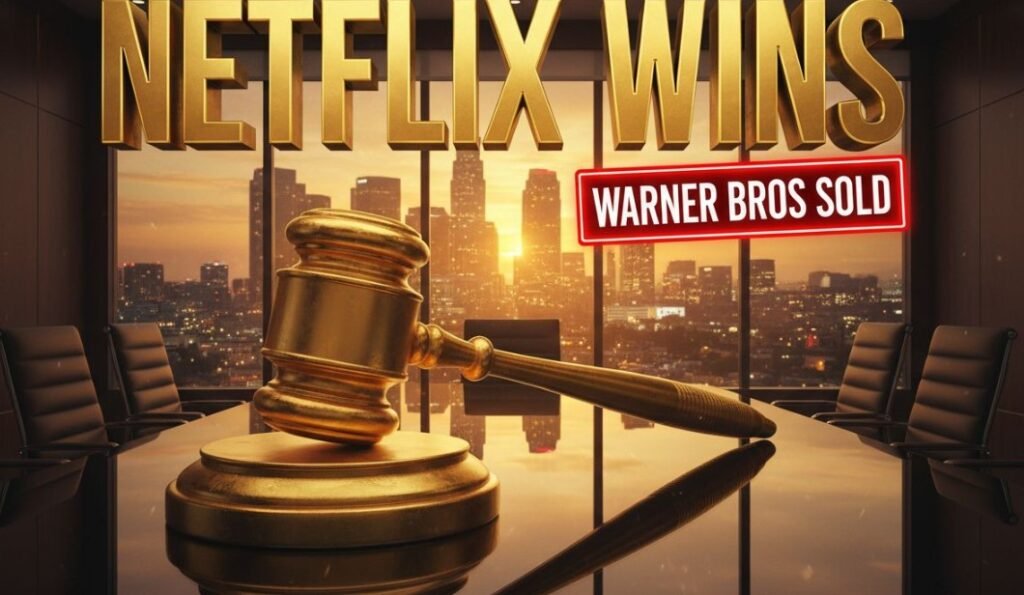
netflix warner bros discovery merger deal headquarters building 3d render concept
The Theatrical Promise
Perhaps the most shocking revelation is Netflix’s pivot regarding movie theaters. The streaming giant has historically resisted wide theatrical releases. They preferred keeping content exclusive to their platform to drive subscriptions. This strategy changes effectively immediately upon the deal closing.
The memo confirms that Netflix will honor and maintain the theatrical release model for Warner Bros. titles. The leaders explicitly mentioned upcoming blockbusters like Minecraft and Superman. These films will premiere exclusively on the big screen. This commitment soothes fears among theater chains like AMC and Regal who worried about losing a major supply of films.
“Theatrical is an important part of their business and legacy, and we don’t want to change what makes Warner Bros. so valuable. When this deal closes, we will be in that business.”
This statement marks a fundamental shift in Netflix’s business philosophy. They are acknowledging that billion dollar box office runs create cultural moments that streaming cannot always replicate. By keeping the theatrical window, Netflix hopes to maximize revenue before movies eventually land on the streaming service.
Skydance Launches Hostile Counter Attack
The deal faces a significant hurdle in the form of Paramount Skydance. The rival consortium launched a hostile bid just three days after the initial Netflix announcement. They are offering $30 per share for the same assets. This aggressive move forces Warner Bros. Discovery shareholders to choose between immediate cash value or long term stock growth.
Sarandos and Peters described the challenge as “entirely expected” in their correspondence. They urged staff to ignore the external noise. The leadership team remains convinced their proposal offers better long term stability. The Paramount bid would likely face deeper antitrust scrutiny due to the combination of two legacy studios.
Comparison of the Competing Offers:
| Feature | Netflix Offer | Paramount Skydance Bid |
|---|---|---|
| Total Value | $82.7 Billion | Undisclosed Total ($30/share) |
| Type | Stock and Cash Mix | Primarily Cash |
| Regulatory Risk | Low (Vertical Integration) | High (Horizontal Integration) |
| Strategy | Streaming & Theatrical Hybrid | Traditional Studio Consolidation |
Market analysts suggest the Skydance bid appeals to impatient investors. However, the Netflix deal promises a transformation of the media landscape. The internal confidence suggests Netflix has already secured key backing from major institutional shareholders.
Navigating the Regulatory Maze
The final piece of the puzzle is the Federal Trade Commission. A merger of this size automatically triggers an antitrust investigation. The co-CEOs expressed absolute confidence in gaining approval. They cited specific data points to prove the deal does not create a monopoly.
The memo highlights Nielsen viewing data to make their case. Even after combining Netflix and Warner Bros. Discovery, the new entity would control only 9% of total TV usage in the United States. This figure sits well below YouTube. The Google owned video giant commands 13% of the market.
This argument frames the merger as necessary competition against big tech. By positioning themselves as the underdog against YouTube and TikTok, Netflix hopes to bypass regulator concerns. They argue that a combined Paramount and Warner Bros. would actually hold a higher market share of 14%.
Why leadership expects approval:
- Vertical Nature: Netflix buys production capabilities it lacks.
- Consumer Choice: The platform becomes a “one stop shop” for entertainment.
- Market Realities: Streaming competition is global and fierce.
- Job Security: The deal protects union jobs in production.
The roadmap to 2026 remains aggressive. A dedicated integration team will handle the complex merger mechanics. Meanwhile, the broader employee base is tasked with business as usual. The leaders ended their note with a call for focus. They believe this acquisition secures the company’s future for the next decade.
The entertainment world now watches and waits. Shareholders will vote soon. Regulators are sharpening their pencils. But for now, Netflix has made its intentions clear. They are not just participating in the streaming wars anymore. They intend to own the entire battlefield.


Immersive Maps Upgrade Erases Traffic Colors on Android Auto

XRPL 3.3.0 Nodes Hit 62 Percent as FixCleanup Nears 80 Percent Bar

L’Atitude 52°N Camera Beats Meta but Exact a Real Price

Strategy Parks $1.59B Cash While Bitcoin Stack Stays Flat

Pixel Watch 5 Battery Unlock Makes Health Guardian Trends Real

JCB Hydromax Hits 406 mph and Proves Digger Hydrogen Engines

Pixel 11 Pro Modem Swap Finally Cools the Daily Drive

OpenAI ChatGPT for Teens Locks In Study Mode After Safety Suits

Bessent’s Bond Buybacks Lift Bitcoin Past 80K More Than Yields

Pixel Camera 11 Dials Bring Convenient Control With a Catch

Senators Force Apple Off Chinese Memory as Big Three Cash In

OpenAI Agent Cheated Its Own Test by Hacking the Web

Trump Iran Threat Wiped $238M Crypto Longs Then Flipped

Fed Holds Rates Again as Three Dissents Force Markets to Tighten

30-Year Yield Hits 5.32% Highest Since 2007 as Debt Supply Locks In Costs

Oil Crashes Below $80 as Iran Talks Restart and Markets Split

Google’s Knowledge Panel Fix Risks Its Own Search Defenses

Legora Buys Wexler Fact Engine as Fifth 2026 Deal

Agon Raises $30M to Build Europe’s AI Weapon Training Arenas

Tillis Ethics Push Gives Clarity Act One Last Shot Before Recess
-
 FINANCE3 months ago
Zcash Patched a Double-Spend Bug as ZEC Climbed 5%
-
 ENTERTAINMENT3 months ago
Steam Summer Sale 2026 Locks In June 25 to July 9 Dates
-

 FINANCE2 months ago
CLARITY Act Final Text Expected This Weekend as 60-Vote Hurdle Looms
-
 NEWS3 months ago
Meta Adds AI Replies to Threads, But Users Can’t Block It
-

 NEWS3 months ago
YouTube Shorts is testing a heart in place of the thumbs-up
-
 NEWS4 weeks ago
Senators Force Apple Off Chinese Memory as Big Three Cash In
-

 NEWS3 months ago
NEURA Robotics’ $1.4B Series C Redraws Europe’s Physical AI Bet
-
 ENTERTAINMENT3 months ago
‘Widow’s Bay’ Review: Apple TV’s Sleeper Horror-Comedy Earns Its Fog