
FINANCE
Hackers Hijack Robinhood CEO’s X to Push Fake Memecoin
Hackers hijacked Vlad Tenev’s X account to push a fake Vladhood memecoin to a $10 million cap, exploiting the meme culture Robinhood Chain itself encouraged.

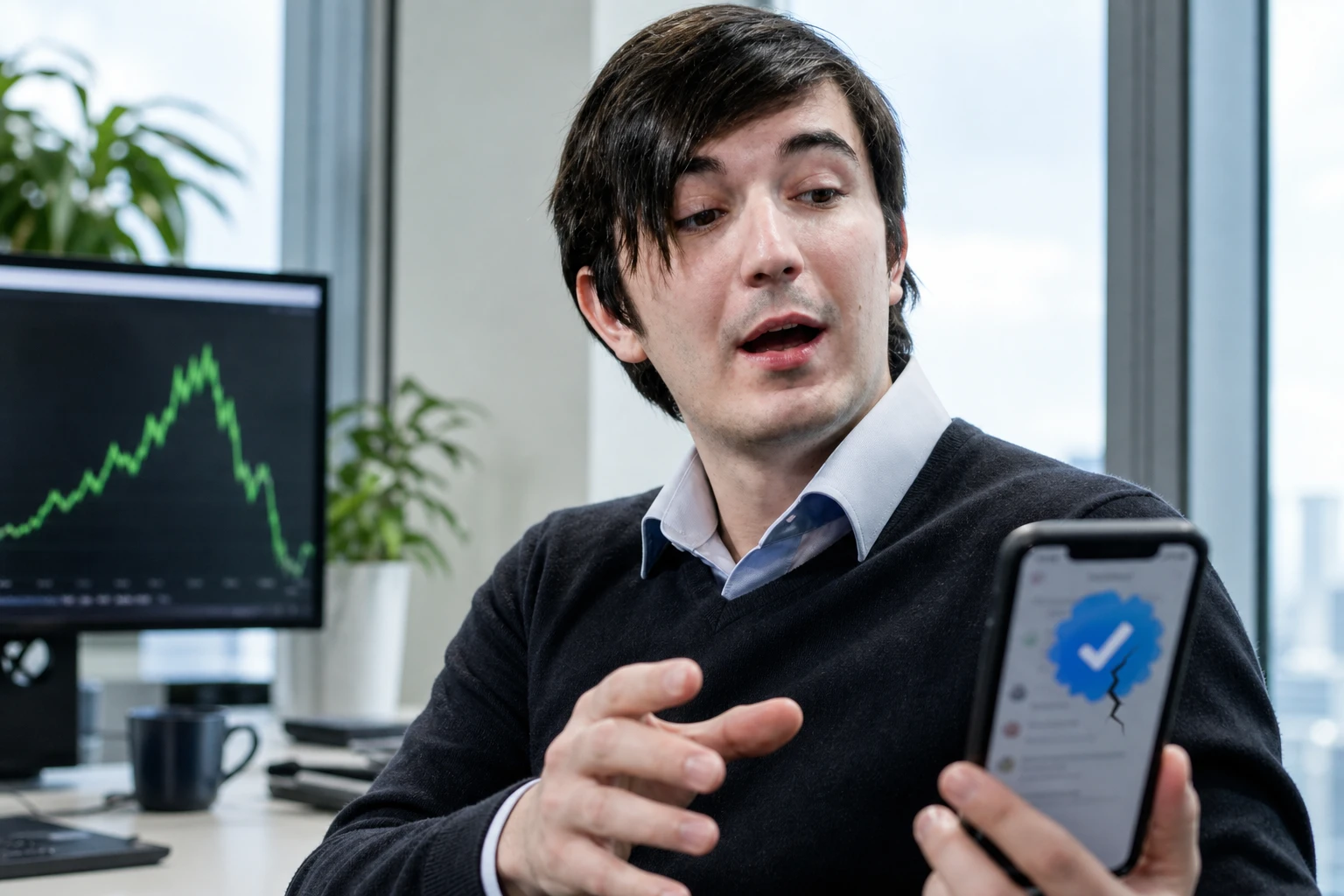
Hackers broke into Robinhood CEO Vlad Tenev’s X account on July 23 and used it to promote a fake memecoin called Vladhood, pitched as the official mascot of Robinhood Chain. The post vanished within the hour. Not before the token’s market cap hit roughly $10 million and insiders walked away with a serious profit.
Robinhood spent the past three weeks turning its new blockchain into a memecoin playground, and Wall Street liked what it saw enough to raise its price target on the stock. That same buzz is what made a hijacked account posting a fake mascot coin look almost plausible to thousands of traders before anyone checked.
A Mascot Robinhood Never Made
The unauthorized post went out at about 17:24 UTC on Thursday, announcing a token called Vladhood under the ticker VLAD and describing it as the official mascot of Robinhood Chain, the company’s Ethereum layer-2 network that launched on July 1. The unauthorized post, published at about 17:24 UTC, announced a token called Vladhood.
The message leaned hard on Tenev’s verified status. One version of the post opened by asking whether Robinhood likes memes before answering itself, then introduced the coin and added that it was “the official mascot of Robinhood Chain. Naturally, it is also set to be listed on the Robinhood app.” No such listing was ever planned. Robinhood did not announce any listing or official mascot token.
The token itself did not exist until minutes before the post went live, and the numbers moved fast once it did. Vladhood’s market cap surged to a high of around $10 million, a figure a separate outlet also placed at roughly that level, and onchain data showed insiders had already cashed out serious money before the post came down. Even after deletion, the token kept trading above a $4 million market cap. The scam spread quickly, too: the fraudulent token promotion reached over 175,000 people before most of them even knew something was wrong, and the post itself topped that view count in under 20 minutes.
Robinhood’s communications team moved to contain the damage within the hour.
We’re working with X to restore access, and the post has been removed.
That statement came from Robinhood’s official account confirming the compromise, which said Tenev’s profile had been taken over and the fraudulent content pulled down. Onchain trackers also picked up on the fraud in real time. Robinhood Chain’s own blockchain explorer labeled the token contract a scam, meaning the network’s own infrastructure flagged its supposed mascot as fake within the same window the post was live.
Tenev Told Everyone the Chain Works for Memes
The scam worked partly because it didn’t need to invent a new story. Tenev had already told the world his chain was friendly territory for meme coins. Tenev previously posted that “while we’re building Robinhood Chain to be the best chain for RWA … it works great for memes too.”
That framing had already played out once. Robinhood Chain’s first viral moment came from the Cashcat meme coin pumping days after the chain’s launch, a token traders treated as close to an unofficial house mascot even without any company endorsement. By the time the hackers struck, the idea of Robinhood Chain having a beloved meme token wasn’t a stretch. It was already the network’s actual reputation. For Robinhood Chain, the Ethereum layer-2 launched July 1, speculative meme coins have eclipsed tokenized stocks on the network.
Decrypt, which broke early coverage of the breach, put the contradiction plainly. The publication wrote that the episode “underscores how meme coin frenzy can crowd even ventures built for serious trading.” Tenev had recently described tokenized real-world assets as the chain’s long-term growth story. The hack landed on the meme side of that story instead, the side his own account had helped legitimize.
Four Hijacks, One Playbook
Tenev’s account is not the first verified crypto profile turned into a billboard for a fake coin, and the pattern is now familiar enough to compare side by side.
| Account Compromised | Fake Promotion | Peak Size or Reach | What Happened Next |
|---|---|---|---|
| Robinhood CEO Vlad Tenev’s X | Vladhood (VLAD), billed as Robinhood Chain’s mascot | About $10 million market cap, 175,000+ views in under 20 minutes | Robinhood confirmed the hack; the chain’s own explorer flagged VLAD as a scam; token still traded above $4 million after deletion |
| Nasdaq’s official X account | STONKS token | Briefly saw its market value surge to $123 million before crashing, according to CoinMarketCap data | Turned out to be a copycat of an existing token on the Solana blockchain |
| Arbitrum DAO governance account (@arbitrumdao_gov) | Fake “snapshot” airdrop phishing link | Millions of Arbitrum community followers exposed | The team warned users not to click anything from the account while access was lost, then shortly after regained control |
| BNB Chain’s official X account | A fake “BNB HODLer Airdrop” | Millions of followers reached | Users were tricked into potentially connecting wallets before the team regained control and warned followers |
Every row shares the same mechanic. A trusted, verified account gets taken over, a token or link gets pushed under that account’s credibility, and the damage is done before the correction catches up. The Robinhood incident is the latest example of verified social media accounts linked to major crypto companies and executives being compromised.
How Did the Hackers Actually Get In?
Robinhood has not said. The company confirmed the breach and secured the account but has not explained the method of entry. The company has not disclosed how the compromise occurred or whether any other systems were affected. That gap between what’s confirmed and what’s still murky is worth separating out.
- Confirmed: Robinhood’s communications account acknowledged the hack and said the post was removed and access work was underway with X.
- Confirmed: Robinhood Chain’s own explorer tagged the Vladhood contract as a scam token.
- Confirmed: No mascot token or app listing was ever real; the claim was fabricated by the hackers.
- Unconfirmed: The exact method used to take over Tenev’s account, and whether any other Robinhood-linked accounts or systems were touched.
- Unconfirmed: The precise size of the insiders’ haul. CoinGape reported insiders had cashed out more than $1 million, while a separate FinanceFeeds estimate put the scam wallet’s gain nearer $159,000. The spread shows how chaotic real-time forensics can be on a token that didn’t exist an hour earlier.
Security researchers who track similar hijacks flagged the Arbitrum DAO case earlier this year as an example of the same weak point: platform-level account security rather than any flaw in the underlying blockchain. A security alert warned the DAO’s governance account was compromised, telling users to avoid every link the account posted until the team regained control.
Wall Street Is Betting on the Same Buzz
The hack landed three days after Bernstein raised its price target on Robinhood stock to $160 from $130, maintaining an Outperform rating in a July 20 note led by analyst Gautam Chhugani. HOOD closed at $99.28 that Monday. Robinhood Chain was one of the reasons cited for the upgrade, alongside Tenev’s push into prediction market revenue growth through the company’s Rothera joint venture.
Bernstein’s model has the chain, prediction markets and perpetual futures combining to contribute 18% of total revenue in 2027 and 23% in 2028, up from about 3% in 2025. Days before the hack, Robinhood Chain had already overtaken Hyperliquid in 24-hour decentralized exchange volume, pulling in more than $606 million driven substantially by Cashcat and other meme trading. None of that revenue math distinguishes between a legitimate tokenized stock trade and a memecoin flip. It counts the same either way, which is part of why a hijacked account promoting one more meme coin didn’t immediately read as suspicious.
Robinhood Chain by the Numbers
The network’s growth in three weeks is the backdrop the hackers were counting on. Per DeFiLlama and a Dune dashboard built by Entropy Advisors, the chain’s footprint looks like this:
- $309 million in total value locked, up more than 3% in the past 24 hours.
- $1.1 million in revenue over the last seven days and $2.11 million since its July 1 launch, ranking third among all blockchains by revenue.
- More than $700 million in assets across stablecoins, tokenized stocks and memecoins, according to Entropy Advisors’ tracking.
- Cumulative decentralized exchange volume of about $9 billion, primarily driven by higher-risk memecoins.
- More than 300,000 daily active addresses, with the network processing roughly 10 million transactions in a single day.
Robinhood has also been widening its risk appetite elsewhere. The company recently opened up letting AI agents trade user stock portfolios and spend on their behalf, another product line built on the same bet that speed and novelty outweigh caution. A hijacked CEO account promoting an unverified token fits that same pattern of moving fast on unproven ground.
The Insiders Who Cashed Out First
Whoever created Vladhood knew what they were doing before Tenev’s account ever posted. The memecoin was created just minutes before the post went live, which means the token, its liquidity pool and likely the wallets set up to sell into the coming rush were all in place before the hijacked message reached a single follower. That is not the behavior of an opportunist reacting to a chance. It’s the behavior of someone who planned the account takeover around a token they had already built.
The winners were never the traders who bought after seeing a CEO’s name attached to a coin. They were the earliest wallets, the ones who could sell into a market cap climbing toward $10 million while everyone else was still deciding whether the post was real. By the time Robinhood’s account confirmed the fraud and the post came down, that window had already closed for anyone chasing the trade.
Robinhood reports second-quarter earnings on July 29, six days after its own CEO’s account was hijacked to sell a coin that never existed.
Frequently Asked Questions
Did Robinhood Confirm a Mascot Token or App Listing?
No. Robinhood did not announce any listing or official mascot token. The claim that Vladhood would be listed on the Robinhood app was invented entirely by the hackers to make the scam look official.
Did the Hack Put Any Robinhood User Funds at Risk?
No. This breach affected only the CEO’s X account, not Robinhood’s internal systems or user accounts. Your funds and personal data are not at risk from this incident.
What Other Projects Launched Alongside Robinhood Chain?
Day one partnerships included Uniswap and Pleiades, positioning the network as a bridge between traditional brokerage and existing decentralized finance protocols rather than a closed system.
When Is Robinhood’s Next Earnings Report?
Robinhood’s second-quarter earnings arrive on July 29, with Bernstein expecting new revenue lines to help offset any softness in crypto trading.


Replit Opens Its London Office Inside an AI Crowd

Straight Circle Trailer Lands Without a U.S. Date

Anemo Labs Bets £700,000 on an AI Sense of Smell

Nintendo Prices the Zelda 40th Switch 2 at $519

Copilot Capital Buys the Autopilot Already Running 90 GW

Ground A Raises €9.1 Million for a Pallet Laser

Gibney’s Musk Film Opens in Venice Without Its Subject

Torvalds Blames AI for a Full-Fat Linux 7.3-rc2

Dexter Returns Sharper, Older, and Stuck Between Killers

Meta’s Muse Agent Can Spend Before the Privacy Lock

Walter’s TWG Insists No Fraud as Insurer Probes Force Cleanup

30-Year Yield Hits 5.32% Highest Since 2007 as Debt Supply Locks In Costs

PCE Stays at 3.7% as Gas and Tariffs Outrun Coming Revisions

Evernorth S-4 Clears Path for Active XRP Treasury on Nasdaq

Astute’s $1.2M bet makes B2B creator deals feed AI discovery

Strategy Parks $1.59B Cash While Bitcoin Stack Stays Flat

Instinct Hits $2.5 Billion as AI Agent Access Sparks Trust Fights

CLARITY Act Cloture Opens a Door Ethics Still Blocks

Oracle’s 2.8 GW Bloom Deal Exposes the AI Power Bypass

Space Mirror Demo Revives 1993 Russian Night-Light Test
-
 FINANCE3 months ago
Zcash Patched a Double-Spend Bug as ZEC Climbed 5%
-
 ENTERTAINMENT3 months ago
Steam Summer Sale 2026 Locks In June 25 to July 9 Dates
-

 FINANCE2 months ago
CLARITY Act Final Text Expected This Weekend as 60-Vote Hurdle Looms
-
 NEWS4 months ago
Meta Adds AI Replies to Threads, But Users Can’t Block It
-
 ENTERTAINMENT5 months ago
Extraction 3 Is Officially Coming to Netflix in 2027
-

 NEWS3 months ago
YouTube Shorts is testing a heart in place of the thumbs-up
-

 NEWS1 month ago
Senators Force Apple Off Chinese Memory as Big Three Cash In
-

 NEWS3 months ago
NEURA Robotics’ $1.4B Series C Redraws Europe’s Physical AI Bet