
FINANCE
Samsung’s Galaxy Card Repeats the Bet That Just Cost Goldman Billions
Samsung’s new Barclays-issued Galaxy Card mirrors the exact model that just pushed Goldman Sachs out of the Apple Card business at a billion-dollar loss.

Samsung launched its first credit card on Monday, a Barclays-issued Visa product called the Galaxy Card that pays up to 5% cash back on purchases made directly with Samsung. Early access applicants can apply now. General applications open Wednesday, when Samsung holds its Galaxy Unpacked event and starts taking preorders on new Galaxy hardware.
The setup looks familiar. Apple built almost the same product in 2019, and this January its original bank partner walked away from that deal at a loss of more than a billion dollars.
A Black Metal Card Built Around One Lineup
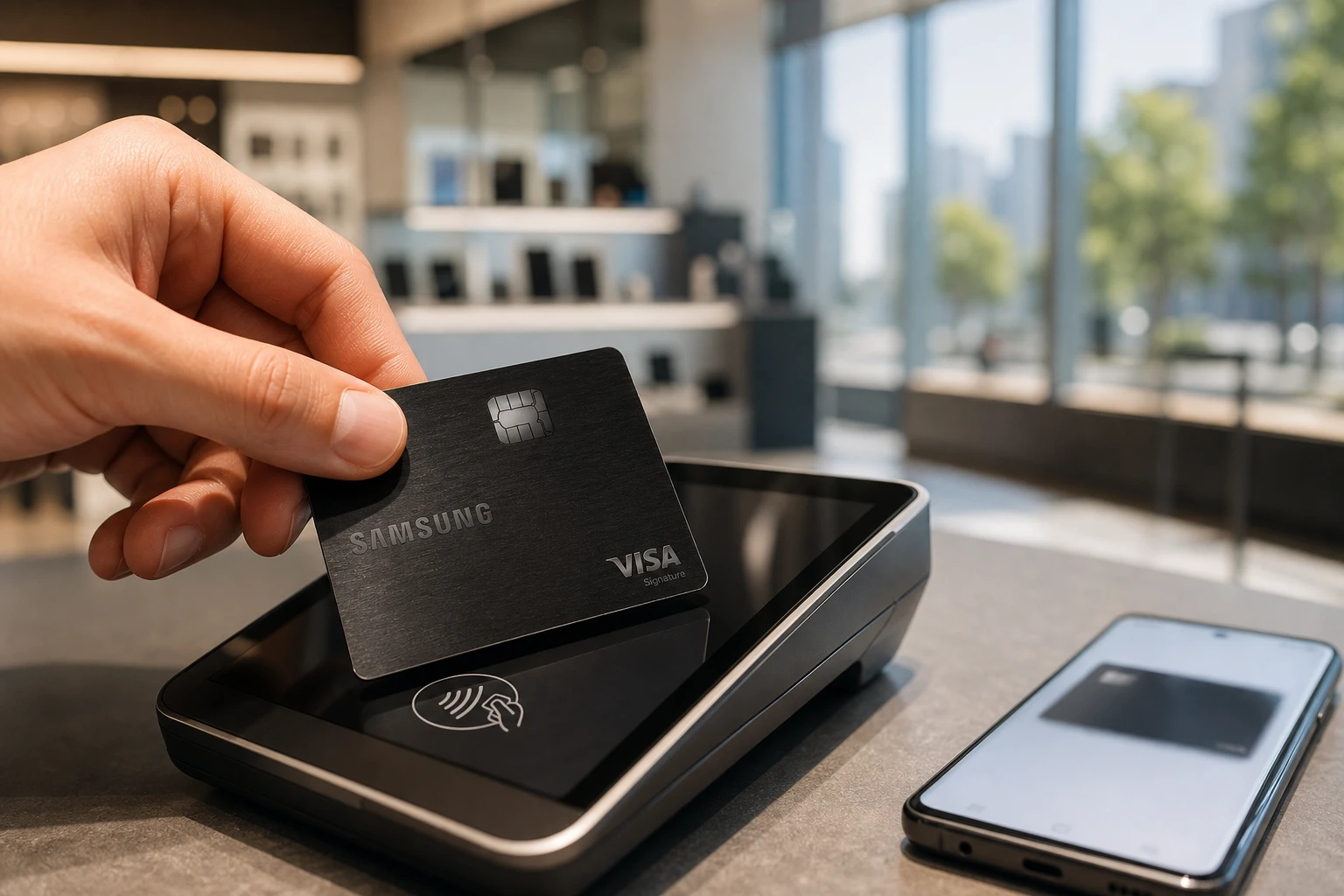
Samsung Electronics America built the Galaxy Card with Barclays US Consumer Bank, the London-based lender’s US retail banking arm, and Visa. It comes in two forms: a virtual card that lives inside Samsung Wallet, and a physical version with a black metal body and a black Samsung logo. The virtual card earns the richer rewards, a structure that mirrors how Apple split its own card years ago.
The tiers break down by where the money goes. Samsung’s announcement promises 5% cash rewards on eligible Samsung purchases, including preorders on new Galaxy phones and other devices. Spending through Samsung Wallet at other merchants earns 3%. Streaming subscriptions, including Netflix, Disney+ and Spotify, earn 2%. Everything else earns 1%.
New cardholders get $200 in bonus cash rewards after spending $2,000 in the first 90 days, plus 20% off a Samsung VIP Advantage membership. That welcome offer lands well inside a run of issuers pushing signup bonuses toward the $300 mark, a sign of how competitive rewards cards have gotten even for a first-time entrant.
There’s no annual fee. The card plugs into Samsung Wallet, where the company already stores IDs, digital keys and other cards, and Samsung points to its on-device Knox security platform as the reason account data stays protected there.
Barclays Inherits the Playbook That Just Cost Goldman Billions
Apple and Goldman Sachs announced the original version of this idea in August 2019: a credit card with no fees, tied tightly to Apple’s own devices and services, issued by a bank that had barely touched consumer lending before. It won design praise. It also cost Goldman a fortune.
This January, Apple said JPMorgan Chase would take over as the card’s issuer, replacing Goldman Sachs entirely. Goldman had spent years trying to exit consumer banking after the Apple Card portfolio built up higher-than-average delinquency rates and heavy exposure to subprime borrowers, a dynamic multiple outlets covering the handover pointed to as the reason a buyer was hard to find.
- $20 billion is the size of the Apple Card portfolio moving from Goldman Sachs to JPMorgan Chase.
- $1 billion-plus is the discount Goldman accepted just to offload those balances.
- $2.2 billion is the credit loss provision tied to the deal, booked for the fourth quarter of 2025.
- 24 months is how long the two banks expect the full handover to take.
Goldman’s chief executive did not dress up the retreat.
This transaction substantially completes the narrowing of our focus in our consumer business.
David Solomon, Goldman Sachs’ chairman and chief executive, said that in the agreement to transition the Apple Card program to Chase. Apple’s device sales never wavered through any of it. The financial pain landed on the bank sitting behind the card, the exact role Barclays just agreed to play for Samsung.
Chase is walking in with its eyes open. It arranged an expected transition of about 24 months and is absorbing the portfolio at a steep discount specifically because Goldman’s underwriting left it with weaker credit quality than a typical bank card carries.
The Bank That Keeps Catching Other Lenders’ Castoffs
This isn’t Barclays’ first time stepping into a seat another bank walked away from. It already picked up General Motors’ credit card program from Goldman Sachs, one of several moves that built Barclays US Consumer Bank into the ninth-largest card issuer in the country.
- General Motors – picked up the automaker’s card program from Goldman Sachs as Goldman retreated from consumer lending.
- Gap, Banana Republic, Athleta and Old Navy – replaced Synchrony as the retail group’s card partner in 2022, Barclays’ first standalone private-label program in the US.
- JetBlue and Breeze Airways – Barclays’ remaining airline co-brands, after American Airlines shifted its business fully to Citi and Hawaiian Airlines folded into Alaska’s loyalty program.
Barclays counts 20 million customers and about $32 billion in receivables, built almost entirely through partner cards rather than its own branded products. Chief executive C.S. Venkatakrishnan has made US card growth a stated priority, and the strategy runs on this exact kind of deal: a recognizable consumer brand, a captive spending base, and a bank willing to underwrite the risk for the relationship.
Barclays hasn’t won every trade. It lost American Airlines to Citi and watched Hawaiian’s portfolio get absorbed into Alaska’s program soon after. Brian Riley, director of credit at Javelin Strategy & Research, a payments research firm, summed up what was left in the airline column: “Currently, Barclays has only two airline co-brands left: JetBlue and Breeze Airlines.”
What Does the Cash Back Actually Cover?
Most of it depends on how much Samsung gear a shopper actually buys. Outside Samsung.com, Samsung Wallet spending and a short list of streaming apps, the Galaxy Card pays a flat 1%, the same base rate Apple offers on its physical card and lower than several general rewards cards already on the market.
| Detail | Samsung Galaxy Card | Apple Card |
|---|---|---|
| Issuer | Barclays US Consumer Bank | Goldman Sachs, transitioning to JPMorgan Chase |
| Network | Visa | Mastercard |
| Top cash back rate | 5% on direct Samsung purchases | 3% at Apple and select partners |
| Base cash back rate | 1% on everything else | 1% on the physical card |
| Disclosed APR range | Not yet published | 17.49% to 27.74% |
| Physical card material | Black metal | Titanium |
| Year launched | 2026 | 2019 |
Apple’s version spreads its higher rates further. Cardholders get 3% at Apple and a rotating list of partners such as Ace Hardware, Exxon, Uber and Walgreens, with occasional retail promotions reaching 6%, plus 2% on any purchase run through Apple Pay. Samsung’s 3% tier is narrower. It only applies to spending routed through Samsung Wallet, not a tap-to-pay standard accepted as broadly as Apple Pay.
Samsung also hasn’t said how cash back actually gets banked. Apple deposits its Daily Cash into an Apple Cash card or a linked Apple Savings account after every purchase. Samsung already runs a separate Rewards card and a Pay Cash option inside Samsung Wallet, but the company hasn’t confirmed whether either one will handle Galaxy Card payouts.
There’s also a device requirement most early coverage has skipped past. Samsung Wallet only runs on Samsung’s own hardware, not on Android generally, so a Pixel or OnePlus owner cannot use the card the way it’s designed to work even if approved for one.
For a company trying to keep its most loyal buyers close, that narrowness might be the point. Samsung’s push arrives as its biggest rival tightens its grip on repeat buyers, with iPhone owner loyalty near a record 87%, leaving Samsung with less room to win new converts and more reason to reward the ones it already has.
General Applications Open as Unpacked Begins
Eligible early access customers can already apply. Everyone else gets access starting Wednesday, the same morning Samsung streams Galaxy Unpacked and reveals its next Z-series lineup. Applications will also be available in person at Samsung retail stores.
Shoppers eyeing a new device can still stack savings through Galaxy Reserve, worth up to $1,230 in total savings on a preorder, though Samsung already trimmed some Galaxy Z Fold 8 preorder perks as memory prices climbed. Whether the card’s 5% preorder rate stacks on top of Reserve credits hasn’t been detailed publicly.
Samsung has signaled there’s more to come. Coverage of the launch has reported that company leadership called the Galaxy Card just the start of a broader push into financial services, without laying out what follows.
Barclays already knows what it looks like to catch a car maker’s card business when a bigger bank lets go. Whether it fares better with Samsung than Goldman did with Apple will show up first in delinquency data, not marketing copy, and that data doesn’t exist yet.
Frequently Asked Questions
Do You Need a Samsung Phone to Use the Galaxy Card?
Practically, yes. Samsung Wallet, which handles the card’s rewards and account management, is built for Samsung’s own devices and isn’t available on Android broadly, so a Pixel or OnePlus owner can’t access the same experience even with an approved application.
Is the Samsung Galaxy Card Available Outside the United States?
Not yet, and nothing announced points to an international rollout. Both companies describe the card strictly as a US product issued by Barclays US Consumer Bank, with applications limited to US residents.
What Is Samsung Knox, and Why Does It Matter for a Credit Card?
Knox is Samsung’s on-device security platform, originally built to protect enterprise data on Galaxy phones. Samsung says it now shields the account details tied to the Galaxy Card, since the card lives primarily inside Samsung Wallet rather than a separate banking app.
What Is Samsung VIP Advantage, and How Does the Card Change It?
Samsung VIP Advantage is the company’s paid membership tier, and Galaxy Card holders get 20% off it. On top of that discount, cardholders earn 5% cash rewards specifically for purchasing or renewing a VIP Advantage membership, stacking one loyalty perk on top of another.
Can You Hold Both an Apple Card and a Samsung Galaxy Card?
Nothing stops it. The two cards come from different issuers on different networks, and approval for one has no bearing on the other. Coverage of the launch has noted that existing Apple Card users, tied to iPhones, have little practical reason to add a card built around a phone they don’t own.


Replit Opens Its London Office Inside an AI Crowd

Straight Circle Trailer Lands Without a U.S. Date

Anemo Labs Bets £700,000 on an AI Sense of Smell

Nintendo Prices the Zelda 40th Switch 2 at $519

Copilot Capital Buys the Autopilot Already Running 90 GW

Ground A Raises €9.1 Million for a Pallet Laser

Gibney’s Musk Film Opens in Venice Without Its Subject

Torvalds Blames AI for a Full-Fat Linux 7.3-rc2

Dexter Returns Sharper, Older, and Stuck Between Killers

Meta’s Muse Agent Can Spend Before the Privacy Lock

Walter’s TWG Insists No Fraud as Insurer Probes Force Cleanup

30-Year Yield Hits 5.32% Highest Since 2007 as Debt Supply Locks In Costs

PCE Stays at 3.7% as Gas and Tariffs Outrun Coming Revisions

Evernorth S-4 Clears Path for Active XRP Treasury on Nasdaq

Astute’s $1.2M bet makes B2B creator deals feed AI discovery

Strategy Parks $1.59B Cash While Bitcoin Stack Stays Flat

Instinct Hits $2.5 Billion as AI Agent Access Sparks Trust Fights

Monzo chair Gary Hoffman exits after board revolt fallout

Oracle’s 2.8 GW Bloom Deal Exposes the AI Power Bypass

CLARITY Act Cloture Opens a Door Ethics Still Blocks
-
 FINANCE3 months ago
Zcash Patched a Double-Spend Bug as ZEC Climbed 5%
-
 ENTERTAINMENT3 months ago
Steam Summer Sale 2026 Locks In June 25 to July 9 Dates
-

 FINANCE2 months ago
CLARITY Act Final Text Expected This Weekend as 60-Vote Hurdle Looms
-
 NEWS4 months ago
Meta Adds AI Replies to Threads, But Users Can’t Block It
-
 ENTERTAINMENT5 months ago
Extraction 3 Is Officially Coming to Netflix in 2027
-

 NEWS3 months ago
YouTube Shorts is testing a heart in place of the thumbs-up
-

 NEWS1 month ago
Senators Force Apple Off Chinese Memory as Big Three Cash In
-

 NEWS3 months ago
NEURA Robotics’ $1.4B Series C Redraws Europe’s Physical AI Bet