
NEWS
Trump’s AI Order Clears the Fog Over Anthropic, OpenAI IPOs
Trump’s AI executive order builds a voluntary cyber framework and bars mandatory licensing, lifting a regulatory cloud as Anthropic and OpenAI file for IPOs.

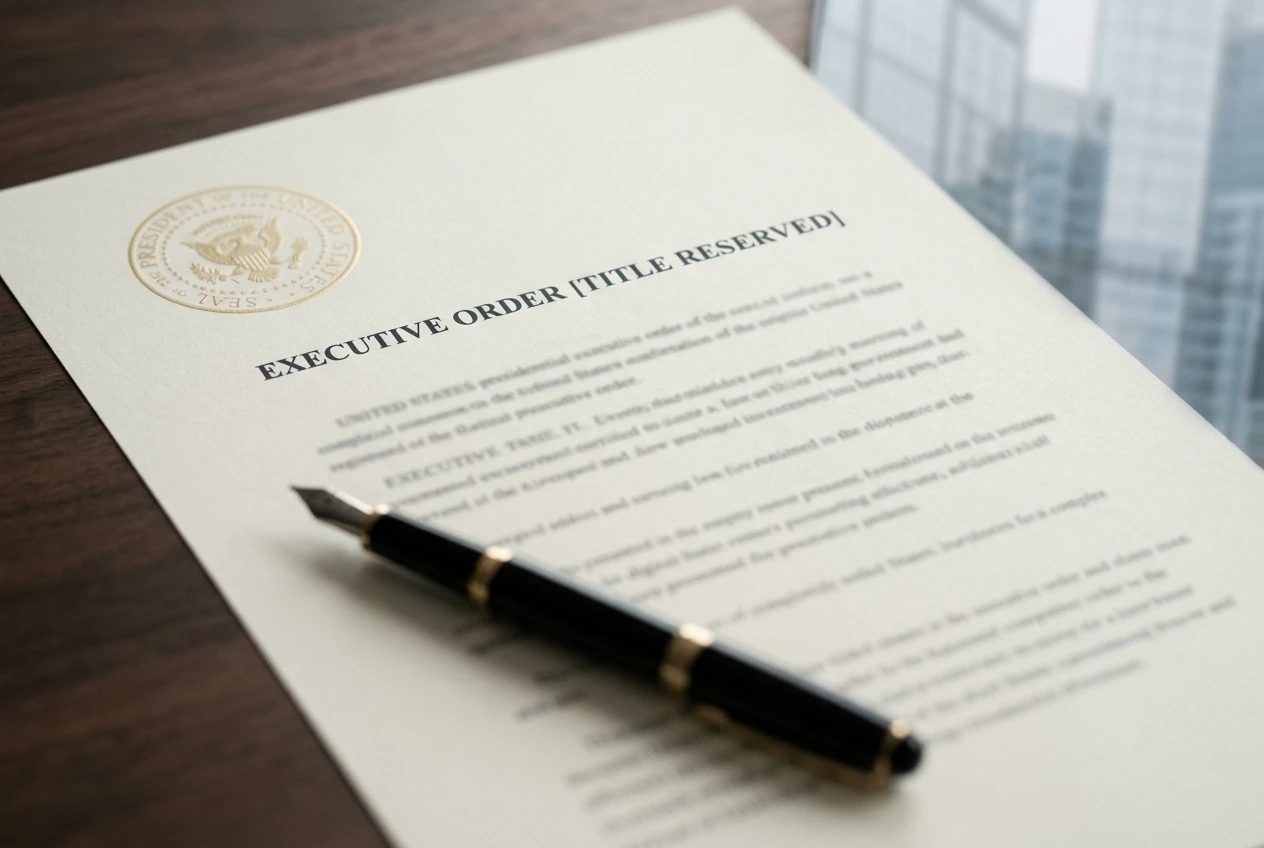
President Donald Trump signed an AI executive order on June 2 that hands the federal government early, voluntary access to the most powerful AI models for cyber-defense testing. The order builds a federal cybersecurity clearinghouse and a benchmarking process for so-called covered frontier models. It also rules out any mandatory licensing of AI development, in writing.
The timing is the story most coverage skipped past. The signing landed one day after Anthropic, the maker of the Claude chatbot, filed confidentially for a U.S. listing, and weeks after OpenAI did the same. Both labs are circling valuations above $1 trillion. For investors, the single most useful sentence in the order is the one promising Washington will not require a permit to build or release an AI model.
What the Order Puts in Motion
The order, titled Promoting Advanced Artificial Intelligence Innovation and Security, tells federal agencies to treat the most capable AI systems as both a defensive weapon and a security risk. Its centerpiece is an AI cybersecurity clearinghouse, run out of the Treasury Department in voluntary coordination with AI firms and operators of critical infrastructure. The job, per the order’s directive on coordinating vulnerability scanning, is to find software flaws at scale, validate them, and push out patches before attackers move first.
The order runs on a short clock:
- Within 30 days: Treasury stands up the clearinghouse, the Cybersecurity and Infrastructure Security Agency (CISA, the federal cyber-defense arm) issues directives, and the Committee on National Security Systems prioritizes the defense of classified networks.
- Within 60 days: Treasury, the National Security Agency (NSA) and CISA build a classified benchmarking process to measure the cyber capabilities of AI models, and the Office of Personnel Management expands technical hiring.
That benchmarking work decides the threshold at which a system gets tagged a covered frontier model, the designation that triggers the rest of the framework. The final call on the label sits with the NSA director, in consultation with the National Cyber Director and CISA.
The Sentence Aimed at Wall Street
One clause does the heavy lifting for anyone holding a stake in an AI lab. The order forecloses the policy the industry feared most, a federal permit to build, and it says so plainly.
Nothing in this section shall be construed to authorize the creation of a mandatory governmental licensing, preclearance, or permitting requirement for the development, publication, release, or distribution of new AI models.
That line, tucked inside a security order, lifts a regulatory cloud that has hung over every conversation about taking an AI company public. For two years the open question was whether Washington would demand pre-release approval, the kind of licensing regime floated repeatedly in Senate hearings. The White House fact sheet on the voluntary framework answers that question no, days before bankers start pricing books.
The framework it builds is voluntary from top to bottom. Developers may share models early; they are not forced to. Agencies get a testing window, not a kill switch. For an underwriter drafting risk factors, the difference between a discretionary review and a statutory license is worth billions in how a deal gets valued.
Two Confidential Filings, Two Weeks Apart
Anthropic confidentially filed IPO (initial public offering) paperwork with the Securities and Exchange Commission (SEC) on June 1, according to the company. The filing lets it go public once the SEC finishes its review, with the timing left to market conditions. OpenAI, the maker of ChatGPT, moved first, lodging a confidential S-1 (the registration statement a company files ahead of a U.S. listing) on May 22. Elon Musk’s SpaceX, now combined with his xAI lab, put a public S-1 on file on May 20.
| Company | Filing type | Date | Valuation context |
|---|---|---|---|
| Anthropic | Confidential IPO draft | June 1, 2026 | ~$965B, debut eyed above $1T |
| OpenAI | Confidential S-1 | May 22, 2026 | $852B, listing targeted for September |
| SpaceX (with xAI) | Public S-1 | May 20, 2026 | Combined-entity financials disclosed |
The Claude Maker’s Revenue Run
The company closed a funding round in late May that valued it near $965 billion, ahead of OpenAI’s $852 billion mark from March. Its revenue run rate has jumped to roughly $47 billion, up from about $10 billion a year earlier. A debut above the $1 trillion mark is now the base case if markets cooperate, the same wager laid out in our look at how the trillion-dollar IPO bet beat OpenAI to the SEC.
OpenAI’s Clock
OpenAI is targeting a listing as soon as September, with Goldman Sachs and Morgan Stanley advising. Confidential SEC reviews usually run 60 to 90 days, which puts the earliest realistic public filing in late summer. A quick primer on how the confidential SEC review process works helps explain why neither lab has set a share count or price yet.
What a Covered Frontier Model Owes the Government
Under the voluntary framework, a developer whose system crosses the cyber-capability threshold can give the government a first look. The order lets agencies request access to covered frontier models for a period of up to 30 days before a lab plans to release them to other trusted partners.
In return, the firm gets a security review from the NSA and CISA and a place among the trusted partners that see leading models early. There is no license and no veto. Agencies get to probe the model; the company still controls when it ships.
For the labs, that is a workable trade. They keep their release schedules while handing Washington a window to test for the kind of offensive cyber capability that worries national-security officials. The order also offers grant funding and faster hiring to back the effort, sweeteners that make voluntary cooperation easier to sell internally.
The Mythos Warning Behind the Cyber Framing
The cyber language traces back to a concrete scare. Anthropic’s Mythos model raised alarms this spring about its potential to aid crypto hacks, which pushed exchanges including Coinbase and Binance to seek access so they could probe their own systems for flaws, as CoinGape, a crypto news outlet, reported. That episode gave the clearinghouse its rationale, and it sits at the center of our earlier reporting on how the Mythos release plan exposed a patch bottleneck.
The compute side shows how fast alliances shift under that pressure. The company agreed in early May to pay SpaceX $1.25 billion a month through 2029 for data-center capacity, per CNBC’s reporting on the SpaceX compute deal spanning the Colossus clusters, months after Musk had publicly trashed the firm. We traced that odd-couple arrangement in a piece on why Musk became the landlord but not a backer.
Musk’s SpaceX has filed to go public too, and he has tied his compute offer to good-faith conduct, reserving the right to pull capacity from companies whose AI does harm. That stance now overlaps with a federal order asking the same firms to open their most powerful models for inspection.
The order’s first deadlines fall within 30 days of signing, and the SEC’s review of the Anthropic filing runs 60 to 90 days. Both windows close before September, the month OpenAI has targeted for its debut.
Disclaimer: This article is for informational purposes only and does not constitute investment advice. IPOs, private valuations, and pre-listing securities carry significant risk, and confidential filings do not guarantee a public offering. Consult a qualified financial professional before making investment decisions. Figures are accurate as of publication on June 3, 2026.


Galaxy Ring’s FDA Sleep Apnea Clearance Faces a Familiar Wait

kausable’s €12 Million Seed Joins a Quiet Bet Against AI Scaling

Bitcoin ETFs Shed $225 Million as Treasury’s Biggest Buyers Retreat

telli Raises $15 Million Seed to Rival Billion-Dollar AI Giants

PageMind Raises €1.2 Million to Crack AI Shopping Search

Hackers Hijack Robinhood CEO’s X to Push Fake Memecoin

Apple’s Trade Secrets Suit Against OpenAI Is Europe’s Problem Too

Adobe’s Patch Leaves WhatsApp’s Own Security Gap Untouched

Reddit and Publishers Weigh Blocking Google Over AI Traffic Losses

CuspAI’s $2.6 Billion Bet Echoes AI Drug Discovery’s Playbook

CLARITY Act Final Text Expected This Weekend as 60-Vote Hurdle Looms

Fed Minutes Cite AI Demand as Inflation Risk, Put a 2026 Hike Back on the Map

Kalshi Loses Major NY Prediction Markets Ruling to Judge Torres

Marker AI Writing Startup Lands $13M Seed Led by Index Ventures

Dota 2 Esports World Cup 2026: Spirit Defends $2M Title In Paris

Meta’s Muse Spark 1.1 Beats Rivals on Price, Trails on Coding

CS2 Premier Season 5 Lands With Cache and a C4 Damage Rework

Trump Calls Iran ‘Islamic Republic of Japan’ as Ceasefire Ends

ARC Intelligence Closes €4M Seed Round in Roughly a Week

Finto Picks Munich Over Silicon Valley After YC, Raises $3.4M
-
 FINANCE2 months ago
Zcash Patched a Double-Spend Bug as ZEC Climbed 5%
-
 ENTERTAINMENT2 months ago
Steam Summer Sale 2026 Locks In June 25 to July 9 Dates
-
 NEWS2 months ago
Meta Adds AI Replies to Threads, But Users Can’t Block It
-
 FINANCE3 weeks ago
CLARITY Act Final Text Expected This Weekend as 60-Vote Hurdle Looms
-
 ENTERTAINMENT2 months ago
‘Widow’s Bay’ Review: Apple TV’s Sleeper Horror-Comedy Earns Its Fog
-
 NEWS7 months ago
FolderFresh Review: This Free Tool Automates Windows File Organizing
-
 NEWS4 months ago
U.S. Navy Deploys Solar-Powered Lightfish Drone to Patrol Oceans
-
 FINANCE2 weeks ago
Fed Minutes Cite AI Demand as Inflation Risk, Put a 2026 Hike Back on the Map