
NEWS
Galaxy Ring’s FDA Sleep Apnea Clearance Faces a Familiar Wait
Samsung’s Galaxy Ring earns FDA clearance for sleep apnea detection this fall, but the Watch’s own five-month rollout delay suggests a longer real wait.

Samsung confirmed at Galaxy Unpacked in London on July 22 that the Galaxy Ring will get FDA-cleared sleep apnea risk detection this fall, a first for any smart ring on the market. Samsung has not named an exact date. Its own Galaxy Watch took roughly five months to go from that same kind of clearance to actually reaching wrists.
That gap matters more than the celebratory framing suggests. The regulatory door Samsung just walked through is also now open to Oura, RingConn and anyone else who wants to follow the same path, which means the exclusivity Samsung is marketing today has a shelf life nobody has put a number on yet.
Samsung Confirms FDA Clearance for the Galaxy Ring
Sharanya Desai, Samsung’s head of digital health, delivered the news almost as an aside during a segment about the Galaxy Watch 9’s health tools. Samsung’s Unpacked event drew attention mostly for the Galaxy Z Flip 8, Z Fold 8 and Z Fold 8 Ultra, plus the new Watch 9 and Watch Ultra 2, which run on Galaxy Watch 9’s switch to a Qualcomm chip for the first time.
Desai’s sleep apnea line landed with more consequence than most of the hardware news.
Galaxy Ring will be the first and only FDA-cleared over-the-counter ring device for sleep apnea risk detection.
That was Desai, speaking on stage at Unpacked. Samsung says the ring will likely rely on the same underlying approach as the Watch: tracking blood oxygen levels overnight and using an AI algorithm to estimate a wearer’s Apnea-Hypopnea Index, the average number of times breathing stops or turns shallow in an hour. The company hasn’t detailed the ring’s exact sensor setup, but it has been explicit that the tool flags risk. It does not diagnose sleep apnea, and anyone flagged is meant to see a doctor for confirmation.
Left untreated, sleep apnea carries real consequences. Estimates put the number of people affected globally at over 1 billion, and the condition is linked to higher risk of high blood pressure, heart failure and irregular heartbeat.
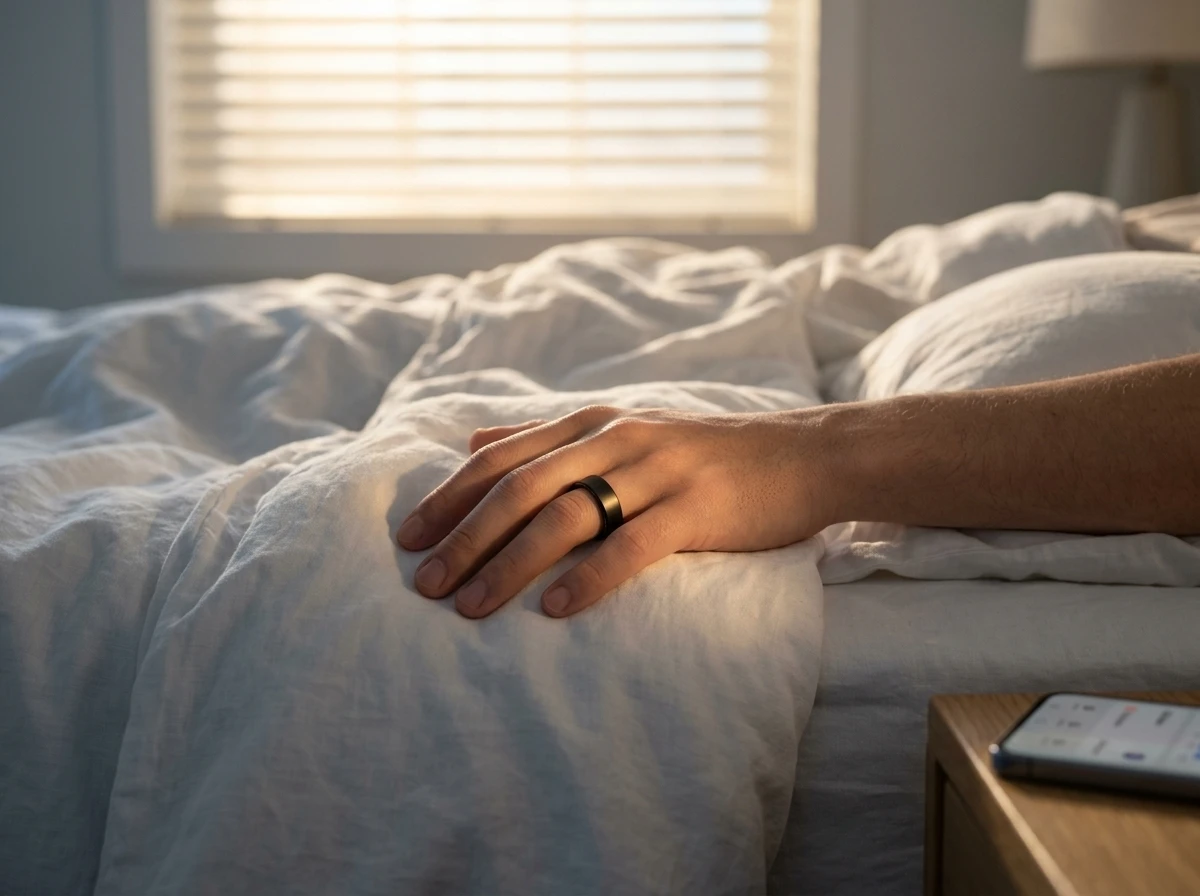
Oura and RingConn Track Breathing, Not Risk
Samsung’s claim to being first checks out against the current field. Other smart rings offer overnight breathing insights, but none carry the same regulatory label.
| Device | FDA Clearance Status | Detection Approach |
|---|---|---|
| Samsung Galaxy Ring | Cleared, arriving fall 2026 | AI analysis of overnight blood oxygen and breathing patterns |
| Samsung Galaxy Watch (4 and later) | Cleared February 2024, De Novo pathway | BioActive sensor tracks breathing disruptions over two nights |
| Apple Watch Series 9, 10, Ultra 2 | Cleared September 2024, 510(k) pathway | Accelerometer-based breathing disturbances metric |
| Oura Ring 5 | Not FDA cleared | Screens for breathing disturbances as a wellness metric |
| RingConn Gen 2 | Not FDA cleared | Manually activated sleep apnea alert feature |
Neither Oura nor RingConn markets its breathing tools as FDA-cleared, and Samsung’s own Watch already costs up to $500 depending on the model. A ring that does the same job at a lower price point is a real pitch to shoppers who want the feature without the smartwatch price tag.
How Long the Watch Actually Took to Arrive
Samsung’s sleep apnea story didn’t start this month. It started in 2023, and it moved slower than the current rollout promise suggests.
- May 2023: Samsung files its FDA De Novo request for the Galaxy Watch’s sleep apnea feature.
- October 2023: South Korea’s Ministry of Food and Drug Safety clears the feature first, ahead of any US decision.
- February 6, 2024: The FDA grants De Novo authorization after an eight-month review, and Samsung announces it days later.
- Third quarter of 2024: The feature begins reaching Galaxy Watch 4 and newer devices in the US, with fuller rollout extending well into the following year.
- September 13, 2024: Apple wins its own 510(k) clearance for the Apple Watch’s version of the feature.
- July 22, 2026: Samsung confirms FDA clearance for the Galaxy Ring at Unpacked in London.
- Fall 2026: The Ring’s sleep apnea detection is expected to go live, with no specific date confirmed.
Add it up and the Watch needed close to a year from South Korean approval to landing on wrists in the US, and longer still before every eligible owner had it. Samsung is now promising the Ring will do something similar in a fraction of that window.
Apple Cleared the Same Hurdle in Days
The comparison isn’t hypothetical. Apple announced on September 9, 2024, that its own sleep apnea notification feature pending FDA clearance would arrive later that month. The FDA cleared it four days later, and the feature was live on Apple Watch Series 9, Series 10 and Ultra 2 within about a week of the announcement.
Dr. David Kuhlmann, a Missouri physician who has treated sleep disorders for nearly two decades and sits on the American Academy of Sleep Medicine’s board, said Apple’s feature was potentially a game changer for patients reluctant to seek testing. He also cautioned that wearable readings could be erroneous and said insurers were unlikely to reimburse based on a wearable flag alone. Apple’s speed proved that clearance to consumer availability doesn’t have to take months. Samsung’s own history says it usually does.
Samsung’s Track Record Complicates Its Own Promise
Samsung isn’t only adding health features to US wearables this year. It’s also removing one. The company is pulling its vascular load feature from US watches, a reminder that a health capability landing on a Samsung device in America isn’t always permanent, let alone fast.
That history cuts against the tidy version of this story. Samsung hasn’t said whether the Ring’s feature will use the exact same algorithm validated for the Watch or a modified version needing its own review. If it’s the former, a faster rollout is plausible. If it’s the latter, the eight-month wait the Watch went through could repeat itself.
What Does the FDA Clearance Actually Cover?
Samsung’s FDA clearance is narrower than the marketing suggests: it covers adults 22 and older who haven’t been previously diagnosed with sleep apnea, requires two nights of tracking within a 10-day window, and flags only moderate to severe cases, never central sleep apnea. The clearance is a risk flag, not a diagnosis.
The original FDA authorization for the Watch feature spells out exactly who it’s for and who it isn’t.
- Age minimum – users must be 22 or older to use the feature.
- No prior diagnosis – the tool is not intended for users already diagnosed with sleep apnea.
- Monitoring window – Samsung’s Watch version asks users to track sleep twice for more than four hours within a ten-day period.
- Severity ceiling – it detects moderate to severe obstructive sleep apnea only, and cannot flag central sleep apnea.
- Not a replacement – results are meant to prompt a clinician visit, not substitute for a formal diagnosis.
That is not unusual for a consumer wearable claim. But it does mean the “leg up on rivals” framing applies to a fairly specific slice of buyers, not everyone shopping for a sleep tracker.
Rivals Now Have a Faster Path to Follow
The FDA’s 2024 decision on Samsung’s Watch didn’t just clear one product. It created a new device category, an over-the-counter tool to assess sleep apnea risk, and set special controls that other companies can use to seek their own clearance through a faster substantial equivalence review rather than starting a De Novo process from scratch.
That’s the part of this story that undercuts Samsung’s exclusivity pitch. Oura and RingConn haven’t filed for that clearance yet, as far as public records show, but the path Samsung paved is available to them now. The same kind of regulatory groundwork exists in other markets too. Digital health device makers overseas face their own version of this friction, as clearing the EU’s toughest device rule recently cost one smaller medtech firm months of review before it could raise fresh funding.
Samsung has not named an exact date beyond fall. Its own Watch took roughly five months to go from FDA paperwork to consumer wrists, and fall itself runs only through November.
Frequently Asked Questions
What is the Apnea-Hypopnea Index, and why does it matter?
The Apnea-Hypopnea Index, or AHI, measures how many times an hour a person’s breathing stops or becomes shallow during sleep. Samsung’s Watch estimates it using blood oxygen data pulled from its BioActive sensor, and the Ring is expected to use a similar calculation once its version of the feature goes live.
Can other smart rings get the same FDA clearance?
Yes, in theory. The FDA’s 2024 authorization for Samsung’s Watch created a generic device category with special controls attached, meaning other companies can seek clearance by showing their product works the same way, a faster process than the original review Samsung went through. Oura and RingConn have not publicly pursued it yet.
Does a risk alert mean a confirmed sleep apnea diagnosis?
No. A flagged result is meant to send a user to a doctor for an actual sleep study. Traditional at-home sleep apnea tests still run in the hundreds of dollars, with one widely used option from Sleep Doctor priced at $189, so a wearable-based flag is a cheaper first step, not a replacement for clinical testing.
Does the Galaxy Ring need a Galaxy phone or watch to work?
Samsung hasn’t detailed the exact device requirements for the Ring’s version of the feature. The Watch’s clearance covers software running on a paired Galaxy Watch and phone through the Samsung Health Monitor app, so a similar phone pairing for the Ring is likely, though Samsung has not confirmed whether a Watch is also required.
Disclaimer: This article is for informational purposes only and does not constitute medical advice; sleep apnea risk detection on any wearable is not a diagnostic tool, and readers with concerns should consult a licensed physician. Figures are accurate as of publication.


Veridue Raises $4 Million to Speed Energy Deal Diligence

Healey Adds a £150m Rung for Northern Scale-Ups

Ten Deals Took Most of Europe’s August Tech Money

Holmes Hired Fielder to Film Her Last Days

Molten Bets £100m of Plc Cash on Late-Stage Tech

Garlinghouse Cited Dutch Gold, and London Got the Bars

byFounders Bets $4.3 Million on Fluencify After $2M ARR

Alpha Gang Puts A-List Stars on a Zellner Wager

Angel Bets a Recut PG-13 Chase on Ritchson and Wilson

Flex IT and T1A Combine to Own Corporate Device Supply

Walter’s TWG Insists No Fraud as Insurer Probes Force Cleanup

30-Year Yield Hits 5.32% Highest Since 2007 as Debt Supply Locks In Costs

PCE Stays at 3.7% as Gas and Tariffs Outrun Coming Revisions

Evernorth S-4 Clears Path for Active XRP Treasury on Nasdaq

Astute’s $1.2M bet makes B2B creator deals feed AI discovery

Strategy Parks $1.59B Cash While Bitcoin Stack Stays Flat

Instinct Hits $2.5 Billion as AI Agent Access Sparks Trust Fights

Oracle’s 2.8 GW Bloom Deal Exposes the AI Power Bypass

Amber’s €7M locks Mittelstand knowledge inside Europe

CLARITY Act Cloture Opens a Door Ethics Still Blocks
-
 FINANCE3 months ago
Zcash Patched a Double-Spend Bug as ZEC Climbed 5%
-
 ENTERTAINMENT3 months ago
Steam Summer Sale 2026 Locks In June 25 to July 9 Dates
-

 FINANCE2 months ago
CLARITY Act Final Text Expected This Weekend as 60-Vote Hurdle Looms
-
 NEWS4 months ago
Meta Adds AI Replies to Threads, But Users Can’t Block It
-
 ENTERTAINMENT5 months ago
Extraction 3 Is Officially Coming to Netflix in 2027
-

 NEWS3 months ago
YouTube Shorts is testing a heart in place of the thumbs-up
-

 NEWS1 month ago
Senators Force Apple Off Chinese Memory as Big Three Cash In
-

 NEWS3 months ago
NEURA Robotics’ $1.4B Series C Redraws Europe’s Physical AI Bet