
BUSINESS
DOJ’s Live Nation Antitrust Suit Closes In on a Ticketmaster Breakup
The DOJ’s 2024 antitrust suit against Live Nation-Ticketmaster produced a guilty verdict in April 2026. A federal judge now weighs whether to break up the company.

The U.S. Justice Department’s 2024 civil antitrust lawsuit against Live Nation Entertainment and its wholly owned Ticketmaster subsidiary reached the phase it was built for on April 15, 2026, when a Manhattan federal jury found the company liable for illegally maintaining monopoly power in the live events market. The jury awarded $1.72 per-ticket overcharges in 22 states and found harm to competition across the full list of plaintiff jurisdictions. The DOJ itself had walked away from the case one week into trial under a settlement the presiding judge called ‘entirely unacceptable,’ leaving a coalition of state attorneys general to close out the courtroom fight. What remains is the remedy phase before U.S. District Judge Arun Subramanian, and the state plaintiffs are asking him to do what the DOJ would not: force Live Nation to divest Ticketmaster.
From a 2024 Filing to a 2026 Verdict
The case began on May 23, 2024, when the Justice Department and 30 state and district attorneys general filed a civil antitrust complaint in the U.S. District Court for the Southern District of New York. The complaint alleged that Live Nation-Ticketmaster ‘unlawfully exercises its monopoly power in violation of Section 2 of the Sherman Act.’ Ten more state attorneys general joined four months later, bringing the total plaintiff group to 40. The case continues under the original 2024 complaint, with the DOJ’s later settlement set aside after most state attorneys general refused to join it.
- May 23, 2024: DOJ and 30 state and district AGs file the complaint in SDNY.
- August 19, 2024: 10 additional states join, bringing the plaintiff group to 40.
- March 14, 2025: Judge Subramanian denies Live Nation’s motion to dismiss.
- March 2, 2026: Trial begins in Manhattan.
- March 5, 2026: DOJ and Live Nation reach a tentative settlement.
- March 16, 2026: Trial resumes with 36 states and D.C. after the DOJ withdraws.
- April 15, 2026: Jury returns a liability verdict against Live Nation and Ticketmaster.
The trial itself ran roughly six weeks before jurors returned their verdict after four days of deliberation, and the verdict has now put the question of remedies on Judge Subramanian’s docket. Each of the case’s procedural milestones is documented in the full case docket and procedural history.
The ‘Flywheel’ the Government Alleges
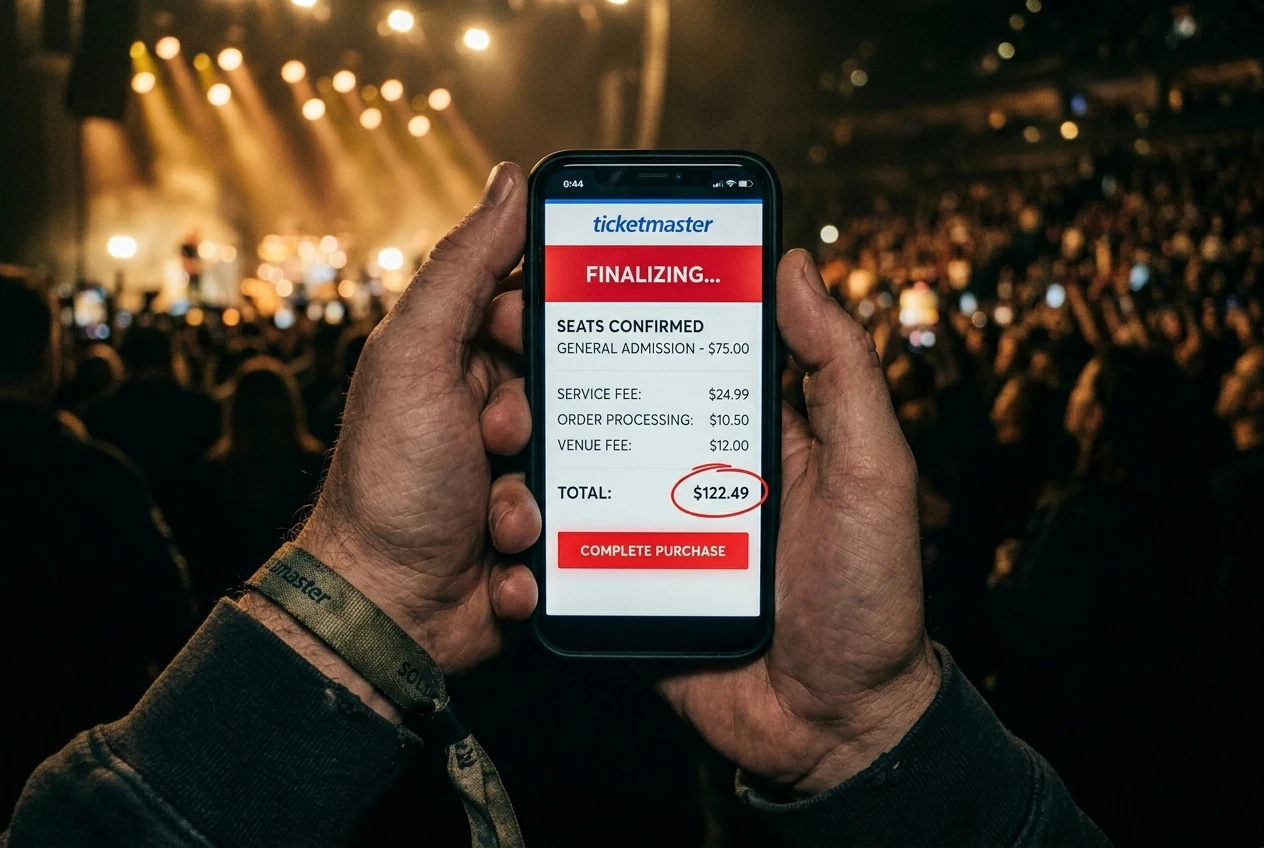
The DOJ’s complaint did not describe Live Nation-Ticketmaster’s market position as the result of better service or superior execution. It described a self-reinforcing business model the government called the ‘flywheel.’ As laid out in the DOJ’s May 2024 complaint announcement, the flywheel captures fees and revenue from concert fans and sponsorship, uses that revenue to lock up artists to exclusive promotion deals, and then uses the resulting cache of live content to sign venues into long-term exclusive ticketing deals, which starts the cycle over.
Live Nation owns or controls more than 265 concert venues in North America, including more than 60 of the top 100 amphitheaters in the United States. That footprint gives the company leverage over every other live promoter, since any venue considering a rival ticketer knows the price of choosing differently may be the loss of Live Nation’s concert content. The complaint alleged that the company has used that leverage to retaliate against venues that worked with competitors, lock venues into multi-year exclusive ticketing deals, and prevent the emergence of new ticketing models.
One tactic cited in the complaint involves Oak View Group, a potential competitor the government said Live Nation turned into a partner. The complaint alleged that Oak View Group has avoided bidding against Live Nation for artist talent and has influenced venues to sign exclusive agreements with Ticketmaster, and that Live Nation has ‘scolded’ Oak View Group multiple times for trying to compete. A second tactic cited in the complaint involved threatening financial retaliation against a firm unless it stopped one of its subsidiaries from competing for a foothold in the U.S. concert promotions market.
The scale of the underlying business makes the conduct the government described commercially significant. Live Nation generates more than $22 billion globally in annual revenue across three segments: concerts, ticketing, and sponsorship and advertising. Ticketmaster is ‘by far the largest concert ticketing company in the United States, multiple times the size of its closest competitor,’ according to the DOJ complaint. It’s the same scale the state plaintiffs say made the company’s exclusionary practices self-sustaining, and it’s the same number the jury has now accepted as the foundation for a liability finding.
What the Jury Found on April 15
The Manhattan jury answered ‘yes’ across every major liability question it was asked to decide, embracing the states’ case from top to bottom. Jurors found for plaintiffs on both primary-ticketing monopolization theories, found that Live Nation controlled or encouraged Ticketmaster’s conduct in those markets, found monopolization in the market for use of large amphitheaters by artists, and found unlawful tying. The verdict form the jury returned also included plaintiff-side findings on each of the state-law claims submitted to it.
In closing arguments, the states told the jury that Ticketmaster controlled 86% of the concert market and 73% when sports venues were included, and they argued that Live Nation kept building what they called ‘a moat around the monopoly castle’ through long-term exclusives, venue leverage, and the threat of withholding concerts from venues that switched ticketers. Live Nation’s defense, summed up by lawyer David Marriott in closing, was that ‘success is not against the antitrust laws,’ and that artists, teams, and venues make the ultimate decisions about who they work with. The jury did not accept that framing.
For damages, the jury found that consumers in 22 states that reached the damages question were overcharged $1.72 per ticket on primary concert tickets sold at major concert venues. The court will now multiply that figure across the relevant tickets sold in each of the 22 states, and observers say the total damages could run into the hundreds of millions of dollars.
Why the DOJ Walked Away
The most consequential moment of the trial did not happen in front of the jury. On March 5, 2026, one week into the trial, the DOJ and Live Nation reached a tentative settlement. The terms, announced four days later, included a $280 million settlement fund for participating states, the divestiture of 13 exclusive amphitheater booking agreements, a 15% cap on service fees at the affected venues, and a requirement that Live Nation open parts of its platform to other companies. Most state AGs didn’t join the deal, arguing that the package did not go far enough to restore competition in the markets the jury has now found were illegally monopolized.
Judge Subramanian was told of the settlement only the evening before it was announced, and he called the late disclosure ‘entirely unacceptable.’ The DOJ then withdrew from the case, and trial resumed on March 16, 2026 with 36 states and the District of Columbia carrying the case forward. The contrast between the DOJ’s negotiated package and the jury’s verdict is now central to the remedy phase, because the state plaintiffs have signaled they will press for outcomes the DOJ’s settlement did not include.
The Remedy Phase and the Breakup Question
Judge Subramanian will now decide what consequences follow the jury’s liability finding. The remedy phase is the part of the case the state plaintiffs built their strategy around, and the question they have put at the center is whether the court will order Live Nation to divest Ticketmaster entirely. The original DOJ complaint asked for structural divestiture, and the state plaintiffs are now carrying that request forward after the federal government exited the case.
The DOJ’s earlier settlement would have left the integrated company in place and imposed behavioral guardrails. The state plaintiffs have rejected that approach in public filings, and they have asked the court for remedies that go directly at the integration of promotion, venues, and ticketing. The remedy phase is expected to weigh venue-choice rules, fee limits, and ticketing access requirements alongside the question of a forced sale of Ticketmaster. The state attorneys general leading the case have framed the remedy phase as the moment when the verdict turns into relief for fans, artists, and venues.
Live Nation is expected to file post-trial motions and to appeal any adverse ruling, which means the remedy order itself is unlikely to be the last word in the case. The company can pursue post-trial motions, and the appeals process can stretch for years, but Judge Subramanian’s eventual order on divestiture and damages will set the practical terms under which Live Nation operates while the appeals run. For the 22 states in the damages question, the per-ticket multiplier will translate the jury’s $1.72 finding into a total number that the court will then calculate. For the remaining plaintiff jurisdictions where the jury found harm to competition, the remedy phase is where the consequences will be drawn.
In the face of dwindling antitrust enforcement by the Trump administration, this verdict shows just how far states can go to protect our residents from big corporations that are using their power to illegally raise prices and rip off Americans.
California Attorney General Rob Bonta said that in a statement the day of the verdict. The statement, joined by other state attorneys general, framed the case as one the states finished without the federal government.
The Money at Stake
The financial picture now has two tracks. On one track sits the DOJ’s $280 million settlement fund, which will be distributed to the states that agreed to the deal. On the other track sits the jury’s per-ticket overcharge finding, which the court will multiply across primary concert tickets sold at major concert venues in the plaintiff states that reached the damages question. Analysts tracking the case have said the resulting damages award could run into the hundreds of millions of dollars, though the final figure is the court’s to set.
Independent promoters, working musicians, and venue operators are also watching the remedy phase closely, because the structural question is the one that will determine whether a rival can credibly enter the ticketing or concert promotion market at scale. The flywheel the government alleged depends on the integration of promotion, venues, and ticketing, and the state plaintiffs’ bid for divestiture is aimed at breaking that integration apart.
- Ticketmaster share of concert ticketing: 86% (73% with sports venues)
- Live Nation concert venues (North America): more than 265
- Live Nation amphitheater booking agreements to divest under DOJ deal: 13
- Service-fee cap at affected venues: 15%
Frequently Asked Questions
What did the jury find in the Live Nation-Ticketmaster antitrust trial?
On April 15, 2026, a Manhattan federal jury found Live Nation Entertainment and Ticketmaster liable on every major liability question submitted to it. The verdict covered monopolization in primary ticketing, monopolization in the use of large amphitheaters by artists, and unlawful tying.
Will Live Nation have to sell Ticketmaster?
That decision sits with U.S. District Judge Arun Subramanian in the remedy phase now underway. The state plaintiffs have asked the court to order a structural divestiture of Ticketmaster, while Live Nation is expected to file post-trial motions and to appeal any adverse ruling.
Why did the DOJ drop out of the case?
The Justice Department reached a tentative settlement with Live Nation on March 5, 2026, one week into trial. The deal required Live Nation to divest 13 exclusive amphitheater booking agreements, capped service fees at 15% at the affected venues, and required Live Nation to open parts of its platform to other companies. Most state attorneys general refused to join the deal and continued the trial.
How much could Live Nation owe in damages?
The jury found $1.72 per-ticket overcharges in 22 states. Judge Subramanian will now calculate the total by multiplying that figure across primary concert tickets sold at major concert venues in each of the 22 states, with analysts saying the total damages award could run into the hundreds of millions of dollars. The DOJ’s separate $280 million settlement fund remains in place for the states that joined it.
Where does the case go from here?
The remedy phase is before Judge Subramanian in the Southern District of New York. He will decide whether to layer additional conduct restrictions on top of the DOJ’s earlier settlement, or to order the more aggressive structural divestiture the state plaintiffs are seeking. Live Nation can pursue post-trial motions and appeal, so the case is more likely in its first major chapter than its last.
Disclaimer: This article reports on an active federal antitrust case. Figures are accurate as of publication on June 11, 2026. The remedy phase, including any final damages award or divestiture order, is pending before the U.S. District Court for the Southern District of New York and remains subject to change. This article is for informational purposes only and does not constitute legal advice. Consult a qualified attorney for any situation involving antitrust or competition law.


Galaxy Ring’s FDA Sleep Apnea Clearance Faces a Familiar Wait

kausable’s €12 Million Seed Joins a Quiet Bet Against AI Scaling

Bitcoin ETFs Shed $225 Million as Treasury’s Biggest Buyers Retreat

telli Raises $15 Million Seed to Rival Billion-Dollar AI Giants

PageMind Raises €1.2 Million to Crack AI Shopping Search

Hackers Hijack Robinhood CEO’s X to Push Fake Memecoin

Apple’s Trade Secrets Suit Against OpenAI Is Europe’s Problem Too

Adobe’s Patch Leaves WhatsApp’s Own Security Gap Untouched

Reddit and Publishers Weigh Blocking Google Over AI Traffic Losses

CuspAI’s $2.6 Billion Bet Echoes AI Drug Discovery’s Playbook

CLARITY Act Final Text Expected This Weekend as 60-Vote Hurdle Looms

Fed Minutes Cite AI Demand as Inflation Risk, Put a 2026 Hike Back on the Map

Kalshi Loses Major NY Prediction Markets Ruling to Judge Torres

Marker AI Writing Startup Lands $13M Seed Led by Index Ventures

Dota 2 Esports World Cup 2026: Spirit Defends $2M Title In Paris

Meta’s Muse Spark 1.1 Beats Rivals on Price, Trails on Coding

CS2 Premier Season 5 Lands With Cache and a C4 Damage Rework

Trump Calls Iran ‘Islamic Republic of Japan’ as Ceasefire Ends

Backrooms Returns to Theaters as the Everything Must Go Edition

ARC Intelligence Closes €4M Seed Round in Roughly a Week
-
 FINANCE2 months ago
Zcash Patched a Double-Spend Bug as ZEC Climbed 5%
-
 ENTERTAINMENT2 months ago
Steam Summer Sale 2026 Locks In June 25 to July 9 Dates
-
 NEWS2 months ago
Meta Adds AI Replies to Threads, But Users Can’t Block It
-
 FINANCE3 weeks ago
CLARITY Act Final Text Expected This Weekend as 60-Vote Hurdle Looms
-
 ENTERTAINMENT2 months ago
‘Widow’s Bay’ Review: Apple TV’s Sleeper Horror-Comedy Earns Its Fog
-
 NEWS7 months ago
FolderFresh Review: This Free Tool Automates Windows File Organizing
-
 FINANCE2 weeks ago
Fed Minutes Cite AI Demand as Inflation Risk, Put a 2026 Hike Back on the Map
-
 FINANCE2 weeks ago
Kalshi Loses Major NY Prediction Markets Ruling to Judge Torres