
FINANCE
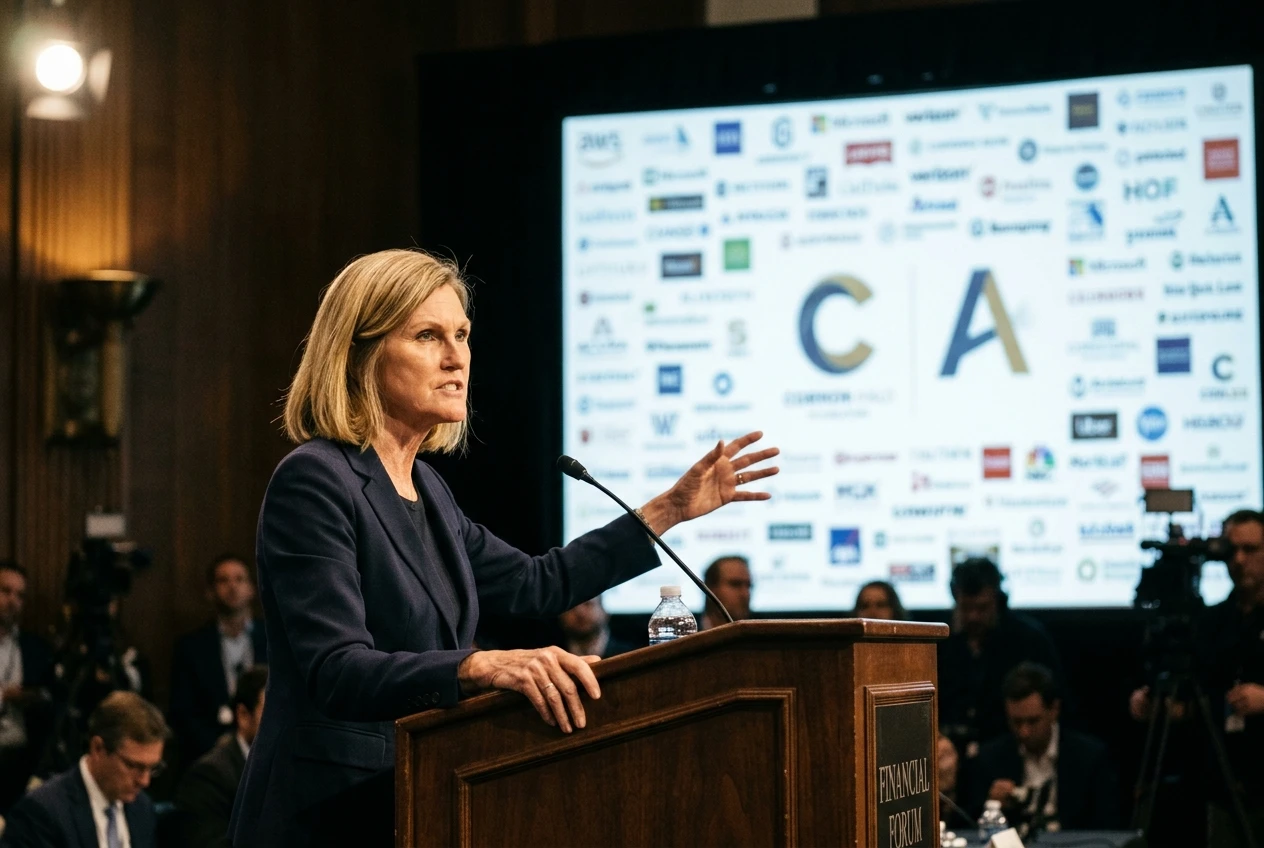
Cathie Wood: OUSD Consortium Faces Uphill Battle Against USDT, USDC
Cathie Wood endorsed an ARK analyst’s thesis that the 140-firm Open USD stablecoin consortium won’t displace USDT and USDC, citing entrenched liquidity.

ARK Invest CEO Cathie Wood endorsed an analyst’s thesis on July 9 that Open USD, the 140-name stablecoin consortium unveiled June 30, faces an entrenched incumbent fight against USDT and USDC, blaming what she called the “powerful” and compounding network effects of the two leading dollar tokens. Wood’s post quoted ARK Invest Director of Digital Assets Lorenzo Valente at length, validating a thread that lays out why liquidity, integration depth, and trading-venue moats cannot be replicated by an expanded roster of logos. Circle CEO Jeremy Allaire had already made a similar case on July 1, the day after the consortium unveiling, telling investors that routing the bulk of reserve income to partners would “starve” the infrastructure behind a global dollar network. ARK’s framing now lines up with Circle’s own defense, leaving Open Standard’s pitch as a product both of the two biggest gatekeepers publicly call structurally handicapped.
Open Standard’s pitch rests on three design points: free minting and redemption, full sharing of reserve earnings with distribution partners, and independent governance through a partner-led board. The consortium already counts Visa, Stripe, BlackRock, Coinbase, Google, BNY, Ripple, OKX, and more than 140 others as members. What ARK and Circle agree on is that the harder questions sit elsewhere. On the exchanges where most crypto trading happens, USDT and USDC are not merely convenient. They are embedded in the quote currency, the collateral asset, the risk-management asset, and the unit of account for the bulk of market makers. Two opinions, one conclusion: OUSD has the partner list it needs to matter, but not the one it would need to unseat the duopoly.
How Valente Disassembled the Logo List
Valente, who leads digital-asset research at ARK Invest, posted his analysis on X on July 8 under the title “Why USDT and USDC are Harder to Kill than Crypto Twitter Thinks: My last Thoughts on Open USD.” Wood’s endorsement came the next day, lifting the same diagnosis verbatim into her own Cathie Wood’s July 9 post quoting Valente’s full thread. The thread begins with a deflation of the logo-list optic the OUSD announcement produced, and it never recovers from there.
“Stablecoin network effects are not created by a long list of logos,” Valente wrote. “They are created by liquidity, habit, collateral acceptance, integrations, brand recognition, market depth, settlement flows, and the fear of breaking what already works.” Eight conditions, and most of them are not switchable. The Open Standard list of 140 partners is one signal that some of them could be built out for OUSD. None of them is, by itself, the source of the moat.
Order books do not move on demand. A market maker who clears in USDC cannot pivot to OUSD without rebuilding the connection. A lending desk that accepts USDC as collateral cannot swap it for OUSD collateral without re-pricing the loan book. Once a stablecoin is woven into those roles, the network effect is locked in. Valente’s read is that USDT and USDC are “vastly misunderstood” precisely because their moat is mistaken for a logo wall rather than a liquidity stack, and the OUSD launch is the case study that proved the point again.
Binance, Bybit, OKX Sit on About $58 Billion in USDT
The cleanest test case in Valente’s analysis is Binance, the exchange he calls Tether’s fortress and crown jewel. As of July 8, Binance held about $45 billion in USDT, Bybit about $4 billion, and OKX about $9 billion. Across the three largest Asian exchanges, that is roughly $58 billion in USDT reserves, a sum that has to be moved before any rival can claim the offshore quote-asset slot.
| Exchange | Approx. USDT holding | Role on that venue |
|---|---|---|
| Binance | about $45 billion | Underwrites the derivatives franchise |
| Bybit | about $4 billion | Quote and collateral asset |
| OKX | about $9 billion | Same lock-in, smaller scale |
Binance once tried to displace Tether’s role. BUSD, the exchange’s branded stablecoin, peaked at roughly $23 billion in supply before the New York State Department of Financial Services ordered Paxos to shut it down in February 2023. There has been no comparable effort since. To explain why, Valente works backward from what replacing USDT would cost the exchange today.
Roughly $40 billion to $50 billion in crypto-derivatives volume flows through Binance on an average day, with spot adding another $8 billion to $10 billion. Valente’s rough calculation puts Binance’s revenue at $17 billion to $20 billion in bear markets and closer to $25 billion in bull cycles, before counting lending spreads, launchpad economics, and the float effect of those USDT balances. Swap USDT for OUSD at a 90% revenue share and a 3.8% T-bill yield, and the entire USDT float generates about $1.55 billion a year. Risking a $25 billion revenue engine for $1.55 billion of upside is something only a madman would do, Valente argues.
To underscore the point, he cites a relationship few outside crypto see. He reports that Circle paid Binance a one-time $60 million incentive plus ongoing monthly payments tied to USDC balances, with no growth to show for it. USDC supply on Binance has been essentially flat at $5 billion, by his read. The Binance math is the closest thing the OUSD debate has to a controlled experiment in what paying an exchange to switch a stablecoin actually delivers.
Circle’s Q1 2026 Numbers Preach the Same Network-Effect Sermon
Two days after the Open Standard announcement, on July 1, Circle CEO Jeremy Allaire answered investor questions in a long Allaire’s July 1 post defending Circle’s USDC network. He opened with the same frame Wood had adopted: stablecoin networks are platform businesses that look winner-take-most once they cross a scale threshold. Then he put a number on it.
“In Q1 2026, according to third-party analysts (Artemis) who track stablecoin adoption, USDC handled nearly $30 trillion in onchain transactions, representing 80% of all dollar stablecoin transactions on blockchains,” Allaire wrote. “USDT handled the remaining 20% of transactions. All of the combined remaining dollar stablecoins handled a total of 0% of transactions (i.e., < 0.5%).” The entire share of the field outside the duopoly sits inside a rounding error.
- Binance USDT balance: about $45 billion (Valente, July 8, 2026)
- Bybit USDT balance: about $4 billion (Valente, July 8, 2026)
- OKX USDT balance: about $9 billion (Valente, July 8, 2026)
- USDC Q1 2026 onchain volume: nearly $30 trillion per Artemis (Allaire, July 1, 2026)
- USDC share of dollar stablecoin onchain volume: 80%
- USDT share of dollar stablecoin onchain volume: 20%
Allaire did not stop at blockchain volume. He argued that USDC is in the top three most liquid digital assets in the world alongside Bitcoin and USDT, and that the closest rival dollar stablecoins are ten times smaller and concentrated in promotional books at a single exchange. USDC, by contrast, sits in dozens and dozens of surfaces. OUSD’s first test would be to earn that kind of width, not just a day-one roster.
Giving away all the income is a recipe for starving an infrastructure, systematically underinvesting and ensuring that your platform will remain limited in scope.
Jeremy Allaire, Chairman and CEO of Circle, posted on X on July 1, 2026.
What OUSD Is Actually Offering, and to Whom
Open Standard’s June 30 announcement did not pitch OUSD as a yield-bearing stablecoin for holders. The design rules that out. Under the federal GENIUS Act framework, payment stablecoin issuers are barred from paying yield directly to holders, and Open Standard has said OUSD will be GENIUS Act compliant. The product is the partner economics, not the user yield.
Valente’s reading of the structure is that Open Standard keeps a 25 basis-point operating fee while each consortium member keeps 100% of the net interest margin on any OUSD sitting on its platform, network, or protocol. That is the offer inside the Open Standard consortium’s launch announcement. Each partner can offset the cost of a payments integration with the spread on the float, without passing the spread to the end user.
- Card networks and processors: Visa, Mastercard, American Express, Discover, Stripe, Adyen, Fiserv, Checkout.com, Western Union, Remitly, MoneyGram
- Banks and asset managers: BlackRock, BNY, Standard Chartered, Commonwealth Bank of Australia, DBS, U.S. Bank, BBVA, Mizuho, Westpac, Itaú, OCBC, UOB, SoFi
- Technology and commerce: Google, IBM, Shopify, Mercado Libre, Mercado Pago, DoorDash, Wix, Rakuten Group
- Crypto and infrastructure: Coinbase, Solana, Base, Sui, OKX, Ripple, Crypto.com, Fireblocks, Gemini, MetaMask, Polygon Labs, Stellar
The launch page also carries an explicit growth forecast from one of its bank partners. BNY’s commentary says it “anticipates that stablecoins alone may grow to $1.5 trillion by 2030,” a sizing that underwrites the consortium’s logic. The implication is that even a thin slice of that expansion rewards the partners who integrate early. Valente and Allaire do not dispute that logic. They argue only that scale alone cannot dislodge incumbents already entrenched in the venues where the money trades today.
The Consortium Has a Membership Problem
The first fracture in the 140-name list appeared within 72 hours of launch. Samsung Electronics told reporters that it had not formally agreed to participate in the Open USD consortium. Dunamu, K Bank, and Shinhan Financial Group issued parallel statements. Investors read the denials as evidence that the OUSD alliance’s headline roster might be more aspirational than contractual, and Circle’s CRCL stock rebounded more than 4% on July 2, as detailed in coverage of how Korean firm denials briefly moved Circle’s stock. The episode showed how easily press-cycle rosters can outrun formal agreements.
Valente’s deeper critique cuts differently. He splits the consortium into two monetization models. AUM monetization is for firms whose economics depend on idle balances: lending protocols, wallets, neobanks, exchanges with large customer deposits. Turnover monetization is for firms whose economics depend on flow: card networks, processors, remittance companies, commerce platforms. The two groups will integrate OUSD at different speeds and for different reasons.
An Aave and a Western Union do not bring the same thing to OUSD, Valente wrote. A DeFi protocol can create persistent supply by making OUSD useful as collateral or as a yield-bearing venue for liquidity. A payments company may move OUSD through its system and burn it at the edge, which adds volume but does not build a float. Without symmetry between the two groups, the consortium will integrate in patches, and that is what he calls the classic consortium problem.
Why Shared Reserve Economics May Not Move the Peg
The Open Standard pitch is not, as some have read it, an attempt to put USDT and USDC out of business. The launch blog frames OUSD as a fee-free, scale-first rail for businesses running on Stripe, not as a stablecoin for retail holders. The implicit target is the B2B and B2B2C layer of the dollar-payment stack, not the offshore retail quote-asset slot that Binance hard-wired to USDT.
What the first week after the announcement showed was that the public launch did not move the duopoly. Open Standard’s website still carried a “live later this year” note as of July 9. The crypto-quote-asset incumbents have not shifted, and the partner list thinned. Allaire, for his part, welcomed OUSD into the broader market rather than dismissing it, noting that Circle already works with many of the consortium’s founding members and expects them to remain USDC partners and customers. The duopoly fight, in his framing, is on the merits of the model rather than on whether Open Standard gets to operate.
Valente’s closing case is that OUSD’s path forward is one of two: either it builds a deep enough integration layer among its payment-rail partners that it becomes the dollar a checkout API speaks by default, or it stalls as another consortium that converted launch coverage into long-tail distribution. Valente does not predict which way it goes, in his published thread. What can be said is that the spec for a successful outcome is strict, and the spec for a familiar failure pattern is well populated.
Frequently Asked Questions
What is Open USD and who announced it?
Open USD (OUSD) is a dollar stablecoin being built by Open Standard, an independent company whose Founding CEO is Zach Abrams, the co-founder of Bridge, the Stripe-owned stablecoin infrastructure firm. Open Standard announced the project on June 30, 2026, with a partner roster of more than 140 companies and a planned launch later in the year. The design offers fee-free minting and redemption for partners and shares the bulk of reserve earnings with distribution partners, with Open Standard retaining a 25 basis-point operating fee.
Why does Cathie Wood think OUSD won’t dethrone USDT and USDC?
Wood endorsed a July 8, 2026 thread by ARK Invest Director of Digital Assets Lorenzo Valente arguing that stablecoin dominance is built on liquidity, integration, market depth, collateral acceptance, and the cost of breaking what already works, factors a 140-firm roster cannot replicate by listing more logos. Valente’s primary case study is Binance’s roughly $45 billion USDT balance, which the exchange will not switch because USDT underwrites its derivatives franchise.
What role does the GENIUS Act play in OUSD’s design?
OUSD is being built to comply with the federal GENIUS Act, under which payment stablecoin issuers must hold 100% reserves and cannot pay yield directly to stablecoin holders. Open Standard therefore routes the bulk of reserve earnings to distribution partners rather than end users. Valente called the design “reserve economics” rather than a yield product for holders, and Allaire argued the structure risks starving the broader infrastructure investment needed to operate a global dollar payment utility.
How does OUSD plan to share yield with partners?
Under the structure Valente read from the launch materials, Open Standard keeps a 25 basis-point operating fee while each consortium member keeps 100% of the net interest margin on any OUSD sitting on its platform, network, or protocol. Circle CEO Jeremy Allaire argued that giving away the majority of income to partners could starve the infrastructure investment needed to operate a dollar network at scale.
Who are the founding members of the Open USD consortium?
The Open Standard partner list spans more than 140 companies and includes Visa, Stripe, Mastercard, BlackRock, BNY, Coinbase, Standard Chartered, Google, Ripple, Crypto.com, OKX, Shopify, and Mercado Libre. South Korean firms including Samsung Electronics, Shinhan Financial Group, Dunamu, and K Bank publicly stated they did not formally agree to participate in the founding consortium.
Disclaimer: This article is for informational purposes only and does not constitute investment advice. Stablecoin markets are highly volatile, subject to regulatory and technological change, and carry counterparty risk. Figures are accurate as of publication and may have changed. Always consult a qualified financial professional before making investment decisions.


Xiaomi Bets 110 Million Phones on a Memory Price Turn Its Own Data Hasn’t Confirmed

CLARITY Act’s Ethics Fix Would Hand Trump’s Own DOJ the Enforcement Pen

Tillis, Once Threatened by Trump, Says Crypto Ethics Deal Falls Short

Iceland’s Sowilo Raises Pre-Seed to Ride the AI Shopping Wave

UK Hands AI a Cabinet Seat by Scrapping the Department That Ran It

Anthropic Bet $1.5 Billion to Dodge a $75 Billion Verdict

Claude’s Record a Skill Feature Puts RPA Vendors on Notice

UK Startup Humanoid Hits $1.35 Billion With a Wheeled Robot Bet

Cascade Raises $3.5 Million to Predict Construction Projects Before Rivals

Brandon Gill’s Smithsonian Grilling Revives a Whiteness Chart From 2020

CLARITY Act Final Text Expected This Weekend as 60-Vote Hurdle Looms

Fed Minutes Cite AI Demand as Inflation Risk, Put a 2026 Hike Back on the Map

Kalshi Loses Major NY Prediction Markets Ruling to Judge Torres

Marker AI Writing Startup Lands $13M Seed Led by Index Ventures

Meta’s Muse Spark 1.1 Beats Rivals on Price, Trails on Coding

Dota 2 Esports World Cup 2026: Spirit Defends $2M Title In Paris

Trump Calls Iran ‘Islamic Republic of Japan’ as Ceasefire Ends

CS2 Premier Season 5 Lands With Cache and a C4 Damage Rework

Backrooms Returns to Theaters as the Everything Must Go Edition

Finto Picks Munich Over Silicon Valley After YC, Raises $3.4M
-
 FINANCE2 months ago
Zcash Patched a Double-Spend Bug as ZEC Climbed 5%
-
 ENTERTAINMENT2 months ago
Steam Summer Sale 2026 Locks In June 25 to July 9 Dates
-
 NEWS2 months ago
Meta Adds AI Replies to Threads, But Users Can’t Block It
-
 FINANCE3 weeks ago
CLARITY Act Final Text Expected This Weekend as 60-Vote Hurdle Looms
-
 ENTERTAINMENT2 months ago
‘Widow’s Bay’ Review: Apple TV’s Sleeper Horror-Comedy Earns Its Fog
-
 NEWS7 months ago
FolderFresh Review: This Free Tool Automates Windows File Organizing
-
 FINANCE2 weeks ago
Fed Minutes Cite AI Demand as Inflation Risk, Put a 2026 Hike Back on the Map
-
 ENTERTAINMENT2 months ago
Amazon Scraps Its Stargate Revival After a 20-Week Writers Room