
NEWS
Tillis, Once Threatened by Trump, Says Crypto Ethics Deal Falls Short
Sen. Thom Tillis, freed from Trump’s threats by retiring, says the CLARITY Act’s crypto ethics text still lacks equal rules for every office.

Senator Thom Tillis says the Senate’s crypto ethics agreement is “not quite there,” the newest snag in a monthslong fight over whether President Trump’s own crypto fortune gets special treatment in the Digital Asset Market CLARITY Act. The North Carolina Republican delivered the verdict Tuesday after a staff briefing on the latest draft, a deal negotiated by the White House and Sens. Cynthia Lummis and Bernie Moreno that still has not been shown to the public, Senate Democrats, or most of Tillis’s own Republican colleagues.
The irony is hard to miss. Tillis is only free to say this because Trump tried to end his career and failed to stop him from staying in the room.
No Exceptions Based on Office
Tillis’s complaint is narrow but pointed. Punchbowl News reporter Brendan Pedersen, who first flagged the senator’s assessment after Tuesday’s staff briefing, reported that Tillis’s concerns were not aimed at the White House itself. Instead, Tillis pressed staff on the exemptions built into the proposed text.
The main thing is, I think we have to apply the same sorts of rules to everybody. There can’t be any exceptions based on office.
Tillis, R-N.C., said that to reporters describing the ethics framework, according to Pedersen’s reporting. Asked to grade the proposal itself, Tillis called it a good step that still falls short of finished. He said more changes are coming before the bill reaches the Senate floor.
That single word, office, is doing a lot of work. The ethics fight has never really been about congressional aides or agency staffers. It has been about whether the president himself is covered.
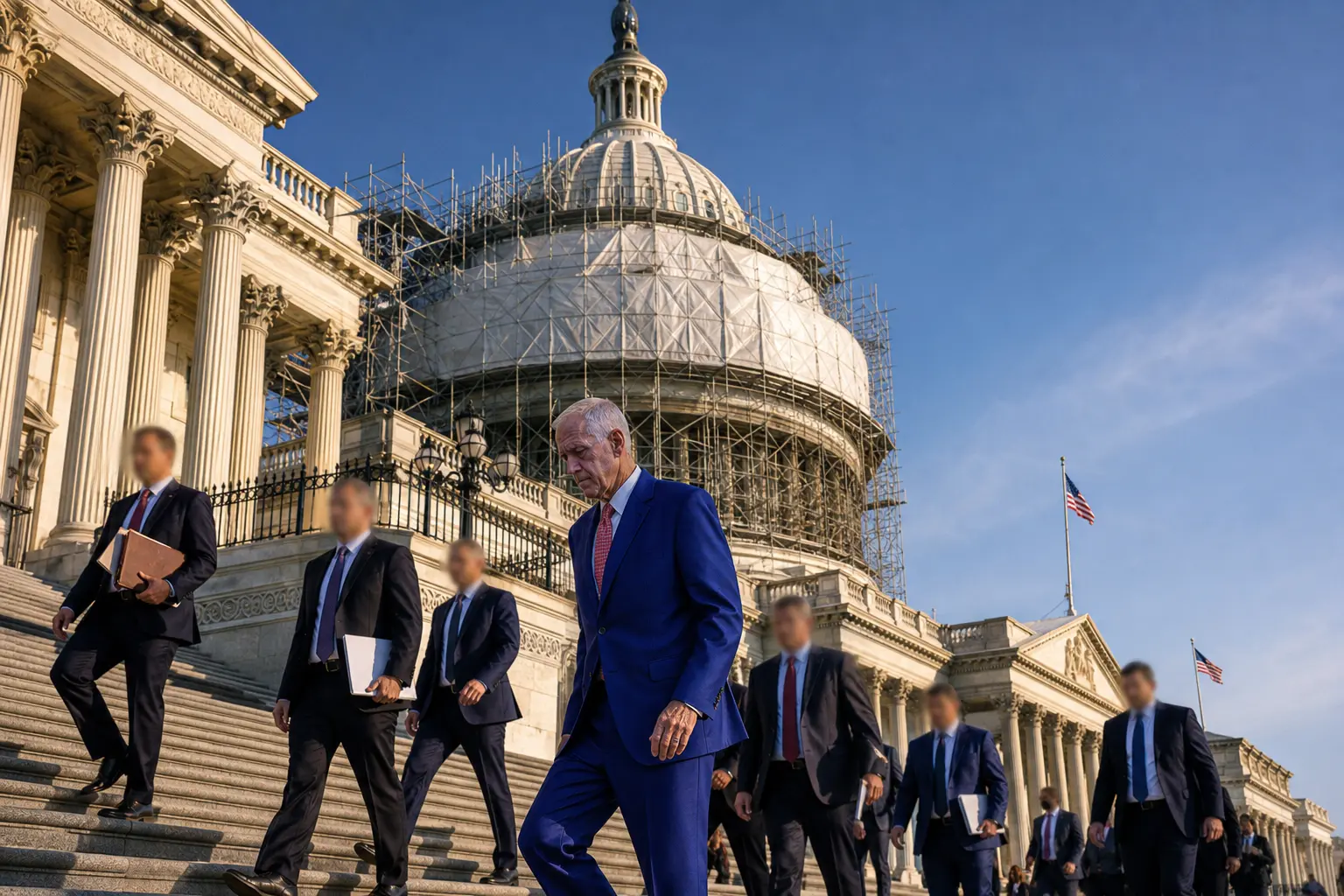
The Senator Trump Once Tried to Purge
Tillis is not a bystander lecturing from the sidelines. He is a senator with nothing left to lose politically, and that fact traces back more than a year.
In June 2025, Tillis announced he would not seek reelection in 2026, hours after President Trump threatened on social media to back a primary challenger against him over Tillis’s opposition to the administration’s tax and spending package. Tillis said the fight over Medicaid cuts made the decision easy. He also made clear what the retirement bought him. I look forward to having the pure freedom to calling the balls and strikes as I see fit,
Tillis said at the time.
He has used that freedom before. Tillis has also held up confirmation of a new Federal Reserve chair pending a probe of current chair Jerome Powell, a standoff that ran deep enough into 2026 that Trump publicly insisted, incorrectly, that Tillis was no longer a senator.
He is. Tillis’s term runs through January 2027, and he was one of only four senators, alongside Lummis, Moreno and Bill Hagerty, in the room when Trump personally negotiated the ethics language at the White House on July 16.
Trump spent political capital trying to force Tillis out. What he got instead was a senator with no primary to fear and a seat at the table anyway.
Where the Ethics Fight’s Key Players Stand
The July 16 meeting narrowed the gap but did not close it. Here is how the main players line up heading into the floor vote fight.
| Player | Role | Position on the Ethics Text |
|---|---|---|
| Thom Tillis | Republican senator, North Carolina, not seeking re-election | Wants identical rules regardless of office; calls the current draft incomplete |
| Cynthia Lummis | Republican senator, Wyoming, lead GOP negotiator | Says White House talks went welland expects the released text to reflect it |
| Patrick Witt | White House crypto adviser | Wants rules applied across the board, from the president to the intern,not aimed at existing holdings |
| Senate Democrats (Gallego, Alsobrooks, Murphy, Merkley, Van Hollen) | Democratic senators whose votes are needed to reach 60 | Demand conflict of interest language covering the president, vice president and Congress |
| John Thune | Senate Majority Leader | Sees a good chanceof a bipartisan deal and wants floor time before recess |
Democrats hold the real veto here. Republicans control 53 seats, seven short of the 60 needed to break a filibuster, and that math is the entire reason Senate Democrats have leverage over ethics language they were not invited to help write.
- Conflict of interest rules that reach the president and vice president directly, not just staff or agency appointees.
- Coverage extending to members of Congress and, in some proposals, their spouses and children.
- An enforcement structure durable enough to survive a change in administration.
Those three asks are what Tillis is quietly enforcing from the Republican side, even though he will not run again and technically owes the White House nothing.
Trump’s $1.4 Billion Crypto Windfall Is the Sticking Point
The reason a single word like office matters so much traces back to one number. Trump’s 2025 financial disclosure valued his crypto related income at more than $1.4 billion, driven largely by the $TRUMP memecoin and World Liberty Financial. That figure is the reason Democrats wanted the ethics clause in the first place, and it is the reason the White House has resisted language written around it.
Patrick Witt, the White House’s crypto adviser, has argued that any rule should apply generally rather than single out the president’s existing business interests, calling narrower Democratic proposals politically motivated. Trump’s other market activity has not helped his case. His stock trades ahead of NVIDIA and Tesla earnings reports had already given Democrats a separate reason to distrust any carve out tied to his office.
Sen. Kirsten Gillibrand, Democrat of New York, has gone further than most, warning that weak ethics language could sink her support entirely. The underlying bill itself, tracked officially as H.R. 3633, the Digital Asset Market Clarity Act, already contains general conflict of interest rulemaking language. What is missing is the specific presidential carve out language everyone is now fighting over.
How the Ethics Deal Cracked and Recracked in a Week
The pace of this fight has been fast, then slow, then fast again. The sequence explains why Tillis’s comments landed the way they did.
- July 14, 2026: Democratic Sens. Chris Murphy, Jeff Merkley and Chris Van Hollen publicly oppose the sitting draft, demanding a ban on officials’ personal crypto businesses.
- July 16, 2026: Trump meets Lummis, Moreno, Tillis and Hagerty at the White House alongside crypto adviser Patrick Witt to negotiate ethics language directly. Democrats are not invited.
- July 20, 2026: The White House signs off on ethics language and sends it to select Senate Republicans, a scoop first reported by Crypto in America host Eleanor Terrett and later corroborated by other outlets.
- July 21, 2026: Prediction market odds of passage jump roughly eleven points on the news. Hours later, Tillis tells reporters after a fresh staff briefing that the deal is not quite there.
Each step looked like the final one until the next senator spoke up. Tillis’s comments are simply the latest reminder that a deal reached in a closed room with four senators still has to survive contact with the other 96.
Eighteen Legislative Days Until the Recess Deadline
The clock is the part nobody controls. The Senate is expected to leave for its August recess around August 7, and lawmakers were working with roughly eighteen legislative days left as of Tillis’s comments. Miss that window and midterm politics take over the calendar.
Treasury Secretary Scott Bessent told reporters lawmakers were at the one yard line on a deal, a line that circulated widely after Bloomberg reported it. Markets took the earlier optimism seriously. Prediction market odds tied to Senate passage had already been climbing before this latest snag, echoing the jump in confidence traders showed after crypto and bank representatives struck their own stablecoin yield compromise earlier this month.
Thune has said there is a good chance Republicans and Democrats land a bipartisan solution before the bill goes to the floor. He has also made clear he intends to press ahead with a vote regardless of whether every senator is satisfied first. Tillis’s math cuts against that plan. A senator with no election to lose has far less reason to rubber stamp a text he has not fully read.
Frequently Asked Questions
What Does the CLARITY Act Regulate, Beyond the Ethics Fight?
The bill’s core purpose, per its official Senate text, is to build a regulatory system for digital commodities split between the Securities and Exchange Commission and the Commodity Futures Trading Commission. It also touches Federal Reserve rules around central bank digital currency. The ethics language is a late addition layered onto that broader framework, not the bill’s original purpose.
Why Is Tillis Willing to Buck a White House Backed Deal?
Because he has nothing left to protect. Tillis is not running for reelection, his term runs until January 2027, and he has already shown a willingness to cross the White House on other priorities, including holding up a Federal Reserve chair confirmation over a separate dispute involving Chair Jerome Powell.
What Enforcement Piece Did Republicans Already Drop From the Ethics Text?
An earlier proposal would have let state attorneys general sue the Department of Justice if it failed to enforce the ethics rules, a mechanism Democrats wanted because the DOJ answers to the president. Republicans and the White House withdrew that idea in a closed door session in June, collapsing an earlier near deal. Enforcement now rests with the DOJ alone.
What Happens if the Senate Misses the August Recess Deadline?
The bill does not die, but it loses momentum. Once senators leave for recess in early August, midterm election politics are expected to dominate the fall calendar, pushing a fresh floor vote attempt further down the list of priorities.


Veridue Raises $4 Million to Speed Energy Deal Diligence

Healey Adds a £150m Rung for Northern Scale-Ups

Ten Deals Took Most of Europe’s August Tech Money

Holmes Hired Fielder to Film Her Last Days

Molten Bets £100m of Plc Cash on Late-Stage Tech

Garlinghouse Cited Dutch Gold, and London Got the Bars

byFounders Bets $4.3 Million on Fluencify After $2M ARR

Alpha Gang Puts A-List Stars on a Zellner Wager

Angel Bets a Recut PG-13 Chase on Ritchson and Wilson

Flex IT and T1A Combine to Own Corporate Device Supply

Walter’s TWG Insists No Fraud as Insurer Probes Force Cleanup

30-Year Yield Hits 5.32% Highest Since 2007 as Debt Supply Locks In Costs

PCE Stays at 3.7% as Gas and Tariffs Outrun Coming Revisions

Evernorth S-4 Clears Path for Active XRP Treasury on Nasdaq

Astute’s $1.2M bet makes B2B creator deals feed AI discovery

Strategy Parks $1.59B Cash While Bitcoin Stack Stays Flat

Instinct Hits $2.5 Billion as AI Agent Access Sparks Trust Fights

Oracle’s 2.8 GW Bloom Deal Exposes the AI Power Bypass

CLARITY Act Cloture Opens a Door Ethics Still Blocks

Amber’s €7M locks Mittelstand knowledge inside Europe
-
 FINANCE3 months ago
Zcash Patched a Double-Spend Bug as ZEC Climbed 5%
-
 ENTERTAINMENT3 months ago
Steam Summer Sale 2026 Locks In June 25 to July 9 Dates
-

 FINANCE2 months ago
CLARITY Act Final Text Expected This Weekend as 60-Vote Hurdle Looms
-
 NEWS4 months ago
Meta Adds AI Replies to Threads, But Users Can’t Block It
-
 ENTERTAINMENT5 months ago
Extraction 3 Is Officially Coming to Netflix in 2027
-

 NEWS3 months ago
YouTube Shorts is testing a heart in place of the thumbs-up
-

 NEWS1 month ago
Senators Force Apple Off Chinese Memory as Big Three Cash In
-

 NEWS3 months ago
NEURA Robotics’ $1.4B Series C Redraws Europe’s Physical AI Bet