
NEWS
RAROG’s €162K Bet Turns Everyday Phones Into Rescue Beacons
Swiss startup RAROG has raised €162,000 from Venture Kick to build a detector that finds missing hikers using signals from their own phones and smartwatches.

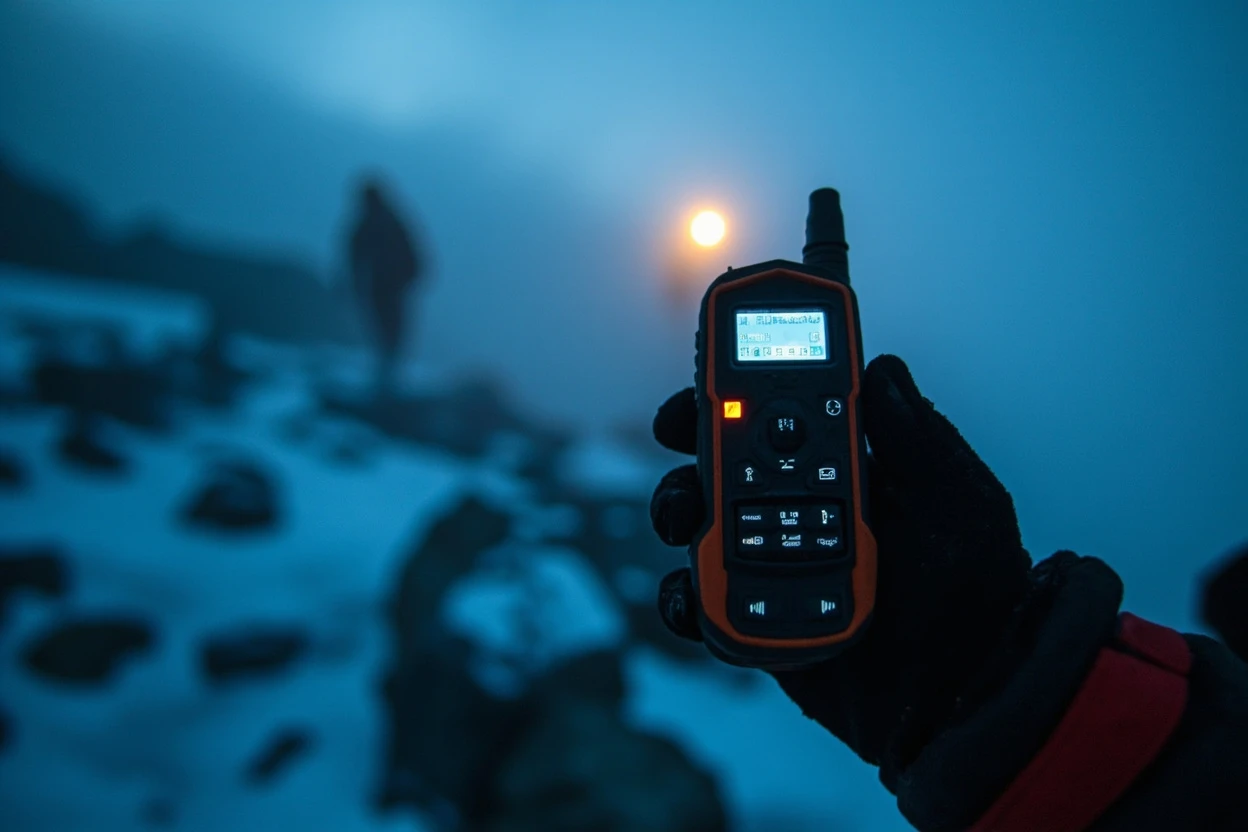
Swiss startup RAROG has secured €162,000 (CHF 150,000) from Venture Kick to turn a missing hiker’s own phone into the thing that finds them. The handheld detector reads the radio signals that smartphones, smartwatches and fitness trackers broadcast on their own, no cell tower, satellite subscription or search dog required.
It is RAROG’s second Venture Kick award in the program’s staged funding track, after an earlier CHF 40,000 (about €43,000) grant. The money lands as Alpine death tolls climb and a wider field of engineers races to turn the electronics people already carry into passive safety nets.
How a Missing Hiker’s Own Phone Becomes the Beacon
RAROG’s detector does not ping a phone or request its location. It listens. Phones, watches and trackers constantly emit short radio bursts while searching for Wi-Fi or Bluetooth connections, whether or not they have signal bars or a working SIM, and RAROG’s hardware is built to catch those bursts from a distance.
The system works through vegetation, fog, snow and rubble, conditions that routinely blind visual searches and ground camera drones. Because it does not depend on mobile networks, it keeps working in the dead zones and overloaded networks that swallow entire disaster areas.
The company, cofounded by engineers Alexander Marinšek, Uroš Hudomalj and Marko Hudomalj, built its portable system for locating missing people after interviewing rescuers across Europe and the United States about where existing methods break down. Visual scanning is slow. Dogs tire and need handlers. Network triangulation fails the moment a phone loses signal, often exactly when someone is lost.
Alpine Rescue Calls Are Climbing
RAROG’s pitch lands at a moment when Alpine rescue services are stretched thin. Next door to its Swiss home base, Italy publishes some of the starkest numbers in Europe, and they have been getting worse.
- 528 deaths were recorded in Italian mountain accidents in 2025, up 13% from 466 the year before.
- 11,789 people were rescued by Italy’s Corpo Nazionale Soccorso Alpino e Speleologico (CNSAS), the national Alpine and cave rescue corps, in 2024 alone.
- 223 helicopter missions flew over the Friuli-Venezia Giulia region in 2025, up 30% from 148 the year before.
- 43% of mountain rescues are triggered by falls, more than any other single cause.
Italy publishes those figures; RAROG’s own pilots run in Switzerland and Ireland. The terrain and the underlying problem are the same across all three: rescuers racing weather and daylight in country where nearly 90 hikers and climbers have already died this summer.
Venture Kick’s Money Comes in Stages
Venture Kick does not hand out its full prize at once. Startups clear separate evaluation stages, and RAROG had already banked an earlier CHF 40,000 award before its newest CHF 150,000 prize, one of the largest checks the program writes. Combined, RAROG has now drawn roughly CHF 190,000 (about €205,000) from Venture Kick alone.
RAROG says the new money goes toward a specific list of tasks:
- Finishing product development alongside its ongoing rescue pilots
- Completing CE marking for the detection units
- Manufacturing its first production batch of detectors
- Entering the market with a growing team
Venture Kick’s backing carries some weight of its own. Startups that have passed through the program collectively pulled in CHF 1.25 billion in follow-on investment during 2025, a track record the funder points to when picking its winners.
Two Out of Three, Found
RAROG’s earliest evidence came from a fire brigade drill, not a lab. During the company’s first field exercise with a local brigade, the chief in charge said afterward that the crew would not have located two of the three missing people without the detector, according to the company’s own account of the test.
That result is why RAROG’s detectors are now out of the workshop. Systems are already running in Ireland’s Wicklow Mountains and in the Swiss Alps, terrain where, the company says, hundreds of people die every year simply because rescuers cannot reach them in time.
Both sites share the same failure mode RAROG is built to fix: wide, difficult ground where a phone’s last known location and a person’s actual position can be kilometers apart by the time a search team arrives.
How Does RAROG Compare to Existing Rescue Beacons?
RAROG’s handheld unit passively reads signals a phone already broadcasts, so a lost hiker does not need to carry, charge or activate anything extra. Personal locator beacons, satellite SOS accessories and Bluetooth-based research systems all still require a dedicated device the user must buy, carry and switch on themselves.
| Technology | Maker | How It Detects Someone | Action Needed From the Missing Person |
|---|---|---|---|
| RAROG detector | RAROG (Switzerland) | Reads ambient radio signals from phones, smartwatches and fitness trackers | None |
| Personal locator beacon | Various manufacturers | Sends a distress signal to satellites | Must carry the device and trigger it manually |
| Cerberus | BriarTek | Pairs a phone app with a separate satellite hardware accessory | Must own the accessory and activate the app |
| Bluetooth Low Energy beacon research | Toronto Metropolitan University | Detects Bluetooth Low Energy signals from nearby phones | Phone’s Bluetooth must be discoverable |
Other engineers are chasing the same idea. A Toronto Metropolitan University team has been testing Bluetooth signal detection to speed up search coordination, and BriarTek’s Cerberus already pairs a phone app with a satellite SOS accessory for backcountry use.
European hardware startups chasing public-safety contracts have had a strong fundraising run generally. Satellite radar company ICEYE secured a €300 million revolving credit facility this year to expand its own sovereign satellite contracts.
What Has to Happen Before RAROG Ships
The award funds RAROG’s next phase: closing out CE marking, the European Union’s conformity certification that lets a product be legally sold across the bloc, before its first production batch reaches rescue teams.
Beyond the mountains, the company says it is expanding toward firefighters, civil protection units and other emergency responders, aiming to put its detectors in the hands of what it describes as millions of rescuers worldwide.
Some of that plan is still an open question.
What we know:
- RAROG has drawn roughly CHF 190,000 (about €205,000) from Venture Kick across two funding stages.
- Pilots are running in Ireland’s Wicklow Mountains and in the Swiss Alps.
- CE marking is the next formal milestone before commercial sales.
What’s unconfirmed:
- A firm date for CE marking approval or first commercial sale.
- Unit pricing and the size of the first manufactured batch.
- How many people RAROG plans to hire beyond its three cofounders.
RAROG says its first commercially manufactured units are due once CE marking clears, the last formal step before its detectors join rescue kits beyond the Alps and Wicklow’s hills.


Dolly Parton’s $450 Million Fortune Keeps Working After Her Death

SpaceX’s $60B Cursor Buy Immediately Costs It OpenAI Models

Rays Forever Home Wins County Vote as College and Taxpayers Carry the Load

Apple TV Hits $14.99 as Sports and Hits Bill Comes Due

Swift Telescopes Restart as Orbit Drop Accelerates

Oracle’s 2.8 GW Bloom Deal Exposes the AI Power Bypass

Galaxy S26 Beta 7 Ports Fold 8 AI as Stable Nears

Walmart Pays $50 Million to Close Federal Opioid Pharmacy Case

Space Mirror Demo Revives 1993 Russian Night-Light Test

Measles Death Dispute Deepens Distrust in Pennsylvania Outbreak

Trump Iran Threat Wiped $238M Crypto Longs Then Flipped

30-Year Yield Hits 5.32% Highest Since 2007 as Debt Supply Locks In Costs

Oil Crashes Below $80 as Iran Talks Restart and Markets Split

Strategy Parks $1.59B Cash While Bitcoin Stack Stays Flat

Astute’s $1.2M bet makes B2B creator deals feed AI discovery

Capital Clusters and the Dual Tracks of European Tech Finance

SpaceX Stock Rebound Tests Real Demand Before Huge Unlock

BlackRock Turns Cash Empire Into Stablecoin Reserve Rails

The 20% Savings Ideal Meets a 2.7% Reality Check

Monzo chair Gary Hoffman exits after board revolt fallout
-
 FINANCE3 months ago
Zcash Patched a Double-Spend Bug as ZEC Climbed 5%
-
 ENTERTAINMENT3 months ago
Steam Summer Sale 2026 Locks In June 25 to July 9 Dates
-

 FINANCE2 months ago
CLARITY Act Final Text Expected This Weekend as 60-Vote Hurdle Looms
-
 NEWS4 months ago
Meta Adds AI Replies to Threads, But Users Can’t Block It
-

 NEWS3 months ago
YouTube Shorts is testing a heart in place of the thumbs-up
-

 NEWS1 month ago
Senators Force Apple Off Chinese Memory as Big Three Cash In
-

 NEWS3 months ago
NEURA Robotics’ $1.4B Series C Redraws Europe’s Physical AI Bet
-
 ENTERTAINMENT5 months ago
Extraction 3 Is Officially Coming to Netflix in 2027