
NEWS
Dell Parks Flagship XPS 13 Chassis on Googlebook Platform
Leaked Dell XPS 13 DX13267 Googlebook runs Snapdragon X Elite, 13.4-inch OLED and up to 32GB RAM on Android 17 Aluminium OS.

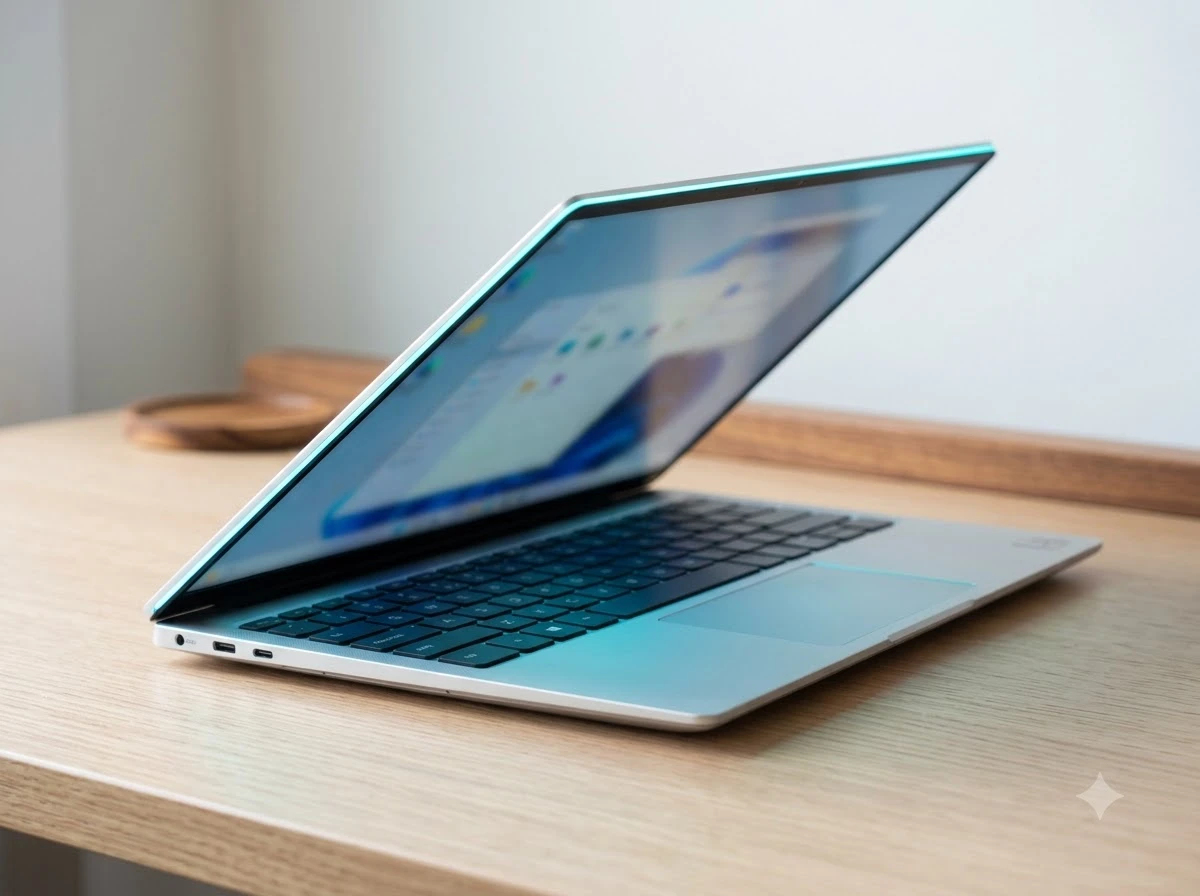
Dell’s XPS 13 is heading to Google’s new laptop platform. Geekbench runs and Chromium code now identify model DX13267, codenamed Mica, as a Snapdragon X Elite Googlebook inside the familiar 13-inch chassis, running an Android 17 desktop build.
The find lands weeks before Google’s expected fall hardware window and completes the first wave of partner devices.
That timing matters. Partner code and benchmark trails have surfaced in quick succession, and the XPS mapping removes the last major gap in the opening lineup. What began as scattered board names now reads as a coherent first wave ready for the same seasonal launch.
Mica Becomes the Dell XPS 13
In July a board labeled Mica appeared in the Chromium Gerrit under Qualcomm’s Bluey reference family for Snapdragon X Googlebooks. Power-management and battery-health code matched Dell’s proprietary structures. Then Geekbench 6 listings showed “Dell XPS 13 (DX13267)” alongside “Google Multi-device ARM64” aliases.
Software strings inside those runs pointed to mica-userdebug on Android 17 desktop build CL2B.260330.081. That sealed the link. DX13267 sits next to the Windows XPS 13 DX13260 in Dell’s numbering, so the company is dropping Google’s new OS straight into its current premium 13-inch design.
The numbering choice itself is revealing. Dell kept the DX13 prefix and simply advanced the final digits, treating the Googlebook variant as a sibling rather than a separate experimental line. That approach signals confidence in both the chassis and the platform.
- July 2026, Mica board spotted in Chromium Gerrit with Dell-like firmware patterns.
- Mid-to-late July, Geekbench entries appear under Dell XPS 13 (DX13267) and Google Multi-device ARM64.
- August 2026, Full mapping of mica-userdebug to the retail model name confirmed by multiple trackers.
GBookHub later stated the Mica board tied directly to DX13267 after the userdebug string matched.
Each step narrowed the uncertainty. Firmware patterns first hinted at Dell. Benchmark aliases then named the XPS 13 outright. The userdebug string finally locked the internal board to the retail model. Trackers needed little more once those three layers lined up.
Hardware Matches the Windows Flagship
Dell is not trimming the bill of materials. Leaked configurations list the same 12-core Snapdragon X Elite X1E-80-100 used in the Windows model, complete with a 45 TOPS Hexagon NPU for on-device AI.
| Spec | Googlebook XPS 13 (DX13267 leak) | Windows XPS 13 9345 |
|---|---|---|
| Processor | Snapdragon X Elite X1E-80-100 (12-core) | Snapdragon X Elite X1E-80-100 (12-core) |
| NPU | 45 TOPS Hexagon | 45 TOPS Hexagon |
| Memory | 16 GB or 32 GB LPDDR5X | Up to 32 GB LPDDR5X |
| Display | 13.4-inch OLED touch, 2880 × 1800 | 13.4-inch options including OLED |
| Ports | Dual USB-C, Wi-Fi 7, Bluetooth | Dual USB4 Type-C, Wi-Fi 7 |
| Extras | Lid Glow Bar, biometrics | Fingerprint reader, CNC aluminum |
Early Geekbench 6 scores sit near 2,200 single-core and just over 9,500 multi-core. Software is still tuning, so final numbers should firm up. The chassis already exists in the current Snapdragon X Elite XPS 13 chassis, which starts under 1.2 kg with all-day battery claims and CNC aluminum construction. Buyers should expect the same thin profile and dual-port simplicity.
Keeping the identical silicon and NPU means local Gemini workloads face no hardware penalty relative to the Windows twin. The 45 TOPS Hexagon unit can handle on-device inference without cloud round-trips, which is central to how Googlebook positions itself. Memory options of 16 GB or 32 GB LPDDR5X further align the two machines, so the choice between them will turn on software preference rather than raw capacity.
The dual USB-C layout and Wi-Fi 7 radio carry over as well. That continuity lowers the learning curve for anyone already living with the Windows XPS 13. The only visible differentiator at a glance will be the lid Glow Bar that every Googlebook carries as both design cue and status light.
Dell Left XPS Off ChromeOS for Years
Dell has shipped solid education and enterprise Chromebooks for a long time. Consumer XPS machines stayed on Windows and Linux. ChromeOS enthusiasts watched and waited while Latitude and classroom models carried the Google logo.
That split made sense when ChromeOS targeted light web work and school fleets. Googlebook changes the math. Google now treats the platform as a full desktop OS built for Gemini Intelligence, Android apps, and premium materials. Dell’s willingness to put the XPS name on it is the clearest signal yet that the old hierarchy has cracked.
One longtime user on X who still runs a 2019 Pixelbook Go called the hardware strong and said the real test will be how cleanly Linux apps and desktop windowing land. That matches the broader reaction: the chassis earns excitement, the software must finish the job.
The earlier separation protected the XPS brand from any perception that it belonged in the light-task category. Education and enterprise Chromebooks served volume and manageability goals. They never needed the thin CNC aluminum body or the OLED panel that define the 13-inch flagship. Googlebook’s higher hardware floors remove that risk, so Dell can finally attach its best consumer name without diluting it.
Enthusiasts who followed every Latitude ChromeOS refresh now see the machine they wanted years ago. The remaining open question is software maturity, not whether the metal and glass feel premium enough.
Googlebook Arrives as Aluminium OS
Google introduced Googlebook in May 2026 as a new category of laptops designed for Gemini. It merges the best of Android and ChromeOS into what internal builds call Aluminium OS, an Android 17 desktop stack with proper windowing.
Partners named at launch include Acer, ASUS, Dell, HP and Lenovo. Every unit will carry a distinctive lid Glow Bar that is both a design cue and a status light. Devices ship this fall.
- Magic Pointer, cursor that summons Gemini context when you wiggle it over on-screen content.
- Create your Widget, prompt-built live dashboards pulling from Gmail, Calendar and the web.
- Phone continuity, cast phone apps to the laptop screen, pull files via Quick Access, stay in flow across devices.
- Premium baseline, Google set hardware floors high enough that OEMs now risk their flagship brands.
The same fall window also follows the broader Gemini push seen at Google I/O 2026 Gemini and hardware reveals. Aluminium OS is the desktop piece of that strategy.
Android 17 desktop windowing is the technical foundation that lets the platform move beyond simple browser or tablet modes. Proper multi-window behavior, combined with the Magic Pointer’s contextual Gemini calls, aims to make the laptop feel native rather than adapted. Phone continuity features then extend that same session across the user’s existing Android device, so files and running apps travel without friction.
The premium baseline is equally deliberate. By requiring hardware strong enough for flagship branding, Google forces partners to treat Googlebook as a peer to their Windows ultrabooks instead of a secondary line. Dell’s decision to reuse the XPS 13 chassis is the clearest proof that the floor is working as intended.
Lenovo Already Leaked Its Own Wave
Dell is not alone. Lenovo’s marketing materials and code trails already showed a 13-inch Sapphire detachable tablet with pen support and a 15-inch clamshell, plus an AI mouse accessory. Those leaks put Lenovo first in the public eye. The full set of first-wave partners now appears mapped: Acer Moonstone, ASUS Lapis, HP 14c Quartz, Lenovo Sapphire/Ruby and Dell Mica.
The presence of an XPS-class machine beside Lenovo’s Sapphire detachable and AI mouse family raises the entire category. Buyers who once chose between a cheap Chromebook and a Windows ultrabook suddenly have multiple premium Google options in the same size class.
Crowd chatter on X notes that strong partner flagships could reduce pressure for Google to ship its own Pixel Googlebook reference design. If Dell and Lenovo already cover the high end, Google can focus on software and the Glow Bar identity.
Lenovo’s mix of a pen-enabled detachable and a larger clamshell gives the first wave form-factor breadth that a single XPS 13 cannot supply alone. Together the two brands bookend the premium segment: one classic thin clamshell, one flexible tablet-plus-keyboard design, both running the same Aluminium OS stack and both carrying the Glow Bar.
The First Wave Now Looks Complete
With Mica identified, every launch partner named in May has at least one corresponding code name in public view. The set forms a clear snapshot of how OEMs are interpreting Google’s premium brief.
- Acer Moonstone, early partner entry in the mapped set.
- ASUS Lapis, another first-wave code name now public.
- HP 14c Quartz, the HP contribution to the opening lineup.
- Lenovo Sapphire and Ruby, covering detachable and clamshell sizes plus an AI mouse.
- Dell Mica, the XPS 13 DX13267 that anchors the high end.
That spread matters because it shows no single OEM is carrying the category alone. Each partner brings its own design language and accessory ideas while still meeting the shared hardware floors and Glow Bar requirement. The fall event can therefore present a genuine multi-brand shelf rather than a narrow pilot.
Buyers gain choice inside the same software family. Someone who wants a classic 13-inch clamshell can look at Dell. Someone who prefers pen input and a detachable can look at Lenovo. The underlying Android 17 desktop build and Gemini features remain consistent across them.
Why the Shared Chassis Strategy Matters
Dell’s choice to drop Aluminium OS into an existing Snapdragon X Elite XPS 13 body is more than a cost-saving shortcut. It lets the company ship on the same fall cadence as the rest of the first wave without tooling an entirely new magnesium or aluminum shell.
The approach also gives reviewers and early buyers an immediate reference point. Anyone who has handled the Windows XPS 13 9345 already knows the weight, the keyboard feel, and the display quality. Attention can shift straight to windowing behavior, app compatibility, and how the Glow Bar and Magic Pointer feel in daily use.
For Google the strategy is equally useful. A familiar premium chassis running the new OS reduces the risk that hardware novelty distracts from software evaluation. The platform either delivers a finished desktop experience or it does not. The metal and glass will not be the variable under test.
Identical silicon further simplifies that comparison. The same 12-core X1E-80-100 and 45 TOPS NPU mean performance differences will trace to scheduling, drivers, and thermal policy rather than raw transistor count. Early Geekbench figures already place the machine in flagship territory; final tuning will determine how close the shipping scores land to those early runs.
A Premium Android Desktop Choice Finally Exists
For years the premium thin-and-light conversation stopped at Windows Snapdragon or Intel machines. The XPS 13 Googlebook puts a familiar, highly regarded chassis on the other side of that line with identical silicon and an OLED panel. Early multi-core scores already sit in flagship territory while the NPU handles local Gemini work without cloud round-trips.
We’re introducing Googlebook, designed for Gemini Intelligence. These new laptops are built with Gemini’s helpfulness at their core, premium hardware and work seamlessly with Android phones.
Alex Kuscher, Google’s senior director of laptops and tablets, wrote that in the May announcement. Dell’s chassis decision turns the statement into hardware reality.
Pricing and final retail naming remain unconfirmed. The Windows XPS 13 9345 currently sells near $1,000 after discounts, giving a rough ceiling. Expect dual USB-C only, Wi-Fi 7, and the Glow Bar as the visual tell. Software polish on desktop windowing and app compatibility will decide whether the first units feel finished or still early.
The fall event will show the finished machines. Until then the leak already delivers the larger point: Dell now treats Google’s desktop platform as worthy of its best consumer name.
That shift closes a long chapter in which premium Android desktop hardware simply did not exist in this size and build quality. The combination of a known chassis, flagship silicon, and a desktop-focused Android 17 stack finally gives buyers a concrete alternative when they shop the thin-and-light aisle. How cleanly the software lands will decide whether the alternative becomes a habit.


OpenAI Bets $300 Donut Speaker Can Seed Its Device Future

OpenAI Bets $300 Donut Speaker Can Seed Its Device Future

Dell Parks Flagship XPS 13 Chassis on Googlebook Platform

OpenAI Bets $300 Donut Speaker Can Seed Its Device Future

CLARITY Act Delay Leaves Crypto Bill Racing a Midterm Clock

Ethics Deal on CLARITY Act Could Force Trump Crypto Sale With Tax Deferral

Chrome Wins Netflix 4K on Windows 11 but Edge Keeps More

Tight Jobless Claims Cap Bitcoin Under $65,000 on Hike Odds

Maher Gasps at DSA Communists While Hollywood Stays Silent

Netflix Gets GTA 6 Extended Look Six Hours Before YouTube

Fed Minutes Cite AI Demand as Inflation Risk, Put a 2026 Hike Back on the Map

Marker AI Writing Startup Lands $13M Seed Led by Index Ventures

Meta’s Muse Spark 1.1 Beats Rivals on Price, Trails on Coding

Finto Picks Munich Over Silicon Valley After YC, Raises $3.4M

CS2 Premier Season 5 Lands With Cache and a C4 Damage Rework

Backrooms Returns to Theaters as the Everything Must Go Edition

Trump Calls Iran ‘Islamic Republic of Japan’ as Ceasefire Ends

IO Interactive Regains Project Fantasy, Closes Istanbul Studio

Kord’s £6.4M Series A Bets Identity and Payments Run on One Stack

Taiwan Margin Debt Climbs 160% as Locals Borrow Into the TSMC Rally
-
 FINANCE2 months ago
Zcash Patched a Double-Spend Bug as ZEC Climbed 5%
-
 ENTERTAINMENT2 months ago
Steam Summer Sale 2026 Locks In June 25 to July 9 Dates
-

 FINANCE1 month ago
CLARITY Act Final Text Expected This Weekend as 60-Vote Hurdle Looms
-
 NEWS3 months ago
Meta Adds AI Replies to Threads, But Users Can’t Block It
-
 ENTERTAINMENT3 months ago
‘Widow’s Bay’ Review: Apple TV’s Sleeper Horror-Comedy Earns Its Fog
-
 NEWS5 months ago
U.S. Navy Deploys Solar-Powered Lightfish Drone to Patrol Oceans
-
 FINANCE2 months ago
CLARITY Act Floor Vote Likely Shifts to August, Lummis Says
-

 FINANCE1 month ago
Kalshi Loses Major NY Prediction Markets Ruling to Judge Torres