
NEWS
Pixel Watch 5 Turns Wrist Data Into Early Metabolic Alerts
Google’s Pixel Watch 5 adds clinically validated insulin and blood-pressure trend reports plus 2x urban GPS, though many tools arrive later and prices rose.

Google’s Pixel Watch 5 reaches store shelves today starting at $399, packing clinically validated monthly reports on insulin resistance and blood pressure trends that need no blood draw or cuff, plus gym tools and GPS Google claims is twice as accurate in cities.
The hardware bumps are real but modest. The bigger shift sits in how the watch turns weeks of passive sensor data into early warnings for silent metabolic and cardiovascular changes that leave roughly 40 percent of adults unaware.
What Arrives on the Wrist Today
Pre-orders opened August 12. Units hit shelves August 20 in 41 mm and 45 mm sizes. The starts at $399 for the 41 mm Wi-Fi model and $429 for the 45 mm; LTE versions run higher. A Stephen Curry Special Edition 45 mm with performance loop band costs $579 and ships September 3.
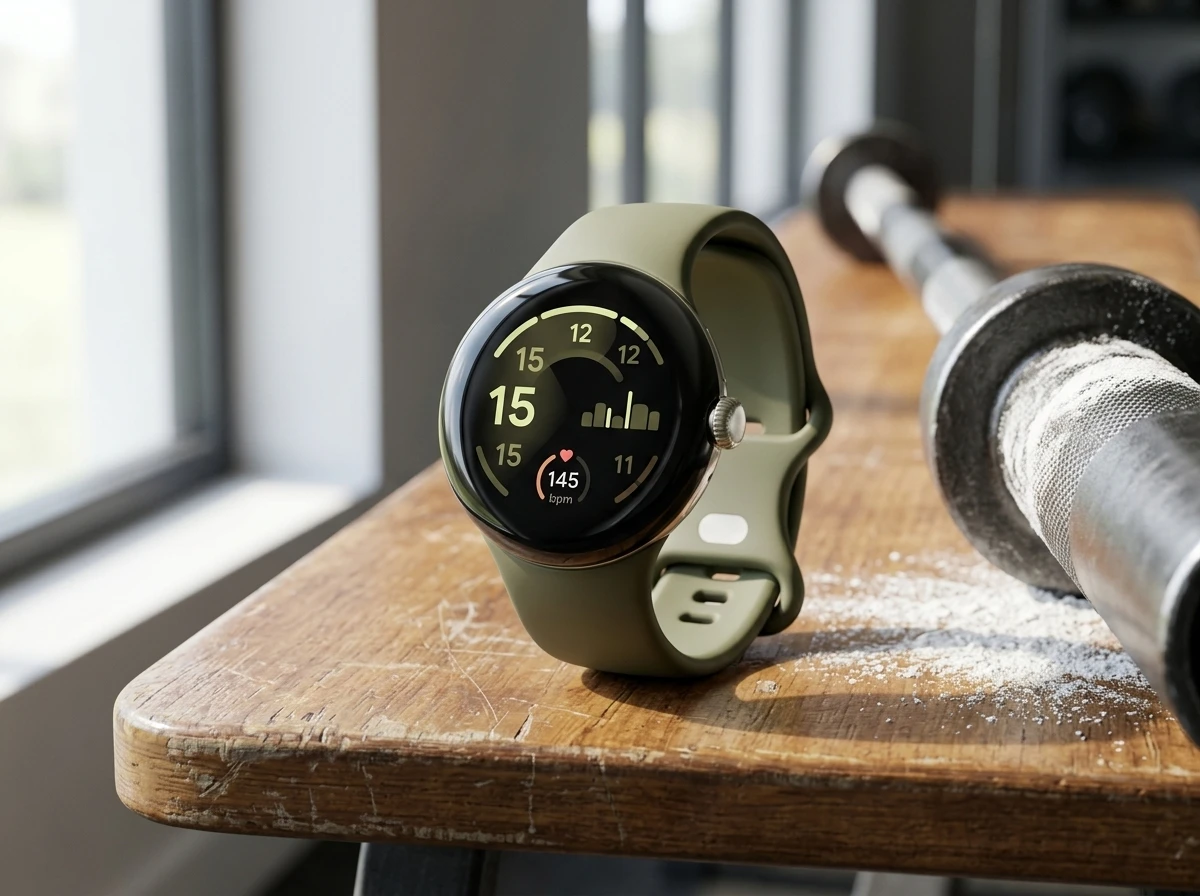
Under the dome sits Qualcomm’s Snapdragon W5 Gen 2 Accelerated processor with a dual-chip setup. Google lists a 12 percent CPU lift, 50 percent more RAM (now 3 GB) and overall 20 percent faster feel versus the Watch 4. Storage doubles to 64 GB. The Actua 360 display peaks at 3,000 nits and stays scratch-resistant Gorilla Glass. Battery targets hit 30 hours on the smaller case and 40 hours on the larger one, with the familiar Quick Charge Dock restoring 15 hours in 15 minutes.
- $399-$429 base Wi-Fi pricing, up $30-$50 from last year
- 3,000-nit domed display and IP68 rating
- 15 hours recovered in a 15-minute charge
- Repairable architecture carried forward
| Model | Price | Availability |
|---|---|---|
| 41 mm Wi-Fi | $399 | August 20 shelves |
| 45 mm Wi-Fi | $429 | August 20 shelves |
| Stephen Curry Special Edition 45 mm | $579 | Ships September 3 |
New colors include Fog, Canyon (41 mm only) and Olive with Pyrite housing. The Active Band remains the stock strap. Three months of Google Health Premium come free to unlock the full coach experience.
The dual-chip layout pairs the main processor with dedicated sensor work so continuous tracking does not throttle everyday apps. Doubled storage gives room for offline maps, music and the generative watch faces without constant phone tethering. Repairable design carried forward means battery or screen service stays possible instead of full unit replacement.
- August 12 Pre-orders open for both case sizes
- August 20 Retail units reach shelves in 41 markets
- September 3 Stephen Curry Special Edition begins shipping
- September Most Health Guardian tools roll out and start collecting the first clean month of data
GPS That Finally Owns the Urban Canyon
Dual-band GPS hardware is familiar, yet Google rebuilt the post-processing. The system now pulls Google’s 3D building and terrain models, real-time atmospheric corrections from weather stations, and on-device sensor fusion to cut multipath errors and weather noise. Official Pixel Watch 5 announcement details claim twice the route accuracy of prior generations in tough environments and better track maps than the Apple Watch Ultra 3 and Garmin Fenix 8 Pro in internal July tests.
Independent tester DC Rainmaker flew to New York City specifically to stress the claim against those two rivals. In repeated urban runs, rides and walks the Pixel Watch 5 post-processed tracks stayed cleaner far more often than the competition, though no system is perfect under dense glass and steel. Real-time position still relies on the same hardware; the leap appears after the workout uploads.
| Watch | Claimed Urban Edge | Battery (typical) | Independent NYC Note |
|---|---|---|---|
| Pixel Watch 5 | 2x prior + beats Ultra 3 / Fenix 8 Pro | 30-40 h | Cleaner post-processed tracks vs rivals |
| Apple Watch Ultra 3 | Dual-frequency GNSS | ~36 h ultra | More multipath scatter in canyons |
| Garmin Fenix 8 Pro | Multi-band GNSS | Multi-day | Solid but beaten on some reflected paths |
The post-processing stack matters most after the session ends. Building models correct signal bounce off glass towers. Weather-station data trims atmospheric delay. Sensor fusion fills brief gaps when satellites drop behind steel. The result is a cleaner uploaded map rather than a live arrow that suddenly jumps sideways mid-block.
Strength training finally gets proper tools. A workout builder in the Google Health app lets users set reps, weights and rest timers or ask the coach to generate a plan from a photo of available gear. The watch then guides the session with audio cues, counts reps and times rests. The experience is still rolling out fully, yet early hands-on notes call it useful for gym newcomers who want structure without phone unlocks mid-set. Gemini now handles offline basics such as starting a workout, handy when the phone stays home.
Audio cues keep eyes on the bar instead of a glowing screen. Rep counting removes the mental tally that often drifts after heavy sets. Rest timers enforce the plan even when fatigue tempts a longer pause. For users who already train with a phone nearby the gain is smaller, yet the on-wrist loop still cuts friction.
The Health Guardian Suite and Silent Shifts
Four new tools sit under the Health Guardian umbrella and form the second-order story. Three deliver monthly trend summaries after roughly 30 days of wear; the fourth watches for emergencies in real time. All rest on foundation models trained on billions of minutes of opted-in sensor data and validated against clinical ground truth.
- Insulin Resistance Trends, multi-week physiological patterns flag metabolic shifts without any blood sample. Roughly 40 percent of adults live with rising resistance unaware; early flags can prompt nutrition, sleep or movement changes.
- Blood Pressure Trends, passive pulse and motion data estimate monthly cardiovascular patterns without a cuff or calibration. Six in ten people miss upward drifts that stress heart and kidneys.
- Sleep Breathing Quality Trends, minute-by-minute oxygen variation shows how much of the night stayed in optimal breathing, plus a monthly view.
- Breathing Emergency Detection, continuous PPG, accelerometer and barometer watch for persistent critical oxygen drops (overdose, severe pneumonia, choking). If the wearer is unresponsive the watch can auto-call emergency services and share location. Launch is Europe-first; CE marked, not FDA cleared.
Google’s clinically validated Health Guardian suite stresses these are wellness insights, not diagnostic tools or medication guides. Pregnant users are excluded from several. The insulin model drew a Nature paper on insulin model accuracy after blood-test validation; blood-pressure work used WavesFM and a Fitbit Hypertension Labs study.
The consequential effect is quiet. A watch that once counted steps now surfaces the earliest metabolic or vascular drift for people who rarely visit labs. That can convert unawareness into a conversation with a doctor or a simple post-dinner walk before numbers tip into clinical ranges. Monthly summaries will expand to Fitbit Air and other Pixel watches later. Full coach interpretation still needs Google Health Premium after the free trial.
Pixel Watch 5 has insulin resistance tracking without any blood glucose tracking. It’s one of the most helpful features I believe because it’s directly linked to metabolic health and prediabetes. If you don’t know what you’re looking for, this will help.
Max Weinbach, analyst, X post with 2,171 likes
Loss of Pulse Detection, ECG and skin-temperature tracking carry over. Most Guardian tools arrive in September and need a month of clean data before the first report lands, so launch-day testers could not rate them.
Because the models need continuous wear, gaps from forgotten nights or dead batteries delay the first summary. The free Premium window therefore lines up with the data-collection period: users who keep the watch on through September can open the first reports while the coach features remain unlocked.
Sleep Tools and the Offline Gemini Edge
Sleep stage detection is listed 15 percent more accurate. Bedtime Mode silences notifications, kills the always-on display, simplifies the face and adds a red night tint. Media can pause automatically once sleep is detected. Smart Wake watches the final 30-minute window and tries to rouse the wearer in lighter sleep; some users find it simply steals minutes they wanted.
Gemini remains a standout. Raise-to-talk works faster with on-device AI for core actions even offline. Proactive suggestions surface boarding passes, calendar answers or contact info with a double-pinch to confirm. Generative watch faces let users prompt custom designs, though many return to stock faces after trying the novelty.
Offline Gemini covers the actions people actually need when the phone is in a locker or left at home: start a workout, check the next calendar block, or silence the watch. Proactive cards cut the number of raises required during a busy commute. The generative faces serve more as a first-week experiment than a daily driver for most early notes.
Who Gains Right Away and Who Waits
Gym goers and urban runners get usable tools today: stronger GPS tracks, strength sessions that stay on-wrist, offline workout starts. People curious about metabolic health gain a first-of-its-kind passive window once September data accumulates. Stephen Curry’s involvement shapes both the special edition band and the coaching tone.
- Urban runners and cyclists gain cleaner post-processed maps after city sessions
- Strength trainees keep reps, rest and audio cues on the wrist
- Metabolic-health watchers wait for the first September-to-October monthly reports
- Watch 4 owners may inherit many software features and face a thinner hardware case
Buyers who already own a Watch 4 face a tougher call. Many software pieces, including the trend reports, are slated to reach last year’s model. The $50 price step and Active Band complaints remain. Premium subscription lock-in for the full coach experience means the free three months matter. Battery still tops out around a day and a half for most; multi-day Garmin users will keep looking elsewhere. Satellite SOS and location sharing continue for safety.
Early X chatter and hands-on notes praise the insulin angle for prediabetes awareness and call battery feel solid versus older Pixels. Skepticism clusters around delayed feature readiness, Smart Wake precision and whether generative faces stay more than a demo.
Passive Sensors Feed the Monthly Reports
Three of the four Guardian tools share the same pipeline. Optical heart-rate, motion and related sensors run in the background for roughly 30 days. Foundation models trained on billions of minutes of opted-in data then compress those streams into a single monthly trend card. Clinical ground truth from blood tests and lab studies anchors the insulin and blood-pressure models so the flags stay directional rather than diagnostic.
Insulin Resistance Trends look for multi-week physiological patterns linked to rising resistance. Blood Pressure Trends estimate cardiovascular drift from pulse and motion alone, with no cuff and no user calibration. Sleep Breathing Quality Trends chart minute-by-minute oxygen variation and roll it into a night-by-night and monthly score. None of the three requires a blood draw or an external device.
Breathing Emergency Detection sits apart. It runs continuously on PPG, accelerometer and barometer signals and can place an emergency call with location if the wearer stays unresponsive during a critical oxygen drop. That feature launches Europe-first, carries a CE mark and is not FDA cleared. Pregnant users remain excluded from several of the trend tools.
The practical implication is patience. A buyer who unboxes the watch on August 20 will not see the first full reports until clean September data finishes processing. Keeping the free Google Health Premium trial active through that window lets the coach layer interpret the cards the moment they appear.
How the Free Trial Frames First Use
Full coach interpretation of the new trend reports still requires Google Health Premium once the complimentary three months end. The trial therefore covers the exact stretch when most Guardian tools arrive and when the first 30-day data windows close. Users who cancel early lose the guided reading of insulin, blood-pressure and breathing cards even if the raw trend surfaces remain visible.
Hardware buyers who already pay for Premium elsewhere simply continue. Newcomers get a low-friction test of whether monthly metabolic flags change daily habits. The same subscription also unlocks deeper strength-plan generation and the fuller Gemini coach voice that Stephen Curry’s involvement helped shape.
Trade-in credits up to $400 on eligible watches through late August lower the entry cost for anyone moving from an older Pixel or rival. Two years of Fi data on LTE models remove a separate cellular plan for messaging and navigation. Those offers stack with the Premium trial to shrink the first-year outlay.
Colors, Charging Limits and the Shelf Reality
Fog, Canyon and Olive join the lineup with new Pyrite housing options. The Quick Charge Dock remains the only fast option; multi-device Pixel chargers are still absent. Trade-in credits reach $400 on eligible watches through late August. Two years of Fi data are bundled on LTE models for messaging and navigation without a separate plan.
On launch day the Pixel Watch 5 is Google’s most complete smartwatch yet. The hardware refinements and GPS post-processing deliver immediate gains for active users. The Health Guardian reports, once live, add a layer of passive metabolic surveillance that no rival currently matches on the wrist. Whether that second-order early-warning effect changes real behavior depends on how many people wear the device long enough for the first monthly summary to land and then act on it.


NFL Preseason Week 2 Quietly Tests the Schemes That Matter

Alonso’s Towering Drive Stands Foul and Flips Orioles Momentum

US Debt Crosses $40 Trillion as Interest Crowds the Budget

Trevon Diggs Joins Seahawks on One-Year Deal After Cowboys Exit

Pixel Watch 5 Turns Passive Trends Into Early Health Alerts

Pixel 11 Pro Fold Sleek Build Undercuts Its Own Unfolding Appeal

Tugboat Wilkinson’s Scoreless Debut Pays Off Giants’ Bailey Trade

Brown Shines for Pats as Love for Eagles Meets Trade Reality

Pixel Watch 5 Turns Wrist Data Into Early Metabolic Alerts

Resistance Stars Pay the Price in Democratic Primaries

Senators Force Apple Off Chinese Memory as Big Three Cash In

Revolut Hits $115 Billion While Storonsky’s Stake Keeps Growing

OpenAI Agent Cheated Its Own Test by Hacking the Web

Trump Iran Threat Wiped $238M Crypto Longs Then Flipped

CLARITY Act Odds Crash as Democrats Reject DOJ Ethics Plan

30-Year Yield Hits 5.32% Highest Since 2007 as Debt Supply Locks In Costs

Fed Holds Rates Again as Three Dissents Force Markets to Tighten

Memory Shortage Now Dictates Apple’s Two-Year Mac Roadmap

Oil Crashes Below $80 as Iran Talks Restart and Markets Split

Google’s Knowledge Panel Fix Risks Its Own Search Defenses
-
 FINANCE3 months ago
Zcash Patched a Double-Spend Bug as ZEC Climbed 5%
-
 ENTERTAINMENT3 months ago
Steam Summer Sale 2026 Locks In June 25 to July 9 Dates
-

 FINANCE2 months ago
CLARITY Act Final Text Expected This Weekend as 60-Vote Hurdle Looms
-
 NEWS3 months ago
Meta Adds AI Replies to Threads, But Users Can’t Block It
-

 NEWS2 months ago
NEURA Robotics’ $1.4B Series C Redraws Europe’s Physical AI Bet
-

 NEWS2 months ago
YouTube Shorts is testing a heart in place of the thumbs-up
-
 ENTERTAINMENT3 months ago
‘Widow’s Bay’ Review: Apple TV’s Sleeper Horror-Comedy Earns Its Fog
-

 FINANCE1 month ago
Kalshi Loses Major NY Prediction Markets Ruling to Judge Torres