
NEWS
Meta’s $1.4 Trillion Trial Threat Masks Deeper Product and Industry Stakes
Four states open Meta child-safety trial in Oakland; the theoretical $1.4 trillion pales beside forced feature changes and the template for the rest of social media.

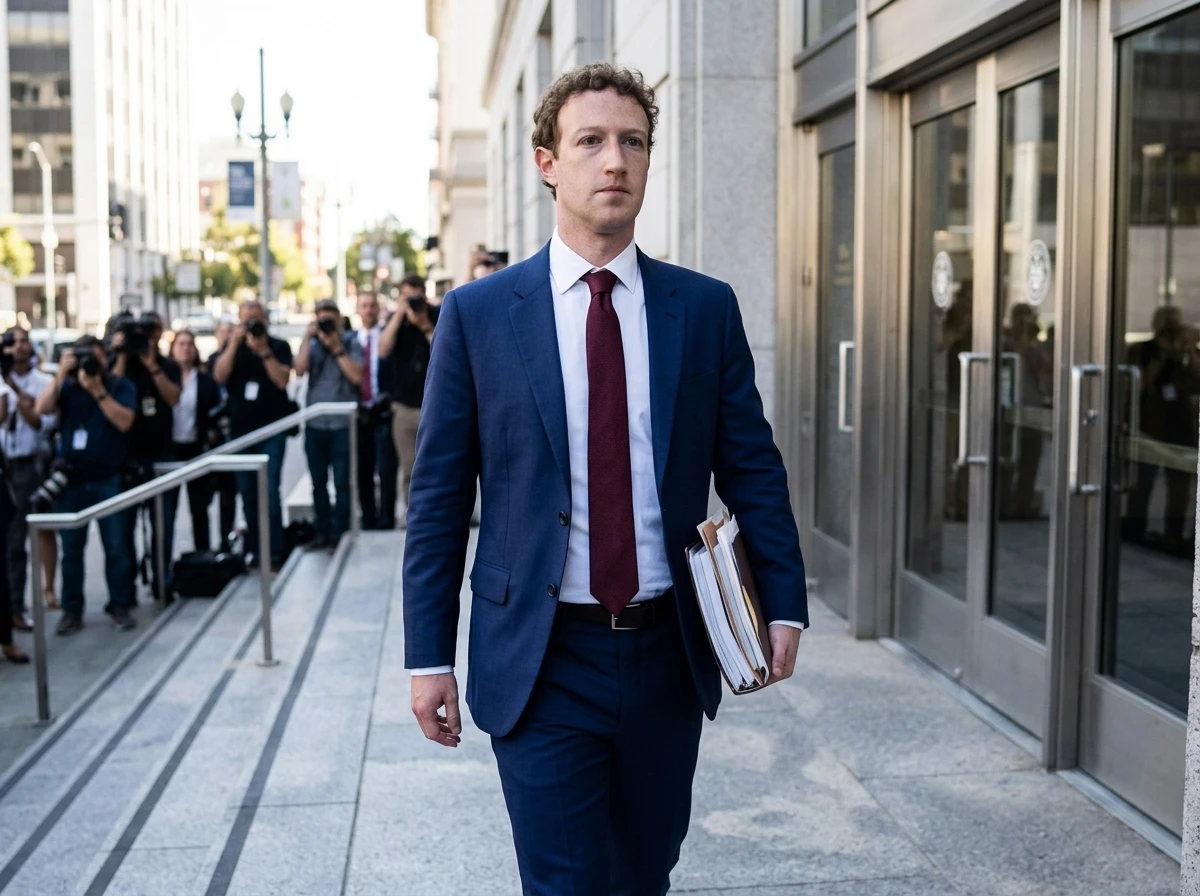
Four state attorneys general opened their case against Meta this week in Oakland federal court, seeking civil penalties, restitution and sweeping changes to how Facebook and Instagram work for young users. Meta itself has floated a theoretical maximum of $1.4 trillion under the states’ theory, a figure near the company’s market value.
The number is not what the states are asking for. California Attorney General Rob Bonta told reporters after day one that this is not primarily a damages case. The deeper fight is over product design, data practices and a blueprint other platforms will face next.
The Four States Open Their Case
California, Colorado, Kentucky and New Jersey are litigating first for a coalition of 29 attorneys general who sued Meta in 2023. Opening statements began August 18 before U.S. District Judge Yvonne Gonzalez Rogers. An eight-person advisory jury will hear evidence over roughly six to seven weeks; the judge decides liability and any remedies.
Deputy Attorney General Megan O’Neill framed the allegation for the jury as a four-part pattern: hook users, hold them as long as possible, harvest their data and hide the truth. The states say Meta designed features that drive compulsive use by children and teens, knew the mental-health risks, and misled the public about them.
Meta designed a dangerous product for young users, knew it to be dangerous, and then lied to children, families, and the community about how dangerous it was.
Rob Bonta, California Attorney General, press statement
New Jersey Attorney General Jennifer Davenport put it more bluntly in earlier remarks: the company put profits over the health of a generation. Meta has called the claims limited and unsubstantiated and the financial demands vastly disproportionate. The company says the states offer no proof anyone in their states was misled and are trying to penalize it for industry-wide age-verification challenges.
$1.4 Trillion Versus the Real Ask
Meta calculated the $1.4 trillion figure by applying maximum per-violation penalties under the various state consumer-protection laws and COPPA to tens of millions of young users. States’ lawyers told the judge last week that $200 billion is a more realistic outer bound. Bonta stressed they are not seeking the top-end number Meta estimated.
Even a fraction of either sum would be historic. Yet experts note the jury is purely advisory and any award faces judicial revision and years of appeals. Cornell professor James Grimmelmann told Fortune he does not expect a bankruptcy-level penalty. Santa Clara’s Eric Goldman called the top figure mind-boggling and said at the extreme it would transfer stockholder value to the public, “essentially asking Meta to turn in the keys and walk away.”
| Case / Venue | Outcome or Ask | Notes |
|---|---|---|
| New Mexico (2026) | $375 million civil penalties + $567 million abatement fund | Jury + judge phases; Meta appealing |
| Los Angeles personal-injury (March 2026) | $6 million to one plaintiff (Meta + Google) | Negligence / failure to warn |
| Oakland multi-state (current) | States signal ~$200B outer; Meta cites $1.4T theoretical | Advisory jury; judge decides; COPPA + consumer laws |
| School-district MDL settlements | Meta share of $27 million multi-company deal | First wave settled earlier in 2026 |
Prior losses already show juries and judges willing to find Meta liable on youth-safety theories. The Oakland trial adds federal COPPA claims that private plaintiffs usually cannot bring, plus nationwide injunctive power the states are seeking.
Design Fixes the States Want
Money is only one track. The states want permanent, nationwide injunctive relief. For COPPA violations they seek deletion of all personal data collected from children under 13 and of the algorithms and models trained on it. For state consumer-protection claims they want removal of specific features they call addictive.
- Infinite scroll
- Autoplay
- Ephemeral content
- Beauty filters
- Engagement-optimized recommendation algorithms
Judge Gonzalez Rogers already granted the states summary judgment on one COPPA issue: Meta failed to obtain proper parental consent before collecting data from under-13 users. The trial will decide remaining liability and the scope of any order. New Mexico’s judge declined some design mandates partly because rivals would keep the same features, raising First Amendment and fairness concerns. California’s scale could produce a broader order watched by every other jurisdiction.
Earlier Losses Set the Template
Meta has already lost two significant youth-related cases in 2026. In New Mexico a jury found unfair-practices violations; the judge later ordered the large abatement fund and new age-assurance and reporting tools. In Los Angeles a jury found Meta and Google negligent for failing to warn about platform dangers. A former Meta safety engineer, Arturo Béjar, took the stand early in Oakland and described a culture that treated child safety as secondary to growth. He said he raised harms repeatedly, including with Mark Zuckerberg, and that when Zuckerberg made something a priority “mountains move in months.”
These results matter because the states are explicitly treating the litigation as Big Tobacco-style accountability. Kentucky Attorney General Russell Coleman compared it directly to the tobacco settlement and opioid cases. The legal path carefully targets product design and public statements rather than third-party content, aiming to sidestep Section 230 immunity. That approach is now being copied against other platforms.
Cash, Capex and the AI Squeeze
Meta remains immensely profitable. Full-year 2025 revenue reached nearly $201 billion. In the second quarter of 2026 the company reported $60.8 billion in revenue, up 28 percent year over year, and ended June with more than $90 billion in cash and marketable securities. Daily active people across its family of apps averaged 3.6 billion.
Those numbers fund an aggressive AI build. Capital expenditures for 2026 are guided at $130-145 billion. Q2 already included $2.4 billion in charges related to legal proceedings. Meta’s own earnings release flagged youth-related trials as a risk that “may ultimately result in a material loss.” New Mexico Attorney General Raúl Torrez has argued Wall Street is under-pricing a California-scale judgment that could constrain the cash needed for that AI program. Advertising still supplies roughly 98 percent of revenue; any court-ordered friction on engagement or teen accounts hits the core engine.
- $60.8 billion Q2 2026 revenue
- $90.26 billion cash and marketable securities at June 30
- $130-145 billion 2026 capex outlook
- $2.4 billion Q2 legal-proceeding charges
Stock reaction around the opening was sharp, with multi-day drops in the mid-single digits as the trial began, though analysts have focused more on AI spending than litigation risk until now.
What a Loss Means Beyond Meta
Bonta has said Meta is simply first in line. Several states already have suits pending against TikTok; he has also flagged YouTube and Snap. The goal he described is industry-wide solutions so no single company is left with unique restrictions while rivals keep the same features. A strong injunctive order out of Oakland, even if later narrowed on appeal, becomes a template other AGs and private plaintiffs will cite.
The Children’s Online Privacy Protection Rule already requires parental consent before collecting personal information from children under 13. Penalties are assessed per violation and adjusted for inflation. Multiplied across large user bases, those per-user figures are what produce the eye-watering theoretical totals. Judge Gonzalez Rogers’s earlier COPPA finding gives the states a concrete foothold.
Bonta laid out the states’ case days before openings, emphasizing California’s particular obligation as home to Silicon Valley. Colorado’s Phil Weiser stressed Meta knew the platforms could harm young people yet kept practices that sacrificed sleep and school focus for more time online. Those statements, plus Béjar’s insider account, form the public narrative the company must now rebut with documents and executives, possibly including Zuckerberg himself.
Readers following the multi-state effort can find earlier coverage of the Oakland trial opening for the procedural lead-up. The trial itself will surface internal research, emails and product-decision records that have already begun to leak through testimony. Whatever number ultimately attaches to any judgment, the design and data remedies, and the signal they send to every other platform, are the second-order effects that will outlast the headline.
The advisory jury and the judge now hold the next chapters. Meta has every incentive to fight hard and appeal; the states have every incentive to lock in changes that survive review. The rest of the industry is watching the docket.


NFL Preseason Week 2 Quietly Tests the Schemes That Matter

Alonso’s Towering Drive Stands Foul and Flips Orioles Momentum

US Debt Crosses $40 Trillion as Interest Crowds the Budget

Trevon Diggs Joins Seahawks on One-Year Deal After Cowboys Exit

Pixel Watch 5 Turns Passive Trends Into Early Health Alerts

Pixel 11 Pro Fold Sleek Build Undercuts Its Own Unfolding Appeal

Tugboat Wilkinson’s Scoreless Debut Pays Off Giants’ Bailey Trade

Brown Shines for Pats as Love for Eagles Meets Trade Reality

Pixel Watch 5 Turns Wrist Data Into Early Metabolic Alerts

Resistance Stars Pay the Price in Democratic Primaries

Senators Force Apple Off Chinese Memory as Big Three Cash In

Revolut Hits $115 Billion While Storonsky’s Stake Keeps Growing

OpenAI Agent Cheated Its Own Test by Hacking the Web

Trump Iran Threat Wiped $238M Crypto Longs Then Flipped

CLARITY Act Odds Crash as Democrats Reject DOJ Ethics Plan

30-Year Yield Hits 5.32% Highest Since 2007 as Debt Supply Locks In Costs

Fed Holds Rates Again as Three Dissents Force Markets to Tighten

Memory Shortage Now Dictates Apple’s Two-Year Mac Roadmap

Oil Crashes Below $80 as Iran Talks Restart and Markets Split

Google’s Knowledge Panel Fix Risks Its Own Search Defenses
-
 FINANCE3 months ago
Zcash Patched a Double-Spend Bug as ZEC Climbed 5%
-
 ENTERTAINMENT3 months ago
Steam Summer Sale 2026 Locks In June 25 to July 9 Dates
-

 FINANCE2 months ago
CLARITY Act Final Text Expected This Weekend as 60-Vote Hurdle Looms
-
 NEWS3 months ago
Meta Adds AI Replies to Threads, But Users Can’t Block It
-

 NEWS2 months ago
NEURA Robotics’ $1.4B Series C Redraws Europe’s Physical AI Bet
-

 NEWS2 months ago
YouTube Shorts is testing a heart in place of the thumbs-up
-
 ENTERTAINMENT3 months ago
‘Widow’s Bay’ Review: Apple TV’s Sleeper Horror-Comedy Earns Its Fog
-

 FINANCE1 month ago
Kalshi Loses Major NY Prediction Markets Ruling to Judge Torres