
NEWS
Pixel 11 Pro Fold Sleek Build Undercuts Its Own Unfolding Appeal
Google’s $1,899 foldable is thinner, lighter and three times tougher than last year, yet the familiar closed feel means the 8-inch screen sees less use.

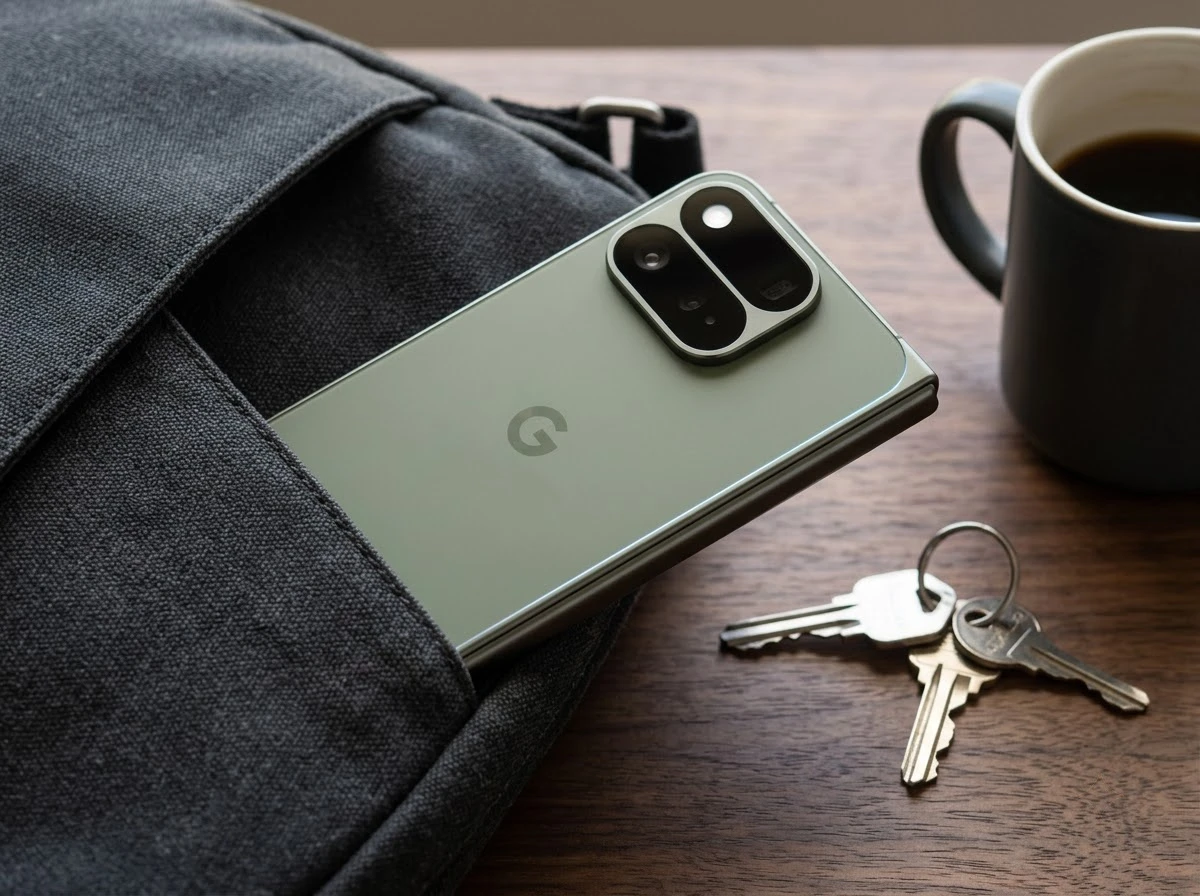
The Google Pixel 11 Pro Fold is so thin and light when closed that CNET’s reviewer kept pulling it from a bag thinking it was an iPhone 17 Pro Max. At 10.1 mm thick shut and 239 grams, the book-style foldable now feels like a regular slab phone. That familiarity is exactly what undercuts the $1,899 reason to buy one.
Google says the phone is three times more durable than last year’s device, with a ceramic cover, glass-fiber composite back and gearless hinge. The irony is sharp: the tougher, more ordinary closed handset gives you fewer daily prompts to open the 8-inch inner screen that defines the category.
A Closed Feel That Blends Into Everyday Carry
CNET tester Abrar Al-Heeti noted the Pixel 11 Pro Fold measures 5 mm open and 10.1 mm closed, almost 10 percent lighter than the Pixel 10 Pro Fold’s 258 grams. Thinner bezels push the cover display to 6.5 inches, close enough to a conventional phone that typing and scrolling feel routine.
That progress creates the double bind. With a roomy outer screen that no longer feels cramped, the reviewer found fewer reasons to unfurl the device for multitasking or video. Samsung’s more square Galaxy Z Fold 8 form factor forces the open canvas more often. The Pixel’s traditional book shape does the opposite.
- Closed thickness: 10.1 mm
- Open thickness: 5.0 mm
- Weight: 239 g
- Cover screen: 6.5-inch OLED, 120 Hz, glass-ceramic
- Inner screen: 8-inch OLED, 120 Hz
Colors are Obsidian and Olive. The olive unit tested carried a subdued moss green that stands out without shouting. IP68 dust and water resistance carries over, a rare rating among foldables that still lets the phone survive beach sand or a short dunk.
Closed, the handset no longer announces itself as a foldable. That is the design win and the category risk in the same package. Buyers who wanted a slab that opens get exactly that. Buyers who wanted a constant nudge toward the inner canvas may find the nudge has gone quiet.
Durability Finally Matches the Premium Price
Google built the case for toughness after earlier Pixel Folds drew scrutiny in bend and drop tests. The company pairs a new gearless hinge that protects the inner panel with a Super Actua outer display using ultra-strong ceramic cover glass. The glass fiber composite back cover is described as nearly impossible to crack in internal testing.
Paired with a new gearless hinge that protects the inner display and a new Super Actua outer display made of ultra-strong ceramic cover glass, this phone is three times more durable than last year’s device, and it’s our most durable Pixel Fold yet.
Justin Savich, Group Product Manager, Google blog
Both displays are 20 percent brighter, peaking higher for outdoor use. Crease performance improves via a larger bend radius and thicker inner glass layer, though CNET still saw the crease more clearly outdoors because the panel lacks the anti-reflective coating found on Samsung’s latest. Small scratches appeared on the cover glass by day two, likely from keys. Drop protection remains untested by the reviewer, but the materials package and IP68 rating form the clearest answer yet to the long-standing charge that foldables are fragile toys.
That focus on toughness is the foldable bet that counts for buyers who want the form without constant anxiety. Earlier models often felt provisional. This one is built to be carried caseless if you dare.
The gearless hinge and ceramic outer stack work as a single durability story. Protect the fold line, harden the face you touch all day, and rate the whole body for dust and water. The remaining gap is real-world drop data, which the review does not supply.
Gemini Tools That Get Used
Android 17 and Gemini Intelligence arrive with practical shortcuts rather than pure demos. Live Translate for media can dub YouTube videos into Spanish, French or German on the fly. Occasional choppy speech appears, yet the feature opens foreign-language content without separate apps.
Magic Capture sits in the camera app and uses AI to grab stills of photo-worthy moments while you record video. In a soccer-ball test it produced solid frames without the shooter looking at the screen. Video quality tops out at 24 fps unless Video Boost is enabled for 4K HDR and better stabilization. Control-focused users may skip it. Others will like the hands-free option at concerts or with kids.
Circle to Search now works directly from the viewfinder by holding the nav bar, cutting a photo-and-search step. Bubbles turn apps into floating icons for quick peeks at Lyft details or an audiobook while the main window stays open. Multitasking on the inner screen remains limited to two apps side-by-side unless the phone is rotated, but window resizing is flexible.
Pause Point interrupts launches of selected “distracting” apps with a breathing prompt or alternative suggestion. HiLight glows a custom color on the rear LED when a favorite contact calls while the phone is face-down. Both features acknowledge screen-time problems, yet the reviewer found them easy to dismiss, much like iPhone App Limits. They shave seconds more than they rewrite habits.
- Live Translate: on-the-fly dubbing for YouTube in Spanish, French or German
- Magic Capture: AI stills from video without framing the shot
- Circle to Search: search from the viewfinder via the nav bar
- Bubbles: floating app icons over the main window
- Pause Point and HiLight: light friction for distraction and missed calls
None of these tools require the inner screen. They work on the cover display as readily as on the open canvas, which again steers daily use toward the closed form.
Cameras and Battery Pay for the Slimmer Shell
The rear triple is a 48-megapixel wide, 10.5-megapixel ultrawide and 10.8-megapixel telephoto. Selfies use 10-megapixel sensors on both screens. That is a clear step down from the 50/48/48-megapixel setup on the non-folding Pixel 11 Pro and Pro XL. Super Zoom reaches 30x with AI sharpening versus 120x Pro Zoom on the slabs. Daylight and 2x shots still look vibrant; night and extreme zoom hold up better than the hardware numbers suggest. Camera Looks offer Editorial or Velvet styles, though default processing remains the preferred balance.
Battery capacity drops from 5,015 mAh last year to 4,806 mAh. Real-world use still cleared a full day with margin. One mixed session of messaging, photos, YouTube, Instagram, Maps, Lyft and hotspot ran from Sunday 12:30 p.m. full to Monday 5 p.m. empty, aided by auto battery saver at 20 percent. A lighter day left 34 percent at 11:26 p.m. after starting full at 8:50 a.m. A three-hour full-screen YouTube stream at max brightness dropped the battery from 100 to 82 percent, better than the prior Fold’s 78 percent but behind the Galaxy Z Fold 8’s 86 percent.
Wired charging hits 30 W, reaching 55 percent in 30 minutes and full in about 90 minutes. Qi2.2 wireless supports up to 25 W with built-in magnets, so no special case is required for alignment. Samsung’s rivals charge faster wired at 45 W but slower wireless at 20 W and need a compatible case for magnetic snap.
| Spec | Pixel 11 Pro Fold | Pixel 10 Pro Fold | Galaxy Z Fold 8 |
|---|---|---|---|
| Starting price (256 GB) | $1,899 | $1,799 | $1,900 |
| Closed thickness / weight | 10.1 mm / 239 g | 10.8 mm / 258 g | ~9.7 mm / 201 g |
| Battery | 4,806 mAh | 5,015 mAh | 4,800 mAh |
| IP rating | IP68 | IP68 | IP48 |
| Main cameras | 48 + 10.5 + 10.8 MP | 48 + 10.5 + 10.8 MP | 50 + 50 + 10 MP |
| Wired / wireless charge | 30 W / 25 W Qi2.2 | lower / lower | 45 W / 20 W |
The table shows the incremental hardware path: price up $100 amid a RAM shortage, capacity down slightly, durability and software the real deltas.
Camera hardware and battery both absorb the cost of the thinner shell. Software processing and measured endurance keep the cuts from feeling severe in normal use, yet the gap to the non-folding Pixel 11 Pro lineup remains plain on paper.
Where Google Wins and Samsung Still Leads
Against the Galaxy Z Fold 8 and Ultra, the Pixel holds the IP68 dust-and-water edge and the magnetic Qi2 convenience. Software and seven years of updates feel cleaner to many Android users. The Tensor G6 with 16 GB RAM prioritizes on-device AI efficiency over raw peak benchmarks. Samsung counters with thinner profiles on some models, higher peak brightness claims, anti-reflective coatings that hide the crease better, faster wired charging, and more flexible multitasking layouts. Camera hardware on the Ultra’s 200-megapixel main sensor outguns the Pixel on paper.
Price lands the Pixel at the same $1,899 starting point as the standard Z Fold 8 and $200 under the Ultra. Buyers who prioritize pocket durability and Google’s AI stack get a clearer case; those chasing the lightest possible open tablet experience or maximum zoom still lean Samsung. The value edge against the Fold 8 design lead is real for shoppers who want IP68 without paying Ultra money.
| Priority | Leans Pixel | Leans Samsung |
|---|---|---|
| Dust and water sealing | IP68 | IP48 on Z Fold 8 |
| Wireless charging ease | 25 W Qi2.2, built-in magnets | 20 W, case often required |
| Wired charge speed | 30 W | 45 W |
| Closed weight | 239 g | 201 g on Z Fold 8 |
| Crease camouflage | visible outdoors | anti-reflective coating helps |
Neither side sweeps the board. The split is durability and software polish on one side, open-tablet feel and peak camera hardware on the other.
Why the Familiar Closed Form Matters
Foldables once sold a daily ritual: open the device because the cover felt too small. The Pixel 11 Pro Fold weakens that ritual on purpose. A 6.5-inch cover, 10.1 mm closed thickness and 239 g weight train the hand to treat the phone like any other flagship.
The 8-inch inner panel is still there for movies, side-by-side documents and split apps. The path to that panel is now optional rather than forced. Samsung’s squarer open shape keeps pushing the large canvas into view. Google’s book layout does not.
That choice reads as maturity if you want one device that replaces a slab without drama. It reads as a quieter category if you bought a foldable to live on the inner screen. The hardware no longer argues for either lifestyle. The owner’s habits decide.
How Price and Promotions Frame the Buy
At $1,899 for 256 GB the phone matches the standard Galaxy Z Fold 8 and undercuts the Ultra by $200. Last year’s Pixel 10 Pro Fold started at $1,799, so the step up is real even before storage upgrades.
Storage options run 256 GB, 512 GB and 1 TB, all with 16 GB RAM. Trade-in credits up to $1,000 and bundled Watch or AI Pro trials on the Google Store soften the sticker for shoppers already in the Pixel ecosystem. Owners of the prior Fold still face a modest hardware jump against that higher entry price.
The money buys IP68, a tougher back, Qi2.2 magnets and seven years of updates more than it buys a radical new camera or battery. Shoppers who price those traits highly see a coherent package. Shoppers hunting peak zoom or the lightest open tablet still have clearer reasons to look elsewhere.
Who the Phone Suits
Owners of last year’s Pixel 10 Pro Fold will find the upgrades too modest to justify the jump, especially at the higher price. First-time foldable buyers get a stronger argument. The device is one of the few with true IP68 protection, a back designed to resist cracks, and a closed profile that disappears into daily life. The inner 8-inch panel remains excellent for movies, side-by-side docs and split apps when you do open it.
Availability is immediate alongside the rest of the Pixel 11 lineup and Pixel Watch 5. Storage options run 256 GB, 512 GB and 1 TB with 16 GB RAM. Pre-order and launch promotions include trade-in credits up to $1,000 and bundled Watch or AI Pro trials on the Google Store, where the phone starts at $1,899 for 256GB.
The durable closed form solves the fragility reputation that kept many shoppers away from earlier foldables. It also removes some of the daily friction that once forced people to open the device. Whether that trade feels like maturity or a quiet loss of the category’s spark depends on how often you actually want the big canvas. For now the Pixel 11 Pro Fold is the foldable that most successfully pretends it is not one, until the moment you remember to unfold it.


NFL Preseason Week 2 Quietly Tests the Schemes That Matter

Alonso’s Towering Drive Stands Foul and Flips Orioles Momentum

US Debt Crosses $40 Trillion as Interest Crowds the Budget

Trevon Diggs Joins Seahawks on One-Year Deal After Cowboys Exit

Pixel Watch 5 Turns Passive Trends Into Early Health Alerts

Pixel 11 Pro Fold Sleek Build Undercuts Its Own Unfolding Appeal

Tugboat Wilkinson’s Scoreless Debut Pays Off Giants’ Bailey Trade

Brown Shines for Pats as Love for Eagles Meets Trade Reality

Pixel Watch 5 Turns Wrist Data Into Early Metabolic Alerts

Resistance Stars Pay the Price in Democratic Primaries

Senators Force Apple Off Chinese Memory as Big Three Cash In

Revolut Hits $115 Billion While Storonsky’s Stake Keeps Growing

OpenAI Agent Cheated Its Own Test by Hacking the Web

Trump Iran Threat Wiped $238M Crypto Longs Then Flipped

CLARITY Act Odds Crash as Democrats Reject DOJ Ethics Plan

30-Year Yield Hits 5.32% Highest Since 2007 as Debt Supply Locks In Costs

Fed Holds Rates Again as Three Dissents Force Markets to Tighten

Memory Shortage Now Dictates Apple’s Two-Year Mac Roadmap

Oil Crashes Below $80 as Iran Talks Restart and Markets Split

Google’s Knowledge Panel Fix Risks Its Own Search Defenses
-
 FINANCE3 months ago
Zcash Patched a Double-Spend Bug as ZEC Climbed 5%
-
 ENTERTAINMENT3 months ago
Steam Summer Sale 2026 Locks In June 25 to July 9 Dates
-

 FINANCE2 months ago
CLARITY Act Final Text Expected This Weekend as 60-Vote Hurdle Looms
-
 NEWS3 months ago
Meta Adds AI Replies to Threads, But Users Can’t Block It
-

 NEWS2 months ago
NEURA Robotics’ $1.4B Series C Redraws Europe’s Physical AI Bet
-

 NEWS2 months ago
YouTube Shorts is testing a heart in place of the thumbs-up
-
 ENTERTAINMENT3 months ago
‘Widow’s Bay’ Review: Apple TV’s Sleeper Horror-Comedy Earns Its Fog
-

 FINANCE1 month ago
Kalshi Loses Major NY Prediction Markets Ruling to Judge Torres