
FINANCE
Strategy Buys Bitcoin at $80,318 After Summer Sales
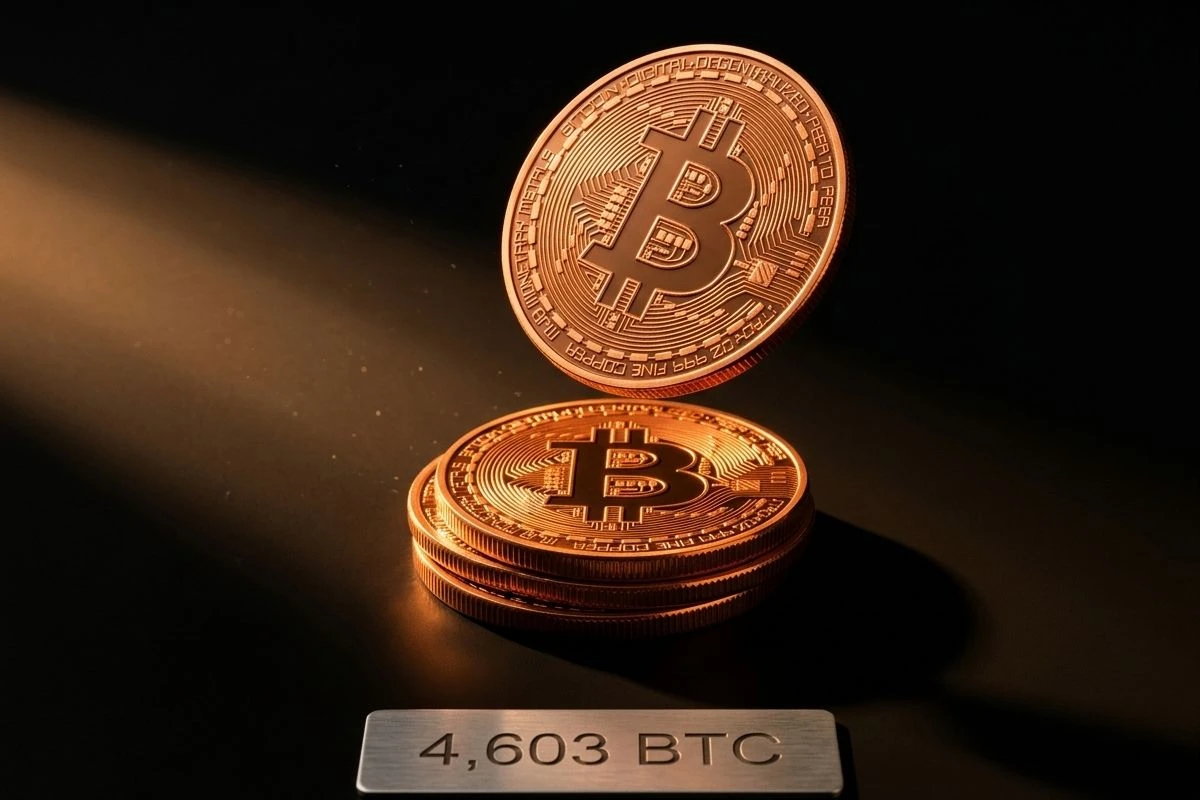
Strategy bought 4,603 bitcoin at $80,318 after selling 6,948 coins near the summer lows, funding the restock with fresh MSTR shares.

Strategy bought 4,603 bitcoin last week for $369.7 million, paying $80,318 a coin after selling thousands near $60,000 this summer. The Tysons Corner, Virginia, treasury company chaired by Michael Saylor filed the add on Monday, its first disclosed purchase since June 22.
Saylor had teed it up on Sunday with two words, “We’re ₿ack.” The 8-K that followed is a restart only if you skip the sales that came first.
https://x.com/saylor/status/2094033266906955896
Strategy Paid $80,318 After Selling Near $60,000
The coins were bought between August 24 and August 30, according to the filing and a matching note that said the firm acquired 4,603 bitcoin for $370 million. Fees are in that average. Holdings rose to 845,050 BTC, carried at $63.73 billion, or $75,412 a coin.
The new print sits about 6.5 percent above that long-run cost. Bitcoin had bounced from around $63,000 to a recent high above $81,000, and Strategy waited for that bounce. The last confirmed buy before the gap was 520 BTC on June 22 at $67,068, a small ticket compared with the spring’s weekly hauls.
Saylor posted the scoreboard on Monday: 4,603 BTC, $29 million more in USD Cash, $152 million of STRC retired, 0.0% net leverage, and $6.71 billion of dollar assets. The filing rounds the cash add at $30.0 million. Either way, bitcoin got a minority of the week’s new equity cash.
https://x.com/saylor/status/2094395804962152885
The Block put the stack near $66.1 billion at prices above $78,000, about $2.34 billion above cost, still more than 4 percent of the 21 million coin cap. MSTR traded around $128 after the note, up less than 1 percent on the day and up over 32 percent across the prior month, per TradingView figures cited with the original report.
The 6,948 Coins That Left the Treasury
The buying pause was not an empty calendar. From late May through August 10, Strategy disposed of 6,948 BTC for about $432.5 million, its first sales since December 2022. Several of those prints landed in the high $50,000s and low $60,000s, under the $75,000-class cost basis. Add the June 22 purchase back and the stack still peaked at 847,363 coins, which means Monday’s treasury is 2,313 coins short of that high.
The sales were small against the pile and against spot volume. They were not small against the company’s old line. After a $12.54 billion first-quarter loss tied to paper bitcoin declines, Saylor told analysts he was ready to break his own taboo on purpose.
We’ll probably sell some Bitcoin to fund a dividend just to inoculate the market, just to send the message that we did it.
Michael Saylor, Executive Chairman, Q1 2026 earnings call
The first ticket was theater. The later tickets paid preferred dividends, STRC buybacks, and the dollar reserve while MSTR sat in the $80s and issuing stock looked expensive. That stretch matched an earlier Saylor post on Strategy’s next move that offered a chart and no instruction.
THE SUMMER COIN MOVES
- June 1, 2026: Sells 32 bitcoin at $77,135, the first disposal since December 2022, for $2.5 million.
- June 22, 2026: Buys 520 bitcoin at $67,068, the last add before a 10-week gap.
- July 6, 2026: Sells 2,225 bitcoin at $60,773 and 1,363 bitcoin at $59,256 to fund preferred payouts and the dollar reserve.
- August 3, 2026: Sells 1,638 bitcoin at $63,957 for $104.73 million, split between dividends and STRC buybacks.
- August 10, 2026: Sells 1,690 bitcoin at $64,262 for $108.6 million, all of it into STRC repurchases.
- August 24-30, 2026: Buys 4,603 bitcoin at $80,318 for $369.7 million.
The August 10 block is the one still hanging over the “we’re back” line. An 8-K covering that week recorded 1,690 bitcoin sold in August at $64,262, more than $16,000 a coin below last week’s bid. Year to date the firm remains a large net buyer, with one spring tally near 175,000 coins bought against roughly 7,000 sold. The summer round-trip is still the trade the new 8-K has to live next to.
Four Places the $602.8 Million Went
The bitcoin did not come from the $6.71 billion dollar pile. Strategy sold 4,531,421 MSTR shares under its at-the-market program for $602.8 million net, then split that cash four ways. No preferred stock was issued that week. About $19.09 billion of MSTR paper remained on the shelf as of August 30.
WHERE THE $602.8 MILLION WENT
| Use | Amount | Detail |
|---|---|---|
| Bitcoin | $369.7 million | 4,603 BTC at $80,318 including fees |
| STRC buyback | $151.8 million | 1,557,177 shares retired |
| STRC dividends | $50.7 million | Monthly cash coupon on the Stretch preferred |
| USD Cash | $30.0 million | Flexible dollar pool, now $1.61 billion |
Bitcoin took the largest slice and still less than two-thirds of the raise. STRC support and cash took the rest. The week before, the firm had sold 18.26 million MSTR shares for about $2.01 billion and bought no bitcoin at all, parking $1.59 billion into the new USD Cash account and lifting the restricted USD Reserve to $5.10 billion. Last week’s $30 million cash add is a rounding error next to that hoard, which is the point: the company can buy coins without touching the dividend reserve.
Common holders fund that flexibility. Each ATM print creates new MSTR shares against a treasury that, on this week’s math, added coins at a higher dollar cost than the coins sold in July and August. Peter Schiff put the complaint without hedging, writing that the firm was “diluting common shareholders by buying back Bitcoin over $80,000 that you recently sold under $60,000.” Some of those summer sales did print under $60,000; the last block went at $64,262. The dilution point does not need the rounding.
A June Framework Made Selling Official
The sales were not a panic tap. On June 29 the board adopted a Digital Credit Capital Framework that turned bitcoin into a funding source for preferred coupons, interest, buybacks, and a dollar reserve. Saylor said that day the company “remains committed to Bitcoin as its primary treasury reserve asset.” The same release authorized selling coins.
THE FIVE PARTS OF THE JUNE FRAMEWORK
- USD Reserve policy: Cash set aside for preferred dividends and interest, $2.55 billion on June 28, with a stated 12-month coverage floor.
- STRC dividend policy: The Stretch coupon was lifted to 12 percent for periods beginning July 1.
- Digital credit buybacks: Up to $1 billion of preferred securities, with STRC first in line.
- Common buybacks: A separate $1 billion MSTR authorization, still unused in full.
- BTC monetization: Board room to sell bitcoin, first sized at $1.25 billion for the reserve and later described in market reports as expanded toward $5 billion.
That is why a two-month gap in purchases could include actual sales rather than a simple halt. Preferred coupons do not care where bitcoin prints. When MSTR was depressed, equity issuance hurt, so coins moved. When MSTR recovered into the $110s and then toward $128, the ATM reopened and coins came back in. The flywheel now runs both directions, and last week’s 8-K is the first week in ten that ran it forward again.
Why the New Coins Are Already Below Water
The 4,603 coins were under water almost as soon as the filing hit. Finance Feeds, using CoinGecko, had bitcoin near $78,316 as desks ran the numbers, about $2,000 below Strategy’s new average, putting the tranche around $360.5 million against the $369.7 million paid, a gap of about $9 million. Spot still sat in the high $78,000s on Tuesday. The broader bag remains above its $75,412 cost. The new lot does not.
That is a small hole in a $63.73 billion book. It is also the tell on timing. Strategy did not recapture the June low. It bought after a 40 percent-class rebound from the late-June trough near $57,700, into a zone the market had just failed to hold above $80,000. The company that spent five years teaching “never sell” is now willing to sell into the $60,000s and restock in the $80,000s if the ATM is open and STRC still needs a bid.
Heavy issuance at a compressed premium also thins bitcoin per share, the yardstick Strategy asks equity holders to watch. A $2 billion week of MSTR sales with zero coin buys, followed by a $603 million week that puts only $370 million into BTC, is a capital-markets machine that treats bitcoin as one budget line among four.
Preferred Holders Get the Cash Cushion
STRC is the variable-rate Stretch preferred, built to trade near a $100 stated amount. Last week’s buyback retired 1,557,177 shares for $151.8 million, about $97.48 a share, under par. Roughly $364.8 million remains under the digital-credit repurchase program, and the $1 billion MSTR buyback line is still sitting there. Saylor’s follow-up post said the moves “further strengthen $STRC,” with USD duration at 4.0 years and STRC’s bitcoin credit at 56 basis points. The assumptions behind STRC’s BTC Credit metrics are 10 percent bitcoin ARR, 40 percent volatility, and a $77,558 bitcoin price.
The restricted USD Reserve, usable for coupons and interest without a fresh board vote, is $5.10 billion. USD Cash, the looser pool created the week of August 17, is $1.61 billion. Combined dollar assets of $6.71 billion are why management can say net leverage is 0.0 percent while still writing a bitcoin check. Critics of that capital stack are not new. Ripple’s chief executive has already called Saylor’s bitcoin funding damning in a separate fight over the preferred model.
For common holders the week is a mixed tape: more coins, more shares, a preferred bid, and a cash fortress built during the same summer they watched the firm sell. For STRC holders it is simpler. Coupons got paid, stock got lifted toward par, and the reserve that backs those checks grew again. The next Monday 8-K will show whether bitcoin keeps winning the four-way split or yields again to STRC and cash. Holdings remain 2,313 coins short of the June peak, and the lot added last week still tracks below the $80,318 the company just paid.
Frequently Asked Questions
What Is STRC Preferred Stock?
STRC is Strategy’s Variable Rate Series A Perpetual Stretch Preferred Stock, designed to trade near a $100 stated amount and to pay a monthly cash dividend. The board lifted that coupon to 12 percent for dividend periods beginning July 1, 2026, which is why the summer filings keep pairing bitcoin sales and MSTR issuance with STRC support rather than treating the preferred as a side show.
What Is the Difference Between the USD Reserve and USD Cash?
The USD Reserve is a restricted dollar pile that, under the June policy, is meant to cover preferred dividends and interest on debt, with a minimum equal to 12 months of those expected costs unless the board says otherwise. USD Cash is a separate, more flexible pool created in the week of August 17-23 that may be used to buy bitcoin, lift the reserve, repurchase stock, or handle convertibles, which is why $1.61 billion can sit next to a $5.10 billion reserve and still be described as dry powder.
How Much ATM Capacity Remains After the August Share Sale?
As of August 30, Strategy reported $19.09 billion of MSTR shares still available for issuance and sale under the at-the-market program, after last week’s 4,531,421-share print. That leftover capacity is several times the $602.8 million just raised, so another week of equity-funded bitcoin buys does not require a new shelf before the company can tap the market again.
Did Strategy Sell Any Preferred Stock the Week It Bought the 4,603 Bitcoin?
No. The August 31 8-K shows zeros across STRC, STRF, STRK, and STRD for the August 24-30 window. All $602.8 million of net ATM proceeds came from Class A common stock, and the preferred line that week was a buyback, not a new issue.
Disclaimer: This article is news reporting and analysis of Strategy’s August 31, 2026, securities filing and related public statements, and it is for information only. It is not investment advice, a solicitation to buy or sell MSTR, STRC, other Strategy securities, or bitcoin, and it is not a recommendation of any trading or treasury strategy. Readers should consult a licensed financial adviser or securities professional who can review their own holdings, tax position, and risk tolerance before acting. Figures, prices, and program capacities here reflect the cited filings and market reports as of September 1, 2026, and they can change with the next 8-K, the next ATM print, or the next move in bitcoin.


British Business Bank’s Zinc Fund Will Mint 80 Startups

Philips Hue IFA Gear Opens TVs and Gates the Hub

Souk Raises $1.6 Million for Its AI Partner Manager

Anthropic Bets on Cheaper Cache for Claude Fable 5.1

Food Processors Back Backbone’s €4 Million Quality Round

Scosche Bets IFA Shoppers Will Buy Fewer Charging Bricks

ELO Bets Sentinel XR Gaming Glasses at IFA Berlin

ShiftCam SuperZoom Lenses Bet on a 350mm Phone Gap

Clooney Defends Ruffalo’s Speech While Collecting Venice’s Lion

Jungheinrich Is the Sole Backer of Uplift’s €100M Fund

30-Year Yield Hits 5.32% Highest Since 2007 as Debt Supply Locks In Costs

Walter’s TWG Insists No Fraud as Insurer Probes Force Cleanup

Astute’s $1.2M bet makes B2B creator deals feed AI discovery

PCE Stays at 3.7% as Gas and Tariffs Outrun Coming Revisions

Strategy Parks $1.59B Cash While Bitcoin Stack Stays Flat

The 20% Savings Ideal Meets a 2.7% Reality Check

SpaceX Stock Rebound Tests Real Demand Before Huge Unlock

Amber’s €7M locks Mittelstand knowledge inside Europe

Monzo chair Gary Hoffman exits after board revolt fallout

Nvidia’s $16,000 RTX Pro 6000 Turns Local AI Into a Luxury
-
 FINANCE3 months ago
Zcash Patched a Double-Spend Bug as ZEC Climbed 5%
-
 ENTERTAINMENT3 months ago
Steam Summer Sale 2026 Locks In June 25 to July 9 Dates
-

 FINANCE2 months ago
CLARITY Act Final Text Expected This Weekend as 60-Vote Hurdle Looms
-
 NEWS4 months ago
Meta Adds AI Replies to Threads, But Users Can’t Block It
-

 NEWS3 months ago
YouTube Shorts is testing a heart in place of the thumbs-up
-

 NEWS1 month ago
Senators Force Apple Off Chinese Memory as Big Three Cash In
-

 NEWS3 months ago
NEURA Robotics’ $1.4B Series C Redraws Europe’s Physical AI Bet
-
 ENTERTAINMENT5 months ago
Extraction 3 Is Officially Coming to Netflix in 2027