
NEWS
Sony and Warner Price Claude Lyrics After Licensing Suno
Sony and Warner want $150,000 per Claude lyric after a $3,000-a-book pirate deal, while Warner already licenses AI training to Suno.

Sony Music Publishing and Warner Chappell sued Anthropic on August 28, asking for up to $150,000 per song they say fed Claude. The San Jose filing also names CEO Dario Amodei and co-founder Benjamin Mann.
Warner already struck a licensed AI deal with Suno last November, so the new case is a second price for overlapping catalogs, not the industry’s first meeting with chatbots.
Sony and Warner Join a Fight That Started in 2023
Universal Music Publishing Group, Concord Music Group, and ABKCO sued Anthropic over lyrics in October 2023. That case moved from Nashville to California and is still live. A later Concord-group filing in January 2026 targets shadow libraries and names the same two founders. BMG added its own complaint in March 2026.
Sony Music Publishing and Warner Chappell are late to that docket, not first through the door. The new caption packs in EMI units, Jobete, Famous Music, and Hipgnosis vehicles that spent years buying songwriter catalogs. When a chatbot recites a hook, those funds want to be in the room that sets the rate.
MUSIC PUBLISHERS VERSUS CLAUDE
- October 18, 2023: Concord, Universal Music Publishing Group, and ABKCO sue Anthropic over lyrics, later moved to California.
- January 28, 2026: The same publishers file a second case over pirate libraries and name Amodei and Mann.
- March 2026: BMG sues Anthropic over hundreds of compositions.
- July 20, 2026: A San Francisco judge gives final approval to the authors’ $1.5 billion pirate-book deal.
- August 28, 2026: Sony Music Publishing and Warner Chappell file in San Jose.
The Northern District docket 5:26-cv-09217 now puts every major publisher group in front of the same court that already called Anthropic’s book downloads “straightforward piracy but at massive scale.”
What the 48-Page Complaint Claims
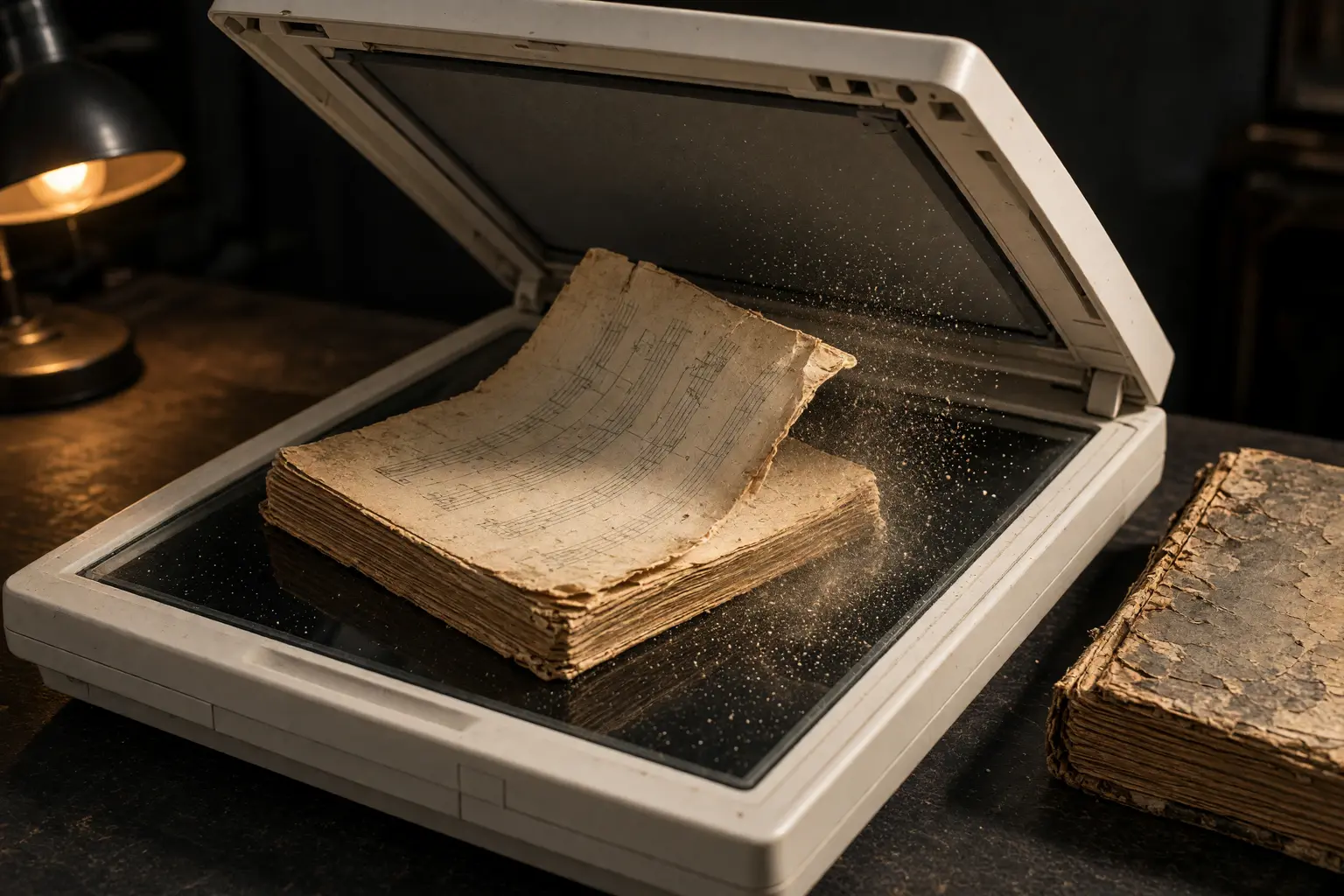
The publishers say Anthropic torrented books that held lyrics and sheet music, scraped licensed lyric sites, scanned used songbooks, then trained Claude until the bot could spit verses back. They want a jury, destruction of copies, and a full account of which songs sat in the training pile, including hits such as “Ain’t No Mountain High Enough,” “All I Want for Christmas Is You,” and “Eye of the Tiger.”
In the 48-page complaint filed August 28, the publishers call the campaign “one of the largest and most blatant ongoing thefts of intellectual property in history.” Exhibit A covers lyrics and sheet music found inside torrented books, “hundreds or more,” including “Livin’ On a Prayer,” “September,” “Great Balls of Fire,” “Ramblin’ Man,” and “Hallelujah.” Exhibit B lists “tens of thousands” of compositions they say were copied as training input.
HOW THE COMPLAINT SAYS THE SONGS ARRIVED
- BitTorrent: Mann, on Anthropic’s behalf and at Amodei’s direction, torrented at least five million pirated books from Library Genesis in June 2021, then about two million more from Pirate Library Mirror in July 2022, and BitTorrent’s design uploads while it downloads.
- Lyric sites: The company allegedly crawled authorized displays such as MusixMatch and LyricFind rather than paying a training license.
- Used books: Anthropic is accused of “destructively scanning” millions of second-hand copies, including books that held lyrics and sheet music.
- Public piles: The filing adds Common Crawl, The Pile, and Books3, and quotes the Bartz record that Mann took Books3 copies “to avoid the trouble of paying for them.”
The publishers also say Claude has already returned verbatim or near-verbatim lyrics to users, including “Uptown Funk,” “Redbone,” “Stay,” “Scars to Your Beautiful,” “California Gurls,” and “We Belong Together.” They plead a separate claim for stripping copyright-management information, and they ask up to $25,000 for each altered credit line.
Anthropic clearly considers that to be just the cost of doing business given that its entire business model continues to be built on copyright theft.
Sony Music Publishing and Warner Chappell, complaint, U.S. District Court, N.D. Cal.
An Anthropic spokesperson called the new case a recycling of allegations already before the courts and said training generative models is transformative fair use. The company said it will defend the suit.
A $1.5 Billion Check Did Not Close the Library
Judge William Alsup held in 2025 that training on books can be fair use if the copies were obtained legally, and he sent the pirate downloads to trial. Anthropic then settled with authors rather than try that piracy piece. Judge Araceli Martínez-Olguín granted final approval of the $1.5 billion settlement on July 20, 2026.
Class members release only past acquisition and copying through August 25, 2025. Output claims stay open, and so does anything after that cutoff. Anthropic must destroy the original LibGen and PiLiMi files, subject to litigation holds, and it has told the court those datasets were not in the training corpus of its commercially released models.
TWO PRICE TAGS IN THE SAME COURTHOUSE
| Case | Works | Money on the table | Status |
|---|---|---|---|
| Bartz authors | About 500,000 class books from roughly 7 million downloaded copies | $1.5 billion fund, about $3,000 a title | Final approval July 20, 2026 |
| Concord, UMPG, ABKCO | About 500 songs, then a second case over more than 20,000 | Lyrics, outputs, and shadow libraries | Live in the Northern District |
| Sony and Warner publishers | Hundreds-plus in torrented books; tens of thousands on Exhibit B | Up to $150,000 a work, plus up to $25,000 per stripped credit | Filed August 28, 2026 |
A jury in the new case would have to pick a number inside that gap, work by work. The complaint argues $1.5 billion did not deter a company it ties, in a footnote, to a column that floated a $2 trillion October IPO; that figure is the publishers’ citation, not a filed valuation.
The book deal also cut class counsel to about 6.8 percent of the fund, roughly $101.56 million, and trimmed lead-plaintiff service awards to $15,000 each. Those housekeeping facts matter here only because they show how a Northern District copyright fight against Anthropic actually ends: a per-work check, a destroy order, and a narrow release that leaves the next catalog free to sue.
Warner Already Sells AI Training to Someone Else
On November 25, 2025, Warner Music Group announced a licensed AI music partnership with Suno that also settled prior litigation between those companies. Suno said it would train a new generation of models on licensed music and phase out current ones. Artists and songwriters were promised control over name, image, likeness, voice, and compositions in new AI songs. Downloads move behind paid tiers.
AI becomes pro-artist when it adheres to our principles: committing to licensed models, reflecting the value of music on and off platform, and providing artists and songwriters with an opt-in for the use of their name, image, likeness, voice and compositions in new AI songs.
Robert Kyncl, CEO, Warner Music Group, Nov. 25, 2025 press release
Warner also settled with Udio and, with Sony and Universal, licensed Klay, which said it would train only on licensed music. Sony is still in court with Suno and with Udio. The licensed market the publishers describe in fair-use briefs is not hypothetical; Warner’s own newsroom posted it.
Claude is a general chatbot, not a song generator with an opt-in artist mode, so the Suno contract does not cover this caption. It does show that Warner will sell training rights when the product is a music studio and will sue when the product is a writing assistant that can quote “Paper Rings” or “Here Comes Santa Claus.” Two desks, two prices, same catalogs.
An IPO roadshow now has to carry this complaint beside the book check, because the filing itself waves both the $1.5 billion figure and that $2 trillion column. Buyers who already swallowed one pirate-library bill are being asked to underwrite a second, at the statutory ceiling, on lyrics that rode along inside the same torrents.
Personal Liability for Two Founders
The complaint does not stop at the corporate defendant. It says Mann personally used BitTorrent to download and upload millions of pirated books from LibGen, including volumes that held the publishers’ songs, and that he told other staff to do the same with PiLiMi. It says Amodei authorized and directed that work, and that without those two men none of the torrenting would have happened.
In the Concord-group’s later case, Amodei has already asked the court to drop the direct-infringement claim against him personally. Anthropic has moved to trim output claims and the credit-stripping count in that file. Those motions are a preview of the defense this caption will meet: keep the fight on the company, keep outputs out, and treat training as fair use if the copies can be painted as lawful.
The Sony-Warner lawyers are betting the opposite. They plead each torrented song as its own act of copying and of distribution, because BitTorrent shares while it takes. They also say Anthropic planned to keep a central library of texts “forever.” If that library still holds lyric books after the Bartz destroy order, the music case is a fight over leftovers the authors’ deal did not bury.
How Far Above $3,000 Do the Publishers Reach?
Statutory damages under the Copyright Act run from $750 to $150,000 per infringed work if registration lines up. The authors’ class took about $3,000 a title, four times the ordinary $750 floor. Sony and Warner ask a jury for the top of that range on each composition, plus the $25,000 CMI adder, on a list they say runs to tens of thousands of songs.
Do the math on the ceiling and the headline turns into billions. Do the math on the Bartz rate and the same list looks like another operating charge. The publishers wrote the first version of that sentence themselves when they called $1.5 billion too small to deter. Hipgnosis funds on the caption make the ask even plainer: catalogs that were bought as yield assets are now being marked to a statutory sticker.
Publishers who spent a decade taking catalogs off writers’ hands now want a chatbot to pay the top rate for reciting them. That contradiction does not erase the pirate-library record Alsup already condemned. It does mean the number they want is a bet against the only large check this courthouse has cut.
Anthropic will argue fair use and recycled pleadings. The publishers will argue torrenting, stripped credits, and verbatim verses. The San Jose docket is open, and the book settlement’s destroy order is the first exhibit both sides already share.
Disclaimer: This article is news reporting and analysis of a filed civil complaint and related court orders. It is informational only and is not legal advice, an assessment of any party’s likelihood of success, or a recommendation to sue, settle, license, or invest. Readers who need advice about copyright claims, AI training licenses, or pending litigation should consult a qualified copyright attorney licensed in the relevant jurisdiction before acting. Figures, party lists, and case statuses reflect the public filings and statements reviewed as of September 2, 2026, and may change as the docket moves.


Flower Labs Puts Endeavor 1.0 on Customer Servers

Cummins Bets on Emerald to Scout the Next Power Shift

Holifya Raises €2 Million to Wrap Italy’s GLP-1 Care

INLEAP Photonics Places a Factory Bet on Laser Defences

Instarc Takes €1.25 Million After a Quiet July Recap

nordIX Bets €21 Million on ID Finance’s Spanish Loans

Space Cargo Buys Into France’s Zero-G Flight Company

The $399 Omni Walks Away, Then Asks for a Dock

TECNO’s 0mm Bezelless Phone Still Needs a Rim

The Ryobi Tools That Unblocked a Garage Workbench

30-Year Yield Hits 5.32% Highest Since 2007 as Debt Supply Locks In Costs

Walter’s TWG Insists No Fraud as Insurer Probes Force Cleanup

Strategy Parks $1.59B Cash While Bitcoin Stack Stays Flat

Astute’s $1.2M bet makes B2B creator deals feed AI discovery

BlackRock Turns Cash Empire Into Stablecoin Reserve Rails

The 20% Savings Ideal Meets a 2.7% Reality Check

SpaceX Stock Rebound Tests Real Demand Before Huge Unlock

Amber’s €7M locks Mittelstand knowledge inside Europe

PCE Stays at 3.7% as Gas and Tariffs Outrun Coming Revisions

Monzo chair Gary Hoffman exits after board revolt fallout
-
 FINANCE3 months ago
Zcash Patched a Double-Spend Bug as ZEC Climbed 5%
-
 ENTERTAINMENT3 months ago
Steam Summer Sale 2026 Locks In June 25 to July 9 Dates
-

 FINANCE2 months ago
CLARITY Act Final Text Expected This Weekend as 60-Vote Hurdle Looms
-
 NEWS4 months ago
Meta Adds AI Replies to Threads, But Users Can’t Block It
-

 NEWS3 months ago
YouTube Shorts is testing a heart in place of the thumbs-up
-

 NEWS1 month ago
Senators Force Apple Off Chinese Memory as Big Three Cash In
-

 NEWS3 months ago
NEURA Robotics’ $1.4B Series C Redraws Europe’s Physical AI Bet
-
 ENTERTAINMENT5 months ago
Extraction 3 Is Officially Coming to Netflix in 2027