
BUSINESS
Shein Lists in Hong Kong as Investors Price an Older Model
Shein’s Hong Kong IPO raised $1.74 billion at about $26.5 billion, a listing that priced a Guangdong sewing-floor business next to soaring robot and chip debuts.

Shein shares fell as much as 10% on their Hong Kong debut Tuesday, then closed almost unchanged at HK$48.50 after years of failed Western listings. The offering set a final offer price of HK$48.56 on 279,992,500 Class B shares, raising HK$13.60 billion ($1.74 billion) and valuing the group at about $26.5 billion.
That figure is roughly a quarter of the private mark near $100 billion in 2022. The company that spent years presenting itself as a Singapore-based, algorithm-driven fashion platform listed instead as a Guangdong sewing-floor exporter, on a market that had just minted robot and chip champions.
The Listings That Never Happened
Sky Xu Yangtian, a Chinese search-engine specialist, founded Shein in 2012 with three former colleagues. The firm later moved its headquarters to Singapore and sold $5 dresses into about 160 markets, while most of the cutting and stitching stayed in China.
A New York listing was the original prize. In May 2023 a bipartisan group of U.S. representatives asked the Securities and Exchange Commission to halt an IPO until Shein showed it was not using forced labor. Senator Marco Rubio later pressed for extra China-risk disclosures. The Uyghur Forced Labor Prevention Act already presumes that goods tied to Xinjiang involve forced labor, a claim Beijing rejects.
London was the fallback. Shein filed confidentially with the Financial Conduct Authority in June 2024. Stop Uyghur Genocide sent the regulator a dossier alleging Xinjiang cotton. Britain’s Independent Anti-Slavery Commissioner raised the same worry inside government. At a parliamentary hearing, Liam Byrne, who chairs the Business and Trade Committee, said lawmakers were “horrified” by how little Shein’s European general counsel, Yinan Zhu, would say about cotton origins.
THE ROAD TO 00625
- May 2023: U.S. lawmakers ask the SEC to freeze a New York float over forced-labor risk.
- June 2024: Shein files in London; Stop Uyghur Genocide opens a legal campaign to block the listing.
- July 10, 2026: China’s securities regulator clears a Hong Kong prospectus after withholding approval for the Western venues.
- August 31, 2026: The offer prices at HK$48.56, below the HK$49.50 cap.
- September 1, 2026: Trading starts in Hong Kong under stock code 00625.
Chinese authorities, including the securities regulator that oversees foreign-registered firms with heavy China operations, never signed off on New York or London. The Hong Kong path required the company to look more like what it is: a China-rooted manufacturer that happens to bill from Singapore.
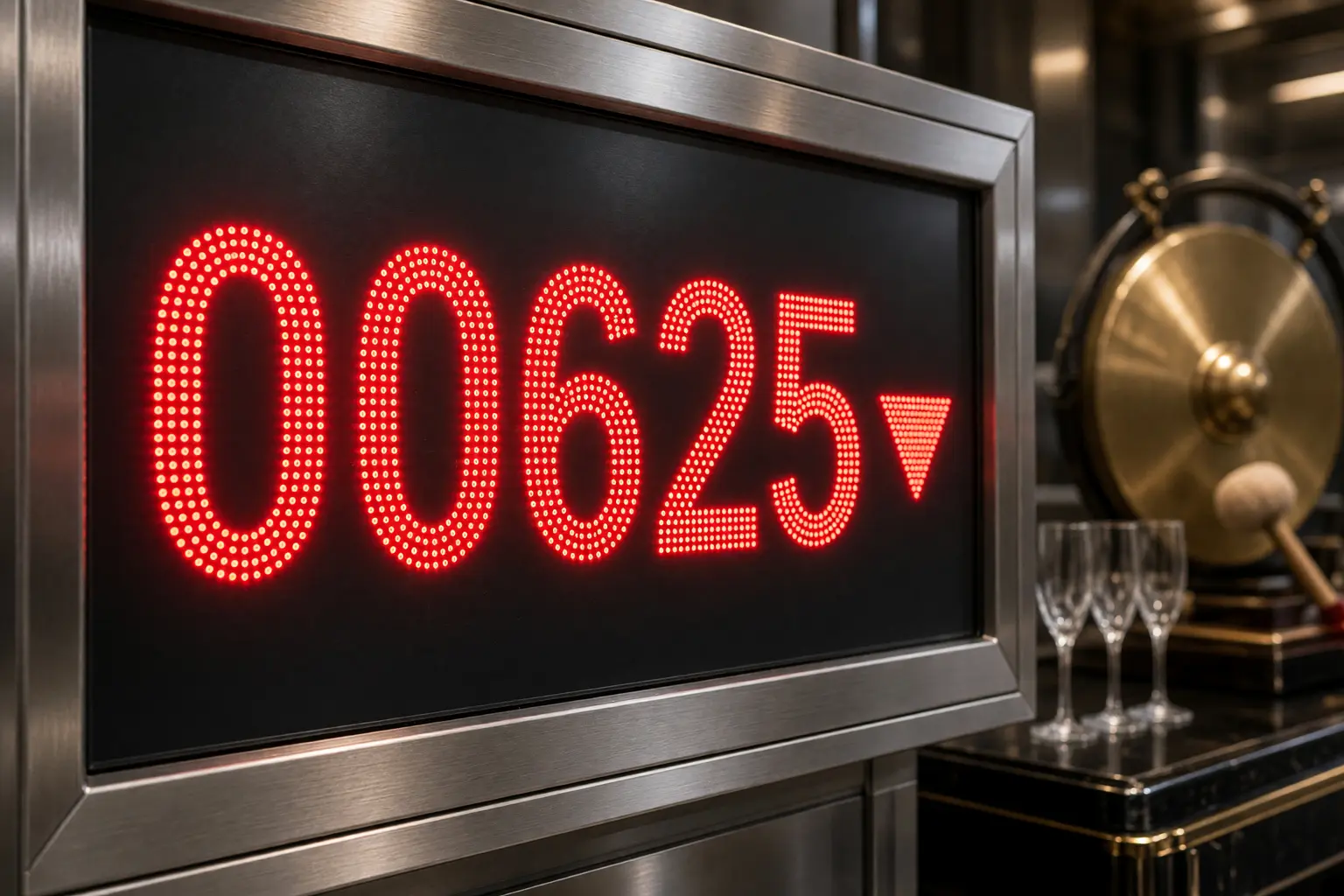
Shares Fell 10%, Then Finished Flat
The stock opened at the offer price, then dropped to about HK$43.72, a 10% slide that briefly pushed the implied value under $25 billion. Bids hit three times as often as offers in that opening crush. The shares spent most of the session well below the issue price, then jumped in the last minutes and finished at HK$48.50, down 0.1%.
Hong Kong retail was subscribed 5.63 times. The international book was subscribed 2.59 times, with 106 placees. Weiheng Chen, a senior partner at Wilson Sonsini who leads its Greater China practice, said institutional buyers that were offered shares before the open took up just over 20 percent of the deal, against roughly 50 percent on a popular listing.
The sale is about 6.6% of the 4,246,202,609 shares in issue. Cornerstone names led by existing holders Boyu, Tiger Global and General Atlantic agreed to take about $383 million of stock and are locked up for six months, which leaves only a thin band of paper that can actually trade. A lower listing price is not the same as a cheap stock when so little equity is free and the next unlock is months away.
Charu Chanana, chief investment strategist at Saxo, said that even after the reset, buyers were still being asked to pay about 15 times forward earnings, more than twice the multiple on PDD Holdings, the parent of Temu. Kenny Ng, a strategist at China Everbright Securities International, tied the discount to last year’s weaker profits and to trade rules that keep shifting.
Goldman Sachs is the stabilization manager. Hong Kong Exchanges and Clearing also allowed options and short selling from the first print, so the tape can move on a small free float.
$41.8 Billion in Sales at Utility Speed
The prospectus, posted in July after the China regulator’s July 10 clearance, is the first full public look at the books in years. Shein is still huge. It is no longer growing like a 2021 e-commerce darling.
SHEIN’S AUDITED YEARS
| Period | Net revenue | Change | Net income |
|---|---|---|---|
| 2023 | $32.1 billion | ||
| 2024 | $38.7 billion | about 21% | $3.37 billion |
| 2025 | $41.8 billion | 8% | $2.064 billion |
| Q1 2026 | $9.05 billion | 1.1% | loss of $99 million |
Net profit in 2025 fell 38.7%. The first-quarter loss includes a $328 million fair-value charge on convertible redeemable preferred shares after an accounting change. U.S. revenue in that quarter fell 14% to $2 billion, or 22.5% of the total, from 26.6% a year earlier.
Europe overtook the United States as the largest market in 2024 and contributed $14.8 billion, or 35.4% of 2025 sales. The rest of the world, every market outside the U.S. and Europe, reached $16.9 billion, or 40.5%. Product sales were about $37.1 billion. Service revenue, the marketplace slice, rose to $4.7 billion.
The group counted 273 million active customers in 2025 and more than two million apparel styles at year end. Apparel’s share of sales still slipped from 68.8% in 2023 to 63.8% in 2025. Shein said it would put 40% of IPO proceeds into technology and another 40% into brand and overseas reach, with the rest split between corporate-responsibility work and general uses.
H&M is worth about $30 billion. Inditex, which owns Zara, is worth about $213 billion. Shein now sits near H&M on value while running a sales base closer to Inditex, with a 2025 net margin of 4.9% that collapsed further in the first quarter.
Why Capital Chose Robots Over Dresses
Two weeks before Shein rang the Hong Kong gong, Unitree Robotics, officially Yushu Technology, listed on Shanghai’s STAR Market. Shares opened 629.44% above the 150.80 yuan issue price and closed 460.34% higher, valuing the Hangzhou humanoid-robot maker at 341.77 billion yuan ($50.68 billion).
Unitree raised about 6.099 billion yuan. Online, 9.7846 million accounts tried to subscribe, the most for any STAR Market IPO since that board opened. The company told investors it shipped more than 5,500 humanoid robots in 2025, for a 32.4% global share, and that it makes more than 90% of core parts in-house. Revenue rose from 159 million yuan in 2023 to 1.699 billion yuan in 2025. CXMT, the memory-chip maker that listed on the same Shanghai board in July, jumped more than 470% on its first morning.
TWO PUBLIC DEBUTS, TWO PRICES
| Shein | Unitree Robotics | |
|---|---|---|
| Venue | HKEX, 00625 | Shanghai STAR, 688836 |
| Cash raised | $1.74 billion | 6.099 billion yuan |
| First-day move | as much as -10%, close flat | +460.34% |
| Value after debut | about $26.5 billion | 341.77 billion yuan ($50.68 billion) |
| Retail demand | 5.63 times subscribed | 9.78 million accounts |
Beijing’s industrial slogan for this cycle is “new, quality productive forces,” shorthand for high-value plants, chips and robots. Chen Jing, a vice president at the Technology and Strategy Research Institute, said Unitree showed that money is moving toward firms that own core hardware, not toward another consumer-internet story.
Nirgunan Tiruchelvam, who leads the consumer and internet desk at Aletheia Capital, put Shein on the other side of that split. “It represents the old tech, as opposed to the new tech,” he said. “Shein would have had a lot more traction with investors in the 2021 vintage. But the world has moved on from blockbuster e-commerce listings.”
Winston Ma, a former managing director at China Investment Corporation, compared the stock to Zoom, which soared in the pandemic and then faded. “It was a super promising concept during Covid,” he said. “But now it’s overshadowed by the new A.I. era.”
It’s a fashion company that is not that fashionable to today’s investors.
Weiheng Chen, senior partner, Wilson Sonsini
Chris Weston, head of research at Pepperstone, said the contrast with CXMT and Unitree was the message: this is where buyers currently want China and Hong Kong exposure, and it is not in $5 dresses.
Piece Rates Still Set the Factory Clock
Shein’s pitch was speed. The company once said it could create 4,700 new styles a day, using software to spot trends and placing first orders of a few hundred pieces. In the small Guangdong workshops that still cut and sew those drops, the hardware is sewing machines and 10- to 14-hour shifts, not humanoid robots.
China Labor Watch, a U.S. nonprofit that investigates Chinese factories, shared a forthcoming report based on interviews with 13 apparel workers at Shein suppliers plus staff at warehouses and offices. Workers described 20 or more days on the clock with no rest, 10-minute breaks, and reprimands for sewing too slowly, at 7 to 28 cents per item. Monthly pay averaged $850 to $1,130, they said, only if they worked weekends and took no days off.
WHAT WORKERS DESCRIBED
- The hours: Li Qiang, the group’s director, said a 100-hour week is entirely possible on Shein orders, against about 60 hours in a typical Chinese garment plant.
- The rate: Piece pay of 7 to 28 cents an item, with short breaks and pressure to keep the line moving.
- The take-home: $850 to $1,130 a month if weekends are worked and rest days are skipped.
- The older file: A 2025 Kangle Village study with ActionAid France, in which researchers took jobs in Shein workshops, found 10- to 12-hour days and piece rates of 6 to 27 euro cents, with overtime often unpaid.
Those claims sit against Shein’s Supplier Code of Conduct, which suppliers of Shein-branded goods must sign. The company’s Supplier Responsibility Standards, filed with UK lawmakers, say staff 60 hours per week including overtime is the cap except in emergencies, with at least one day off in seven.
None are quite like Shein. With Shein, working 100 hours a week is entirely possible.
Li Qiang, director, China Labor Watch
Shein said it categorically rejected the characterizations of conditions in its supplier network and that the pay figures “are not factual and misrepresent the wage structures used by suppliers.” On Douyin, workers have called Shein sites “Guangdong’s most tiring logistics factory,” and some factory owners say they no longer want the orders because quality-check fines are too heavy.
Design copying is a second running cost. Court records show Shein has been named in 58 U.S. lawsuits since 2021 over trademark claims and racketeering. The company said being named as a defendant “does not establish the validity of the allegations made,” and that it is tightening intellectual-property checks.
Washington Closed the $800 Parcel Door
The low-price model rode a U.S. rule that let parcels worth $800 or less enter duty-free. That door is shut. Executive orders first pulled the exemption for China and Hong Kong from May 2, 2025, then for every country from August 29, 2025. U.S. Customs and Border Protection ended the de minimis loophole on that August date. Congress, in a July 4, 2025 statute, set a permanent repeal for July 1, 2027.
THE PARCEL WAVE WASHINGTON SHUT
- The volume: De minimis shipments rose from 134 million in 2015 to 1.36 billion in 2024, more than 4 million packages a day.
- The China step: Duty-free treatment for China and Hong Kong stopped on May 2, 2025.
- The global step: The exemption stopped for all origins on August 29, 2025.
- The statute: Repeal of the commercial exemption is written into law from July 1, 2027.
Shein told investors that losing the U.S. exemption hurt sales growth and raised costs, and that it was looking at options that included higher U.S. prices. It had already raised U.S. prices in May 2025. In Europe, a 3-euro fee on inbound parcels is in force, and the company warned that the EU hit could match or exceed what it saw in the United States. U.S. sales have been contracting since 2025. Growth in Europe has slowed. Those two regions still account for more than half of sales.
Younger Shoppers Have Already Left
The listing also arrives after the cohort that built Shein began to peel off. Michael Gunther, senior vice president of research at Consumer Edge, which tracks spending in the United States and Europe, said the brand is still losing U.S. market share, with the steepest drop among 18- to 34-year-olds. Affordability after the price rises, and sustainability worries, are the reasons he flags.
In Britain, share gains have slowed even without a U.S.-style tariff shock. In Europe the slide is sharpest in France and Spain. The company that compressed the fashion cycle from months to days now has to win back the same young buyers who once treated it as default.
Poppy Bao, senior vice president of investment, and Leigh Gui, the chief financial officer, stood at the Hong Kong exchange on listing morning with Xu. The gong sounded. The first prints went red. The close was almost unchanged, on a sliver of stock, after a decade of calling the model new.
Frequently Asked Questions
What Is Shein’s Hong Kong Stock Code and Board Lot?
Shein trades under stock code 00625 as Class B shares, and the board lot is 100 shares. Dealings were set to start at 9:00 a.m. Hong Kong time on September 1, 2026, with share certificates valid from 8:00 a.m. that day if the global offering had gone unconditional.
When Does U.S. Law Permanently Repeal De Minimis?
The commercial de minimis exemption under 19 U.S.C. 1321 is scheduled for permanent repeal on July 1, 2027, under section 70531 of the One Big Beautiful Bill Act signed on July 4, 2025. CBP’s 2025 suspension already stopped duty-free treatment in practice, and the 2027 date writes that end into statute even if an executive order were later changed.
How Many Hong Kong Retail Applicants Received Shein Shares?
The allotment notice recorded 18,673 successful applications from 35,751 valid Hong Kong public-offer applications, with no claw-back of shares from the international tranche. The Hong Kong public offer covered 27,999,300 shares, and the international offer covered 251,993,200 shares before any over-allotment of up to 41,998,500 extra Class B shares.
Which Banks Sponsored Shein’s Hong Kong Listing?
Goldman Sachs, Morgan Stanley and JPMorgan acted as joint sponsors on the Hong Kong offering. Goldman Sachs is also the stabilization manager, the bank that can buy shares in the market after listing to support the price, and existing-shareholder cornerstones in the book included Boyu, Tiger Global and General Atlantic.
Disclaimer: This article is news reporting and analysis of Shein’s Hong Kong listing and related trade and labor facts, and it is for information only. It is not investment advice, a solicitation to buy or sell Shein shares or any other security, or a recommendation on how to trade the IPO or related derivatives. Readers should consult a licensed financial adviser or broker who understands their objectives and local rules before making any investment decision. Figures, subscription ratios, lock-ups and trading prices reflect the prospectus, allotment notice, company statements and market data as of September 2, 2026, and may change.


Flower Labs Puts Endeavor 1.0 on Customer Servers

Cummins Bets on Emerald to Scout the Next Power Shift

Holifya Raises €2 Million to Wrap Italy’s GLP-1 Care

INLEAP Photonics Places a Factory Bet on Laser Defences

Instarc Takes €1.25 Million After a Quiet July Recap

nordIX Bets €21 Million on ID Finance’s Spanish Loans

Space Cargo Buys Into France’s Zero-G Flight Company

The $399 Omni Walks Away, Then Asks for a Dock

TECNO’s 0mm Bezelless Phone Still Needs a Rim

The Ryobi Tools That Unblocked a Garage Workbench

30-Year Yield Hits 5.32% Highest Since 2007 as Debt Supply Locks In Costs

Walter’s TWG Insists No Fraud as Insurer Probes Force Cleanup

Strategy Parks $1.59B Cash While Bitcoin Stack Stays Flat

Astute’s $1.2M bet makes B2B creator deals feed AI discovery

BlackRock Turns Cash Empire Into Stablecoin Reserve Rails

The 20% Savings Ideal Meets a 2.7% Reality Check

PCE Stays at 3.7% as Gas and Tariffs Outrun Coming Revisions

SpaceX Stock Rebound Tests Real Demand Before Huge Unlock

Amber’s €7M locks Mittelstand knowledge inside Europe

Monzo chair Gary Hoffman exits after board revolt fallout
-
 FINANCE3 months ago
Zcash Patched a Double-Spend Bug as ZEC Climbed 5%
-
 ENTERTAINMENT3 months ago
Steam Summer Sale 2026 Locks In June 25 to July 9 Dates
-

 FINANCE2 months ago
CLARITY Act Final Text Expected This Weekend as 60-Vote Hurdle Looms
-
 NEWS4 months ago
Meta Adds AI Replies to Threads, But Users Can’t Block It
-

 NEWS3 months ago
YouTube Shorts is testing a heart in place of the thumbs-up
-

 NEWS1 month ago
Senators Force Apple Off Chinese Memory as Big Three Cash In
-

 NEWS3 months ago
NEURA Robotics’ $1.4B Series C Redraws Europe’s Physical AI Bet
-
 ENTERTAINMENT5 months ago
Extraction 3 Is Officially Coming to Netflix in 2027