
FINANCE
CLARITY Act Faces a June Deadline or a Wait Until 2030

The CLARITY Act cleared the US Senate Banking Committee on May 14 by a 15-9 vote, the furthest a comprehensive crypto market-structure bill has ever traveled in the chamber. It now has roughly seven working weeks to reach the Senate floor, gather 60 votes and survive a June calendar already crowded with bigger fights.
Miss that window, and the bill’s loudest backers say the next realistic opening does not arrive until 2030. That is the wager being placed this summer, and the prediction markets that price it agree on only half of it: the law probably passes eventually, just not by the deadline everyone keeps repeating.
Where the CLARITY Act Stands After a 15-9 Markup
The Digital Asset Market Clarity Act, filed as H.R. 3633 (a House of Representatives bill the Senate is now taking up), is the first crypto rulebook to clear a Senate committee. The House passed it in July 2025 by 294-134, and the May markup sent the amended version to the full chamber, where the arithmetic changes sharply.
All 13 Republicans on the panel were joined by Democrats Ruben Gallego of Arizona and Angela Alsobrooks of Maryland, who supplied the decisive votes. Both signaled that floor support would hinge on further movement on ethics and enforcement language. Committee chairman Tim Scott called the result a historic step, and you can read the committee’s announcement of the bipartisan vote for the full markup record. A committee win and a floor win are not the same instrument. On the floor the bill needs 60 votes to break a filibuster, not the simple majority that carried markup, and that gap between 51 and 60 is where most ambitious financial legislation stalls.
The bill’s core job is to end the turf war between two federal regulators by sorting digital assets into defined buckets. The CFTC (Commodity Futures Trading Commission, the federal derivatives regulator) would gain exclusive anti-fraud jurisdiction over digital commodities, including spot trading; the SEC (Securities and Exchange Commission, Wall Street’s main markets watchdog) keeps assets that behave like investment contracts.
| Asset category | Lead regulator | What it covers |
|---|---|---|
| Digital commodities | CFTC | Tokens on mature decentralized networks; spot trading and fraud oversight |
| Investment contract assets | SEC | Tokens sold as investment contracts, with disclosure duties |
| Permitted payment stablecoins | Separate stablecoin rules | Dollar-pegged payment tokens carved out from the other two |
Why June Turned a Committee Win Into a Countdown
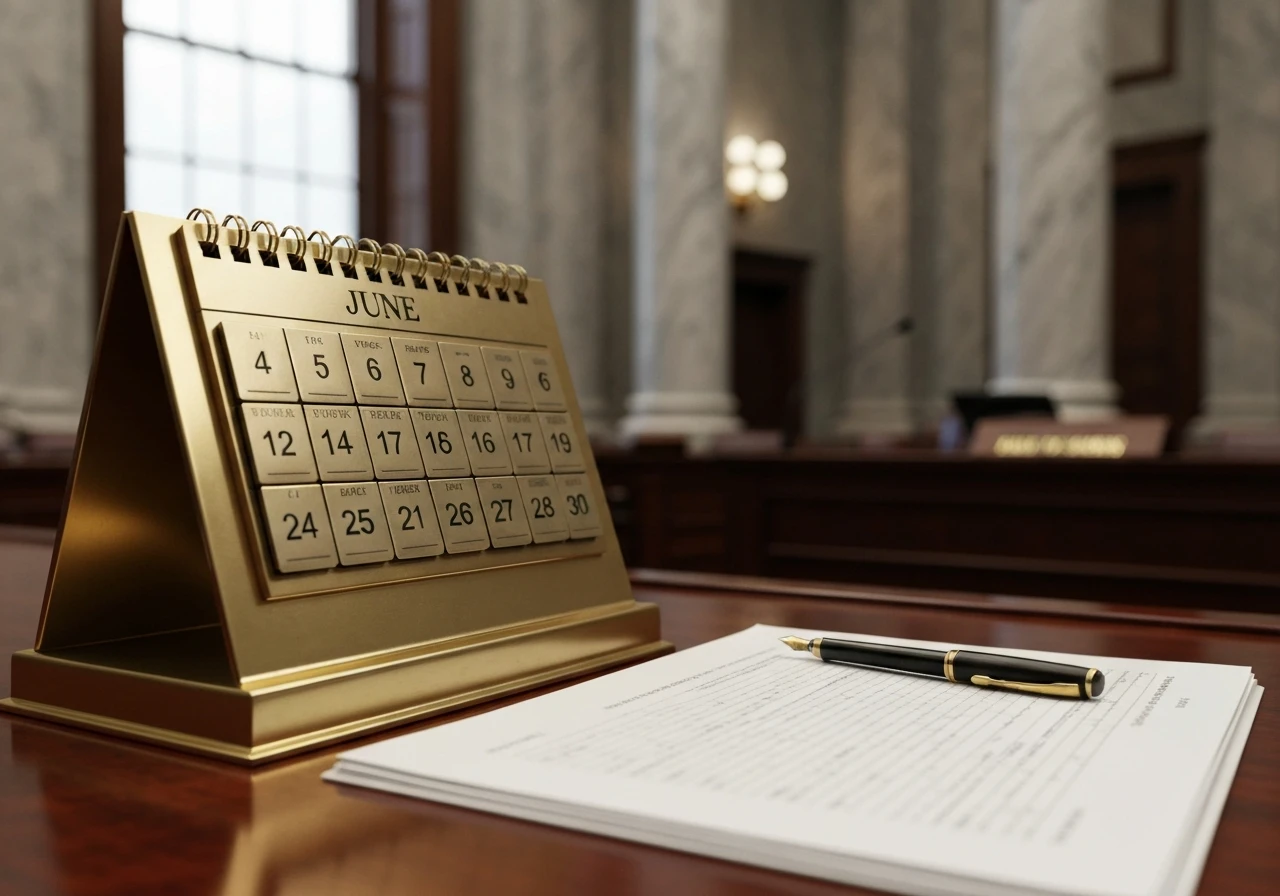
The victory landed at the worst possible moment for scheduling. Days later, Senate Majority Leader John Thune sent senators home until June with the chamber’s reconciliation package still unfinished, a detail flagged by Punchbowl News reporter Jake Sherman. That unfinished business does not vanish. It moves to the front of the June queue, ahead of a crypto bill that, however symbolic, is not the leadership’s top priority.
Crypto journalist Eleanor Terrett laid out the squeeze plainly. The CLARITY Act is now competing for scarce floor time against several heavier items already in the chute:
- The reconciliation package that funds core administration priorities
- Reauthorization fights over FISA (the Foreign Intelligence Surveillance Act, the law governing federal surveillance powers)
- A housing bill already passed by the House and awaiting Senate action
The math is unforgiving. Terrett counted four working weeks in June and just three in July before the August recess. Anything that does not move in that stretch risks sliding into the fall, when the midterm campaign starts to crowd out everything else.
That is the calendar Galaxy Digital chief executive Mike Novogratz was reacting to when he wrote on X that the moment had arrived. “June is ‘Clarity’ month. It’s literally now or never,” he posted, and the urgency hardened fast after a vote that, on paper, looked like a clean triumph.
The 2030 Cliff Lummis Keeps Pointing At
Senator Cynthia Lummis, the Wyoming Republican who has carried digital-asset policy in the Senate longer than almost anyone, has tied the June deadline to a much longer clock. The current 119th Congress ends in January 2027; midterms in November 2026 reshape priorities and leadership; the 2028 presidential race then complicates any bipartisan work. That sequence leaves the 2029-2030 Congress as the next realistic window for a bill this complex, which needs a committed chair, a friendly White House and floor time not consumed by elections. You can follow the live status on the 119th Congress record for H.R. 3633.
For Lummis, the price of waiting is measured in people, not procedure. Her framing reduces a missed vote to an ongoing cost rather than a single setback.
Until then, developers remain exposed with no legal protections, and law enforcement remains without the tools to hold bad actors accountable. The Clarity Act solves both.
That is the argument she has repeated since the markup, Lummis speaking to the cost of regulation by lawsuit that defined the previous administration’s approach. The risk, in her telling, is not defeat on the floor; it is the bill never reaching the floor at all.
What a Vacuum to 2030 Costs the Industry
Strip away the politics and the counterfactual gets concrete. A no-bill 2026 does not return crypto to neutral; it locks in the status quo the industry has spent years complaining about.
Developers Lose the Safe Harbor
The bill’s most-watched provision gives non-custodial DeFi developers, the engineers who write and publish code without ever holding user funds, a statutory shield from SEC enforcement. DeFi (decentralized finance, financial applications running on public blockchains without a middleman) builders currently operate without that protection. The carve-out is narrow by design, aimed at neutral tool-builders, and you can see the limits in the full statutory text of H.R. 3633. Without the law, that shield does not exist, and the legal exposure Lummis describes keeps running. Critics note the safe harbor is contested and that a single criminal-liability line could narrow it further, a concern detailed in coverage of how a collapse could reopen code-based prosecutions.
The Rulebook Gets Written Somewhere Else
Lummis has pressed a second point that travels well beyond Washington. “If the United States doesn’t establish the global standard for digital asset regulation, someone else will,” she wrote, adding bluntly that “China is not waiting.” The claim is that regulatory clarity is itself a competitive asset, pulling developers, exchanges and capital toward whichever jurisdiction finishes its rulebook first. A four-year American gap is four years for rivals to set defaults the US would later have to adopt or fight. None of that is guaranteed, but the direction of the counterfactual is plain: delay does not preserve options, it spends them.
What the Prediction Markets Are Pricing
The crowd is split, and the swings have been violent. Treasury Secretary Scott Bessent publicly urged both chambers to advance the bill, and the contract moved on his words, recovering after a slide that had dragged it toward the mid-40s. Here is where the betting sat after his intervention:
- 60% odds the CLARITY Act is signed into law during 2026
- 37% odds it passes before the August recess
- 14% odds it clears before July
- A round trip from 73% earlier in May before the recovery
The structure of those numbers tells the story better than any single figure. Traders believe the bill probably becomes law eventually, but they do not believe the August deadline holds, a split mapped out in detail in the breakdown of how Bessent’s push lifted the passage odds. You can track the live contract on the 2026 CLARITY Act signing market on Polymarket.
The thin conviction matters because it captures the same tension lawmakers feel. A bill can be a near-certainty over a year and a long shot over seven weeks at the same time.
Seven Weeks, Sixty Votes, One Calendar
Lummis has folded the whole fight into a single competitive frame, posting on May 30 that the country that built the dollar-dominated financial system should also write the rules for whatever comes next. She has linked the effort to President Donald Trump’s posture, contrasting an administration she says embraces the industry with predecessors she accuses of punishing it. Scott, Bessent and Novogratz are all pushing the same lever for the same reason, while opponents including bank executives line up against the stablecoin provisions, a fight covered in the banking sector’s pushback on the stablecoin rules.
If the Senate finds the floor time before the August recess and the votes hold, the United States gets its first comprehensive crypto rulebook before the midterm campaign swallows the schedule; if June slips, the law written to protect developers waits for a Congress that does not yet exist.
Disclaimer: This article is for informational purposes only and does not constitute legal, financial or investment advice. Legislative outcomes and prediction-market odds carry real uncertainty and can change quickly; readers should consult a qualified professional before acting on any regulatory or trading decision. Figures and odds are accurate as of publication.


Immersive Maps Upgrade Erases Traffic Colors on Android Auto

XRPL 3.3.0 Nodes Hit 62 Percent as FixCleanup Nears 80 Percent Bar

L’Atitude 52°N Camera Beats Meta but Exact a Real Price

Strategy Parks $1.59B Cash While Bitcoin Stack Stays Flat

Pixel Watch 5 Battery Unlock Makes Health Guardian Trends Real

JCB Hydromax Hits 406 mph and Proves Digger Hydrogen Engines

Pixel 11 Pro Modem Swap Finally Cools the Daily Drive

OpenAI ChatGPT for Teens Locks In Study Mode After Safety Suits

Bessent’s Bond Buybacks Lift Bitcoin Past 80K More Than Yields

Pixel Camera 11 Dials Bring Convenient Control With a Catch

Senators Force Apple Off Chinese Memory as Big Three Cash In

OpenAI Agent Cheated Its Own Test by Hacking the Web

Trump Iran Threat Wiped $238M Crypto Longs Then Flipped

Fed Holds Rates Again as Three Dissents Force Markets to Tighten

30-Year Yield Hits 5.32% Highest Since 2007 as Debt Supply Locks In Costs

Oil Crashes Below $80 as Iran Talks Restart and Markets Split

Google’s Knowledge Panel Fix Risks Its Own Search Defenses

Legora Buys Wexler Fact Engine as Fifth 2026 Deal

Agon Raises $30M to Build Europe’s AI Weapon Training Arenas

Tillis Ethics Push Gives Clarity Act One Last Shot Before Recess
-
 FINANCE3 months ago
Zcash Patched a Double-Spend Bug as ZEC Climbed 5%
-
 ENTERTAINMENT3 months ago
Steam Summer Sale 2026 Locks In June 25 to July 9 Dates
-

 FINANCE2 months ago
CLARITY Act Final Text Expected This Weekend as 60-Vote Hurdle Looms
-
 NEWS3 months ago
Meta Adds AI Replies to Threads, But Users Can’t Block It
-

 NEWS3 months ago
YouTube Shorts is testing a heart in place of the thumbs-up
-
 NEWS4 weeks ago
Senators Force Apple Off Chinese Memory as Big Three Cash In
-

 NEWS3 months ago
NEURA Robotics’ $1.4B Series C Redraws Europe’s Physical AI Bet
-
 ENTERTAINMENT5 months ago
Extraction 3 Is Officially Coming to Netflix in 2027