
BUSINESS
Moonkie’s $38.5 Million Raise Leans on Wholesale and Affiliates
Moonkie raised a $38.5 million Series B on huge search growth, but wholesale racks, marketplaces and a paid affiliate program drive its real scale.

Moonkie has closed a $38.5 million Series B. The premium baby brand’s search traffic grew 9,300 percent over five years, according to startup-trend data making the rounds this month. Both figures trace back to Exploding Topics, a startup-analytics firm, not to Moonkie itself.
That gap matters. Moonkie’s own site draws a fraction of the traffic those numbers imply, and much of its real growth runs through wholesale racks, marketplace listings and a paid network of affiliates repeating the same trust pitch across the internet.
A Round With No Named Investors
No lead investor has surfaced for the $38.5 million round. No press release from Moonkie turned up in the reporting behind this story, and no venture firm has claimed the deal publicly.
That absence is worth sitting with. Typical Series B rounds raise $7 million to $10 million at valuations between $30 million and $60 million. Moonkie’s raise is nearly four times that ceiling, though the company has not disclosed its own valuation.
That kind of capital, at this stage, usually goes toward hiring and inventory rather than a change in direction. Investors want proof a company can grow from thousands of customers to millions before they commit more.
The headline numbers, in other words, rest on one analytics estimate, repeated across a handful of startup newsletters rather than confirmed independently.
Selling Trust in a Category Built on Fear
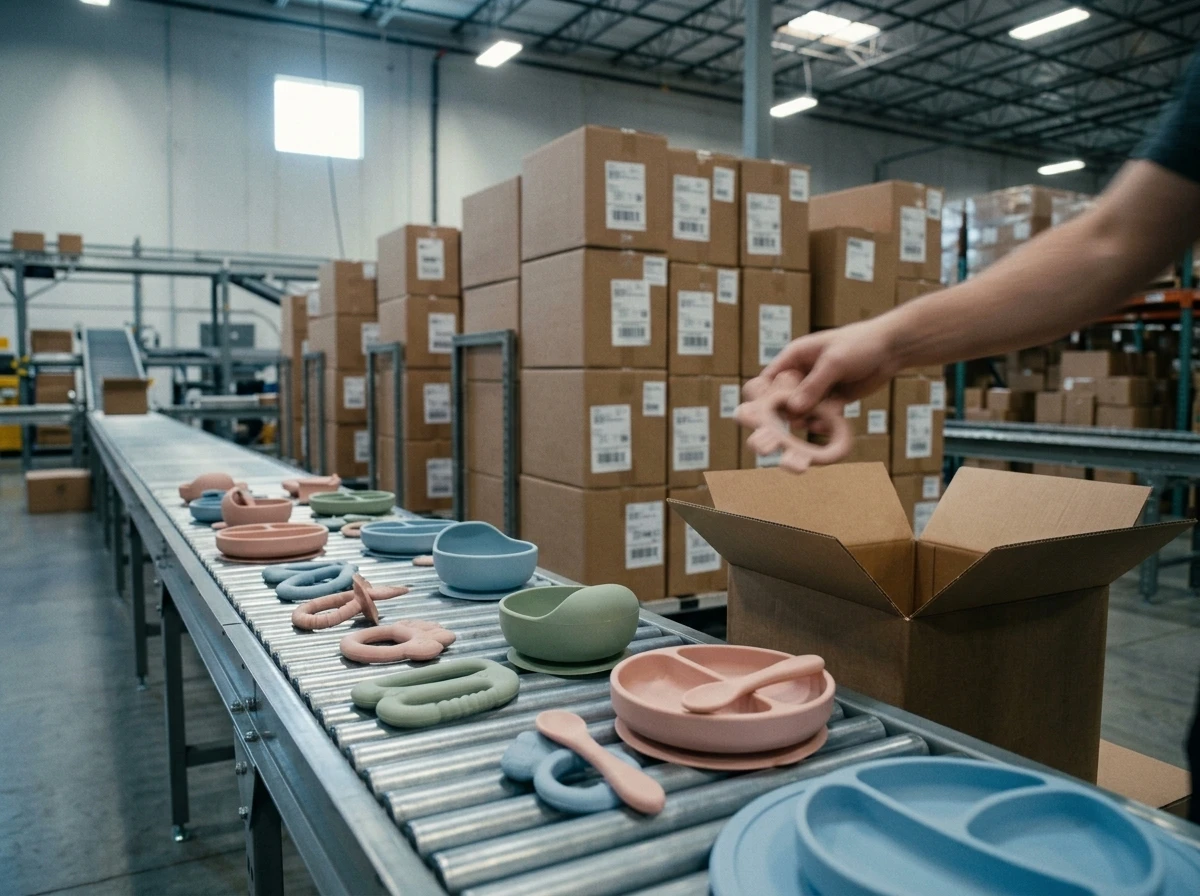
Moonkie’s pitch to parents is specific. The five-year-old brand sells silicone teethers, feeding sets, sensory toys and toddler backpacks built around Montessori-inspired design and non-toxic, food-grade silicone.
Its own about page frames the mission around the idea that new parents deserve the best, paired with safety claims the brand says meet U.S. and European standards.
Certifications matter in this category. Moonkie says its products are tested against CPSIA (Consumer Product Safety Improvement Act) rules in the United States and EN71 standards in Europe, the same benchmarks larger competitors cite.
That pitch shows up in reviews too. Moonkie carries a 4.5-star rating across more than 4,100 reviews on Trustpilot.
Not every review reads like an advertisement, though.
The product looks nice, but I’m a little hesitant because silicone has a smell.
One Trustpilot reviewer wrote that, tucked into an otherwise positive writeup about a baby toy purchase.
Do Moonkie’s Numbers Actually Add Up?
Not entirely, at least not on the surface. Moonkie’s own site draws roughly 161,800 monthly visits, a modest number for a brand claiming 2.64 million customers and 9,300 percent search growth. The gap doesn’t prove the figures are wrong, but it does show most of Moonkie’s reach happens somewhere other than moonkieshop.com.
Here is how the headline figures line up against each other:
| Metric | Reported Figure | What It Doesn’t Show |
|---|---|---|
| Series B raised | $38.5 million | No lead investor named publicly |
| Five-year search growth | 9,300 percent | Single-source estimate, not company-confirmed |
| Monthly visits to moonkieshop.com | About 161,800 | Excludes Amazon, Walmart and wholesale sales |
| Customers reached | 2.64 million | No independent audit located |
| Trustpilot reviews | 4,133 | Roughly 0.16 percent of the claimed customer count |
| Wholesale retail accounts | 600+ | Per the company’s own wholesale page, separate from its own site |
Social reach follows the same pattern. Moonkie’s Instagram account has about 227,000 followers. Its Facebook page counts 29,319 likes. Both are real audiences, just a small slice of 2.64 million.
Retail Shelves and Marketplaces Do the Heavy Lifting
The traffic gap has a straightforward explanation. Moonkie does not rely on its own site to reach most shoppers.
Three channels move more product than the brand’s storefront:
- Wholesale retail: Moonkie says its products sit in more than 600 retail stores across the U.S. and internationally.
- Marketplaces: Amazon and Walmart storefronts carry the same teethers and feeding sets to shoppers who may never type moonkieshop.com into a browser.
- Affiliates and ambassadors: the Magnetic Moonkie program pays approved creators a commission on every sale they refer.
Each channel pulls from the same catalog and the same safety pitch, just repackaged for a shopper who found Moonkie somewhere other than its own homepage.
Who’s Getting a Cut of Every Glowing Review?
A wide cast, it turns out. Moonkie runs an affiliate program called Magnetic Moonkie that pays approved creators a 15 percent commission on sales they refer, and several independent sites publish near-identical “Moonkie Reviews” pages built around affiliate links and shopping commissions.
The program lets approved members earn a 15 percent commission on referred sales, and it does not require a minimum follower count, just an application and content the brand likes.
Search a specific Moonkie product and the results fill with sites running their own five-star writeups, each disclosing, in small print, that it earns money when a reader clicks through and buys. One such site invites brands to claim their own listing and reply directly to reviews, which blurs the line between independent review and brand-managed placement.
That is part of what a 9,300 percent jump in search interest can look like from the outside. Parents are searching a name that both the brand and a small economy of review sites have financial reasons to keep putting in front of them.
A Small Brand Against Diaper Giants
Moonkie is still small next to the companies that dominate the baby care aisle. Procter & Gamble, Johnson & Johnson and Kimberly-Clark are the three companies most often named as the biggest players in the category, where the child skin care segment alone was valued at more than $4.8 billion in 2024.
The adjacent U.S. diaper market alone brought in close to $8 billion in 2024, according to Statista, a scale no single venture-backed accessory brand approaches on its own.
None of those larger companies built their business on Montessori branding or a 15 percent affiliate cut. They compete on shelf space, formulation science and decades of parent recognition, a kind of scale a five-year-old challenger cannot match with search traffic alone.
The Raise Buys More of the Same Playbook
Series B money at this stage typically pays for headcount, inventory and channel expansion rather than a change in direction, and nothing in Moonkie’s public messaging suggests otherwise.
For Moonkie, that most likely means more wholesale accounts, a bigger affiliate roster and continued marketing built around the trust story that carried it this far.
What we know:
- Moonkie sells silicone teethers, feeding sets, sensory toys and toddler backpacks through its own site, Amazon, Walmart and more than 600 wholesale accounts.
- The brand runs a 15 percent commission affiliate program and has drawn more than 4,100 reviews on Trustpilot since launching in 2020.
- Its identity rests on Montessori-inspired design and food-grade silicone marketed as free of BPA, phthalates, lead and latex.
What’s unconfirmed:
- No named lead investor or venture firm has surfaced for the $38.5 million round.
- The 9,300 percent search-growth figure and the 2.64 million customer count trace to one analytics estimate, not an independent audit or a Moonkie announcement.
- Whether Moonkie has publicly confirmed the raise at all.
Moonkie previewed part of that playbook last year, when a fifth-anniversary campaign put the brand in Times Square and launched a MoonPoints loyalty program aimed at keeping buyers on its own site. The Series B arrives about a year later, with the same wholesale, marketplace and affiliate channels now waiting on fresh money to grow.
Frequently Asked Questions
Did Moonkie confirm the $38.5 million Series B itself?
No public announcement from Moonkie surfaced in the reporting behind this figure. As a private company, Moonkie is not required to disclose funding details, and the $38.5 million number, along with the 9,300 percent search growth figure, traces to Exploding Topics data cited in third-party startup roundups rather than a company statement.
Where can shoppers actually buy Moonkie products?
Through moonkieshop.com directly, through Amazon and Walmart storefronts, and through more than 600 wholesale retail accounts across the U.S. and internationally. Individual items range from about $7 for a small teether to roughly $85 for bundled gift sets, based on the brand’s own wholesale pricing.
What is the Magnetic Moonkie affiliate program?
It is Moonkie’s ambassador and affiliate scheme, open to parents, caregivers and influencers regardless of follower count. Approved members earn a 15 percent commission on sales made through a personal discount code, along with early access to new products.
Why do some new silicone products have a smell?
New silicone can absorb odors from packaging or from strong-smelling foods and drinks. Moonkie’s own product guide recommends boiling affected pieces in water for up to two hours, repeating the process if the smell lingers.
Is Moonkie profitable?
No profitability figures for Moonkie appear in public reporting. Like most venture-backed direct-to-consumer brands at the Series B stage, its stated priority has been growth across sales channels rather than disclosed earnings.


The House Cancels September Votes and Strands the CLARITY Act

Ascentiz Recruits Developers Around Its Modular Exoskeleton at IFA

Saylor’s Bitcoin Speech Claim Needs a Statute

Zeit AI Raises €5 Million for the Mid-Market Data Layer

Onwards and Sideways Turns Five Good Years Into a Joke

The Galaxy Watch 9 Splits Samsung’s Watch Update Path

Rightcharge Raises £500,000 as Fleets Drift Onto Public Chargers

Early Payment Discounts Hand Buyers a 37 Percent Return

AI Score Raises $5.4 Million as Security Alumni Watch Agents

Sony’s PlayStation Settlement Pays Users in Store Credit

Walter’s TWG Insists No Fraud as Insurer Probes Force Cleanup

30-Year Yield Hits 5.32% Highest Since 2007 as Debt Supply Locks In Costs

PCE Stays at 3.7% as Gas and Tariffs Outrun Coming Revisions

Evernorth S-4 Clears Path for Active XRP Treasury on Nasdaq

Astute’s $1.2M bet makes B2B creator deals feed AI discovery

Strategy Parks $1.59B Cash While Bitcoin Stack Stays Flat

Amber’s €7M locks Mittelstand knowledge inside Europe

SpaceX Stock Rebound Tests Real Demand Before Huge Unlock

The 20% Savings Ideal Meets a 2.7% Reality Check

CLARITY Act Cloture Opens a Door Ethics Still Blocks
-
 FINANCE3 months ago
Zcash Patched a Double-Spend Bug as ZEC Climbed 5%
-
 ENTERTAINMENT3 months ago
Steam Summer Sale 2026 Locks In June 25 to July 9 Dates
-

 FINANCE2 months ago
CLARITY Act Final Text Expected This Weekend as 60-Vote Hurdle Looms
-
 NEWS4 months ago
Meta Adds AI Replies to Threads, But Users Can’t Block It
-

 NEWS3 months ago
YouTube Shorts is testing a heart in place of the thumbs-up
-
 ENTERTAINMENT5 months ago
Extraction 3 Is Officially Coming to Netflix in 2027
-

 NEWS1 month ago
Senators Force Apple Off Chinese Memory as Big Three Cash In
-

 NEWS3 months ago
NEURA Robotics’ $1.4B Series C Redraws Europe’s Physical AI Bet