
NEWS
NFL Owner Discipline History Frames York Review After Sting
Roger Goodell confirms the NFL is reviewing 49ers owner Jed York’s Ohio prostitution sting plea under the personal conduct policy.

Commissioner Roger Goodell said Wednesday the NFL is reviewing San Francisco 49ers owner Jed York under the league’s personal conduct policy after York’s arrest in an Ohio prostitution sting and his no-contest plea to two misdemeanors. “It’s being reviewed under the personal conduct policy,” Goodell told reporters at the owners’ meetings in Atlanta. “We’ll do that and when there’s something to be reported we’ll talk.”
York, 46, was taken into custody Sunday in East Palestine and resolved the case Monday. The outcome leaves the league with a completed legal disposition that earlier owner cases did not always produce.
That completed file matters. The personal conduct policy treats a criminal disposition as grounds for discipline even when charges are reduced. Goodell now has a closed court record rather than an open prosecution or a collapsed case. The review therefore starts from a fixed set of facts instead of waiting on further court action.
York Pleads No Contest After Trailer Park Sting
Police from the Mahoning Valley Human Trafficking Task Force arrested York at a mobile home park after he responded to an undercover online ad. He used the alias “Joe,” contacted the undercover officer three times, and agreed to pay $160 for one hour of sexual activity.
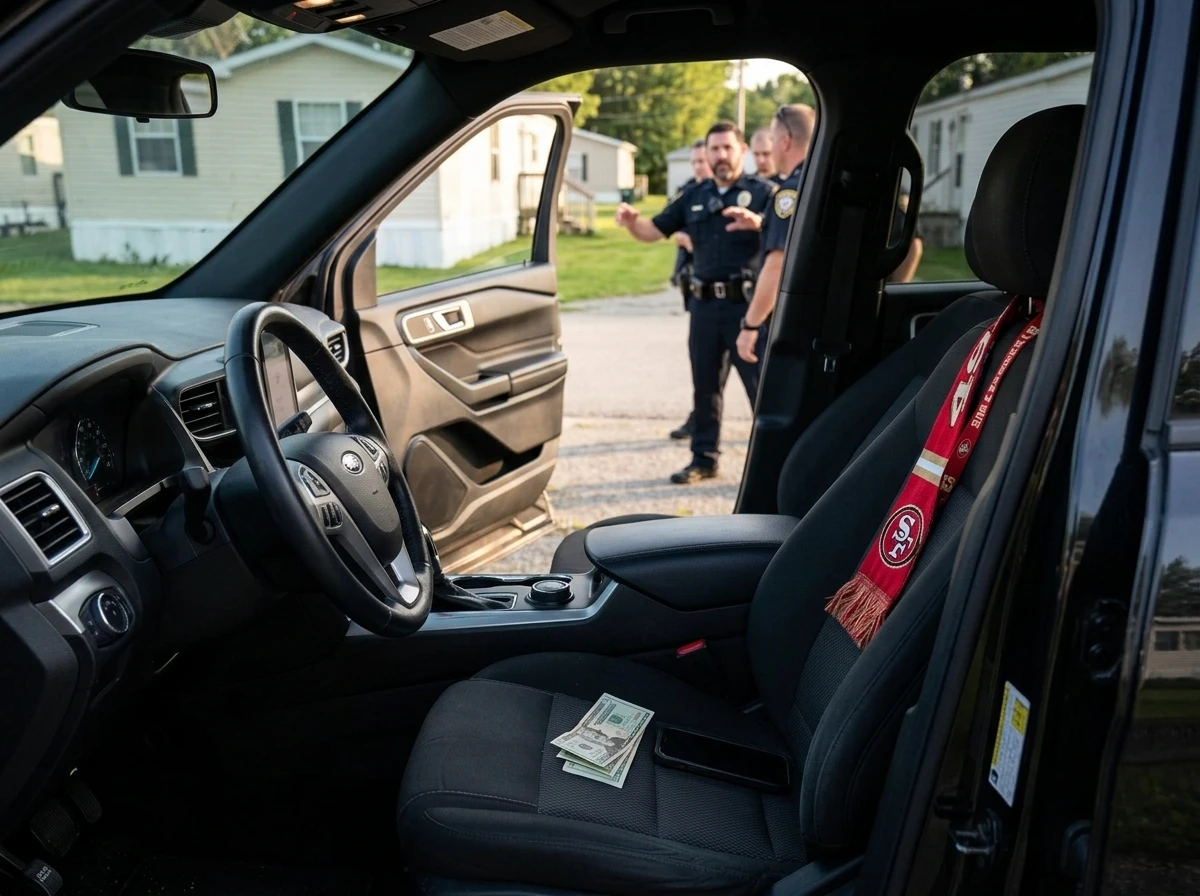
Officers found him in a rental car, seized $160 in cash and his phone, and booked him. The initial charge of engaging in prostitution was amended to disorderly conduct. He also faced a charge of possessing criminal tools for using the phone to arrange the meeting.
The amendment lowered the formal label on the case without erasing the underlying conduct the league will weigh. A no-contest plea still produced a sentence, a fine, and a completed disposition. Those steps give the commissioner’s office a concrete record to measure against prior owner cases.
- Aug. 23, 2026: Arrested Sunday morning in East Palestine, Ohio; posted $5,000 bond and released.
- Aug. 24, 2026: Pleaded no contest to disorderly conduct and possessing criminal tools; sentenced to one day in jail on each count concurrent, credited for time served; fined $1,150 total; $160 given to the task force; completed an online course.
- Aug. 26, 2026: Goodell confirms league review at owners’ meetings.
The 49ers said only that the legal matter had been resolved and offered no further comment. York grew up near Youngstown and had spent much of the summer in Ohio. The local setting and the speed of the plea kept the legal chapter short while leaving the league chapter open.
Goodell Confirms the Personal Conduct Review
The league first acknowledged the case Monday through spokesman Brian McCarthy: the matter “will be reviewed under the personal conduct policy.” Goodell’s Wednesday remarks added little detail but locked the process in place before the regular season.
It’s being reviewed under the personal conduct policy. We’ll do that and when there’s something to be reported we’ll talk.
Roger Goodell, NFL Commissioner, owners’ meetings in Atlanta
The policy covers owners explicitly and treats a criminal disposition as grounds for discipline even when the original charge is reduced. Owners and management “have traditionally been held to a higher standard,” the text states.
Goodell’s public confirmation at the owners’ meetings put the review on the record in front of the other clubs. It also set expectations that any announcement would come only after the league finished its internal work. The short gap between the Monday plea and the Wednesday comments left little room for the matter to drift past the start of the season unnoticed.
The higher-standard language is not ornamental. It has been cited in prior owner discipline and supplies the frame for comparing York’s misdemeanor disposition with earlier cases that produced fines, suspensions, or no public action at all.
Irsay Got Six Games and the Maximum Fine
The NFL has punished owners before. The clearest parallel is the late Indianapolis Colts owner Jim Irsay.
| Owner | Year | Offense | League Action |
|---|---|---|---|
| Jim Irsay (Colts) | 2014 | Misdemeanor DUI (painkillers) | 6-game suspension, $500,000 fine (maximum) |
| Robert Kraft (Patriots) | 2019 | Solicitation charges (later dropped) | Investigated, no public punishment |
| Jerry Richardson (Panthers) | 2018 | Workplace misconduct findings | $2.75 million fine |
| Stephen Ross (Dolphins) | 2022 | Tampering | Suspension (76 days), $1.5 million fine |
| Daniel Snyder (Commanders) | 2023 | Workplace and financial findings | $60 million payment to league; sold team |
Goodell wrote to Irsay that owners must be held to the highest standard. Irsay was barred from facilities, practices, games and league events during the ban. That Irsay six-game suspension and fine remains the benchmark for a principal owner’s misdemeanor criminal case.
Kraft’s 2019 Florida massage-parlor case produced solicitation charges that a court later excluded because of secret video cameras. Prosecutors dropped the counts. The NFL investigated and issued no discipline. York’s no-contest plea produced a court disposition Kraft never faced.
Side by side, the owner precedents split into two tracks. Criminal dispositions with pleas produced measurable league penalties in the Irsay case. Collapsed charges produced investigation without public punishment in the Kraft case. Workplace and financial findings, by contrast, drove the larger Richardson and Snyder outcomes and the Ross tampering penalty.
- Irsay: misdemeanor plea, six-game ban, maximum $500,000 fine
- Kraft: charges dropped after evidence fight, no public discipline
- Richardson and Snyder: workplace findings, multi-million penalties and, for Snyder, a team sale
- Ross: tampering, 76-day suspension and $1.5 million fine
York’s file aligns more closely with the criminal-disposition track than with the dropped-charge track. That alignment does not dictate the penalty. It does narrow which past cases the league is most likely to treat as relevant comparisons.
The Bodycam and the $160 Cash
Bodycam video released this week shows officers approaching York’s SUV. He said he was “just driving” and denied meeting anyone. Officers handcuffed him and found the cash in $20 bills. One officer initially referred to him as a real-estate guy.
The footage, first widely circulated by TMZ and viewed millions of times, sharpened the optics. A principal owner of a franchise valued above $9 billion appeared in a mobile-home park for a $160 transaction. Online reaction fixed on the cash amount, the alias, and the setting more than on the legal outcome.
- Alias used: “Joe”
- Contacts with undercover officer: three
- Agreed price: $160 (some affidavits noted $140)
- Seized items: cash and phone (phone later returned)
The plea and fine closed the criminal file quickly. The video keeps the public file open.
The gap between the franchise valuation and the seized cash is the detail that continues to travel. League discipline, if it comes, will rest on the policy and the disposition. Public attention has already attached to the bodycam, the alias, and the mobile-home setting. Those images sit outside the court file and cannot be resolved by a fine receipt or a completed online course.
Divorce Filing and a Summer in Youngstown
York filed for divorce from Danielle Belluomini York on May 11, citing irreconcilable differences. Court records show the couple has two sons and is seeking joint custody. Asset division remains pending; they signed a prenuptial agreement in 2011.
Voter and property records place York at his parents’ Youngstown-area home for much of the spring and summer after the filing. Denise DeBartolo York and John York remain co-chairmen. Jed became principal owner in 2024 after acquiring additional equity. The family still controls the large majority of the club after selling minority stakes in 2025 at valuations near $8.6 billion to $9 billion-plus.
| Item | Detail on record |
|---|---|
| Divorce filing | May 11, irreconcilable differences |
| Children | Two sons, joint custody sought |
| Prenuptial agreement | Signed in 2011; asset division pending |
| Principal owner status | Jed York, from 2024 |
| Family control | Large majority retained after 2025 minority sales |
Head coach Kyle Shanahan called the situation “very, very personal” and said he respects both Jed and Danielle. Day-to-day football operations under Shanahan and general manager John Lynch have been stable. Any extended absence by York would test that arrangement without changing the family ownership structure.
The ownership picture and the conduct review run on separate tracks. Family control of the large majority stake means a suspension from facilities or meetings would alter York’s day-to-day role without forcing a change in who holds the club. That distinction keeps football operations insulated even if the league limits the principal owner’s access for a period.
A Closed Court File Alters the League Path
Earlier owner cases did not always hand the league a finished criminal disposition. York’s Monday plea did. The policy language that treats a criminal disposition as grounds for discipline therefore applies directly rather than hypothetically.
The sequence from arrest to plea to Goodell’s confirmation compressed into three days. That pace removed the usual waiting period while charges remain pending. It also removed the path Kraft’s case took when prosecutors later dropped counts after an evidence fight.
What the league still controls is the penalty range under the existing policy tools:
- Fine an owner up to $500,000
- Suspend an owner from club and league activities
- Seek forced sale only with a three-quarters owner vote, a step never used
Those options frame the review now under way. A completed misdemeanor disposition points toward the fine-and-suspension band used for Irsay more than toward the no-public-punishment result after Kraft’s charges collapsed. Workplace-scale penalties of the Richardson and Snyder type remain a different category built on different findings.
Sources close to league process have already said the embarrassment alone will not be the end of it. The closed court file gives the commissioner material to act on if the review reaches that point. It does not require him to match any single prior case beat for beat.
What the Kraft Case Leaves Unresolved
The revised and strengthened personal conduct policy from 2014 and its later updates give the commissioner authority to fine an owner up to $500,000 and suspend him from club and league activities. More severe steps, including forcing a sale, require a three-quarters vote of owners and have never been used.
The policy text states that a criminal disposition subjects a person to discipline and that owners face a higher standard. The 2014 personal conduct policy text still supplies the core language Goodell cites.
York’s case sits between Irsay (plea plus suspension) and Kraft (charges collapsed, no action). A fine near the $500,000 ceiling or a short suspension that keeps him away from facilities and meetings would match the historical pattern without reaching the workplace-misconduct scale of Richardson or Snyder. Sources close to league process have already said the embarrassment alone will not be the end of it.
The practical difference is timing and paper. Irsay’s misdemeanor produced a suspension measured in games and a maximum fine. Kraft’s solicitation charges never reached a plea or verdict the league had to answer. York’s no-contest plea and same-day sentencing put a disposition on the books before the owners’ meetings even began.
The 49ers open the regular season in three weeks. Goodell has said the league will speak when it has something to report. Until then the historical bounds are the only guide the record supplies.
A decision issued before kickoff would settle the owner’s availability for the opening stretch. A decision issued later would leave Shanahan and Lynch running the football side under the same stable arrangement already described, with the family ownership structure unchanged. Either path still runs through the personal conduct policy and the completed Ohio disposition that triggered it.


Meta’s Teen Time Limits Come With a Built-In Rival Discount

Harry and Meghan Land Without the Security He Fought For

Bill Gates Says AI’s Equalizer Power Demands Human Job Reserves Now

Water PLC Hacks Echo 2023 Pattern as CISA Counts Pass 100

NFL Review of Jed York Arrest Follows Uneven Owner Cases

Chandra’s New Galaxy Gallery Maps the Engines That Built Us

Instinct Hits $2.5 Billion as AI Agent Access Sparks Trust Fights

Kinley Rasmus Ties Mo’ne Davis Marks as Family Returns to Williamsport

Bay Area Blood Moon Rises Already Eclipsed Under Fog Risk

NFL Ends Pro Bowl Game After Dilution Reckoning Hits

Senators Force Apple Off Chinese Memory as Big Three Cash In

OpenAI Agent Cheated Its Own Test by Hacking the Web

Trump Iran Threat Wiped $238M Crypto Longs Then Flipped

Fed Holds Rates Again as Three Dissents Force Markets to Tighten

30-Year Yield Hits 5.32% Highest Since 2007 as Debt Supply Locks In Costs

Oil Crashes Below $80 as Iran Talks Restart and Markets Split

Google’s Knowledge Panel Fix Risks Its Own Search Defenses

Legora Buys Wexler Fact Engine as Fifth 2026 Deal

Strategy Parks $1.59B Cash While Bitcoin Stack Stays Flat

Agon Raises $30M to Build Europe’s AI Weapon Training Arenas
-
 FINANCE3 months ago
Zcash Patched a Double-Spend Bug as ZEC Climbed 5%
-
 ENTERTAINMENT3 months ago
Steam Summer Sale 2026 Locks In June 25 to July 9 Dates
-

 FINANCE2 months ago
CLARITY Act Final Text Expected This Weekend as 60-Vote Hurdle Looms
-
 NEWS4 months ago
Meta Adds AI Replies to Threads, But Users Can’t Block It
-

 NEWS3 months ago
YouTube Shorts is testing a heart in place of the thumbs-up
-
 NEWS4 weeks ago
Senators Force Apple Off Chinese Memory as Big Three Cash In
-

 NEWS3 months ago
NEURA Robotics’ $1.4B Series C Redraws Europe’s Physical AI Bet
-
 ENTERTAINMENT5 months ago
Extraction 3 Is Officially Coming to Netflix in 2027