
NEWS
WhatsApp Opens Username Reservations, India Pauses Rollout
WhatsApp opened username reservations on June 29 ahead of a wider rollout in 2026. An optional four-digit key and India’s pause shape what comes next.

WhatsApp began letting users reserve usernames on June 29 ahead of a wider rollout later this year, opening a race for handles across the messaging app’s more than three billion users. Within days India ordered Meta to halt the feature in the country until privacy and security consultations wrap, the most concrete friction the launch has met so far.
The reservation window matters on its own. A phone number is no longer the only door into a WhatsApp conversation; users still need a number to create an account, but once usernames are live they can hand a handle to a new classmate, neighbour, or business contact in place of the digits their carriers keep on file. Meta frames the change as privacy-first. India’s notice, and the impersonation fears behind it, suggest the rollout enters contested ground before it ships.
How the Reservation Window Opens
WhatsApp, the Meta-owned service used in more than 180 countries and 60 languages, put the reservation control inside the latest version of its Android and iPhone apps. After updating, a user navigates to Settings, taps Account, then Username, and enters a handle of between 3 and 35 characters. Meta has held back handles tied to top celebrities, public figures, government entities, and Meta-verified accounts so only their legitimate owners can claim them.
The reservation tool is smartphone-only, per Al Jazeera’s reporting on the change. Users can change or turn off their username at any point once the feature is live. The broader reservation process maps out how handles work when usernames go live. WhatsApp is not running a directory: there is no autocomplete and no searchable list of handles, which the company says limits how strangers can find someone. Choosing now locks in the name once the feature activates locally; the release will be gradual, with country-by-country notifications pushed through the app once usernames are available.
- 3 to 35 characters the length range for a valid WhatsApp username
- 3 billion users WhatsApp’s worldwide user base
- 180+ countries and 60+ languages current WhatsApp reach
- Smartphone only Web and Desktop cannot claim a handle
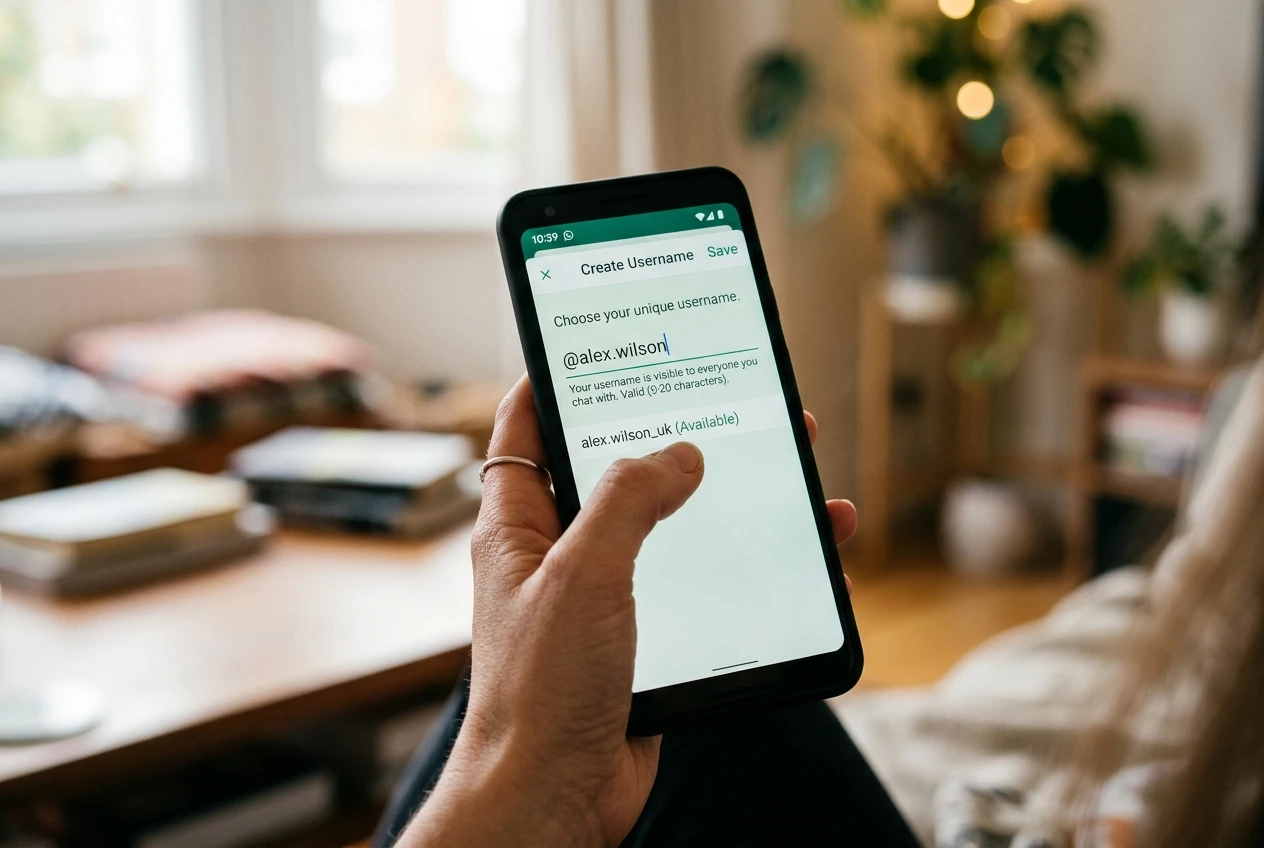
The Username Key Is a Privacy Feature With Friction Built In
WhatsApp is pairing the username with an optional secondary credential called a username key, and how that key is generated, shared, and reset is one of the under-discussed pieces of the launch. When the key is on, anyone who knows only the username cannot initiate a first message; they also need the four-digit code. The friction is part of a wider set of safeguards: WhatsApp has said it will rate-limit how many new accounts any one user can contact, and its internal systems now detect and block what it calls “abuse patterns.” Al Jazeera reported that the app will display the country origin of any new contact through the username, plus a warning, before the first message lands.
Optional username keys are short numbered codes that, in practice, require both the handle and the code before a first conversation can start, adding a privacy-tightening layer to first contacts, per Al Jazeera. The friction is the point: a contact who has not been given the key is effectively invisible to first-time outreach, much as a phone number already is. Cybersecurity analyst Mukul Kumar has argued that, over time, usernames could make the phone number a less attractive target for SIM-swap fraud, since the number would no longer be the master key to someone’s digital identity.
The trade-off travels inside a feature the company frames as privacy-only. Critics including Vikram Raichura of Helo.ai observed that WhatsApp “seems to have introduced usernames with clear constraints to reduce that risk,” per India Today, citing the absence of a directory and the optional username key as the visible protections. A federal bounty for Russian-linked hacking groups that have hit Signal and WhatsApp accounts sits in the same security window, a reminder that the threat model is real even as the company markets the move as privacy-first. None of these protections is unique to WhatsApp, but together they turn what could have been a simple identity swap into a layered filter.
One Handle for Meta’s Three Apps
Meta is opening a second door: businesses, creators, and organizations can claim their existing Instagram or Facebook handle as their WhatsApp username, citing uniformity across its platforms. WhatsApp’s help pages describe the option as a way to unify cross-platform identities under Meta’s Accounts Center, the same plumbing that already lets a single login move between Facebook, Instagram, and WhatsApp. The username claim is opt-in; there is no automatic migration, and users without an Instagram or Facebook presence face no obligation to engage the broader identity stack.
For a brand or creator who already lives across Meta’s other apps, the Accounts Center path is the path of least friction. For ordinary users the option is opt-in, with no automatic migration of handles. WhatsApp told India in its response that it “will reserve select usernames that can only be claimed by legitimate owners,” a position meant to address impersonation of public figures and government entities. The reservation tool is one piece of how the company is placing WhatsApp inside the same identity graph as its other consumer apps.
When you meet someone new, whether it’s a classmate, a neighbour, or someone you met at an event, sharing your phone number can feel like a big step. Your phone number is personal, and it’s tied to so many other parts of your life. So usernames are designed to give you control of who gets to see your phone number in the first place.
Alice Newton-Rex, WhatsApp’s vice president and head of Product, said in a TechCrunch briefing on the rollout.
That framing positions usernames as a control switch rather than a social handle. The same architecture lets Meta stitch its three consumer apps behind a single identity for the people who opt in. WhatsApp has said the actual launch will be slow, with country-by-country app notifications before the feature activates locally.
India Orders Meta to Halt the Username Rollout
India’s Ministry of Electronics and Information Technology (MeitY) ordered Meta on July 1 to hold off on rolling out usernames in the country until consultations on privacy and security wrap. Officials gave Meta three days to file a detailed explanation of why regulatory action should not be taken against it for launching a feature that “may increase cybercrimes.” An explainer of the WhatsApp username pause walks through the chain of events from the global reservations opening to the government’s intervention. The order landed within days of the reservation window opening, putting India at the centre of the rollout debate.
What India fears, the notice said, is a sharp rise in phishing, impersonation, and what officials called digital arrest scams. Until now, even a scammer’s phone number would surface when they reached out on WhatsApp; usernames could hide that trail, officials argued. Indian finfluencer Ankur Warikoo raised the same worry on the day the feature was announced, writing on X that a scammer could pose as “warikoo / awarikoo / ankurwarikooo / ankur_warikoo / a_warikoo / ankurwarikooofficial etc etc” soliciting money from his followers.
Internet Freedom Foundation, a digital rights group, called the government’s notice legally baseless, saying there is no statute that lets the executive approve or withdraw a product feature before release. WhatsApp, in turn, said it “held well-known names and some variations of them” so only legitimate owners can claim them.
Why WhatsApp Waited This Long
Rival messaging apps including Telegram, Signal, and Wire have let users go by handle for years. WhatsApp, which changed leadership in the days before the launch announcement, has stuck with the phone number as the primary identifier since launch. The reservation window marks the first moment the company is letting the phone number sit behind something else for a public conversation. The delay was partly a function of scale: designing a process for three billion people is a different problem than doing it for a few hundred million.
The change also reorders the relationship between WhatsApp and its sister apps. By putting the username claim path through Meta’s Accounts Center, Meta is treating the WhatsApp identity as part of a single graph spanning Facebook, Instagram, and WhatsApp. WhatsApp users who do not want to engage that broader identity stack can ignore the cross-platform claim entirely and stay with a unique standalone handle.
Before You Tap Reserve
Reservations opened on June 29 inside the latest WhatsApp for Android and iPhone. India-based users can still claim a handle in-app; the country’s order covers the feature going live, not the reservation step. The reservation flow lives in one place: Settings, then Account, then Username, where the handle is set on the user’s primary device. WhatsApp Web and Desktop cannot be used to claim a handle, so a phone is the only door to this reservation window.
- Update WhatsApp on Android or iPhone to the latest version.
- Open Settings, tap Account, then Username, and enter your preferred handle.
- Decide whether to enable the four-digit username key for first-message control.
- If you run a brand on Instagram or Facebook, link accounts in Meta’s Accounts Center before claiming the matching handle.
Once the feature activates locally, WhatsApp will notify users in-app and the username will go live alongside the existing phone-number setup. Until then, the reservation is a placeholder; nothing changes in how messages are routed today.
The handle reserved now is the handle a user gets when the rollout reaches their country, provided no one raced ahead and grabbed it first. India remains the only country with a public pause on the feature so far; elsewhere the timing depends on Meta’s per-country go-live schedule. For users anywhere, the only thing the reservation guarantees is priority of order at the moment the feature flips on locally.
Frequently Asked Questions
What is the WhatsApp username key?
The username key is an optional four-digit code that sits on top of a user’s handle. With it turned on, a stranger who knows only the username cannot send a first message; they also need the code. WhatsApp designed the key as a secondary credential so a familiar handle cannot be turned into a wide-open contact channel.
Can I claim my Instagram or Facebook handle as my WhatsApp username?
Yes. Meta is letting businesses, creators, and organizations unify their identity by claiming an existing Instagram or Facebook handle inside WhatsApp. The claim runs through Meta’s Accounts Center, where Facebook, Instagram, and WhatsApp logins already connect for users who opt in.
Why has India asked Meta to pause the WhatsApp username rollout?
India’s Ministry of Electronics and Information Technology sent Meta a notice on July 1 asking the company to halt the rollout in the country until privacy and security consultations wrap, citing fears of a rise in phishing, impersonation, and digital arrest scams. WhatsApp’s reservation tool remains available to Indian users; the order covers the feature going live in India, not the global reservation step.
When will WhatsApp usernames actually start working?
Meta has not set a firm launch date for the full feature. Reservations opened on June 29 ahead of a wider rollout planned for later in 2026, with country-by-country app notifications once usernames are available locally. India is the only country so far with a government order pausing the rollout; for everywhere else, the timing depends on Meta’s per-country go-live schedule.


xTool M2 Hands-On: A 3-in-1 Laser Cutter for Creators

Senate’s August 7 Deadline Caps the CLARITY Act’s 2026 Path

Strategy’s $216 Million Bitcoin Sale Funds STRC Preferred Dividends

Byron Donalds Pitched Trump’s Tax Bill on Varney. It’s Now Law.

Night Falls on Manhattan Turns 30, Lumet’s Crime Drama Returns to Blu-ray

India Dearness Allowance July 2026: Where the 3% Estimate Stands

The Bet Parents Are Making on College Students’ Credit Cards

Average Refinance Rates Hit a Seven-Week Low on the Friday Update

Aylight Closes €4.5M Pre-Seed Round for AI Optical Interconnects

BBC’s Personal Finance Push Is Bigger Than One Week

Coinbase for Agents Lets AI Trade and Spend From Your Account

NEURA Robotics’ $1.4B Series C Redraws Europe’s Physical AI Bet

SpaceX IPO Tests Retail Appetite With a Record $75B Raise

Kalshi’s CFTC-Approved HYPE Perpetuals Go Live in the US

Theker’s $85M Series A Bets on Robots That Rethink the Factory Floor

Coinbase and Ripple Push CLARITY Act Vote as Time Tightens

OpenAI Confidentially Files S-1, A Week Behind Anthropic

Ripple CEO Agrees Wall Street Is Copying XRP’s Banker Coin Model

DOJ’s Live Nation Antitrust Suit Closes In on a Ticketmaster Breakup

CLARITY Act’s Senate Path Now Runs Through Law Enforcement Buy-In
-
 FINANCE1 month ago
Zcash Patched a Double-Spend Bug as ZEC Climbed 5%
-
 ENTERTAINMENT1 month ago
Steam Summer Sale 2026 Locks In June 25 to July 9 Dates
-
 NEWS2 months ago
Meta Adds AI Replies to Threads, But Users Can’t Block It
-
 ENTERTAINMENT2 months ago
‘Widow’s Bay’ Review: Apple TV’s Sleeper Horror-Comedy Earns Its Fog
-
 ENTERTAINMENT1 month ago
Amazon Scraps Its Stargate Revival After a 20-Week Writers Room
-
 FINANCE1 month ago
Citigroup Says ETF Outflows Drove Bitcoin’s Crash, Not Strategy’s Sale
-
 FINANCE1 month ago
CLARITY Act Floor Vote Likely Shifts to August, Lummis Says
-
 FINANCE1 month ago
Coinbase Invests in Ethena, ENA Jumps 10% on Open-Market Buy