
NEWS
Xiaomi’s Wide Foldable Joins a Six-Brand Race Already Led by Huawei

Six smartphone brands have either shipped, scheduled, or leaked a wide foldable in the last twelve months. Xiaomi just became the sixth. A leaked prototype with a 200-megapixel main camera and an aspect ratio mirroring Huawei’s Pura X Max points to a launch window that was supposed to close in June, then slipped to July, with Samsung and Apple breathing down the calendar.
The leak, attributed to tipster Kartikey Singh on X, lands as the industry stops pretending the tall, paperback-shaped foldable was the answer. Huawei shipped the first wide foldable in April. Apple’s iPhone Ultra arrives in September. Between them, four Chinese brands are racing to claim the middle.
What the Xiaomi Prototype Carries
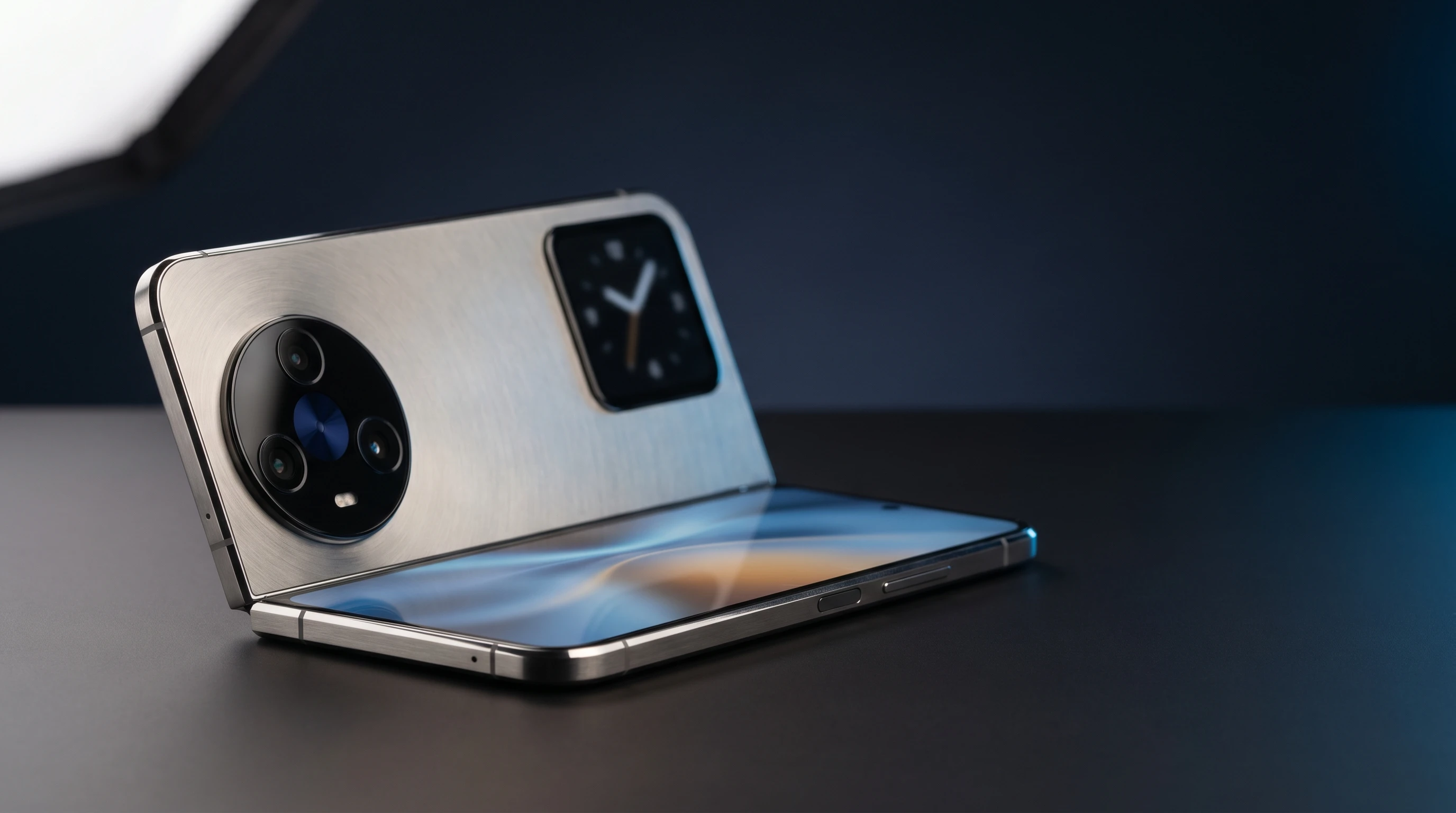
Singh’s posts describe a Xiaomi device that will be sold as either the MIX Fold 5 or the Xiaomi 18 Fold (some leakers are also using “Xiaomi 17 Fold”). The naming is unresolved because Xiaomi itself has not locked it. What the prototype shows is a clear break from the Mix Fold 4’s tall, narrow proportions.
Three rear cameras sit on the back, headlined by a 200-megapixel main sensor with Leica tuning, the same sensor family that powers the Xiaomi 17 Max. The form factor is the bigger reveal: a wide-screen aspect ratio that opens closer to a small tablet than a long paperback. Singh placed the device in the same visual family as Huawei’s Pura X Max and Apple’s rumored iPhone Ultra.
Singh’s original timing call, made in October last year, pointed to a first-half 2026 launch. That window now expires in 33 days. A separate report from Gizmochina in April pushed the launch to July, with Qualcomm’s Snapdragon 8 Elite Gen 5 inside. The Singh leak itself comes with a footnote that the model is a prototype, so specifications can still shift before retail. Xiaomi has not confirmed any of it.
Why Wide Foldables Replaced the Tall Format
For six years, the book-style foldable meant one shape: a tall outer screen that looked like a normal phone, opening into a tall inner screen that looked like a long paperback. The Galaxy Z Fold line shipped four generations of that template before Samsung itself moved on. The problem the wide format solves is software, not hardware.
Apps Were Built for a 4:3 Canvas
Android tablet apps, iPad apps, and most productivity software are designed for a roughly 4:3 layout. A tall inner display forced two-column compromises and letterboxed video. The Huawei Pura X Max’s 16:10 unfolded ratio gives apps the canvas they were already drawn for. Apple’s iPhone Ultra is rumored to land at the same 4:3 territory, with a 7.8-inch inner display and a 5.5-inch outer screen.
The Outer Screen Becomes Useful
A wide foldable’s cover display is shorter and squarer, closer to the proportions of a normal phone held one-handed. Huawei’s Pura X Max uses a 5.4-inch OLED on the outside with a 3:2 ratio, large enough for full keyboards and short video, but not so tall that the folded device feels like a remote control. That, more than the inner panel, is the change consumers will feel first.
Six Brands, Twelve Months, One Form Factor
The race is now public. Huawei has the only retail wide foldable on shelves; everyone else is in the pipeline. The compressed timing is what makes this a sleeper story: the industry has been telegraphing convergence for two years, but the final six months will see four major launches stacked back to back.
| Brand | Device | Status | Window | Notable Spec |
|---|---|---|---|---|
| Huawei | Pura X Max | Shipping | April 2026 | 7.7-inch inner, Kirin 9030 Pro, from $1,615 |
| Xiaomi | MIX Fold 5 / 18 Fold | Prototype leak | Slipped from June to July | 200MP Leica main, Snapdragon 8 Elite Gen 5 |
| Samsung | Galaxy Wide Fold | Confirmed in supply chain | July 2026 Unpacked | Roughly square inner display, ~1M unit build |
| Apple | iPhone Ultra / Fold | Schematic leaked | September 2026 | 7.8-inch 4:3 inner, Touch ID, from $2,000+ |
| OPPO | Unnamed | Roadmap leak | H2 2026 | No firm specs yet |
| Vivo / HONOR | Unnamed | Rumor stage | 2026 to 2027 | No firm specs yet |
That is six devices in a category that did not exist in retail form 14 months ago. The implication for buyers is the opposite of the early foldable era: in 2022, choosing a Galaxy Z Fold meant accepting it because nothing else competed. In late 2026, choosing a wide foldable means picking between Leica color science, HarmonyOS continuity, Galaxy AI, and whatever iOS does with a 4:3 canvas. The competition arrived in one quarter.
Samsung’s TriFold Already Showed the Risk
The cautionary tale is two months old. Samsung’s Galaxy Z TriFold, a 10-inch dual-hinged device priced at $2,899, went on sale January 30, 2026. By March, Samsung had discontinued it. The internal explanation, leaked to suppliers, was that retail demand collapsed inside the first 30 days because the device was too thick folded and too expensive unfolded.
That is the warning shot for everyone in the table above. The TriFold proved that consumers will not pay a tablet’s price for a tablet’s complexity in a phone-shaped chassis. The wide foldable category sits one rung below TriFold on the engineering ladder; it is more forgiving, but the same pricing problem applies. Huawei’s $1,615 starting price for the Pura X Max is the upper boundary that worked. Apple’s rumored $2,000+ for the iPhone Ultra sits above that boundary, and Apple’s market power is the only reason analysts think it will hold.
For coverage of Samsung’s parallel wide foldable bet, see the Samsung Wide Fold global launch leak, which puts the SM-F971 ahead of Apple’s iPhone Fold in the release calendar.
China Owns the Category Going Into 2026
The reason five of the six brands in the wide foldable race are Chinese is structural. The Chinese foldable market grew from 1.5 million units in 2021 to 10.01 million units in 2025, a compound annual growth rate of 60.7%. The first-half growth rate of 32.8% in 2025 indicated the curve was still steep heading into 2026.
Global foldable shipments are set to grow 20% year-on-year in 2026, supported by Apple’s entry into the segment.
Liz Lee, Associate Director at Counterpoint Research, framed the 2026 expansion in those terms. IDC’s more aggressive forecast puts the growth at 30% year-on-year, up from a 6% pre-Apple estimate. Both research houses agree on the shape: Apple’s first year captures roughly 22% of the foldable unit market and 34% of the revenue. The rest of the category fights for what is left.
- 55.2% of global foldable shipments in 2026 will originate from Chinese brands serving Chinese buyers
- 60.7% compound annual growth in Chinese foldable shipments from 2021 to 2025
- 10.01 million Chinese foldable units shipped in 2025
- 22% of the 2026 global unit market projected to go to Apple in its first year
Apple’s September Move Reshapes the Math
The iPhone Ultra is the variable that decides whether Xiaomi’s wide foldable becomes a regional hit or a global one. Apple’s foldable is rumored to ship with a 7.8-inch inner display, a 5.5-inch outer, a 4:3 aspect ratio, and Touch ID built into the power button (because the device is too thin to host the TrueDepth array). Pricing starts above $2,000.
That spec sheet matters for two reasons. First, it locks the 4:3 inner aspect ratio as the category standard, validating the bet Huawei made and Xiaomi is copying. Second, it sets a price ceiling that gives Chinese brands a real value gap to attack. Xiaomi’s MIX Fold 5, if priced in the Pura X Max range, undercuts Apple by roughly $400 to $500 while matching the form factor.
Whether the iPhone Ultra ships on schedule is no longer a sure thing. Recent reporting flagged hinge-yield problems pushing the device into late 2026 or beyond. Apple’s iPhone Ultra indefinite-delay risk is now a real variable in every competitor’s launch math. If Apple slips into 2027, Xiaomi and Samsung get a clean three-quarter run with no Cupertino pressure. If Apple lands in September on schedule, the Chinese brands need to be in stores before the iPhone Ultra preorder window opens.
Xiaomi’s July window, if it holds, gives the company eight weeks of clear air before Apple’s expected announcement. The 200-megapixel Leica camera, the same sensor that drew strong reviews on the Xiaomi 17 Max, is the marketing line that lets Xiaomi compete on imaging while Apple competes on ecosystem. If the prototype’s specs survive to retail, that is the angle Xiaomi will lean on. If Samsung’s Galaxy Wide Fold launches first at July Unpacked, Xiaomi’s window narrows to weeks. If Apple ships on time in September and the iPhone Ultra clears its hinge tests, every Chinese brand in this race spends Q4 chasing Apple in a market Apple has barely entered.


Dolly Parton’s $450 Million Fortune Keeps Working After Her Death

SpaceX’s $60B Cursor Buy Immediately Costs It OpenAI Models

Rays Forever Home Wins County Vote as College and Taxpayers Carry the Load

Apple TV Hits $14.99 as Sports and Hits Bill Comes Due

Swift Telescopes Restart as Orbit Drop Accelerates

Oracle’s 2.8 GW Bloom Deal Exposes the AI Power Bypass

Galaxy S26 Beta 7 Ports Fold 8 AI as Stable Nears

Walmart Pays $50 Million to Close Federal Opioid Pharmacy Case

Space Mirror Demo Revives 1993 Russian Night-Light Test

Measles Death Dispute Deepens Distrust in Pennsylvania Outbreak

Trump Iran Threat Wiped $238M Crypto Longs Then Flipped

30-Year Yield Hits 5.32% Highest Since 2007 as Debt Supply Locks In Costs

Oil Crashes Below $80 as Iran Talks Restart and Markets Split

Strategy Parks $1.59B Cash While Bitcoin Stack Stays Flat

Astute’s $1.2M bet makes B2B creator deals feed AI discovery

SpaceX Stock Rebound Tests Real Demand Before Huge Unlock

BlackRock Turns Cash Empire Into Stablecoin Reserve Rails

The 20% Savings Ideal Meets a 2.7% Reality Check

Amber’s €7M locks Mittelstand knowledge inside Europe

Walter’s TWG Insists No Fraud as Insurer Probes Force Cleanup
-
 FINANCE3 months ago
Zcash Patched a Double-Spend Bug as ZEC Climbed 5%
-
 ENTERTAINMENT3 months ago
Steam Summer Sale 2026 Locks In June 25 to July 9 Dates
-

 FINANCE2 months ago
CLARITY Act Final Text Expected This Weekend as 60-Vote Hurdle Looms
-
 NEWS4 months ago
Meta Adds AI Replies to Threads, But Users Can’t Block It
-

 NEWS3 months ago
YouTube Shorts is testing a heart in place of the thumbs-up
-

 NEWS1 month ago
Senators Force Apple Off Chinese Memory as Big Three Cash In
-

 NEWS3 months ago
NEURA Robotics’ $1.4B Series C Redraws Europe’s Physical AI Bet
-
 ENTERTAINMENT5 months ago
Extraction 3 Is Officially Coming to Netflix in 2027