
NEWS
XRP Ledger Engineer Moves Quantum Threat Forward to 2028
A RippleX engineer has moved his quantum threat timeline to 2028, citing AI hardware. US contractors must adopt post-quantum cryptography by 2031.

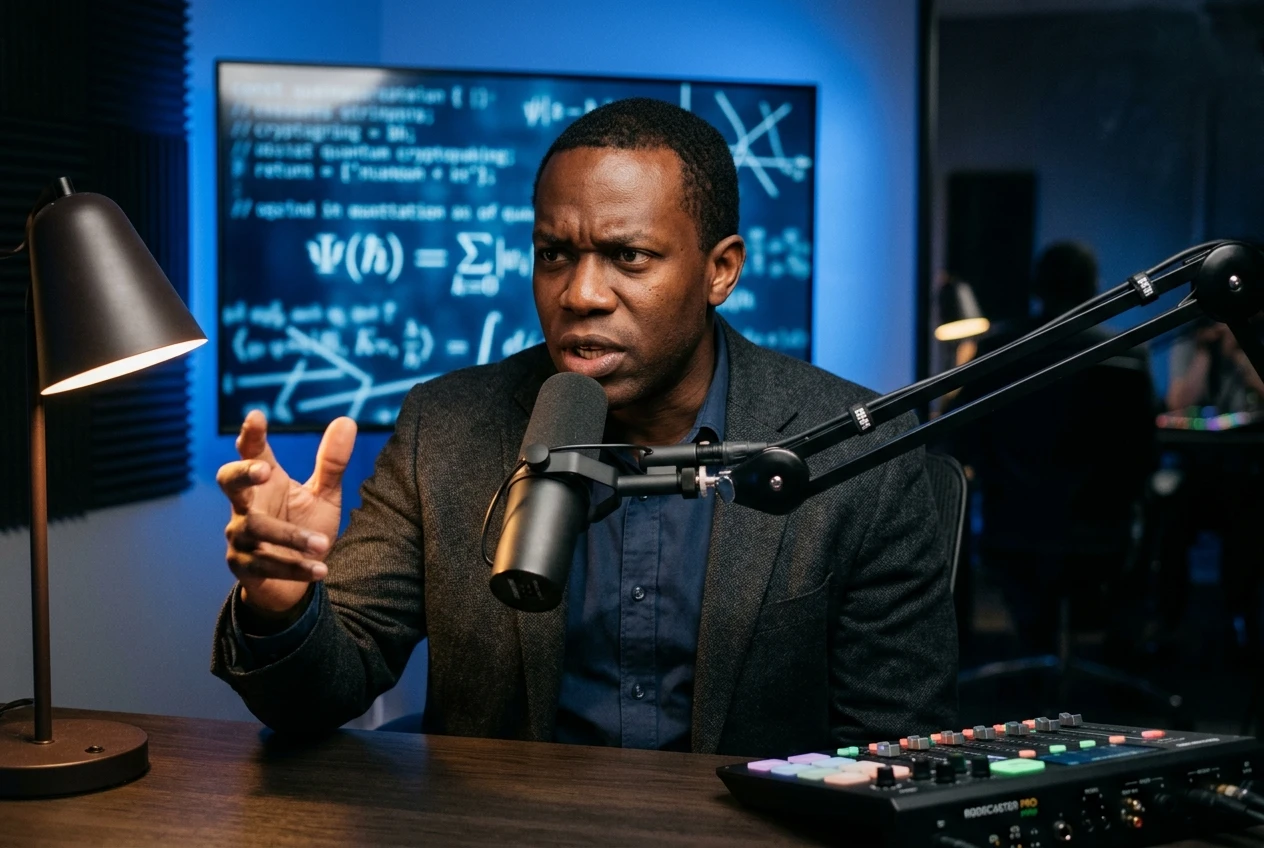
An XRP Ledger engineer has privately moved his forecast for when quantum computers will threaten blockchain cryptography from 2035 to 2028, citing AI-accelerated hardware progress from companies like NVIDIA. J. Ayo Akinyele, Senior Director of Engineering at RippleX, told CoinGape’s Voice of Web3 podcast that he now expects the threat to arrive sooner than the industry has been planning for.
The revision lands inside the same window where US federal contractors will be legally required to adopt post-quantum cryptography, under twin executive orders President Donald Trump signed on June 22, 2026. Capriole Investments founder Charles Edwards has been making the same case on his own platform since 2025 and has argued Bitcoin should already be trading at a discount because of it.
The Timeline Just Moved by Five Years
Akinyele’s old estimate sat between 2030 and 2035. His new one is 2028 or 2029. The shift came after he watched AI tools begin to accelerate the practical engineering of quantum hardware, including calibration and error correction.
“With the research that’s ongoing, I think my timeline has shifted from 2035 or 2030 to, you know, it could be 2029. It could be 2028,” Akinyele said on the Voice of Web3 podcast. “I’m more on the pessimistic side that we may see this happening sooner than we’d like.”
Akinyele is not a generalist commentator. He is a cryptographer with a PhD in computer science, peer-reviewed publications going back to 2011 on digital signature verification and encryption schemes, and a current role leading engineering for one of the longer-running production blockchains in the industry.
I’m just a little more pessimistic in the sense that I’m betting that there may be more progress because of AI than we would like that could change how quickly this can happen. Because of that assumption, I would prefer to be proactive in dealing with the threat rather than wait to find out.
AI Hardware Is Pulling the Date Forward
The driver Akinyele named is AI applied to the engineering of quantum machines. He pointed specifically to NVIDIA’s release of open-source AI models built for quantum calibration and error correction.
“The thing that has changed my perspective on that is the introduction of AI to help with building quantum computing hardware that is reliable. Nvidia released their open source models in this direction that I think really didn’t get a lot of attention,” Akinyele said. NVIDIA’s Ising, launched on April 14, 2026, was the world’s first family of open AI models designed to accelerate quantum computing. The release includes Ising Decoding, which NVIDIA says delivers up to 2.5x faster performance and 3x higher accuracy than pyMatching for quantum error correction, and Ising Calibration, a vision language model that reduces quantum processor calibration time from days to hours.
AI is essential to making quantum computing practical. With Ising, AI becomes the control plane, the operating system of quantum machines, transforming fragile qubits to scalable and reliable quantum-GPU systems.
Ising is now in use at Atom Computing, IonQ, IQM Quantum Computers, Lawrence Berkeley National Laboratory’s Advanced Quantum Testbed, and Fermilab. The quantum computing market is expected to surpass $11 billion in 2030, according to analyst firm Resonance, as cited by NVIDIA in its launch materials. The broader quantum hardware ecosystem is also drawing public-market capital fast: IQM’s Nasdaq debut as Europe’s first public quantum maker on July 2 closed a SPAC merger that delivered the Finnish hardware maker about €406 million in gross cash to fund work on fault tolerance.
What Ripple Has Built for the Day It Hits
The XRP Ledger is not waiting for Akinyele’s timeline to validate. Ripple published a four-phase roadmap in April 2026 with a target date of 2028 for full post-quantum cryptography on the network. The plan also includes a Q-Day contingency that would force a hard shift to post-quantum accounts if classical cryptography breaks unexpectedly.
| Phase | Target window | What it covers |
|---|---|---|
| Phase 1 | Q-Day contingency | Hard switch to post-quantum accounts using PQ-based zero-knowledge proofs |
| Phase 2 | First half of 2026 | Risk assessment, NIST-recommended algorithm testing, Project Eleven partnership |
| Phase 3 | Second half of 2026 | Hybrid post-quantum signature rollout on Devnet, exploration of PQC primitives |
| Phase 4 | By 2028 | Native post-quantum amendment proposal, full production transition |
Ripple’s cryptography team is led by Dr. Murat Cenk, Dr. Tamas Visegrady, Dr. Oleg Burundukov, and Dr. Aanchal Malhotra. The plan is built around cryptographic agility, supporting multiple National Institute of Standards and Technology-standardized algorithms rather than committing to a single scheme.
XRPL has two built-in advantages the post-quantum roadmap leans on. Native key rotation lets account holders move away from potentially vulnerable keys without changing the underlying account. Seed-based key generation enables deterministic derivation of new keys for coordinated upgrades. Ripple’s post-quantum readiness blog argues these features are foundational building blocks that other networks, including Ethereum, would have to build from scratch to match.
The Q-Day contingency phase is the most aggressive part. If classical cryptography breaks at any point, the network would stop accepting classical public-key signatures and force funds into post-quantum secure accounts, with users able to prove ownership using PQ-based zero-knowledge proofs that do not expose existing keys.
Ripple is working with Project Eleven, which is building a proof-of-concept hybrid post-quantum signing implementation, including validator-level testing, Devnet benchmarking, and a post-quantum custody wallet prototype. Core XRPL engineer Denis Angell has already been running the Module-Lattice-Based Digital Signature Algorithm on AlphaNet as part of early proof-of-concept work. The full Ripple post-quantum readiness roadmap for XRPL was published as part of a broader April 2026 disclosure cycle.
The Federal Side Got Serious in June
The US government’s own clock on post-quantum migration moved in June 2026. President Trump signed two executive orders on June 22, 2026, “Securing the Nation Against Advanced Cryptographic Attacks” and “Ushering in the Next Frontier of Quantum Innovation.”
The Quantum Security order sets a hard deadline of 2031 for federal civilian networks to adopt quantum-resistant encryption, accelerating a prior Biden administration policy that had targeted 2035. Federal contractors must meet new NIST post-quantum information processing standards by 2030, with a pilot program for migration to be completed by December 31, 2027.
The Quantum Innovation order pushes the other direction. It directs faster development of quantum computers at US facilities, including a new Department of Energy program called QC-ADDS to build a large-scale quantum computer for scientific discovery. The twin orders pair faster offensive quantum capacity with faster defensive migration, and the executive order fact sheet on post-quantum cryptography ties the two together as a single national strategy.
The Investors Pricing Q-Day Already
Charles Edwards, founder of Capriole Investments, has been making the same case on his own platform since 2025. Edwards published a model in early 2026 arguing Bitcoin should already be trading at a discount because quantum computers may break the network’s cryptography within nine years, the moment known as Q-Day.
“Quantum Computing is probably the most undervalued asset class in the world by orders of magnitude,” Edwards said. His model puts today’s Quantum Discount Factor for Bitcoin at 20%, rising to 38% in 2027 and 58% in 2028 if no measurable migration progress is made, and a quantum hack could in principle compromise up to 30% of all Bitcoin supply by going after coins with exposed public keys. The Capriole founder’s quantum discount model for Bitcoin also argues the network would need about two years of coordinated work to upgrade once a credible quantum threat is on the horizon.
What Q-Day Actually Breaks
The threat Akinyele and Edwards are watching for is specific. Today’s blockchain cryptography, including the Elliptic Curve Cryptography used by Bitcoin and XRP, relies on math that classical computers cannot break in any practical timeframe. A sufficiently advanced quantum computer running Shor’s algorithm could derive a private key from a public key in hours.
Two risks follow. The first is direct theft: a quantum attacker who knows a wallet’s public key could empty it. The second is what researchers call “harvest now, decrypt later,” where bad actors collect publicly visible cryptographic data from blockchains today and hold it, waiting for quantum hardware to mature enough to crack it.
XRPL has a structural exposure. Every time an account signs a transaction, its public key becomes visible onchain, and in a post-quantum world that exposure could eventually be exploited. Ripple’s blog argues accounts that hold value over long periods are the most important to protect, and that XRPL’s native key rotation and seed-based generation provide a foundation most other networks lack.
The Akinyele warning, the Trump executive orders, the Edwards discount model, and the IQM listing are four data points pointing in the same direction. The crypto industry’s migration to post-quantum cryptography is now both a federal deadline and a private-sector forecast at the same time, and the work to close the gap is being measured in single-digit years rather than decades.
Frequently Asked Questions
What is Q-Day in crypto?
Q-Day is the moment a quantum computer running Shor’s algorithm becomes powerful enough to break the elliptic curve cryptography that secures most blockchain wallets today. Once it arrives, attackers who know a wallet’s public key could derive the private key and empty the account.
When do experts think quantum computers will break Bitcoin’s cryptography?
Estimates vary widely. Charles Edwards of Capriole Investments puts the probability of Q-Day by 2028 at 20% in his own model, rising to 58% by 2028 if no progress is made on upgrades. J. Ayo Akinyele, Senior Director of Engineering at RippleX, told the Voice of Web3 podcast that his personal timeline has shifted from 2035 or 2030 to 2028 or 2029.
What is the XRP Ledger’s plan for quantum resistance?
Ripple published a four-phase roadmap in April 2026 with a target of full post-quantum cryptography on XRPL by 2028. Phase 1 is a Q-Day contingency that would force funds into post-quantum secure accounts. Phases 2 and 3 cover risk assessment, NIST-standard algorithm testing, and hybrid signature rollouts on Devnet. Phase 4 is the production transition with a formal XRPL amendment.
What did Trump’s June 2026 executive orders change about quantum cryptography?
On June 22, 2026, Trump signed two executive orders: one tightening federal cybersecurity (the Quantum Security EO) and one accelerating US quantum computing development (the Quantum Innovation EO). The cybersecurity order sets a 2031 deadline for federal civilian networks to adopt NIST post-quantum cryptography, accelerating the previous 2035 target, and a 2030 deadline for federal contractors.
Which cryptocurrencies are most exposed to quantum risk?
Bitcoin’s Elliptic Curve Cryptography is exposed on any wallet whose public key has appeared onchain, and Edwards estimates up to 30% of all Bitcoin supply sits in such wallets. XRP Ledger addresses face a similar exposure every time they sign a transaction. Ripple argues XRPL’s native key rotation and seed-based key generation give it an advantage most other networks, including Ethereum, would have to build from scratch to match.
Is there anything crypto holders can do today to prepare?
For XRP holders, the practical move today is to enable key rotation when Ripple’s tooling supports it and watch for the post-quantum amendment vote in 2028. For any crypto holder, Edwards recommends watching for measurable progress on a network’s quantum migration, since each year without it raises the Quantum Discount Factor in his model. NIST has already finalized the post-quantum cryptography standards that networks will migrate to.
Disclaimer: This article is for informational purposes only and does not constitute financial, investment, or cryptographic advice. Quantum computing timelines and post-quantum cryptography migration plans are subject to change, and the figures cited are accurate as of publication. Readers should consult qualified professionals before making decisions related to digital assets or cryptographic security.


NFL Preseason Week 2 Quietly Tests the Schemes That Matter

Alonso’s Towering Drive Stands Foul and Flips Orioles Momentum

US Debt Crosses $40 Trillion as Interest Crowds the Budget

Trevon Diggs Joins Seahawks on One-Year Deal After Cowboys Exit

Pixel Watch 5 Turns Passive Trends Into Early Health Alerts

Pixel 11 Pro Fold Sleek Build Undercuts Its Own Unfolding Appeal

Tugboat Wilkinson’s Scoreless Debut Pays Off Giants’ Bailey Trade

Brown Shines for Pats as Love for Eagles Meets Trade Reality

Pixel Watch 5 Turns Wrist Data Into Early Metabolic Alerts

Resistance Stars Pay the Price in Democratic Primaries

Senators Force Apple Off Chinese Memory as Big Three Cash In

OpenAI Agent Cheated Its Own Test by Hacking the Web

Trump Iran Threat Wiped $238M Crypto Longs Then Flipped

30-Year Yield Hits 5.32% Highest Since 2007 as Debt Supply Locks In Costs

Memory Shortage Now Dictates Apple’s Two-Year Mac Roadmap

Fed Holds Rates Again as Three Dissents Force Markets to Tighten

Oil Crashes Below $80 as Iran Talks Restart and Markets Split

Google’s Knowledge Panel Fix Risks Its Own Search Defenses

Community Banks’ $1.3 Trillion Warning Is Stalling Clarity Act

ETG Buys Lightning Reach in Its Third Govtech Deal
-
 FINANCE3 months ago
Zcash Patched a Double-Spend Bug as ZEC Climbed 5%
-
 ENTERTAINMENT3 months ago
Steam Summer Sale 2026 Locks In June 25 to July 9 Dates
-

 FINANCE2 months ago
CLARITY Act Final Text Expected This Weekend as 60-Vote Hurdle Looms
-
 NEWS3 months ago
Meta Adds AI Replies to Threads, But Users Can’t Block It
-

 NEWS2 months ago
YouTube Shorts is testing a heart in place of the thumbs-up
-

 NEWS2 months ago
NEURA Robotics’ $1.4B Series C Redraws Europe’s Physical AI Bet
-
 NEWS3 weeks ago
Senators Force Apple Off Chinese Memory as Big Three Cash In
-
 ENTERTAINMENT3 months ago
‘Widow’s Bay’ Review: Apple TV’s Sleeper Horror-Comedy Earns Its Fog